

Country Guides
Afghanistan

Start here
Overview
Explore sections
Guide Details
Household Goods
Documents
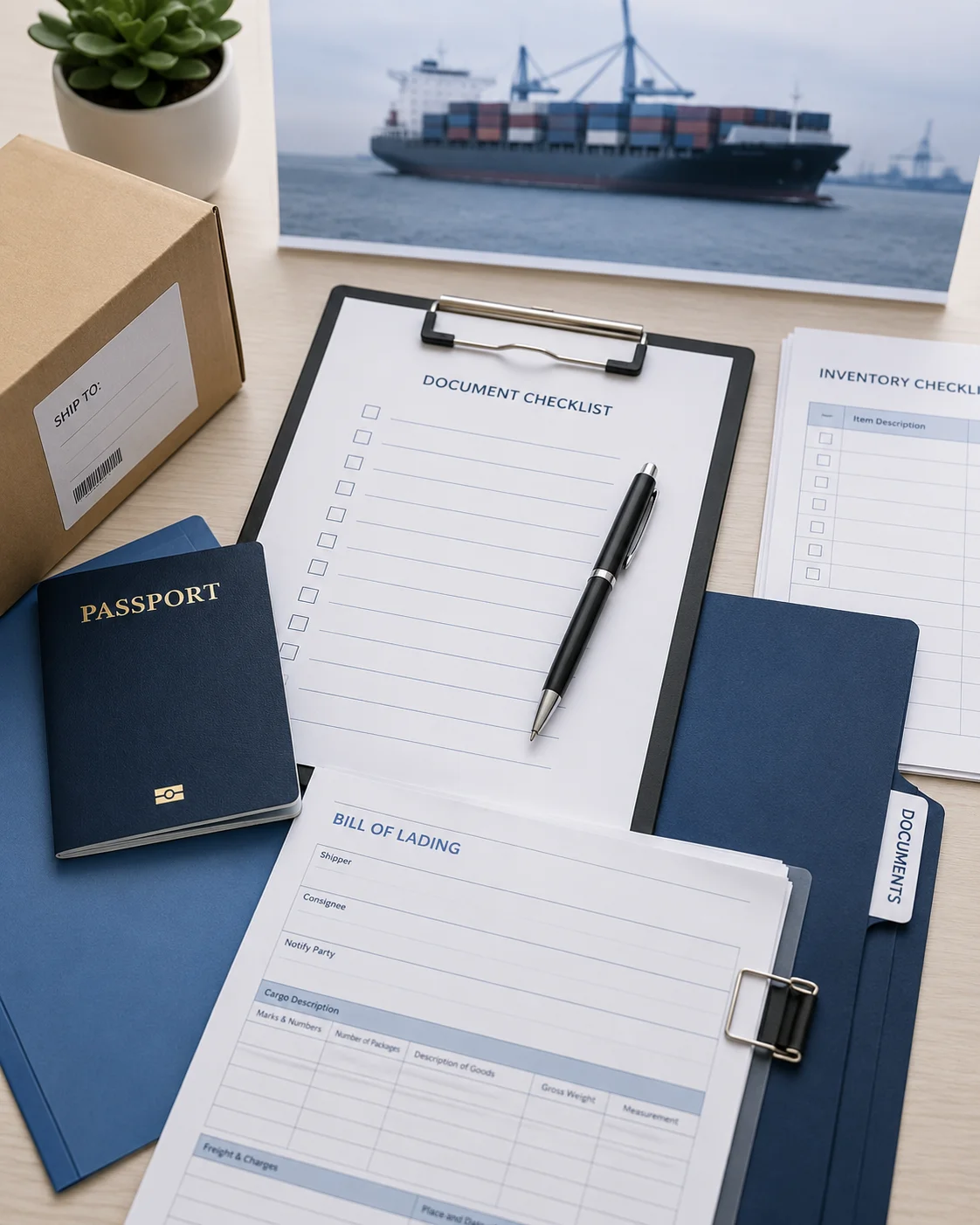
Documents required for importing used household goods, personal effects, and related shipments.
- Copy of passport
- Original bill of lading (OBL) or air waybill (AWB)
- Packing list with comprehensive inventory including declared values
- Resident visa issued by the Ministry of the Interior (if returning from abroad)
- Copy of passport
- Original bill of lading (OBL) or air waybill (AWB)
- Packing list with comprehensive inventory including declared values
- Tax exemption form
- Letter of request to the Ministry of Foreign Affairs for customs clearance permission
- Work permit or working visa
- Resident visa issued by the Ministry of the Interior
- Copy of passport
- Original bill of lading (OBL) or air waybill (AWB)
- Packing list
- Tax exemption form
- Letter of request to the Ministry of Foreign Affairs for customs clearance permission
- Note Verbale (memo letter) from the Embassy or international organisation
Specific Information
Bank guarantee / deposit: Not typically required for personal effects. However, all shipments are subject to customs inspection and valuation. Customs may reassess duties if goods are found to be inconsistent with declared values.
Tax registration / EORI: Afghanistan does not use an EORI system. Importers of record must either enter into a contract with an Afghan entity or register as a legal person operating in Afghanistan.
ISPM 15 (wood packaging): Afghanistan does not currently require the fumigation of wood packaging materials (WPM) with ISPM 15. However, movers should confirm this at the time of shipment, as regulations may change.
Resale / disposal restrictions: Goods imported duty-free as personal effects should not be resold or disposed of commercially. Goods found in commercial quantities may be subject to duties and penalties.
Loading / packing notes: A detailed, valued inventory is required. The bill of lading or air waybill must be clearly labelled "In transit to Afghanistan via [transit country]" when routing through a third country. All foreign currency must be declared upon arrival.
Duties & Taxes
Duty-free conditions: Used household goods and personal effects are duty-free for returning Afghan nationals and for foreign citizens with a valid work permit/working visa, provided all required documentation is submitted. Foreign diplomats, members of government, and staff of international organisations are granted tax- and duty-free entry of their personal effects and household items, whether new or used. Items intended for personal use by foreigners working in Afghanistan are exempt under the terms and conditions of their contract (per Article 43 of the Afghan Customs Law). New goods, goods in commercial quantities, and goods intended for resale are not eligible for duty-free import and may attract customs duty at rates averaging 10–16% depending on the item category.
Prohibited & Restricted Items
Prohibited Items
- Firearms, explosives, and daggers `RESTRICTED` — Weapons of all kinds are prohibited for civilian import
- Alcohol and foodstuffs `RESTRICTED` — Alcohol is prohibited except for the 2-litre personal-use exception for air passengers; foodstuffs in commercial quantities are prohibited
- Pornography and obscene materials — Strictly prohibited
- Anti-Islamic materials and literature — Strictly prohibited
- Narcotics — Strictly prohibited
- Recorded media (CDs, DVDs, audiotapes, videotapes) `PERMIT REQUIRED` — Require Ministry of Culture approval; content deemed contrary to Islam or Afghan culture is banned under the 2021 guidance and the 2024 PVPV law
- Parlour video games or parts thereof — Prohibited
- Goods in commercial quantities — Prohibited within personal effects shipments
- Certain rare bird species `CITES` — Transport of some species of rare birds is prohibited; check CITES listings
- Content depicting women or containing music `RESTRICTED` — Under the August 2024 Promotion of Virtue and Prevention of Vice (PVPV) law, media content showing women or containing music is subject to prohibition; this may affect items within household shipments such as artwork, photographs, and recorded media
Restricted / Dutiable Items
International Imports (All Modes)
- Alcohol: 2 litres permitted for personal use for commercial air passengers only. Alcohol is otherwise prohibited.
- Tobacco: A reasonable amount of tobacco products for personal use (no specific quantity published).
- Perfume: Any amount of perfume is permitted for personal use.
- Accompanied luggage: The total value of accompanied luggage should not exceed USD $500.
- Antiques, carpets, furs, and camera film: Permit required for both import and export.
- Film cameras and film: Require an import permit.
- Currency: All foreign currency must be declared upon arrival. Foreign currencies taken out must equal the amount imported and declared. Up to AFN 50,000 in local currency may be exported. An "Ansari Application Form" is required for amounts over AFN 100,000.
- Communication equipment: Requires approval from the Ministry of Communications.
- Medicines: Require certification from the Ministry of Public Health.
- Armoured vehicles: Require Ministry of Interior certification.
Exports (for reference)
- Permits are required for the export of furs, carpets, antiquities, and camera film.
Importing a Used Personal Vehicle
Required Documents
- Copy of passport
- Original bill of lading (OBL) or air waybill (AWB)
- Original commercial/purchase invoice or original sell contract (if vehicle is not owned by the importer)
- Original vehicle license / registration certificate
- Original certificate of title
- Tax exemption form (for diplomats and exempt personnel)
- Vehicle identification number (VIN) — must be indicated on the OBL/AWB
- Request letter for customs clearance permission addressed to the Ministry of Foreign Affairs and the Ministry of Finance
- Note Verbale (memo letter) from the Embassy or NGO/international organisation (for diplomatic imports)
Specific Information
Prior authorisation: The import of motor vehicles requires prior authorisation from the Ministry of Commerce in Kabul.
Who may import: Only foreigners holding a valid work permit or working visa, and diplomats, are permitted to import vehicles into Afghanistan. Tourists are not permitted to import vehicles.
Ownership duration requirement: No specific minimum ownership duration is published, but the vehicle must have proper title documentation.
Vehicle age / type restrictions: Left-hand drive vehicles are permitted. There is no general age restriction on the import of used passenger vehicles. However, industrial-use vehicles (trucks and vehicles carrying more than 10 persons) older than 10 years are generally prohibited. Note: The Taliban government extended a policy for undocumented ("one-key") vehicles through the end of Afghan solar year 1405 (approximately March 2027), allowing temporary documentation for previously unregistered vehicles. Right-hand drive vehicles are not officially prohibited but are discouraged and have contributed to traffic issues.
Duties and taxes: Private vehicles are taxed at between 10% and 16%, depending on model and year, calculated on the CIF value (Cost + Insurance + Freight). Trucks and buses are taxed at a rate of 2.5%. A value-added tax (VAT) of around 10% may also apply. Diplomats and certain privileged expatriates are exempt from all duties and taxes with appropriate documentation.
Technical inspection: All imported vehicles are subject to physical inspection at the port or border entry point. Vehicles that are excessively damaged, poorly maintained, or inconsistent with documentation may face delays, reassessment of duties, or refusal of clearance. All motor vehicles must have number plates when operating on public roads.
Registration deadlines: No specific published deadline, but vehicles must be registered with the traffic department before use on public roads. Drivers must hold a valid national or international driving licence. The minimum driving age is 18.
Homologation: No formal homologation process is published. However, vehicles must comply with Afghan traffic regulations, including right-hand-side driving.
Temporary plates: No formal temporary plate system is widely published. Consult the destination agent for current arrangements.
Shipping route: Afghanistan is landlocked. Vehicles have traditionally been shipped via the Port of Karachi in Pakistan and then transported overland. See the Consignment Instructions section for critical updates on the Pakistan transit route.
Pets
- ISO 15-digit microchip (compliant with ISO 11784/11785), implanted before rabies vaccination From All Countries
- Certificate of rabies vaccination, issued at the point of origin, accompanying the animal From All Countries
- Veterinary health certificate issued by a licensed veterinarian within 10 days of departure From All Countries
- Government endorsement of the health certificate by the national veterinary authority of the country of origin From All Countries
- Pet passport (if available from the country of origin) From All Countries
Identification: Pets must be identified with a 15-digit ISO-compliant microchip (ISO 11784/11785) prior to entering Afghanistan. If the microchip is not ISO-compliant, the owner must provide a compatible scanner. The microchip must be implanted before the rabies vaccination is administered.
Minimum age: Puppies and kittens should not be vaccinated for rabies prior to 3 months of age, which effectively sets a minimum import age of approximately 4 months (allowing for the required post-vaccination waiting period).
Rabies vaccination timing: All cats and dogs must be vaccinated for rabies between 30 days and 12 months prior to entering Afghanistan. The vaccination certificate and veterinary health certificate must be issued within 30 days of arrival in Afghanistan. Some sources indicate the vaccination window as 21 days to 1 year before arrival — confirm the current requirement with the destination agent.
Other vaccinations: Dogs should be vaccinated against distemper, hepatitis, leptospirosis, and parvovirus. Cats should be vaccinated against feline viral rhinotracheitis, panleukopenia, and feline leukemia. These should be recorded on the health certificate.
Rabies titer test: Afghanistan does not require a rabies titer test for cats and dogs from any country. However, pets originating from countries classified by the CDC as high risk for rabies (Afghanistan is itself classified as high risk) should travel with a titer test, particularly if they may later be re-exported to the United States or EU countries.
Health certificate: A licensed veterinarian in the country of origin must complete the health certificate within 10 days of entry. A government veterinarian must either issue or endorse the certificate.
Quarantine: Quarantine is not required. However, the owner must be present at the time of clearance. Veterinary officials must be notified in advance so they are available to inspect the pet upon arrival.
Entry method: Pets must enter Afghanistan as air cargo via Hamid Karzai International Airport in Kabul. An IATA-compliant pet crate is required. Dogs may enter as cargo only (not in-cabin on most routes).
Banned breeds: Afghanistan does not publish a list of banned breeds.
CITES: If the pet is not a dog, cat, or ferret — particularly turtles, parrots, or other exotic species — verify whether it is protected under CITES. Additional permits will be required. The transport of some species of rare birds is specifically prohibited.
Common mistakes: Failing to have the rabies vaccination issued before departure from the origin country (it must accompany the animal). Failing to notify Afghan veterinary officials in advance of arrival. Not having the microchip implanted before the rabies vaccination. Using a non-ISO-compliant microchip without providing a compatible scanner.
Consignment Instructions
Recommended: Contact the destination agent to ensure all requirements have been met prior to import, especially for differences regarding air / sea / road shipments.
Inventory requirements: A comprehensive, detailed inventory with declared values is required. Documentation should be in English or accompanied by an English translation.
Inspection: All shipments are subject to inspection by Afghan customs.
Timing / shipment arrival: The owner should be present at the destination when the shipment arrives. There is no published deadline for shipment arrival relative to the owner's arrival, but clearance cannot proceed without the owner or an authorised representative present.
Owner presence: Yes — the owner or their authorised agent must be present for customs clearance.
Routing / transit: Afghanistan is landlocked and has no seaport of its own. Shipments have traditionally been routed via the Port of Karachi, Pakistan (approximately 1,400 km from Kabul, 3–4 days transit, ~$2,000 per 40-foot container under normal conditions). Air shipments arrive via Hamid Karzai International Airport (Kabul), Mawlana Jalaluddin Mohammad Balkhi International Airport (Mazar-i-Sharif), Khwaja Abdullah Ansari International Airport (Herat), or Ahmad Shah Baba International Airport (Kandahar).
CRITICAL TRANSIT ALERT (April 2026): The Pakistan–Afghanistan border has been closed since October 2025 following military clashes between Taliban forces and Pakistani security forces. As of late February 2026, all major border crossings — including Torkham, Spin Boldak/Chaman, and Ghulam Khan — remain closed indefinitely to commercial and pedestrian traffic. Thousands of transit containers are stranded at Karachi Port and at border crossing points. Pakistan's Federal Board of Revenue has allowed re-export of stranded Afghan transit cargo from border points back to Karachi for re-routing. Alternative routes: Iran's Chabahar Port has been used as an alternative (developed with Indian investment), but regional conflict involving Iran has severely disrupted this corridor as well. Northern overland routes via Central Asia (Uzbekistan, Turkmenistan) are available but significantly more expensive ($4,500–$7,200 per container) and slower (15–25 days). Until the security situation stabilises, all shipments to Afghanistan should be coordinated closely with the destination agent, and air freight should be considered where feasible. The situation is highly fluid and changes frequently.
Demurrage / detention: All surface shipments will incur container detention and demurrage on average of 30 days. The average detention period is 60 days. Detention can be avoided by using a shipper-owned container (SOC). During border closures, detention periods are indefinite and costs escalate rapidly.
Special territories: Afghanistan does not have overseas territories or autonomous regions with separate customs regimes.
Unpredictable expenses: Container detention and demurrage fees, storage charges during border closures, re-routing costs via alternative corridors, customs inspection fees, and currency declaration-related issues. Afghan customs procedures and charges can be inconsistent and non-transparent, and informal fees may be encountered.
Cultural & Other Information
- OpenFactBook (replaces CIA World Factbook): https://www.openfactbook.org/countries/afghanistan/
- Wikipedia: https://en.wikipedia.org/wiki/Afghanistan
- Afghan Customs Department: https://customs.mof.gov.af/english
- Ministry of Finance: https://mof.gov.af/en
- Ministry of Foreign Affairs: https://mfa.gov.af/en/home-en
- Afghanistan Revenue Department: https://ard.gov.af/english
- Afghan Customs Law (full text, PDF): https://mof.gov.af/sites/default/files/2019-02/847-Customs%20law.pdf
Key country facts: Afghanistan is a landlocked country in South and Central Asia, bordered by Pakistan, Iran, Turkmenistan, Uzbekistan, Tajikistan, and China. The official languages are Dari and Pashto. The currency is the afghani (AFN). The country has been governed by the Taliban (Islamic Emirate of Afghanistan) since August 2021. No country except Russia has formally recognised the Taliban government as of April 2026. Driving is on the right-hand side of the road.
Important cultural notes for shipments: Under the August 2024 Promotion of Virtue and Prevention of Vice (PVPV) law, a range of items may be considered contrary to Islamic values by Afghan customs officials. This includes recorded music, films or images depicting women, and materials deemed anti-Islamic. Movers and shippers should advise customers that items of this nature within household goods shipments may be confiscated or may cause delays at customs. Playing music in vehicles is prohibited. The overall regulatory environment can be unpredictable, and movers should maintain close contact with the destination agent throughout the process.
Regulatory Updates
- March 2026: The Taliban government extended its policy allowing temporary documentation for undocumented ("one-key") vehicles through the end of Afghan solar year 1405 (~March 2027).
- October 2025 – present: All Pakistan–Afghanistan border crossings closed due to military hostilities. Commercial transit via Karachi is effectively suspended. Re-export of stranded cargo authorised by Pakistan's FBR.
- August 2024: The Promotion of Virtue and Prevention of Vice (PVPV) law was enacted, introducing additional restrictions on media content, women's public presence, and items deemed contrary to Islamic values. This may affect customs inspection of household goods containing music, films, artwork, or photographs.
- 2024–2025: UNCTAD's ASYCUDA digital customs system significantly reduced documentation requirements for exempted goods from 14 forms to 1 form, and reduced clearance times at customs headquarters.
Useful resources