

Country Guides
American Samoa

Important: American Samoa, Guam, the Commonwealth of Northern Mariana Islands (CNMI), the U.S. Virgin Islands, Puerto Rico, and other U.S. island territories are subject to the importation rules of the United States. However, each territory has additional requirements to protect its delicate ecosystem. American Samoa's quarantine and biosecurity regulations are significantly stricter than the mainland United States, particularly regarding pets and agricultural products. An individual is generally considered a bona fide resident of a territory if they are physically present for 183 days during the taxable year, do not have a tax home outside the territory, and do not have a closer connection to the U.S. or a foreign country. American Samoans are U.S. nationals (not U.S. citizens), and the territory has its own immigration system administered by the American Samoa Government, not USCIS.
Start here
Overview
Explore sections
Guide Details
Household Goods
Documents
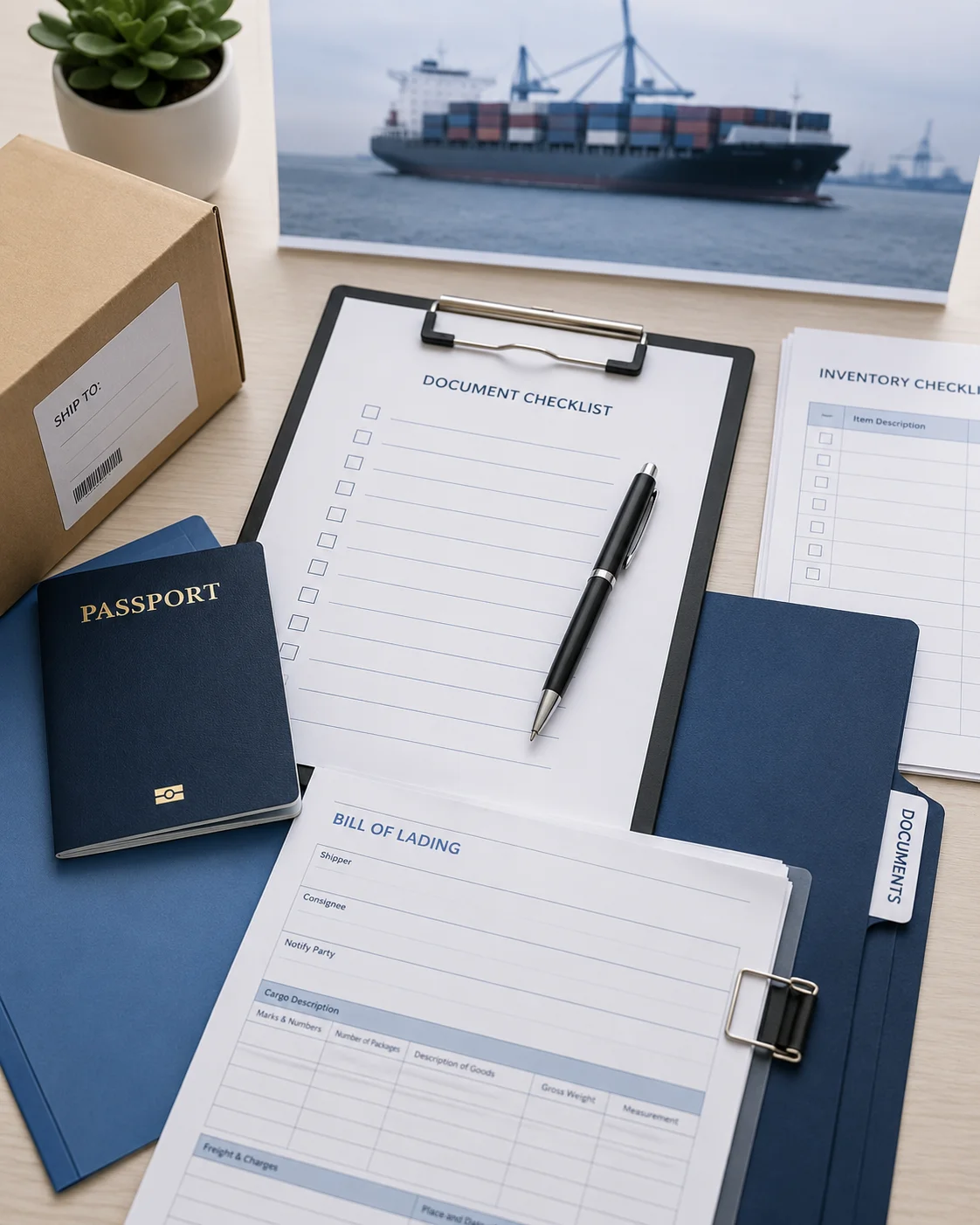
Documents required for importing used household goods, personal effects, and related shipments.
- Copy of passport (some ports require passports for all family members listed on the CF-3299)
- Customs Form CF-3299 (Declaration of Free Entry of Unaccompanied Articles)
- Supplemental declaration (required by most ports)
- Detailed inventory in English
- Copy of permanent resident card (if applicable)
- I-94 stamp/card (for foreign nationals; indicates length of admission)
- Copy of bill of lading (OBL) or air waybill (AWB)
- Importer Security Filing (ISF) — must be filed prior to vessel sailing from last foreign port
- All of the above, plus:
- Copy of visa (must be a long-term visa; not B1/B2 visitor's visa for duty-free import of household goods)
- American Samoa entry permit (required for all non-U.S. nationals; apply at https://legalaffairs.as.gov/visitor-visa-home at least 72 hours in advance)
- Form DS-1504 (submitted to the Department of State by the Consulate/Embassy at least 10 days prior to arrival of shipment)
- A-1 visa
- Brokers are not allowed to clear Customs on CF-3299 entries for foreign diplomats holding A-1 visas
Specific Information
New items within shipments: Items used less than 12 months must be listed in detail on the back of Customs Form CF-3299, including item description, quantity, material composition, value paid in USD, and country of origin.
Importer Security Filing (ISF): Critical for all ocean shipments. The ISF must be filed prior to the vessel sailing from the last foreign port. Failure to file timely results in penalties.
Customs examination: Customs and other government agencies can require examinations that cost USD 200–1,700 or more per full container load (FCL) shipment.
Inventory requirements: Do not indicate "packed by owner" (PBO) or use miscellaneous descriptions on the detailed inventory.
Biosecurity: American Samoa has strict biosecurity regulations enforced by the Department of Agriculture. All agricultural products (meat, poultry, seafood, dairy, fruits, vegetables, plants, seeds, honey) must be declared. Outdoor and sports equipment must be thoroughly cleaned and free from soil and biological material. A US$25 penalty applies for undeclared agricultural items, plus a US$5 permit fee.
Duties & Taxes
Duty-free conditions: Household goods must have been used at least 12 months in the foreign household prior to shipment from the origin country. The owner must hold a proper long-term visa (not a B1/B2 visitor's visa). Short-term visitors can only import personal effects (clothing, camping gear, toiletries, etc.). Most household items used less than 12 months will require duty.
Prohibited & Restricted Items
Prohibited Items
- Illegal drugs and drug paraphernalia — Strictly prohibited
- Pornographic materials — Prohibited
- Counterfeit items or items inappropriately using a federally registered trademark — Prohibited
- Products made from dog and cat fur — Prohibited
- Flavoured cigarettes, including cloves — Prohibited
- Cuban cigars — Prohibited (subject to US embargo; confirm current status)
- Blank tapes and CDs from Iran — Prohibited (subject to US embargo; confirm current status)
- Haitian animal hide drums — Prohibited
- Absinthe (containing thujone) — Prohibited
- Tuna — Prohibited for import (American Samoa has its own tuna cannery industry)
- Firearms, explosives, and ammunition `PERMIT REQUIRED` — Complex rules apply:
- Firearms previously owned and shipped from the USA may be re-imported if the owner can prove to Customs they were originally sent from the USA (best method: register with Customs prior to export)
- Foreign-purchased weapons require import via a Federal Firearms permit holder; some exceptions allow individuals to apply directly to ATF (apply at least 6 weeks in advance; the application must name the Customs broker)
- Not all weapon types can be imported
- Ammunition should not be shipped as it is a hazardous good
Restricted / Dutiable Items
Duty-Free Allowances (Travellers)
- Alcohol: 1 bottle of spirits (includes wine), plus 1 case of beer
- Tobacco: 1 carton of cigarettes
- Quantities exceeding these limits are subject to duty calculated as a percentage by Customs upon arrival
Restricted Items
- Plants and seeds `PERMIT REQUIRED` — Import permit required from Department of Agriculture
- Soil `PERMIT REQUIRED` — Import permit required
- Meats and meat byproducts (including bouillon soups) — Must be declared; restrictions apply
- Fruits and vegetables — Must be declared; subject to quarantine inspection
- Medications — Prescription medications over 30 days' supply require a doctor's note (preferably in English)
- Game and hunting trophies — Subject to restrictions
- Gold — Restricted
- Merchandise from embargoed countries `PERMIT REQUIRED` — License from the Office of Foreign Assets Control required
- Textiles and clothing — May be subject to duty
- Fish and wildlife products (ivory, skins, feathers, shells) `CITES` — Regulated by Fish and Wildlife Service; many require CITES permits or are prohibited; permits cannot be issued after shipment leaves origin
- Alcohol within household shipments — Governed by both federal and territory laws; if Customs deems the amount excessive, a licensed alcohol importer must file a commercial entry
- Food items — Import strongly discouraged; requires detailed inventory for food and drug filings and duty payments
- Weapons — See Prohibited Items; complex rules for previously US-owned firearms vs. foreign-purchased firearms
Antiques, Artefacts, Carpets, Paintings
- Antiques must be at least 100 years old (recently purchased antiques should show circa date on invoice); antiques are duty-free
- Carpets of Iranian origin used in the foreign household for at least 1 year and imported with household goods are generally approved, but large quantities or new carpets are discouraged due to the US embargo on Iranian-origin goods
- Paintings of nominal value can be shipped with household goods
- Artefacts should not be shipped without first checking with the USA agent and the country of export, as CITES treaties may apply
Importing a Used Personal Vehicle
Required Documents
- Original bill of lading (OBL) Foreign-Purchased Vehicles
- Bill of sale or pro-forma invoice with statement of value (must include vehicle description, VIN, model, and year of manufacture) Foreign-Purchased Vehicles
- Title of ownership translated into English Foreign-Purchased Vehicles
- Environmental Protection Agency (EPA) Form 3520-1 Foreign-Purchased Vehicles
- Department of Transportation (DOT) Form HS-7 Foreign-Purchased Vehicles
- EPA Form EPA-3520-21 (if applicable) Foreign-Purchased Vehicles
- Proof of conformity (one of the following: USA title/registration, letter of conformity from manufacturer, foreign military sales contract indicating compliance, or exemption as a 25+ model year vehicle) Foreign-Purchased Vehicles
- Copy of USA title or registration Vehicles Previously Owned and Shipped from the USA
- Completed EPA-3520-1, DOT HS-7, and Customs 7501 forms Vehicles Previously Owned and Shipped from the USA
- Ownership names must match the consignee on the vehicle title and registration Vehicles Previously Owned and Shipped from the USA
- Letter of permission from the EPA (required prior to shipping) Non-Residents Importing Temporarily (Tourists)
- Bond may be required (up to 3x the vehicle value at some ports of entry) Non-Residents Importing Temporarily (Tourists)
Specific Information
EPA/DOT compliance: Vehicles less than 25 model years old that were not previously titled in the USA must comply with EPA and DOT regulations. The cost and time to bring a non-compliant vehicle into compliance through a certified conversion shop (ICI) make this economically unwise in most cases. It is strongly recommended not to import non-compliant vehicles.
25-year exemption: Vehicles that are 25 model years old with the original drive train are generally exempt from EPA/DOT regulations.
Separate shipping: Non-compliant vehicles should be sent separately from household goods shipments to avoid delays in receiving the household shipment.
Temporary importation (non-residents): Non-USA residents may import a vehicle for up to 12 months as a tourist. No extension is allowed. The vehicle may not be sold or offered for sale. It must be exported before the 12-month period expires or is subject to seizure and penalties. Some ports require a bond of up to 3x the vehicle value.
Marine engines and generators: Gas-powered marine engines and generators are also subject to EPA requirements and Form EPA-3520-21.
ICI arrangement: Owners must make arrangements with a certified conversion shop in the USA prior to shipping to get an estimate and determine if the vehicle can be brought into compliance.
Driving: Driving is on the right-hand side of the road.
Pets
- Import permit from the American Samoa Department of Agriculture (must be obtained before arrival)
- ISO 15-digit microchip (ISO 11784/11785), implanted before rabies vaccination
- Rabies vaccination certificate (current; administered at least 30 days before arrival)
- Rabies booster (must be no less than 3 months and no more than 1 year after the initial vaccination)
- Rabies titer test (at least 30 days after vaccination; required for pets from non-rabies-free countries)
- Veterinary health certificate in English, issued not more than 14 days before arrival
- Proof of spay/neuter (all imported dogs and cats must be spayed or neutered; unaltered pets will be confiscated)
- Proof of treatment for internal parasites (dogs) and external parasites (dogs and cats)
- Screwworm inspection certificate (for pets from certain countries; 1–5 days before travel)
CRITICAL: Importation is restricted by law. Under American Samoa Code 24.0317, the importation of dogs and cats is strictly prohibited with the following exceptions: pets may be imported from Hawaii, New Zealand, Australia, the continental United States, Guam, and the Pacific Island Trust Territories (Marshall Islands, Caroline Islands, Palau Islands, and Northern Mariana Islands). Imports from other countries should be from nations classified as rabies-free by the World Organisation for Animal Health. The Director of Agriculture has authority to set additional terms and conditions. Any dog or cat arriving without complete compliance will be returned to its place of origin at the owner's expense, or destroyed if the owner is unavailable or unable to bear return costs.
Spay/neuter requirement: All imported dogs and cats must be spayed or neutered. This was enacted via executive order to control the stray animal population. The owner must present a health certificate from a licensed veterinarian certifying the animal is neutered/spayed. Unaltered pets will be confiscated upon arrival.
Banned breeds: Pit Bull breeds and their crosses, as well as American Bull Terriers, are prohibited from entry.
Quarantine: Emotional support animals (ESA) are subject to quarantine for 3–5 days upon arrival. Service animals meeting all requirements may not be separated from their handler. The Department of Agriculture may impose quarantine at its discretion for any animal.
Entry method: Pets must enter via Pago Pago International Airport as air cargo. An IATA-compliant pet crate is required. Commercial transport options into American Samoa are extremely limited. Advance notification to veterinary services of the pet's itinerary is required.
Advance documentation: All necessary documentation must be submitted to the Department of Agriculture at least 14 days before arrival to receive a permit number.
Health inspection at arrival: All pets are inspected at the port of arrival. The customs veterinarian fee is approximately EUR 50/USD equivalent per pet.
Minimum age: Puppies and kittens must be vaccinated for rabies (minimum 12 weeks old), must have a booster 3 months later, and must wait 30 days before travel. The effective minimum import age is approximately 7 months.
Transit via Hawaii: Pets transiting through Hawaii must comply with Hawaii's own strict pet import requirements, which include a 120-day quarantine preparation process. Contact the destination agent for current Hawaii transit requirements.
Common mistakes: Attempting to import from a non-approved country of origin. Failing to obtain the import permit in advance. Importing an unaltered (not spayed/neutered) animal. Importing a banned breed. Not having the rabies booster in addition to the initial vaccination.
Consignment Instructions
Recommended: Contact the destination agent to ensure all requirements have been met prior to import, especially for differences regarding air / sea shipments.
Inventory requirements: A detailed inventory in English must be prepared at the time of packing. Items purchased abroad and used less than 12 months should be individually itemised on the back of CF-3299 with description, quantity, material, USD value, and country of origin.
ISF filing: The Importer Security Filing must be filed prior to the vessel's departure from the last foreign port for all ocean shipments. This is the origin agent's responsibility.
Biosecurity inspection: All shipments are subject to quarantine/biosecurity inspection by the Department of Agriculture. Equipment, outdoor gear, and agricultural products will be inspected. Items must be clean and free of soil and biological material.
Routing / transit: American Samoa is extremely remote, located in the South Pacific approximately halfway between Hawaii and New Zealand. The main port of entry is Pago Pago Harbor (Tutuila Island) for sea freight and Pago Pago International Airport for air freight. Shipping options are limited. Hawaiian Airlines operates bi-weekly flights from Honolulu. Samoa Airways and Talofa Airways offer flights from Apia (Samoa) and Tonga. The Samoa Shipping Corporation operates a weekly ferry between Samoa and American Samoa. Sea freight from the US mainland is typically routed via Honolulu.
Customs examination costs: Government examinations can cost USD 200–1,700+ per FCL shipment.
Currency: The US dollar (USD) is the currency. Cash economy predominates outside hotels; credit cards are limited.
Health declaration: All travellers must complete a health declaration (available online at travel.doh.as or on paper upon arrival).
Special territories: American Samoa consists of five main islands (Tutuila, Aunu'u, and the Manu'a group: Ta'u, Ofu, Olosega) plus two coral atolls (Swains Island, Rose Atoll). Most infrastructure and port services are on Tutuila (Pago Pago). Inter-island transport to Manu'a is limited.
Cultural & Other Information
- OpenFactBook (replaces CIA World Factbook): https://www.openfactbook.org/countries/american-samoa/
- Wikipedia: https://en.wikipedia.org/wiki/American_Samoa
- American Samoa Department of Agriculture: https://doa.as.gov/ *(TLS certificate issue as of June 2026 — verify availability)*
- American Samoa Department of Legal Affairs (Entry Permits): https://legalaffairs.as.gov/
- Visit American Samoa: https://www.visitamericansamoa.org/
- U.S. Department of the Interior — American Samoa: https://www.doi.gov/oia/islands/american-samoa
- American Samoa Bar Association (Quarantine Code): https://asbar.org/regulation/24-0317-dog-and-cat-importation-prohibited-exceptions/
Key territory facts: American Samoa is an unincorporated, unorganised territory of the United States in the South Pacific, approximately 2,600 miles southwest of Hawaii. The capital is Pago Pago on the island of Tutuila. The population is approximately 55,000. The official languages are Samoan and English. The currency is the US dollar. American Samoans are US nationals, not US citizens. The territory has its own immigration system separate from mainland USCIS. Electrical system is 120V/60Hz (US standard). Time zone is UTC-11.
Important cultural notes: Samoan culture (fa'a Samoa) is deeply traditional and communal. The territory takes biosecurity extremely seriously due to its isolated and fragile island ecosystem. Movers should advise customers that import restrictions, particularly for pets, agricultural products, and biological materials, are far stricter than mainland USA.
Regulatory Updates
- 2021–present: American Samoa requires all imported dogs and cats to be spayed or neutered, enforced via executive order and ongoing quarantine regulations.
- 2021: Service animals and emotional support animals were permitted for import under new emergency rules, following a federal ADA lawsuit. Specific quarantine and documentation requirements apply.
- 2016: Executive order established moratorium on importation of unaltered (not spayed/neutered) pets.
- Pit Bull ban: American Samoa prohibits the import of Pit Bull breeds, their crosses, and American Bull Terriers. This prohibition has been in effect for multiple years and remains active.
Useful resources
Quick Links & Resources
N/A (U.S. territory; consular services provided by U.S. Embassy / State Department)