

Country Guides
The Bahamas

Start here
Overview
Process Step
1 stepThe Bahamas Customs Department is the primary agency. All goods must be declared in writing by the owner or an authorised agent.
Explore sections
Guide Details
Household Goods
Documents
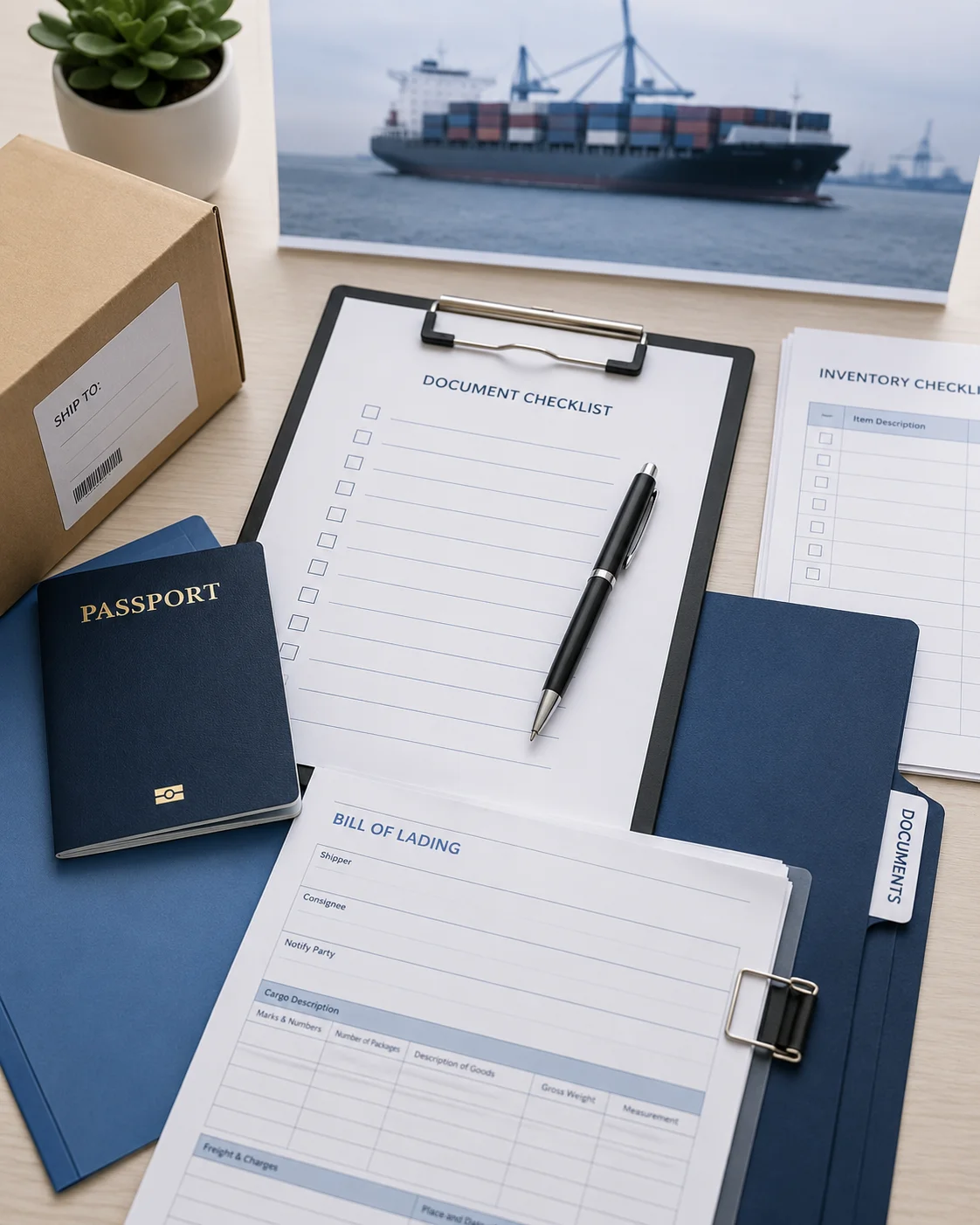
Documents required for importing used household goods, personal effects, and related shipments.
- Home Consumption Entry Form (customs declaration required for all persons importing cargo)
- Bill of lading (OBL) / air waybill (AWB)
- Commercial invoice or receipts (proof of value)
- Freight invoice (proof of freight charges)
- Packing list
- Copy of passport
- Proof of residency or immigration status (work permit, permanent residency, etc.)
Specific Information
Processing fee: 1% customs processing fee (minimum BSD 10, maximum BSD 750).
Environmental levy: Based on the item type, ranging from a fixed amount of BSD 1 to BSD 500 or a percentage of value.
Household goods for permanent residents: Persons relocating to The Bahamas as permanent residents should contact the Bahamas Customs Department and the destination agent regarding duty concessions available for genuine household relocations. The government offers exemption concessions for certain imported goods — details available at https://www.bahamas.gov.bs/exemptions-on-imported-items.
No automatic duty-free import for household goods: Unlike many countries, The Bahamas does not have a blanket "transfer of residence" duty-free exemption for household goods. Most imported goods, including used household items, are subject to customs duty. Specific concessions may be available through application to the government.
Oral vs. written declaration: Visitors with only used personal belongings make an oral baggage declaration. All others must complete a written Baggage Declaration (C17 form) via the Exempt App.
Duties & Taxes
Duty structure: The Bahamas is a duty-based economy (transitioning toward VAT). Customs is the primary agency for collecting duties and taxes at importation. Duty rates range from 0% to 220%, with the average rate between 5% and 35% depending on the item category. Duties are calculated on the CIF value (cost + insurance + freight).
VAT: In addition to customs duty, VAT applies. The rate was recently reduced to 5% on essential products per the 2025/2026 budget. Standard VAT rate may differ for other categories — confirm with the destination agent.
Duty-free exemptions — Residents: Bahamian residents are entitled to a personal exemption of BSD 500, available twice per calendar year, on personal items not intended for sale. This exemption is not cumulative and not transferable. It applies only to items in personal baggage, NOT to goods shipped as cargo.
Duty-free exemptions — Visitors: Bona fide visitors are allowed BSD 100 per trip in duty-free goods.
Prohibited & Restricted Items
Prohibited Items
- Narcotics and illegal drugs — Strictly prohibited
- Counterfeit money and goods — Prohibited
- Pornographic material — Prohibited
- Weapons without permit — Prohibited
- Endangered species and their products `CITES` — Prohibited without permit
Restricted / Dutiable Items
Duty-Free Traveller Allowances
Per the Bahamas Customs Department:
- 200 cigarettes, or 50 cigars, or 454 grams (1 lb) of tobacco products
- 1 quart of spirits and 1 quart of wine (adults only)
- Personal items (clothing, shoes, watches, etc.) not intended for sale
- Other legal items up to BSD 100 in value (visitors) or BSD 500 (residents, twice per calendar year)
Restricted Items
- Firearms and ammunition `PERMIT REQUIRED` — Strictly controlled; permit required from the Royal Bahamas Police Force
- Fruits, vegetables, and dairy products — Restrictions apply; subject to agricultural inspection
- Meat and meat products — Subject to agricultural controls
- Plants and plant material — Subject to phytosanitary controls
- Medicines — For personal use; carry prescriptions
- Precious stones, jewellery, and precious metals in bullion — Must be declared if valued at BSD 10,000 or more and intended for trade
- Currency: Local currency (Bahamian dollar) can be imported with prior Central Bank permission. No restriction on foreign currency import/export. Residents can export up to BSD 70 with Central Bank permission.
2025-2026 Tariff Changes
The Tariff Amendment 2025 (effective July 1, 2025) reduced duties on many everyday items. Energy-efficient appliances, blenders, vacuum cleaners, air purifiers, shampoo, and cleaning solutions all received significant duty reductions or were made duty-free. These changes aim to lower cost of living and encourage energy efficiency.
Importing a Used Personal Vehicle
Required Documents
- Bill of lading (OBL)
- Commercial invoice or bill of sale (proof of value)
- Vehicle registration / title
- Proof of insurance
- Customs entry form
Specific Information
Duties on vehicles: Motor vehicles are subject to customs duty, excise tax, and VAT. The combined rate can be substantial depending on the vehicle type, age, and value. Excise duty rates on vehicles vary.
2025-2026 duty changes: The Tariff Amendment 2025 and Excise Amendment 2025 (effective July 1, 2025) adjusted rates for various goods including vehicles. Check current rates with the Bahamas Customs Department.
Left-hand drive: The Bahamas drives on the LEFT-hand side of the road, but both left-hand and right-hand drive vehicles are permitted.
Driving: Driving is on the LEFT-hand side of the road.
Pets
- Veterinary health certificate from the country of origin Per the Bahamas Customs Department (bahamascustoms.gov.bs):
- Valid rabies vaccination certificate Per the Bahamas Customs Department (bahamascustoms.gov.bs):
- Import permit from the Bahamas Department of Agriculture (apply before travel) Per the Bahamas Customs Department (bahamascustoms.gov.bs):
- Completed customs declaration Per the Bahamas Customs Department (bahamascustoms.gov.bs):
Official authority: The Department of Agriculture handles animal import permits. Contact the Department of Agriculture before travel for specific requirements and the import permit application.
Rabies vaccination: Required for dogs and cats. Must be current.
Health certificate: Must be issued by a licensed veterinarian in the country of origin, typically within 48 hours to 14 days of travel (confirm current requirement with the Department of Agriculture).
Food restrictions: There are restrictions on importing fruits, vegetables, and some dairy items — these apply to items within household shipments as well.
Quarantine: Generally not required if all documentation is in order, but the Department of Agriculture may impose quarantine at its discretion.
Detailed requirements: The Bahamas Customs arriving page states: "Please see Prohibited & Restricted Goods tab for listings. Please see attached URL for requirements and application to travel with an animal." Contact the Department of Agriculture directly for the most current pet import application and requirements.
Consignment Instructions
Recommended: Contact the destination agent to ensure all requirements have been met prior to import, especially for differences regarding air / sea shipments.
Entry form: A Home Consumption Entry Form must be completed and submitted for all cargo imports at the time of arrival.
Documentation: Proof of authorisation for processing, proof of value (invoices/receipts), and proof of freight charges (bill of lading or freight invoice) are the primary requirements.
Customs clearance: The Bahamas Customs Department is the primary agency. All goods must be declared in writing by the owner or an authorised agent.
Routing / port of entry: Nassau (New Providence) is the capital and primary port of entry for most shipments. Freeport (Grand Bahama) is the second major port with its own customs division. The Bahamas comprises over 700 islands; shipping to the out-islands (Family Islands) may require transhipment through Nassau or Freeport.
Freeport / Grand Bahama: The Freeport area operates under the Hawksbill Creek Agreement, which provides duty exemptions for certain businesses operating within the free trade zone. This may affect commercial imports but generally does not apply to personal household goods.
Currency: The Bahamian dollar (BSD) is pegged 1:1 to the US dollar. US dollars are widely accepted throughout The Bahamas.
Cultural & Other Information
- OpenFactBook (replaces CIA World Factbook): https://www.openfactbook.org/countries/the-bahamas/
- Wikipedia: https://en.wikipedia.org/wiki/The_Bahamas
- Bahamas Customs Department: https://www.bahamascustoms.gov.bs/
- Bahamas Government — Customs Information: https://www.bahamas.gov.bs/
- Bahamas Customs — Duty Rate Search: https://importable.app/bahamas/customs/duty-rates
Key country facts: The Bahamas is an archipelago of over 700 islands and cays in the Atlantic Ocean, southeast of Florida and north of Cuba. The capital is Nassau on New Providence island. The official language is English. The currency is the Bahamian dollar (BSD), pegged 1:1 to the US dollar; US dollars are widely accepted. The Bahamas is not part of CARICOM's single market. The economy relies heavily on tourism and financial services. Customs duty is a primary source of government revenue. Driving is on the LEFT-hand side of the road.
Important notes for movers: The Bahamas does not have the typical "transfer of residence" blanket duty-free exemption that most countries offer. This is a significant difference from most other destinations. Household goods shipped as cargo are generally subject to customs duty (5-35% average) plus VAT, processing fees, and environmental levies. The combined import cost can be substantial. Movers should advise customers that relocating to The Bahamas is one of the more expensive destinations for household goods import. Customers should explore any available government concession programmes before shipping. The July 2025 tariff amendments reduced duties on many common items.
Regulatory Updates
- July 2025: Tariff Amendment 2025 and Excise Amendment 2025 effective July 1, 2025. Significant duty reductions on everyday items (blenders, shampoo, cleaning supplies, energy-efficient appliances, cement). Some items made duty-free.
- May 2025: 2025/2026 Budget announced VAT reduction to 5% on essential products. Excise duty on butane fuel removed.
- July 2024: Tariff Amendment Bill 2024 updated duty rates for various items.
- Ongoing: The Bahamas continues transitioning from a primarily duty-based tax system toward a VAT-supplemented model.
Useful resources