

Country Guides
Barbados

Start here
Overview
Explore sections
Guide Details
Household Goods
Documents
Documents required for importing used household goods, personal effects, and related shipments.
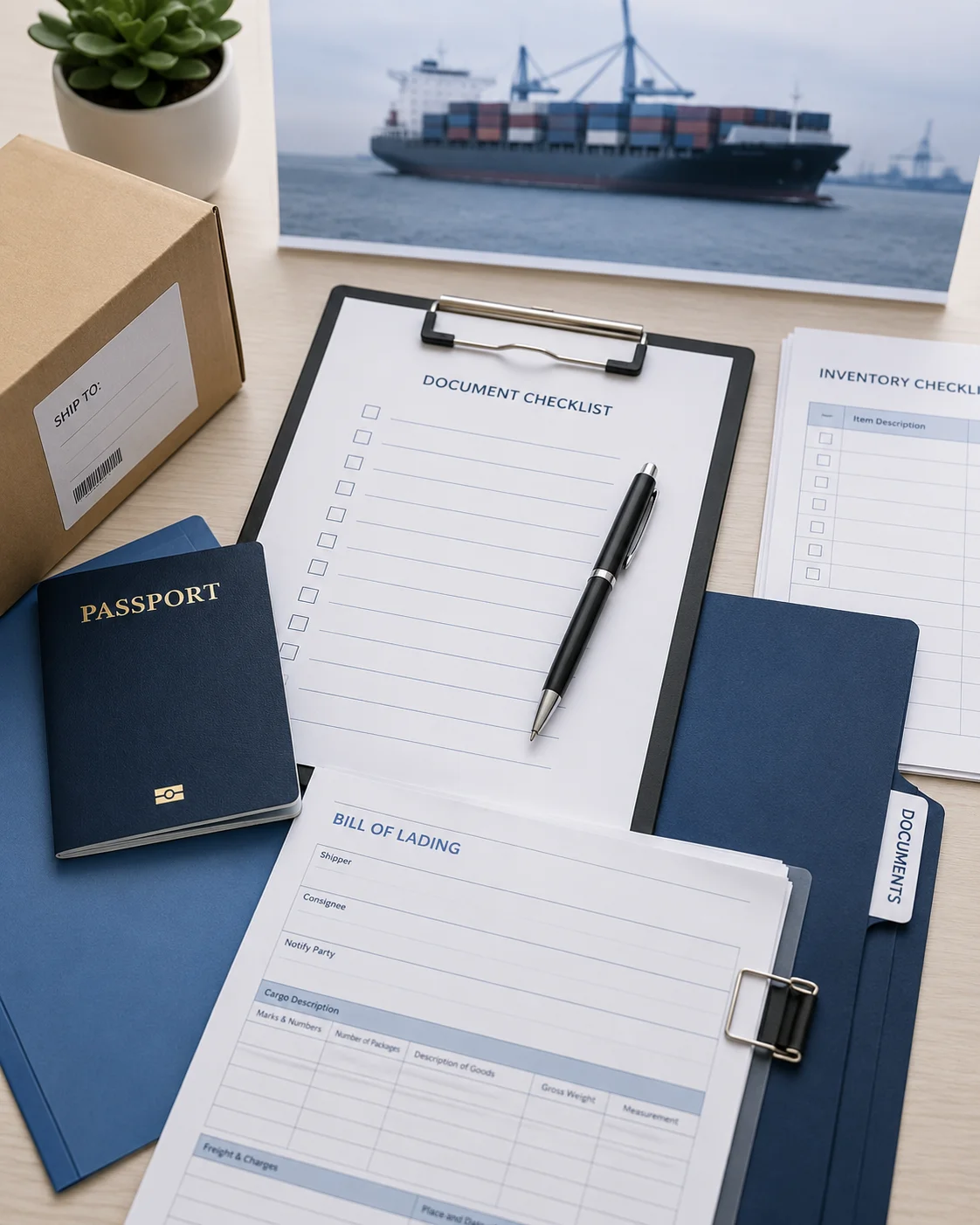
- Passport (alternatives: Barbados ID card, certificate of citizenship, or Barbados birth certificate with photo ID)
- Proof of residence in Barbados
- Detailed inventory
- Original bill of lading (OBL) / express release / air waybill (AWB)
- Original bill of lading and inventory required prior to shipment arrival (for exemption certificate application)
- Diplomatic accreditation (verified by the Ministry of Foreign Affairs)
Specific Information
Customs interview and examination: The client must be available for a customs interview prior to the release of goods and must declare contents to the customs officer. Following the interview, a physical examination by a customs officer is conducted at the importer's residence (for FCL shipments). This at-residence inspection is a distinctive feature of Barbados customs.
Returning Nationals Programme: Barbadian citizens who are at least 50 years old, are citizens by birth/registration/naturalisation/descent, and have lived abroad for 10 or more years continuously prior to resettlement qualify for duty-free concessions on: one motor vehicle per household (imported from outside CARICOM unless relocating from within CARICOM); household effects (used or new); and tools of trade (subject to Customs Department approval). Returning nationals must: provide proof of retirement or resignation from overseas employment; submit documentation proving permanent residence abroad for at least 10 years; and reside in Barbados for at least 183 days annually for a specified period. Vehicles and goods may not be purchased duty-free in Barbados under this programme. Building materials are not covered.
Non-nationals: Used household goods owned for 1+ year are duty-free. New items are subject to applicable duties and taxes.
Temporary importation: Barbados does not subscribe to the international carnet. A customs bond/guarantee must be established and backed by a local financial institution for the value of the duty liability on the shipment. This permits goods to enter without paying duties, on condition they will be re-exported. Items not re-exported are subject to full duties and taxes.
Diplomatic shipments: Usually exempt from customs duties and taxes. The diplomatic agency must apply for an exemption certificate from the Ministry of Foreign Affairs (approximately 4 working days for approval). Clearance can proceed within 1 day after the exemption documents are returned.
Duties & Taxes
Duty-free conditions: Used personal effects and household goods are allowed into Barbados free of duties, provided the items have been owned and in the importer's possession for at least 1 year. Items that are new, purchased within the last year, or unused are subject to duty.
New items within shipments: Subject to import duties. Duty rates vary by item category under the CARICOM Common External Tariff (0-20% for most goods, higher for certain categories). New/commercial furniture attracts approximately 60% duty plus 1% environmental levy plus 17.5% VAT.
Prohibited & Restricted Items
Prohibited Items
- Narcotics and illegal drugs — Strictly prohibited
- Firearms, guns, explosives, and ammunition without permit — Prohibited
- Knives and deadly weapons — Prohibited
- Plants and plant products without authorisation — Prohibited
- Meat and meat products without authorisation — Prohibited
- Pets and animals without proper permit — Prohibited
- Foreign rum and matches — Prohibited
- Bags, clothing, and articles made from camouflage material — Prohibited (this is a distinctive Barbados restriction)
- Radioactive or hazardous materials — Prohibited
- Counterfeit money and goods — Prohibited
- Pornographic material — Prohibited
Restricted / Dutiable Items
Duty-Free Traveller Allowances
- 200 cigarettes or 100 cigarillos or 50 cigars
- 1 litre of spirits and 750ml of wine
- Personal effects not intended for sale
Restricted Items
- Alcohol — 1 litre limit; excess subject to duties and taxes (diplomats exempt)
- Fruits, vegetables, plants, cuttings, seeds, unprocessed plant products `PERMIT REQUIRED` — Must be declared and inspected by a Plant Quarantine Officer; import permit and phytosanitary certificate may be required; fresh fruits from certain countries prohibited
- Meat and meat products `PERMIT REQUIRED` — Special permit from the Ministry of Agriculture required
- Plants and live plants — Must be inspected by Plant Quarantine Division
- Firearms and ammunition `PERMIT REQUIRED` — Both police and government permits required; import licence mandatory; strictly enforced
- Commercial and new furniture — Subject to approximately 60% duty plus environmental levy plus VAT
- Wooden furniture — Must be physically examined by a Plant Quarantine Officer (for FCL, examination at residence during unpacking)
Tax Structure
- Import duties: CARICOM Common External Tariff, generally 0-20% (higher for specific categories: fruits/vegetables 40%, jewellery 60%, watches 50%, motor vehicles 45%, t-shirts 115%)
- Excise tax: 5-60% on alcoholic beverages, tobacco, motor vehicles, and petroleum products; 10% on sweetened beverages
- VAT: 17.5% on most goods and services (8.75% on hotel accommodations)
- Environmental levy: 1% general; higher fixed amounts for vehicles (BDS 1,500-2,000), refrigerators (BDS 15), TVs (BDS 10); 0.75% on CIF value for goods in non-standard containers
Importing a Used Personal Vehicle
Required Documents
- Passport / proof of identity
- Bill of lading (OBL)
- Vehicle registration / title
- Purchase invoice
- Import licence (for certain vehicle types)
Specific Information
Vehicle age and mileage restriction (non-nationals/non-diplomats): Vehicles must be less than 4 years old from date of manufacture AND have odometer readings under 50,000 km. Exceptions: returning nationals (no age/mileage restrictions if all returning national criteria are met, duty-free concessions apply); diplomats (no restrictions with bona fide diplomatic status, duty-free).
Mandatory port inspection: All vehicles packed in containers or co-loaded with household goods must be packed last for mandatory removal at the port for customs inspection and valuation before clearance. Vehicles must be clean with all debris removed from tyres.
Duty rates on vehicles: Substantial, varying by engine capacity, vehicle weight, and value:
- Motor vehicles (HS 87.03) with engine capacity under 1800cc and value not exceeding BDS 45,000: approximately 62.77% excise tax
- Motor vehicles with engine capacity 1800cc+ and value exceeding BDS 45,000: approximately 120%
- Goods vehicles (HS 87.04) under 5 tons and value not exceeding BDS 45,000: approximately 62.77%
- Goods vehicles under 5 tons and value exceeding BDS 45,000: approximately 80.16%
- Goods vehicles over 5 tons: 10%
- Environmental levy: BDS 1,500 (new vehicles) or BDS 2,000 (used vehicles) per vehicle
- Plus 17.5% VAT on top of the above
Returning nationals — duty-free vehicle option: Can now purchase a vehicle duty-free from a local car dealer in Barbados (payment must be via wire transfer from an overseas bank account to the dealer). One vehicle per household.
Boats: An import permit from the Price Control Division of the Ministry of Commerce, Consumer Affairs & Business Development is required before importation.
Driving: Driving is on the LEFT-hand side of the road.
Pets
- Import permit from the Chief Veterinary Officer, Ministry of Agriculture (must be applied for no later than 3 days prior to arrival) Per the Barbados Veterinary Service and T.S. Garraway customs guide:
- Export health certificate from the country of origin (issued within 3 days of arrival) Per the Barbados Veterinary Service and T.S. Garraway customs guide:
- Rabies vaccination certificate Per the Barbados Veterinary Service and T.S. Garraway customs guide:
- Veterinary health certificate confirming the animal is free from disease Per the Barbados Veterinary Service and T.S. Garraway customs guide:
Import permit required: A permit for the import and transhipment of all dogs, cats, caged birds, and poultry must be obtained from the Ministry of Agriculture inside Barbados before the animal arrives.
Health certificate timing: The export health certificate should be issued within 3 days of arrival. The import permit can be applied for no later than 3 days prior to arrival.
Customs clearance: All pets must clear customs upon arrival. Private clearing is not allowed — a customs broker must handle clearance.
Accompanied pets: On arrival, proceed through customs and immigration while the customs broker handles clearance. The pet is collected from the Veterinary Services Receiving Centre (ARC).
Unaccompanied pets: Taken to the Veterinary Services Receiving Centre. The customs broker arranges clearance.
Quarantine: Barbados may impose quarantine depending on the country of origin and disease status. Contact the Chief Veterinary Officer for current requirements.
Official contact: Chief Veterinary Officer, Veterinary Services, Ministry of Agriculture and Rural Development, The Pine, St. Michael, Barbados.
Consignment Instructions
Recommended: Contact the destination agent to ensure all requirements have been met prior to import, especially for differences regarding air / sea shipments.
Customs interview: Mandatory before release of goods. The importer must declare all contents to the customs officer.
At-residence examination: For FCL shipments, a customs officer conducts a physical examination at the importer's residence after delivery. This is standard practice in Barbados.
Minimum clearance time: Allow at least 3 working days.
Vehicles in containers: Must be packed last for mandatory removal and inspection at the port. Do not pack vehicles deep inside containers — they must be accessible.
Routing / port of entry: Bridgetown Port (sea freight). Grantley Adams International Airport (air freight). Barbados is the easternmost Caribbean island. Transit times: approximately 6 days from Miami, 13 days from UK via sea.
CARICOM membership: Barbados is a full member of CARICOM. Goods originating within CARICOM may qualify for preferential duty rates under the Common External Tariff.
Currency: Barbados dollar (BDS), pegged to the US dollar at BDS 2 = USD 1. US dollars widely accepted.
Cultural & Other Information
- OpenFactBook (replaces CIA World Factbook): https://www.openfactbook.org/countries/barbados/
- Wikipedia: https://en.wikipedia.org/wiki/Barbados
- Barbados Customs & Excise: https://customs.gov.bb/ *(TLS certificate issue as of June 2026 — use https://asycuda.customs.gov.bb/ as working alternative)*
- trade.gov — Barbados Import Tariffs: https://www.trade.gov/country-commercial-guides/barbados-import-tariffs
- T.S. Garraway — Barbados Customs Regulations: http://www.tsgarraway.com/barbados-customs-regulations.html
Key country facts: Barbados is an island nation in the Lesser Antilles of the Caribbean, east of the Windward Islands. The capital is Bridgetown. The official language is English. The currency is the Barbados dollar (BDS), pegged 2:1 to the US dollar. Barbados became a republic in November 2021, replacing the British monarch as head of state. It is a full member of CARICOM. The economy relies on tourism, financial services, and light manufacturing. VAT is 17.5%. Driving is on the left-hand side.
Important notes for movers: The at-residence customs examination is Barbados' most distinctive procedural feature. Movers should advise customers that a customs officer will visit their home to inspect the delivered goods. The 1-year ownership requirement for duty-free import of used goods is straightforward. The camouflage material prohibition is unusual and strictly enforced — any clothing, bags, or fabric in camouflage patterns will be confiscated. Vehicle duties are very high (62-120% depending on specifications), making vehicle import expensive for non-returning-nationals. The Returning Nationals Programme has strict eligibility (50+ years old, 10+ years abroad) but generous benefits when it applies.
Regulatory Updates
- Ongoing: The Returning Nationals Programme now allows duty-free purchase of a vehicle from a local Barbados dealer (payment via overseas wire transfer), in addition to the traditional vehicle import option.
- 2021: Barbados became a republic (November 30, 2021), though this did not change customs regulations.
- VAT: Currently at 17.5%, having been adjusted from earlier rates.
Useful resources