

Country Guides
Bhutan

Start here
Overview
Explore sections
Guide Details
Household Goods
Documents
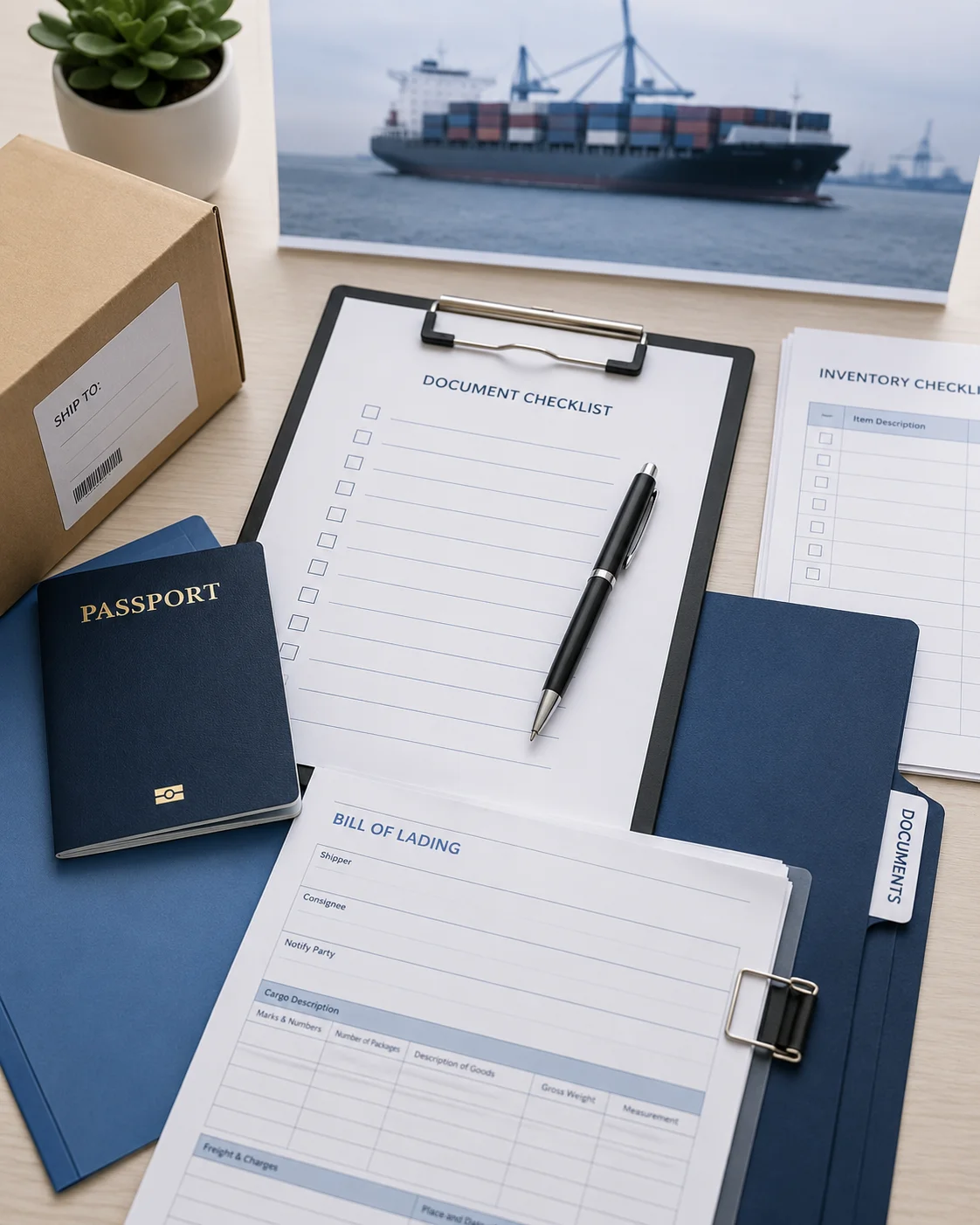
Documents required for importing used household goods, personal effects, and related shipments.
- Passport
- Passenger declaration form (mandatory for all arriving passengers)
- Import licence from the Ministry of Finance (required for all foreign goods imported into Bhutan, except bonafide baggage and permitted gifts)
- Detailed inventory
- Bill of lading / air waybill
- For diplomats and international agency staff: recommendation from the Ministry of Foreign Affairs; exemption application per Annex 6/7 of the Customs Rules and Regulations
Specific Information
Import licence required: Per the Customs Rules and Regulations of Bhutan (2023 revised edition), no foreign goods shall be imported into Bhutan except under the authority of a licence issued by the Ministry of Finance. This applies to cargo shipments of household goods. Bonafide baggage and bonafide gifts as permitted are exempt from the licence requirement.
Used and secondhand goods: The import of used and secondhand goods, machinery, and equipment is strictly restricted and requires an import permit from the relevant authorities.
Duties & Taxes
Duty-free categories:
Diplomats, international agency employees, and members of international voluntary organisations: May import personal and household effects and consumable items duty-free as baggage or cargo during their tenure, subject to the list in Annex 6 of the Customs Rules. The Ministry of Foreign Affairs receives the application and recommends the exemption. These goods are not to be sold or transferred during the employee's posting.
Bhutanese nationals transferring residence to Bhutan: Per Section 161 of the 2023 Customs Regulations, a Bhutanese citizen shall be exempt from payment of customs duty provided the exemptions are in accordance with privileges or relief granted by laws in force. Items in Annex 5 of the Regulations may be imported without payment of customs duty.
Bhutanese nationals returning from duty abroad: Eligible for exemption on personal and household effects upon bonafide transfer to Bhutan.
Bhutanese traveller baggage allowance: Personal effects up to the assessed value of USD 1,000 (or equivalent in Ngultrum), subject to ceilings: 2 bottles of spirits (each not larger than 1 litre), 50g gold, 1 kg silver, 1 bottle perfume (up to 2 oz), maximum 10 pieces of each type of clothing, one piece each of other household/personal goods including electronics and bedding. Gifts and presents are included within this allowance.
Foreign tourists: May import used personal effects and one bottle of spirits (not larger than 1 litre) duty-free. Professional instruments, photographic equipment, video cameras, and electronic goods may be temporarily imported duty-free if declared on arrival and re-exported on departure. Items up to Nu. 10,000 (or equivalent) for personal use, gifts, and souvenirs are duty-free. Dutiable goods for personal use must be declared; if found missing on departure, duty at prevailing market rate is levied.
Non-exempt imports: Subject to customs duty based on the Bhutan Trade Classification (BTC) Customs Tariff. Valuation is on CIF basis.
Prohibited & Restricted Items
Prohibited Items
- Narcotics, psychotropic drugs, and substances — Strictly prohibited
- Pornographic materials — Prohibited
- Antiques — Export strictly prohibited and monitored; import restrictions also apply
- Wildlife products, particularly endangered species `CITES` — Prohibited
- Counterfeit money and goods — Prohibited
- Goods prohibited by international conventions or treaties to which Bhutan is a signatory — Prohibited
Restricted / Dutiable Items
Duty-Free Traveller Allowances
Bhutanese nationals (by air):
- Personal effects up to USD 1,000 assessed value
- 2 bottles of spirits (each not larger than 1 litre)
- 50g gold, 1 kg silver
- 1 bottle perfume (up to 2 oz)
- 10 pieces each type of clothing
- 1 of each type of household/personal goods and electronics
Foreign tourists:
- Used personal effects and articles for the visit
- 1 bottle of spirits (not larger than 1 litre)
- Articles up to Nu. 10,000 for personal use/gifts/souvenirs
Tobacco (SPECIAL RULES)
The sale of tobacco products in Bhutan is banned. However, for personal consumption, import is permitted subject to 100% customs duty AND 100% sales tax (effectively 200% total; 100% if arriving from India):
- 200 cigarettes, OR
- 3 tins of 50g each of pipe tobacco, OR
- 150g of other tobacco products
A proof/receipt of tax payment must be retained and produced on demand. The receipt is valid for only 1 month. Failure to produce the receipt may result in charges of smuggling with a prison sentence of up to 3 years under the Tobacco Control Amendment Act of Bhutan 2014.
Restricted Items
- Arms, ammunition, explosives, and military stores `PERMIT REQUIRED` — Permit from the Royal Bhutan Police / Ministry of Home and Cultural Affairs
- Drugs and pharmaceutical products `PERMIT REQUIRED` — Narcotic/psychotropic medications require a permit from the Drug Regulatory Authority
- Used and secondhand goods, machinery, and equipment `PERMIT REQUIRED` — Restricted
- Gold and silver in excess of free baggage allowance `PERMIT REQUIRED`
- Live animals and their products or by-products `PERMIT REQUIRED` — Permit from BAFRA/Ministry of Agriculture
- Plants and plant materials `PERMIT REQUIRED` — Permit from Ministry of Agriculture; subject to quarantine
- Chemicals and fertilisers `PERMIT REQUIRED`
- Wireless and remote sensing telecommunications equipment `PERMIT REQUIRED` — Permit from the Ministry of Communication
- Religious artefacts `PERMIT REQUIRED` — Permit from the Ministry of Home and Cultural Affairs
- Currency: Foreign currency up to USD 10,000 equivalent may be imported/exported. Amounts exceeding USD 10,000 must be declared.
Importing a Used Personal Vehicle
Required Documents
- Import licence
- Vehicle registration / title from country of origin
- Purchase invoice
- For Bhutanese nationals: proof of at least 2 years' work in a third country; proof the vehicle was procured and registered in their name at least 1 year prior to importation
Specific Information
Foreign diplomats and international organisation staff: May bring in used vehicles on their transfer to Bhutan, subject to re-export on repatriation.
Bhutanese nationals temporarily stationed abroad: May import a used vehicle if: they worked in a third country for at least 2 years; the vehicle was procured and registered in their name at least 1 year before importation; and customs duty and sales tax are paid.
Civil servants posted abroad: Vehicle import is governed by the Foreign Vehicle Allotment Rules 1994 (and amendments by the Ministry of Finance).
Used vehicle import restrictions: Import of secondhand vehicles is generally not permitted, except for the categories above. New vehicle imports require an import licence.
Disposal of duty-exempt vehicles: Subject to specific rules under the 2023 Customs Regulations. Sale or transfer requires customs authorisation and payment of applicable duties.
Driving: Driving is on the LEFT-hand side of the road.
Pets
- Import permit from the Bhutan Agriculture and Food Regulatory Authority (BAFRA), Ministry of Agriculture (must be obtained prior to arrival)
- Veterinary health certificate clearing the animal of any infection or contamination
- Rabies vaccination certificate
Import permit required: All pets are subject to import restrictions and require prior approval from BAFRA.
Live animals restricted: The import of live animals and their products or by-products is strictly restricted and requires an import permit from the relevant authorities.
Health certificate: Must certify the animal is free from communicable diseases.
Quarantine: Plants, soils, and animal products are subject to quarantine. Contact BAFRA for current quarantine requirements for pets.
Limited infrastructure: Bhutan has very limited veterinary infrastructure for pet import processing. Most international moves to Bhutan are for diplomats, international agency staff, or development workers. Contact the destination agent well in advance to confirm the current process and feasibility of pet import.
Consignment Instructions
Recommended: Contact the destination agent to ensure all requirements have been met prior to import, especially for differences regarding air / sea / land shipments.
Import licence: Required for all cargo imports. Apply through the Ministry of Finance. Only registered Import Houses may import goods from third countries (non-India).
All cargo cleared at designated Customs House: All cargo arriving by air must be cleared at the designated Customs House at Paro International Airport.
Routing / port of entry: Bhutan is landlocked, bordered by China (Tibet) to the north and India to the south, east, and west. Paro International Airport is the only international airport (one of the world's most challenging airports, surrounded by 18,000-foot peaks). Most surface freight enters via India through border crossings at Phuentsholing (primary), Gelephu, or Samdrup Jongkhar. Bhutan has no seaport; sea freight must be routed through Indian ports (typically Kolkata/Haldia) and then overland.
India-Bhutan trade: Bhutan and India have a special trade relationship. Goods originating from India enter Bhutan with different (often lower) duty rates. Tobacco from India incurs 100% duty vs. 200% from other countries.
Currency: Bhutanese ngultrum (BTN), pegged 1:1 to the Indian rupee (INR). Indian rupees are also in wide circulation and accepted as legal tender. Foreign hard currencies (USD, EUR, GBP, JPY, CHF, AUD, HKD, SGD) are accepted at the Bank of Bhutan.
Limited commercial infrastructure: Bhutan has very limited international moving and freight forwarding infrastructure. Most international household goods shipments are handled by agents based in India (typically Kolkata or Siliguri) who arrange overland transport from the Indian border.
Cultural & Other Information
- OpenFactBook (replaces CIA World Factbook): https://www.openfactbook.org/countries/bhutan/
- Wikipedia: https://en.wikipedia.org/wiki/Bhutan
- Department of Revenue and Customs: https://www.drc.gov.bt/
- Customs Rules and Regulations 2023: https://www.drc.gov.bt/wp-content/uploads/2024/09/Customs-Rules-and-Regulations-of-Bhutan-Revised-Edition-2023.pdf
- Ministry of Finance: https://www.mof.gov.bt/
Key country facts: Bhutan is a small landlocked kingdom in the Eastern Himalayas, bordered by China (Tibet) and India. The capital is Thimphu. The official language is Dzongkha; English is widely used in education and government. The currency is the Bhutanese ngultrum (BTN), pegged 1:1 to the Indian rupee. Bhutan is famous for its Gross National Happiness policy. Tourism is regulated (all tourists must book through a licensed tour operator). The sale of tobacco is banned. Export of antiques is strictly prohibited. Driving is on the left-hand side. Paro is the only international airport and one of the most challenging in the world.
Important notes for movers: Bhutan is an exceptionally challenging destination for international moves. The import licence requirement for all cargo, the restriction on used/secondhand goods, the lack of a standard transfer of residence duty-free exemption for non-diplomatic foreigners, the single international airport in a Himalayan valley, and the very limited freight forwarding infrastructure all contribute to making this a specialist move. Most shipments to Bhutan are for diplomats, UN/international agency staff, or development workers. The destination agent (typically India-based) is essential for navigating the process. The tobacco rules are unique: sale is banned entirely in Bhutan, but personal import is allowed at 200% duty with mandatory receipt retention.
Regulatory Updates
- April 2023: Customs Rules and Regulations of Bhutan revised edition came into force, repealing the 2017 version. Updated provisions for exemptions, transfer of residence, disposal of duty-exempt goods, and vehicle imports.
- 2014: Tobacco Control Amendment Act updated import rules for personal tobacco consumption.
- Ongoing: Bhutan continues to gradually liberalise trade while maintaining strict controls on cultural preservation, environmental protection, and tobacco/alcohol.
Useful resources