

Country Guides
Bolivia

Start here
Overview
Explore sections
Guide Details
Household Goods
Documents
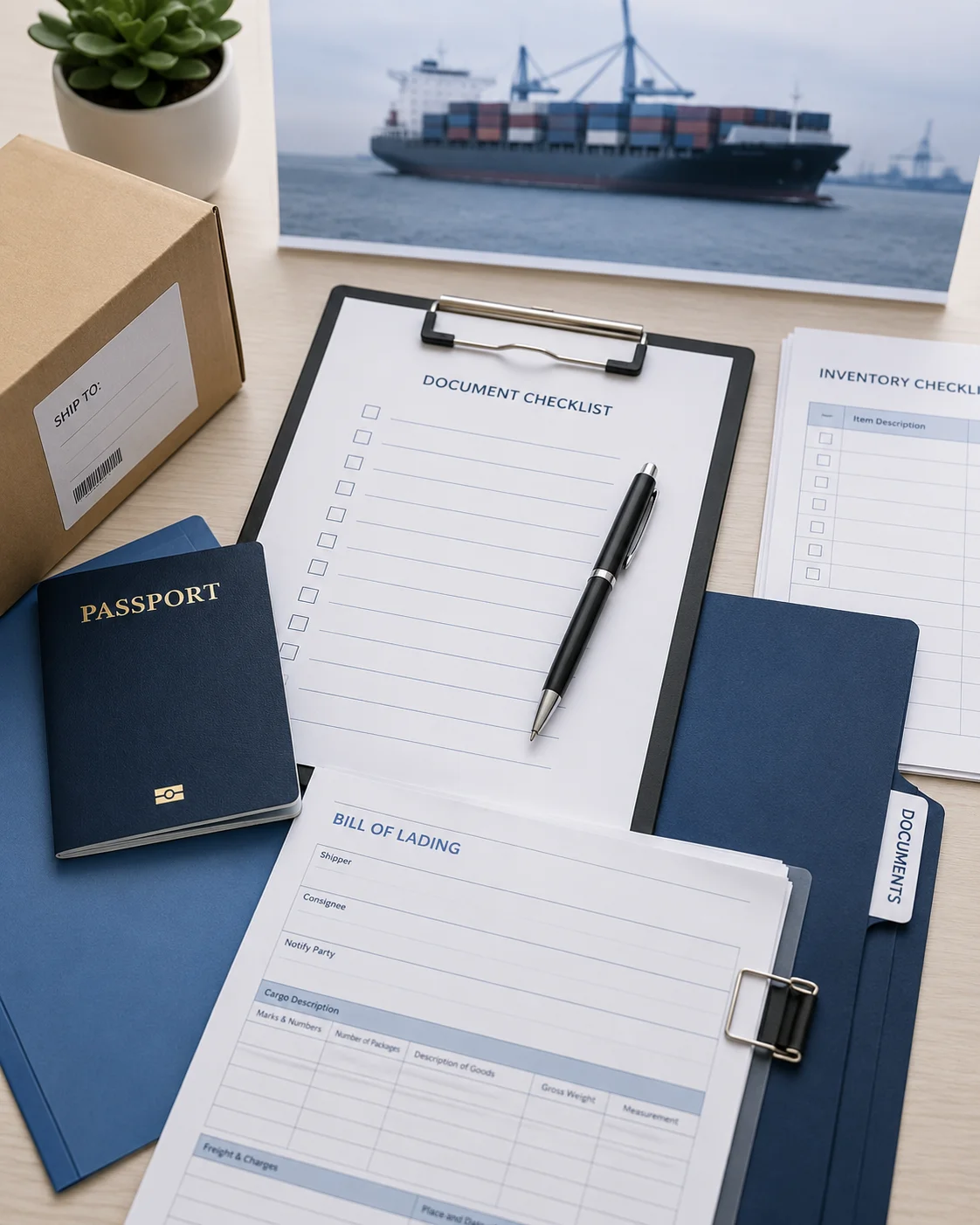
Documents required for importing used household goods, personal effects, and related shipments.
- Passport (must demonstrate a minimum 2-year stay abroad for duty-free eligibility)
- Original bill of lading (OBL) / air waybill (AWB)
- Insurance policy
- Detailed inventory in Spanish
- Validation document issued by the Bolivian Consulate General, Consulate, or Consular Section in the country of origin (indicating the activity carried out abroad)
- Sworn Declaration of Entry of Domestic Goods (Declaracion Jurada)
- For diplomats: tax exemption certificate, accreditation from the Chancellery
- For foreigners: proof of visa (Visa de Objeto Determinado — "specific purpose visa" — is required for anyone planning to reside in Bolivia; tourist visas do not qualify)
Specific Information
Retorno a Bolivia (Return to Bolivia) programme: Bolivia has a specific duty-free programme for household goods import. Originally established for Bolivians and foreigners with Bolivian spouses, it was expanded in 2013 to include all foreigners who meet the requirements.
Timing requirements (critical):
- If household goods arrive before the owner: the owner must enter Bolivia within 30 days of the cargo's arrival date
- If the owner enters before the goods: the goods must arrive within 6 months of the owner's entry
- Failure to meet either deadline results in loss of the duty-free treatment
30-day re-entry restriction: Returning citizens must not have entered Bolivia for the 30 days immediately prior to the shipment's arrival to qualify for duty-free import.
Consulate validation mandatory: The Bolivian Consulate in the country of origin must issue a validation document confirming the owner's stay abroad. This must be obtained before shipping.
Registration as non-habitual importer: The owner must register as a "Non-Habitual" importer in the National Customs computer system (SUMA/ASYCUDA++) at http://suma.aduana.gob.bo/.
Owner presence: The owner or legal representative must be present for customs clearance.
Document lead time: The destination agent must receive all documentation prior to the shipment's arrival.
Document language: Inventory must be in Spanish.
Non-qualifying goods: Items that do not meet the duty-free requirements are subject to standard import duties.
Duties & Taxes
Duty-free conditions: Bolivian citizens returning to the country and foreigners entering to establish residence may import personal effects and household items duty-free, provided they have remained abroad for at least 2 years immediately prior to their return.
Value limits for duty-free import:
- Up to USD 35,000 FOB for household items only (kitchenware, clothing, furniture, appliances, and items normally used in a home)
- Up to USD 50,000 FOB when household items also include machines, equipment, and tools of trade
- Motor vehicles are NOT included in the duty-free allowance
Prohibited & Restricted Items
Prohibited Items
- Illegal drugs and narcotics — Strictly prohibited
- Unauthorised firearms, explosives, and ammunition — Prohibited
- Knives and deadly weapons — Prohibited
- Unauthorised pharmaceuticals and drugs — Prohibited
- Unauthorised chemicals — Prohibited
- Food products containing noxious substances — Prohibited
- Plants, fruits, vegetables, and seeds containing parasites harmful per the Ministry of Agriculture — Prohibited
- Pets and animals containing diseases — Prohibited
- Used clothing without sanitary certificate — Prohibited
- Radioactive scrap and hazardous material — Prohibited
- Counterfeit money and goods — Prohibited
- Gambling machines — Prohibited
- Pornographic material — Prohibited
Restricted / Dutiable Items
Duty-Free Traveller Allowances
- 400 cigarettes (2 cartons), or 50 cigars, or 500g tobacco
- 3 litres of alcoholic beverages
- 1 photographic camera
- 1 non-professional camcorder
- 1 personal portable computer
- 1 tape recorder, 1 electronic memo book, 1 cellular phone
Specific Duty Rates for Non-Diplomatic Private Imports
The following items imported for private use by non-diplomats are subject to:
- Appliances, machinery, tools: approximately 32% of CIF value
- Vehicles: approximately 55% of CIF value
- Pets: 12% of CIF value
- Alcohol: Subject to duties (diplomats may import duty-free)
Restricted Items
- Used clothing — Prohibited without a sanitary certificate
- Transmission devices for radio and television `PERMIT REQUIRED` — Must be authorised by the Telecommunications Office
- Pharmaceutical products `PERMIT REQUIRED` — Must be approved under WHO guidelines and registered with the Vice Ministry of Health
- Firearms and ammunition `PERMIT REQUIRED` — Authorisation required
- Plants, fruits, vegetables, seeds `PERMIT REQUIRED` — Sanitary/phytosanitary certificate from SENASAG required
- Meat and animal products `PERMIT REQUIRED` — Sanitary certificate from SENASAG required
- Pets and animals — Must be accompanied by official health certificate
- Potential contaminants (refrigerators, vehicles, AC equipment) — Subject to environmental inspection upon arrival
Export Restrictions
- Pre-Colombian artefacts, historical paintings, Spanish colonial architecture items, and native textiles — Require permission for legal export from Bolivia
Importing a Used Personal Vehicle
Required Documents
- Passport
- Bill of lading (OBL)
- Vehicle title / registration
- Purchase invoice
- Vehicle details (must be forwarded to the destination agent prior to shipment arrival)
- For diplomats: diplomatic exemption documentation
Specific Information
Not included in duty-free household goods allowance. Vehicles are excluded from the Retorno a Bolivia programme.
Duties on vehicles: Personal-use vehicles are subject to customs duties of approximately 55% of CIF value.
Diplomats: May import vehicles duty-free with proper accreditation.
Vehicle age restriction: Vehicles must be no older than a certain model year, with a cutoff of approximately 10 years. Confirm the current year cutoff with the destination agent.
Potential contaminants: Vehicles are classified as potential environmental contaminants and are subject to inspection upon arrival, along with refrigerators, equipment with AC systems, and similar items.
Driving: Driving is on the RIGHT-hand side of the road.
Pets
- Official government health certificate from the country of origin (issued by a licensed veterinarian)
- Rabies vaccination certificate
- Sanitary certificate from SENASAG (Servicio Nacional de Sanidad Agropecuaria e Inocuidad Alimentaria) may be required upon arrival
Duties on pets: The import of pets is subject to 12% customs duty on the CIF value for non-commercial shipments. Diplomats may import pets duty-free.
Health certificate: Birds, cats, and dogs must be accompanied by a health certificate clearing the animal of infections or diseases.
Official authority: SENASAG handles animal health and import controls.
Quarantine: Not specified for compliant animals. Contact the destination agent.
Consignment Instructions
Recommended: Contact the destination agent to ensure all requirements have been met prior to import, especially for differences regarding air / sea / land shipments.
Consulate validation: Must be obtained from the Bolivian Consulate in the country of origin before shipping. This is the critical first step.
SUMA registration: Register as a non-habitual importer in the ASYCUDA++ system before clearance.
Owner presence: Required for customs clearance (for repatriating citizens).
Timing: Strict 30-day (goods arrive first) or 6-month (owner arrives first) windows apply. Missing the deadline means losing the duty-free treatment entirely.
Routing / port of entry: Bolivia is landlocked, bordered by Brazil, Paraguay, Argentina, Chile, and Peru. International freight typically arrives via Chilean ports (Arica or Iquique, which provide Bolivia with duty-free transit corridor access under treaty) or via Peruvian ports (Ilo). Air freight arrives via El Alto International Airport (La Paz/El Alto, at 4,061m / 13,325 ft elevation — the highest international airport in the world) or Viru Viru International Airport (Santa Cruz). Overland routes from Argentina and Brazil are also used.
Altitude consideration: La Paz and El Alto are at extreme altitude. Electronic equipment with sealed containers (e.g., CRT monitors, certain sealed packaging) may be affected by the low atmospheric pressure. Advise customers to prepare for altitude effects on both themselves and their goods.
Currency: Boliviano (BOB). The economy has experienced dollar shortages; confirm current foreign currency availability with the destination agent.
Cultural & Other Information
- OpenFactBook (replaces CIA World Factbook): https://www.openfactbook.org/countries/bolivia/
- Wikipedia: https://en.wikipedia.org/wiki/Bolivia
- Aduana Nacional: https://www.aduana.gob.bo/
- SENASAG: https://www.senasag.gob.bo/
Key country facts: Bolivia is a landlocked country in central South America, bordered by Brazil, Paraguay, Argentina, Chile, and Peru. The constitutional capital is Sucre; the seat of government is La Paz (the highest capital city in the world at approximately 3,640m). The official languages include Spanish, Quechua, Aymara, and 34 other indigenous languages. The currency is the boliviano (BOB). Bolivia is a member of the Andean Community (CAN) and an associate member of Mercosur. Driving is on the right-hand side.
Important notes for movers: The Retorno a Bolivia programme is well-structured but has strict eligibility requirements. The 2-year minimum stay abroad, the consulate validation, the 30-day/6-month timing windows, and the value caps (USD 35,000/50,000) all require careful planning. The consulate validation is the critical first step and must be completed before shipping. Vehicles are excluded from the programme and face 55% CIF duty. The 12% duty on pets is unusual. Bolivia's landlocked geography means all freight must transit through neighbouring countries, with the Arica/Iquique (Chile) corridor being the most common route. The extreme altitude in La Paz/El Alto is a practical consideration for both the customer and their goods.
Regulatory Updates
- 2013: Retorno a Bolivia programme expanded to include all foreigners (not just Bolivians and foreign spouses of Bolivians).
- Ongoing: The Aduana Nacional uses the ASYCUDA++ (SUMA) electronic customs system for declarations and importer registration.
Useful resources