

Country Guides
Bosnia and Herzegovina

Start here
Overview
Explore sections
Guide Details
Household Goods
Documents
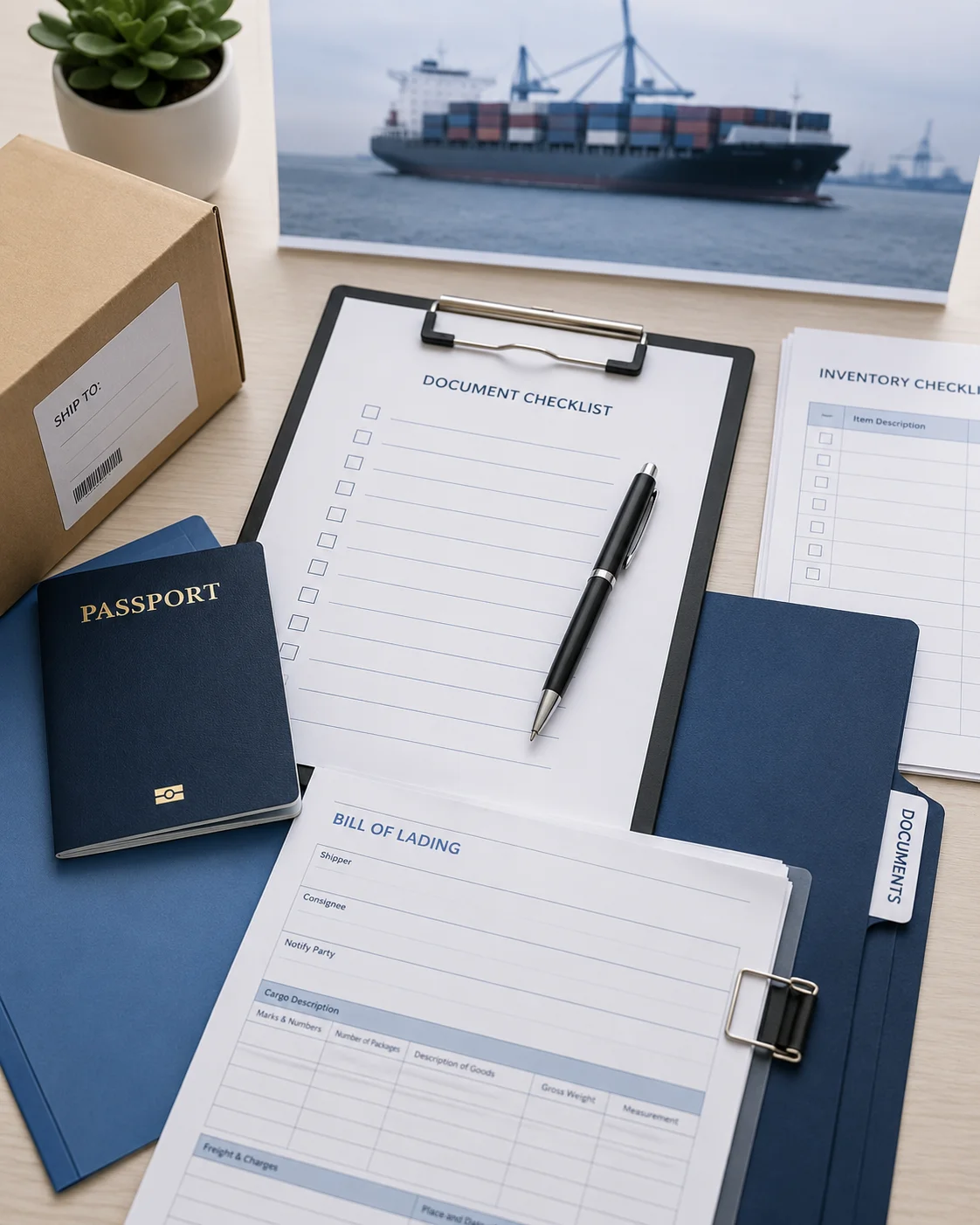
Documents required for importing used household goods, personal effects, and related shipments.
- Copy of passport
- Detailed inventory, valued, dated, and signed by the owner
- Packing list
- Copy of lease (minimum 2 years) or purchase contract (notarised)
- Original bill of lading (OBL) / express release / air waybill (AWB)
- Power of attorney (notarised)
- Protocol from Ministry of Foreign Affairs (if applicable)
- Statement from BiH embassy/consulate at origin confirming the owner has lived abroad for more than 12 months (for returning citizens)
- Copy of passport
- Diplomatic identification
- Protocol number from the Ministry of Foreign Affairs
- Detailed, valued inventory
- Packing list
- OBL / express release / AWB
- Power of attorney
Specific Information
Temporary admission — Foreign workers: Foreigners with work/residence permits may import goods on a temporary basis for the duration of their permit. Customs may require a bank guarantee for the total amount of temporarily imported goods. Goods must be re-exported when the permit expires.
Non-qualifying imports: If the owner does not qualify for duty-free import, duties and taxes of approximately 30-40% of total value apply.
Lease requirement: A notarised copy of lease (minimum 2-year term) or purchase contract for housing in BiH is required.
Inventory requirements: Detailed, valued inventory listing all used items. For electrical appliances, product information including serial number, type, make, and model must be included.
Document language: Customs declarations must be in one of the three official languages: Bosnian, Serbian, or Croatian.
Duties & Taxes
Duty-free conditions — Returning BiH citizens: Used household goods may be imported duty- and tax-free if the owner has lived abroad for more than 12 months (confirmed by a statement from the BiH embassy/consulate at origin). Used items must have been owned for a minimum of 6 months prior to import.
Duty-free conditions — Diplomats: Duty- and tax-free import with proper documentation.
VAT: 17% VAT applies to all goods imported into BiH and placed in free circulation.
Customs duty rates: Ad valorem at 0%, 5%, 10%, or 15%. EU-origin goods are largely duty-free under the Stabilisation and Association Agreement (since 2015). CEFTA, EFTA, and Turkey FTA also provide preferential rates.
Prohibited & Restricted Items
Prohibited Items
- Narcotics and illegal drugs — Strictly prohibited
- Firearms, explosives, and ammunition without permit — Prohibited
- Knives and deadly weapons — Prohibited
- Hazardous waste — Prohibited
- Endangered species and wildlife products `CITES` — Ivory, protected species products prohibited
- Counterfeit goods and currency — Prohibited
- Pornographic material — Prohibited
- Unapproved pesticides — Prohibited
Restricted / Dutiable Items
Duty-Free Traveller Allowances
Per the Indirect Taxation Authority (uino.gov.ba):
- 200 cigarettes, or 100 cigarillos, or 50 cigars (20 per VisaHQ), or 250g tobacco
- 1 litre of spirits over 22% ABV, or 2 litres of wine/champagne/strong wine under 22%
- 2 litres of table wine
- 60ml perfume, 250ml eau de toilette
- Gifts up to approximately EUR 76.70 (BAM 150)
- Items exceeding BAM 600 in value cannot be divided between individuals to avoid duties
Restricted Items
- Weapons and ammunition `PERMIT REQUIRED` — Hunting weapons need a police permit; must be reported to police upon entry
- Plant and meat products `PERMIT REQUIRED` — Permission from the Ministry of Agriculture
- Antiques and valuable works of art — Restricted for both import and export
- Medications — Personal use amounts permitted; larger quantities require permits
- Lithium batteries — Safety certifications required (2025 update)
- Products of animal origin exceeding specified weights — Subject to veterinary border inspection with international health certificate
Currency
- Cash or securities exceeding EUR 10,000 must be declared at every border crossing
- Currency declaration form available from customs officers or at http://www.uino.gov.ba
- Local currency (BAM) and foreign currencies: no import restrictions; export limited to amounts imported and declared
Importing a Used Personal Vehicle
Required Documents
- Copy of passport
- Bill of lading (OBL) / express release
- Original registration card from the country of origin
- Technical data sheet (type, model, chassis number, engine number, engine volume in ccm, engine power in kW, weight)
- Document certifying the vehicle meets at least Euro IV emission standards (must be issued in Bosnia and Herzegovina)
- For returning BiH citizens importing duty-free: statement from BiH embassy/consulate confirming more than 36 months abroad; proof of vehicle ownership abroad for at least 12 months
Specific Information
Returning BiH citizens — duty-free vehicle import: Citizens who have lived abroad for more than 36 months (3 years) may import a vehicle duty- and tax-free if they can prove ownership of the vehicle abroad for at least 12 months before the date of return. The vehicle must be imported within 12 months of the return date. Vehicles that do not meet Euro IV standards may still qualify for duty-free import under this provision.
Temporary import — foreign workers: Vehicles may be temporarily imported for the duration of the work/residence permit. The vehicle must meet at least Euro IV emission standards. The Euro IV certification document must be issued in Bosnia and Herzegovina. Customs may require a bank guarantee for the total value of the temporarily imported vehicle.
Vehicle age restriction: Cars older than 7 years cannot be imported.
Euro IV requirement: All vehicles (except those imported duty-free by returning citizens) must meet at least Euro IV emission standards.
Duties on non-exempt vehicles: Subject to customs duty (0-15%) plus 17% VAT, plus any applicable excise duties.
Driving: Driving is on the RIGHT-hand side of the road.
Pets
- Veterinary health certificate from the country of origin
- Rabies vaccination certificate (for dogs and cats)
- EU Pet Passport (if travelling from an EU country)
- Microchip (ISO 11784/11785 recommended)
Designated border crossings: All species of animals (dogs, cats, birds, etc.) must enter across specific border crossings where veterinary health control inspections are performed. Not all border crossings have veterinary inspection facilities.
Non-cat/dog pets: Birds, reptiles, small rodents, and other pets are not required to prove rabies vaccinations but still require health certificates.
Quarantine: Not specified for compliant animals. Contact the destination agent for current requirements.
EU alignment: BiH is aligning its veterinary import controls with EU standards under the SAA.
Consignment Instructions
Recommended: Contact the destination agent to ensure all requirements have been met prior to import, especially for differences regarding air / sea / land shipments.
Bank guarantee: Customs may require a bank guarantee for the total value of temporarily imported goods and vehicles. This is a significant financial requirement for non-permanent imports.
Document language: Customs declarations must be in Bosnian, Serbian, or Croatian.
Clearance system: BiH uses the Ucarina electronic customs system. Processing typically takes 24-48 hours with correct documentation.
Routing / port of entry: BiH has limited direct sea access (approximately 20 km of coastline at Neum). Most sea freight arrives via the Croatian port of Ploce (the primary sea freight entry point for BiH) or via Split/Rijeka (Croatia) and is transported overland. Air freight arrives via Sarajevo International Airport. Land border crossings with Croatia, Serbia, and Montenegro are also used.
Entity structure: BiH comprises two entities (Federation of Bosnia and Herzegovina and Republika Srpska) and the Brcko District. Customs and indirect taxation are managed centrally by the Indirect Taxation Authority, which applies uniformly throughout BiH.
Currency: Bosnia and Herzegovina convertible mark (BAM/KM), pegged to the euro at BAM 1.95583 = EUR 1.
Cultural & Other Information
- OpenFactBook (replaces CIA World Factbook): https://www.openfactbook.org/countries/bosnia-and-herzegovina/
- Wikipedia: https://en.wikipedia.org/wiki/Bosnia_and_Herzegovina
- Indirect Taxation Authority: https://www.uino.gov.ba/
- trade.gov — BiH Customs Regulations: https://www.trade.gov/country-commercial-guides/bosnia-and-herzegovina-customs-regulations
- trade.gov — BiH Import Tariffs: https://www.trade.gov/country-commercial-guides/bosnia-and-herzegovina-import-tariffs
Key country facts: Bosnia and Herzegovina is located in Southeastern Europe on the Balkan Peninsula, bordered by Croatia, Serbia, and Montenegro, with a small coastline on the Adriatic Sea at Neum. The capital is Sarajevo. Official languages are Bosnian, Croatian, and Serbian (all essentially the same language with minor differences). The currency is the convertible mark (BAM), pegged to the euro. BiH is an EU candidate country. The Stabilisation and Association Agreement with the EU has been in force since 2015, eliminating import tariffs on most EU-origin goods. BiH is a member of CEFTA. VAT is 17%. Customs duties range from 0% to 15%. Driving is on the right-hand side.
Important notes for movers: The temporary admission system for foreign workers requires a bank guarantee, which is a substantial financial commitment. The 7-year vehicle age limit and Euro IV emission standard are strictly applied. Returning BiH citizens get generous treatment (duty-free after 12 months abroad for household goods, 36 months for vehicles) but must obtain the embassy/consulate statement before returning. Most sea freight routes through Croatian ports (primarily Ploce), so customs transit from Croatia into BiH must be properly documented. The 2-year minimum lease or purchase contract requirement for housing is unusually long.
Regulatory Updates
- 2025: BiH customs aligned with WCO HS 2022 nomenclature and EU Combined Nomenclature updates. Tightened rules on lithium batteries and electronics classification.
- 2023: Council of Ministers adopted temporary suspension/reduction of customs rates on 68 tariff codes in textile, footwear, chemical, metal, food, and electrical sectors (valid through December 2024).
- 2015: Stabilisation and Association Agreement with EU entered into force, eliminating tariffs on most EU imports.
- 2009: Import tariffs eliminated on 11,000 EU-origin products.
Useful resources