

Country Guides
Botswana

Start here
Overview
Explore sections
Guide Details
Household Goods
Documents
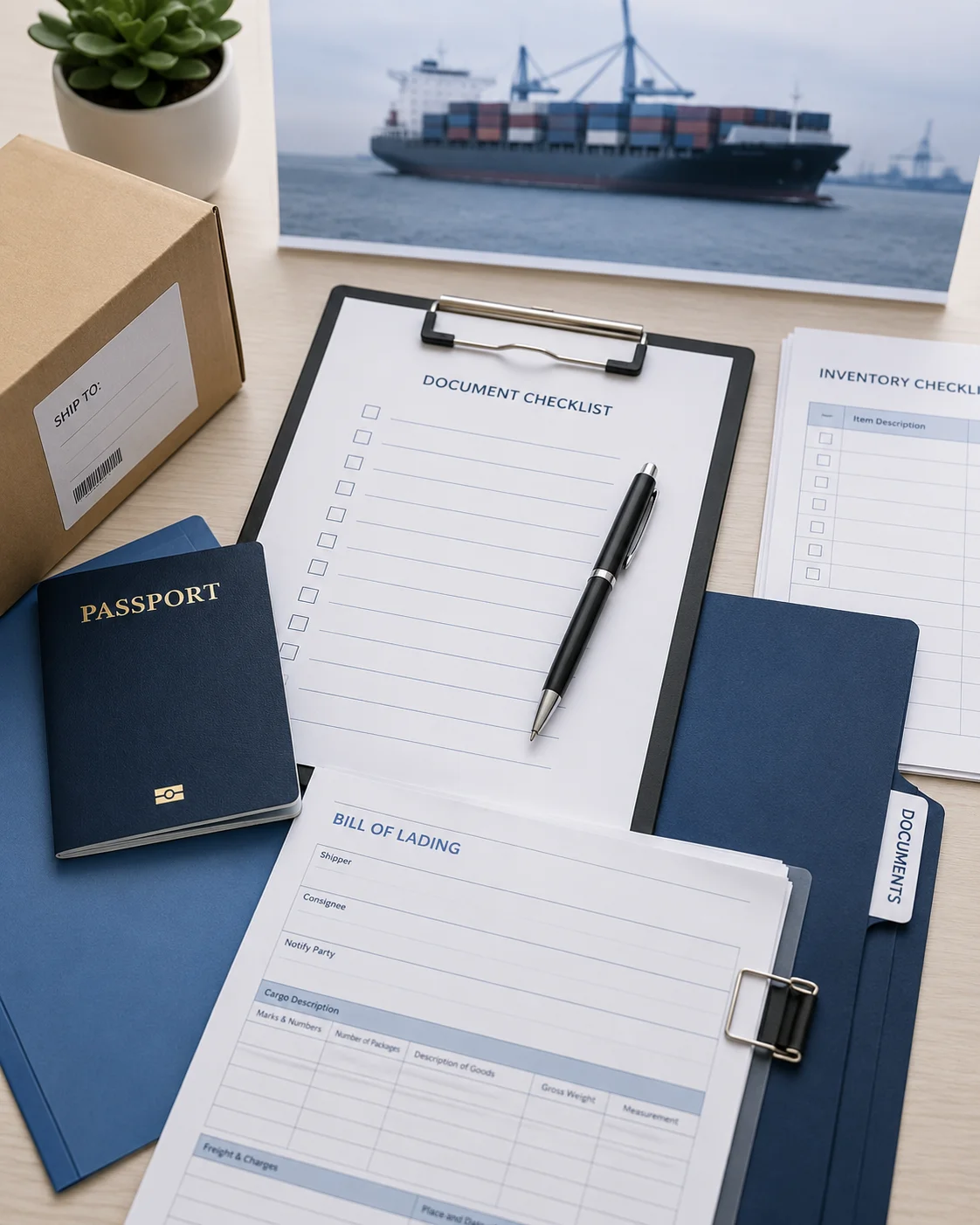
Documents required for importing used household goods, personal effects, and related shipments.
- Original Customs Form CE 101 (2 copies)
- Copy of passport, including page showing entry date into Botswana
- Long-term permit or permanent work/residence permit (or exemption certificate)
- Letter of employment (stating the duration of contract is greater than 2 years)
- Commercial invoices for new items (3 copies) — see Specific Information
- Detailed inventory with declared values for attestation
- For diplomats: Certificate "A" from the relevant embassy in Botswana, signed by the Botswana Department of Foreign Affairs
Specific Information
SACU membership (critical context): Botswana is a member of the Southern African Customs Union (SACU) along with South Africa, Lesotho, Namibia, and Eswatini. These five countries form a Common Customs Area (CCA). Goods moving between SACU members are generally not subject to customs duties. Goods from outside the CCA are subject to customs duties per the Customs Tariff Book.
Employment contract requirement: The letter of employment must confirm the contract duration is greater than 2 years.
6-month import window: Duty-free entry is only permissible if done within 6 months of the date of issue of the work permit. After 6 months, VAT of 10% applies.
2-year disposal restriction: Goods imported duty-free may not be sold or disposed of to other persons within 2 years from the date of importation.
First-time import only: The CE 101 form includes a declaration that the importer has not previously imported household effects or a motor vehicle into the CCA under rebate of duty prior to this transfer of residence.
New items within shipments: New furniture, household items, presents, souvenirs, works of art, and antiques are subject to payment of VAT at 10% of declared CIF value; confirm the current rate with the destination agent, as standard Botswana VAT is 14%. Commercial invoices are required for all new items.
Pre-clearance recommended: Pre-clearance is recommended, but new residents may have goods placed into bond until final customs clearance.
RSA VAT recovery: Holders of passports (except South African) may claim back RSA VAT paid in South Africa at the border when goods transit through South Africa.
Returning citizens: Must state the reason for return and provide proof of time period abroad (must have been abroad for more than 2 years for duty-free entry).
Items to avoid including in shipments: Wine, spirits, cigarettes, and other duty-attracting items increase the likelihood of physical examination, which can lead to delays and extra charges. It is advisable not to include these in household goods shipments.
Duties & Taxes
Duty-free conditions: Personal effects and household furniture, including equipment necessary for the owner's calling, trade, or profession (other than industrial, commercial, or agricultural plant), may be imported duty-free as the bona fide property of a person and their family members, imported for their own use on change of residence to Botswana for the purpose of taking up employment or permanent settlement.
Prohibited & Restricted Items
Prohibited Items
- Narcotics and illegal drugs — Strictly prohibited
- Firearms and ammunition without police permit — Prohibited
- Counterfeit money and goods — Prohibited
- Soil without import permit — Prohibited
- Goods prohibited under the Customs and Excise Duty Act, 1970 — Various categories
Restricted / Dutiable Items
Duty-Free Traveller Allowances (per BURS)
The following may be imported free of duty and VAT when declared at the point of entry, for personal use, not on behalf of others or for trade:
- 2 litres of wine (duty-free; pay tax on excess)
- 1 litre of spirits and other alcoholic beverages
- 200 cigarettes
- 20 cigars
- 250g cigarette or pipe tobacco
- 50ml perfume
- 250ml eau de toilette
Additional goods from outside SACU, new or used, up to a total value of R 12,000 per person (excluding consumables above), may be admitted at a flat rate of 20% if the owner elects this option.
Restricted Items
- Soil — Importation prohibited unless accompanied by an import permit from the Director of Crop Production and Forestry
- Plants and seeds `PERMIT REQUIRED` — Phytosanitary import permit from the Chief Agricultural Research Officer required; South African transit permits may also be needed for plants shipped through South Africa
- Firearms and ammunition `PERMIT REQUIRED` — Police permits issued on a limited quota basis
- Meat and animal products `PERMIT REQUIRED` — Subject to veterinary health controls
- Boats, mokoros, and aquatic apparatus `PERMIT REQUIRED` — Import permit from Department of Water Affairs
- Potential contaminants — Refrigerators, vehicles, AC equipment subject to environmental inspection
- Indecent and obscene material (pornographic books, magazines, films, videos, DVDs, software) — Subject to 12% VAT of CIF value
Importing a Used Personal Vehicle
Required Documents
- Original Customs Form CE 101 (2 copies)
- All documents required for household goods (passport, work/residence permit, letter of employment, etc.)
- Document showing the vehicle has been in the owner's possession abroad for more than 12 months before exportation from origin (original purchase invoice, insurance certificate, etc.)
- Valuation certificate or invoice
- Vehicle registration book
Specific Information
Duty-free conditions: One vehicle per family may be imported duty-free if: the owner has possessed the vehicle for more than 12 months (365 days) before export from origin; the vehicle will not be sold or disposed of for 2 years from the date of importation; and the import occurs within 6 months of the work permit being issued.
Subsequent vehicles: Subject to 12% VAT of CIF value, plus additional duties if the vehicle originates from outside the CCA.
Returning citizens: Permitted duty-free vehicle entry if they have been abroad for more than 2 years.
Foreign diplomats: Pay no duties or taxes, subject to the diplomatic clearance certificate (Certificate "A") and proof of value.
Non-exempt vehicles from outside CCA: Subject to 15-20% VAT of CIF value.
VAT payment: Must be paid in Botswana pula.
Registration: Botswana registration and driver's licence must be obtained within 6 months of arrival. Registration requires BURS clearance followed by police clearance.
Pre-owned vehicles: Subject to Interpol verification before police clearance and registration.
Caravans and trailers: Subject to payment of duties. If towed in with a car on the initial entry into the country, they are duty-free; otherwise subject to 2% VAT of CIF value.
Driving: Driving is on the LEFT-hand side of the road.
Pets
- Animal Health Certificate issued by the Director of Animal Health and Production, Private Bag 0032, Gaborone, Botswana Per BURS Travellers Guide:
- Rabies vaccination certificate Per BURS Travellers Guide:
- Certificate of identity Per BURS Travellers Guide:
- Movement permit Per BURS Travellers Guide:
For pets from SACU/regional countries: A valid Certificate of Identity, Rabies Vaccination, and Movement Permit issued in Lesotho, Malawi, South Africa, Swaziland (Eswatini), Namibia, or Zimbabwe will be accepted at the time of importation.
Import closely regulated: Importation and exportation of domestic animals is closely regulated for public health reasons and animal welfare.
Animal Health Certificate: Must be obtained from the Botswana Director of Animal Health and Production. Contact: Private Bag 0032, Gaborone, Botswana.
Regional certificates accepted: Documents from Lesotho, Malawi, South Africa, Eswatini, Namibia, or Zimbabwe are accepted directly. Pets from other countries will need the Botswana-issued certificate.
Quarantine: Contact the Director of Animal Health for current quarantine requirements.
Boats and aquatic apparatus: No boat, mokoro (traditional canoe), or aquatic apparatus may be imported without an import permit from the Department of Water Affairs. This is relevant for any water-related sporting equipment within household shipments.
Consignment Instructions
Recommended: Contact the destination agent to ensure all requirements have been met prior to import, especially for differences regarding air / sea / road shipments.
CE 101 Form: The official customs form that must be completed and submitted in duplicate. Available from BURS offices or their website.
Pre-clearance: Recommended but not mandatory. Goods may be bonded until clearance is complete.
6-month deadline: Import must occur within 6 months of the work permit issue date for duty-free treatment.
Routing / port of entry: Botswana is landlocked, bordered by South Africa, Namibia, Zimbabwe, and Zambia (with a short border at Kazungula). Most sea freight arrives via South African ports (Durban, Cape Town) and is transported overland. Gaborone is the primary customs clearance point. Sir Seretse Khama International Airport (Gaborone) and Maun Airport handle air freight.
Transit through South Africa: Most shipments transit through South Africa. RSA transit documentation is required. Non-South African passport holders may claim RSA VAT refunds at the border.
SACU implications: Goods already cleared through another SACU country (South Africa, Lesotho, Namibia, Eswatini) do not require additional customs duties in Botswana, as they are already within the Common Customs Area.
Currency: Botswana pula (BWP). VAT and duties must be paid in pula.
Cultural & Other Information
- OpenFactBook (replaces CIA World Factbook): https://www.openfactbook.org/countries/botswana/
- Wikipedia: https://en.wikipedia.org/wiki/Botswana
- BURS — Customs: https://www.burs.org.bw/
- trade.gov — Botswana Import Tariffs: https://www.trade.gov/country-commercial-guides/botswana-import-tarifs
Key country facts: Botswana is a landlocked country in Southern Africa, bordered by South Africa, Namibia, Zimbabwe, and Zambia. The capital is Gaborone. The official languages are English and Setswana. The currency is the Botswana pula (BWP). Botswana is a member of SACU, SADC, and the African Union. Standard VAT is 14% (though household goods import references cite 10-12% in various contexts — confirm with destination agent). The economy is heavily diamond-dependent. Driving is on the left-hand side.
Important notes for movers: The SACU context is the defining feature of Botswana's customs regime. Since Botswana shares a Common Customs Area with South Africa, Lesotho, Namibia, and Eswatini, the transit routing through South Africa is seamless for customs purposes once goods enter the CCA. The 6-month window from work permit issue date is strict. The 2-year employment contract requirement and 2-year disposal restriction are both enforced. The first-time import declaration on the CE 101 means the duty-free concession can only be used once. Vehicle import requires 12 months' prior ownership and is limited to one vehicle per family. Avoid including alcohol, tobacco, and other duty-attracting items in household goods shipments as they trigger physical examination.
Regulatory Updates
- November 2023: Duty-free conditions, vehicle import requirements, and pet import procedures reviewed and confirmed current.
- 2022: SADC reported significant progress in FTA implementation.
- 2008: SADC Free Trade Area launched, aiming to eliminate trade barriers across the region.
- Ongoing: Botswana Single Window electronic customs system (ecustoms.burs.org.bw) continues to modernise customs clearance.
Useful resources