

Country Guides
Bulgaria

Start here
Overview
Explore sections
Guide Details
Household Goods
Documents
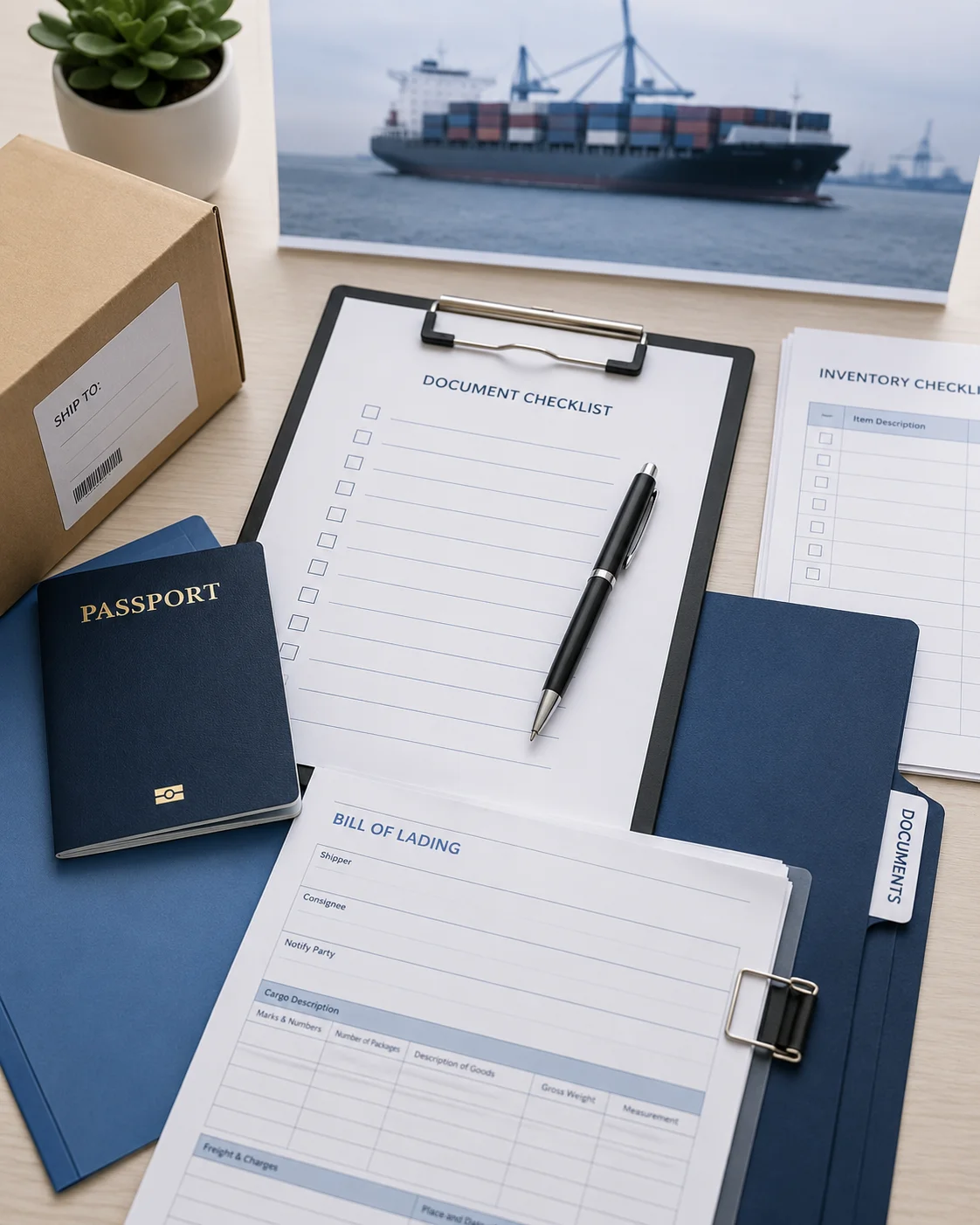
Documents required for importing used household goods, personal effects, and related shipments.
- Copy of passport
- Copy of local Bulgarian ID / residence permit
- Declaration of value / pro-forma invoice
- Packing list
- List of electronic items (must include serial numbers and model numbers)
- Letter of employment (must be for a minimum of 12 months)
- Copy of residential rental contract (must be for a minimum of 12 months)
- EORI number (Economic Operators Registration and Identification; can be obtained cost-free through the customs agency in the region of the permanent residence)
- Original bill of lading (OBL) / air waybill (AWB)
Specific Information
EU member state (since 2007): Bulgaria is a member of the EU Customs Union. Moves from within the EU require no customs formalities — goods move freely. Only imports from non-EU (third) countries require customs clearance.
Returning Bulgarian citizens: Individuals who had permanent residence outside Bulgarian territory for at least 12 consecutive months and are returning for permanent residence are permitted duty-free import of personal property and used transport vehicles.
12-month import window: Goods must be imported within 12 months of establishing residence in Bulgaria.
1-year resale restriction on vehicles: Vehicles imported duty-free may not be sold within 1 year.
Customs guarantee (no residence permit yet): If the owner does not yet have a Bulgarian residence permit and the shipment has arrived, a Customs Guarantee must be paid. The guarantee is 25% of the declared value (5% duty + 20% VAT) for shipments with a declared value of USD 1,500 or less. This guarantee is reimbursable immediately after residence is established.
Temporary admission: Non-prohibited items may be imported on a temporary basis for up to 6 months. Customs duties will not be charged with a letter of guarantee from a Bulgarian organisation stating that the goods will be returned or duties will be paid.
Arrival deadline: Household goods should be imported within 3 months of the customer's arrival (per the Atlas/HHGFA guide).
Home computers: Not accepted as personal effects. Subject to customs duties and import taxes. This is a notable Bulgaria-specific rule.
Precious metals and stones: Must be declared in writing. Gold and platinum jewellery up to 60g total and silver jewellery up to 300g total may be imported without declaration.
Non-qualifying imports: Duties and taxes of approximately 30-40% of total value apply if the owner does not qualify for duty-free import.
EORI number: Required for customs declarations. Can be obtained free from the customs agency in the owner's registration district.
Duties & Taxes
Duty-free conditions (from non-EU countries): Per EU Council Regulation (EC) No 1186/2009, Articles 3-11, household goods imported by natural persons transferring their normal place of residence from a third country to the EU (Bulgaria) are admitted free of import duties and VAT, provided: the person has had their normal place of residence outside the EU for at least 12 consecutive months; the goods have been owned and used for a minimum of 6 months; and the goods are for the person's own use at their new residence.
New items: New electrical items and furniture are subject to duties and taxes. Invoices/receipts required.
VAT: 20% on all imports. Waived for qualifying transfer of residence goods.
Prohibited & Restricted Items
Prohibited Items
- Narcotics and illegal drugs — Strictly prohibited
- Firearms and ammunition without permission — Prohibited
- Knives and deadly weapons — Prohibited
- Dangerous chemicals — Prohibited
- Substances that damage the ozone layer — Prohibited
- Quarantined pets — Prohibited
- Pornographic material — Prohibited
- Counterfeit goods — Prohibited
Restricted / Dutiable Items
Duty-Free Traveller Allowances (from non-EU countries)
Tobacco (17+):
- 200 cigarettes, or 100 cigarillos, or 50 cigars, or 250g tobacco
Alcohol (17+):
- 1 litre spirits over 22% ABV, or 2 litres under 22%
- 4 litres still wine, 16 litres beer
Other goods:
- EUR 430 (air/sea), EUR 300 (land), EUR 175 (under 15)
Medication: For personal use; may not be expired.
Restricted Items
- Home computers — Not accepted as personal effects; subject to customs duties and taxes
- New electrical items and furniture — Subject to duties and taxes; invoices required
- Alcohol and spirits within shipments — Subject to customs duties
- Precious metals and stones — Must be declared in writing above the free allowances (60g gold/platinum, 300g silver)
- Firearms and ammunition `PERMIT REQUIRED` — Permission required
- Nuclear materials, explosives, arms, dual-use goods `PERMIT REQUIRED` — Bulgarian decree required
- Plant protection products and pharmaceuticals `PERMIT REQUIRED` — Non-automatic licence required
- Currency: Cash sums greater than BGN 8,000 (approximately EUR 4,000) require customs declaration. Cash or securities exceeding EUR 10,000 must be declared when crossing EU external borders.
Importing a Used Personal Vehicle
Required Documents
- All household goods documents listed above
- Vehicle title / registration
- Technical data sheet (model, make, year of production, first year of registration, kilowatts of engine, colour)
- Certificate of vehicle homologation (DEKRA or equivalent, issued in Bulgaria after import)
- Original purchase invoice / bill of sale
Specific Information
Duty-free conditions: Same as household goods — 12 months' residence abroad, 6 months' vehicle ownership. One vehicle per person.
Engine power: Must be indicated as per the European DIN or American SAE system.
Vehicle in HHG container: Vehicles included in the household goods container may cause delays, as vehicles are only cleared at specific customs offices. It is recommended to ship vehicles separately.
Homologation: After customs clearance, the vehicle must receive a certificate of homologation (standardisation by DEKRA or equivalent) and be registered with KAT (the traffic police, similar to the DMV in the US).
1-year resale restriction: Vehicles imported duty-free may not be sold within 1 year.
Diplomats: May import one vehicle duty- and tax-free.
Driving: Driving is on the RIGHT-hand side of the road.
Pets
- EU Pet Passport From EU Member States
- ISO-compliant microchip (or tattoo applied before 3 July 2011) From EU Member States
- Valid rabies vaccination From EU Member States
- EU Health Certificate (non-commercial) From Non-EU Countries
- ISO-compliant microchip (ISO 11784/11785) From Non-EU Countries
- Valid rabies vaccination (at least 21 days before travel; after microchip) From Non-EU Countries
- Rabies antibody titration test (RNATT) if from an unlisted (non-Part 1/Part 2) country — blood sample at least 30 days after vaccination and at least 3 months before travel From Non-EU Countries
- Written declaration of non-commercial movement From Non-EU Countries
EU standard regulations apply. Bulgaria follows EU Regulation 576/2013 for pet travel.
Maximum 5 pets per person for non-commercial movement.
Quarantined pets prohibited: Pets under quarantine may not be imported.
No quarantine required if all EU documentation requirements are met.
Entry points: Pets from non-EU countries must enter through designated border crossing points with veterinary inspection facilities.
Consignment Instructions
Recommended: Contact the destination agent to ensure all requirements have been met prior to import, especially for differences regarding air / sea shipments.
EORI number: Required. Can be obtained free from the local customs agency.
Customs guarantee: If residence permit is not yet in hand, a 25% guarantee of declared value must be paid. Reimbursable once residence is established.
Vehicle clearance: Vehicles are cleared at specific customs offices only. Ship separately from household goods to avoid delays.
Routing / port of entry: Varna and Burgas (Black Sea ports) for sea freight. Sofia Airport for air freight. Land borders with Romania, Serbia, North Macedonia, Greece, and Turkey. Bulgaria is at the crossroads of European transit routes.
Customs clearance location: Import processed by the customs agency in the region of the owner's permanent residence (address on Bulgarian ID/residence permit).
EU Advance Cargo Declaration: Mandatory for all goods entering or moving through the EU.
Currency: Bulgarian lev (BGN), pegged to the euro at BGN 1.95583 = EUR 1 (same rate as the Bosnian mark). Bulgaria is expected to adopt the euro in the coming years.
Cultural & Other Information
- OpenFactBook (replaces CIA World Factbook): https://www.openfactbook.org/countries/bulgaria/
- Wikipedia: https://en.wikipedia.org/wiki/Bulgaria
- Customs Agency: https://customs.bg/wps/portal/agency-en/home
- FreeLine — Bulgaria Customs Formalities: https://freeline.bg/en/customs-formalities-and-procedures-in-bulgaria
- trade.gov — Bulgaria Customs Regulations: https://www.trade.gov/country-commercial-guides/bulgaria-customs-regulations
Key country facts: Bulgaria is located in Southeastern Europe on the Balkan Peninsula, bordered by Romania, Serbia, North Macedonia, Greece, Turkey, and the Black Sea. The capital is Sofia. The official language is Bulgarian (Cyrillic alphabet). The currency is the Bulgarian lev (BGN), pegged to the euro. Bulgaria joined the EU in 2007 and is part of the EU Customs Union. VAT is 20%. EU tariff rates apply to non-EU imports (4-45%). Bulgaria became a full Schengen member with the lifting of land border controls on 1 January 2025, completing the integration that began with air and sea borders in March 2024; Bulgaria is now a full Schengen Area member with no internal border checks. Driving is on the right-hand side.
Important notes for movers: The home computer restriction is the most unusual Bulgaria-specific rule — personal computers are not treated as personal effects and are subject to duties and taxes. This should be communicated to customers during packing. The customs guarantee for persons without a residence permit (25% of declared value) is a significant cash requirement. The 12-month employment contract and 12-month rental contract requirements are specific documentation thresholds. Vehicle homologation through DEKRA must be completed in Bulgaria after import. EU-origin moves are customs-free, making Bulgaria particularly easy for intra-EU relocations.
Regulatory Updates
- 1 January 2025 (CONFIRMED): Bulgaria completed full Schengen integration with the lifting of internal land border controls, following the March 2024 lifting of air and sea border controls. Bulgaria is now a full Schengen Area member with no internal border checks at any crossing.
- March 2024: Bulgaria approved for Schengen entry via air and sea borders (superseded by full membership above).
- 2007: Bulgaria joined the EU and the EU Customs Union. Most Bulgarian customs provisions replaced with EU regulations.
- Ongoing: Euro adoption timeline under discussion; BGN remains pegged to EUR at the fixed rate.
Useful resources