

Country Guides
Burkina Faso

Start here
Overview
Explore sections
Guide Details
Household Goods
Documents
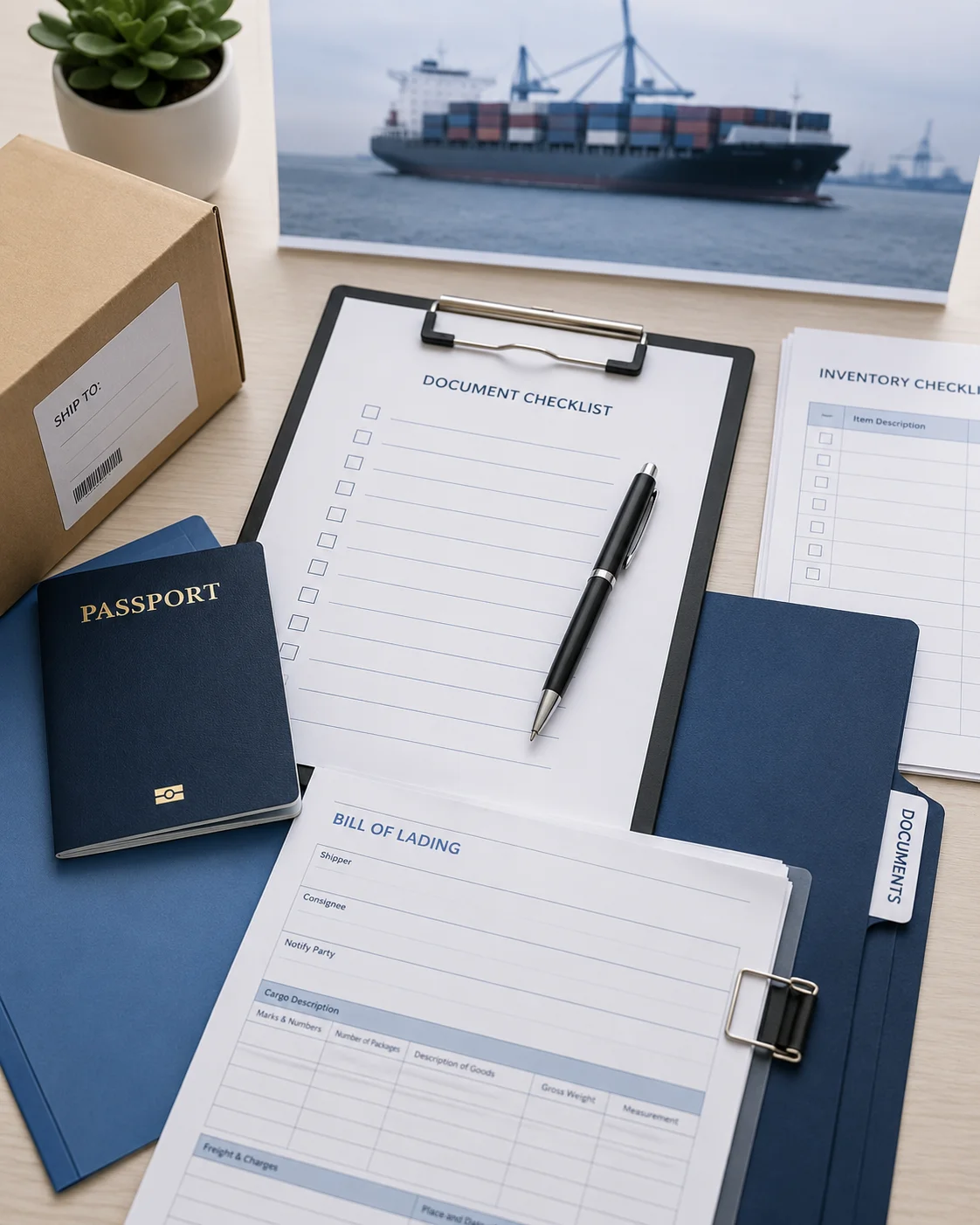
Documents required for importing used household goods, personal effects, and related shipments.
- Copy of passport
- Packing list
- Original bill of lading (OBL) — no express release accepted — or air waybill (AWB)
- Original detailed inventory in French, dated, valued, and signed by the owner
- Residence permit / work permit / letter of employment, or certificate of change of residence
- Electronic Cargo Tracking Note (BESC — Bordereau Electronique de Suivi des Cargaisons)
- For diplomats: diplomatic credentials / exemption documentation
Specific Information
Certificate for free entry: A certificate for free entry must be obtained from the Customs head office (Direction Generale des Douanes) to avoid duty payment. This is a critical administrative step that must be completed before or immediately upon clearance.
Pre-shipment inspection: COTECNA pre-inspection is required for commercial shipments. Personal effects shipments may also be subject to inspection — confirm with the destination agent whether pre-inspection via COTECNA or the Orbus system applies.
Express release not accepted: Only original bills of lading are accepted.
Document language: The inventory must be in French, dated, valued, and signed by the owner.
ECOWAS/WAEMU membership: Burkina Faso is a member of both ECOWAS and WAEMU. The WAEMU Common External Tariff (CET) applies to imports from outside the region. CET categories: 0% for social goods, 5% for raw materials/capital goods, 10% for intermediate goods, 20% for final consumer goods.
Pre-shipment inspection threshold: Per trade.gov, pre-shipment inspection is still required for imports over XOF 1,000,000 (approximately USD 1,565).
Import declaration: Must be obtained via the Orbus electronic system.
Duties & Taxes
UEMOA/WAEMU tax (not waived): An import tax is levied on all non-diplomatic personal effects shipments: 1.5% of declared value for household goods, and 2.5% of declared value for vehicles. This tax applies even to duty-free shipments. Diplomats are exempt.
Combined duty/tax structure for non-exempt imports: Customs duty (0-35%), statistical royalty (1%), VAT (18%), community solidarity tax (1%), CEDEAO community tax (0.5%). Additional excise duties apply to alcohol, tobacco, petroleum products, fragrances, and cosmetics.
Prohibited & Restricted Items
Prohibited Items
- Narcotics and illegal drugs — Strictly prohibited
- Firearms, explosives, and ammunition without authorisation — Prohibited
- Knives and deadly weapons — Prohibited
- Hazardous materials — Prohibited
- Counterfeit money and goods — Prohibited
- Pornographic material — Prohibited
- Ivory for export — Strictly forbidden
Restricted / Dutiable Items
Duty-Free Traveller Allowances
- 200 cigarettes, or 50 cigars, or 50g tobacco
- 1 bottle of wine and 1 bottle of spirits
- 250ml perfume
Restricted Items
- Firearms and ammunition `PERMIT REQUIRED` — Authorisation from the territorial administration required; travellers may import up to 2 shotguns and 50 rounds of ammunition with express safety authority authorisation
- Sugar `PERMIT REQUIRED` — Special authorisation required
- Pharmaceuticals `PERMIT REQUIRED` — Special authorisation required
- Arms, ammunition, and uniforms `PERMIT REQUIRED` — Special authorisation required
- Toxic products `PERMIT REQUIRED` — Special authorisation required
- Plants and plant products `PERMIT REQUIRED` — Phytosanitary certificate required
- Meat and meat products `PERMIT REQUIRED` — Health certificate required
- Endangered species `CITES` — Protected species permits may be required
- Ivory — Export strictly forbidden
Excise Duties on Specific Items
- Alcoholic and non-alcoholic beverages: 10-30%
- Tobacco: 17-30%
- Coffee and tea: 10%
- Kola nuts: 10%
- Fragrance and cosmetic products: 10%
Importing a Used Personal Vehicle
Required Documents
- All household goods documents listed above
- Vehicle registration / title
- Purchase invoice
- Technical specifications
Specific Information
UEMOA tax on vehicles: 2.5% of declared value (higher than the 1.5% rate for household goods).
Duties on non-exempt vehicles: Subject to the full CET tariff plus VAT (18%) and additional taxes.
Diplomats: Exempt from all duties and taxes.
Driving: Driving is on the RIGHT-hand side of the road.
Pets
- Veterinary health certificate clearing the animal of any infectious diseases
- Rabies inoculation certificate issued no less than 3 weeks and no more than 60 days prior to arrival
Health certificate: Must certify the animal is free from infectious diseases.
Rabies vaccination timing: Must be administered at least 3 weeks before arrival and no more than 60 days before arrival. This is a relatively narrow window.
Official authority: Contact the Ministry of Animal Resources for current requirements.
Quarantine: Not specified for compliant animals. Contact the destination agent.
Consignment Instructions
Recommended: Contact the destination agent to ensure all requirements have been met prior to import, especially for differences regarding air / sea shipments.
Certificate for free entry: Must be obtained from the Customs head office. Without it, duties will be assessed.
BESC / Electronic Cargo Tracking Note: Required for all shipments. Must be obtained before shipping.
Express release: Not accepted. Original bills of lading required.
Pre-shipment inspection: May be required for shipments above XOF 1,000,000.
Import declaration: Via the Orbus electronic system.
Routing / port of entry: Burkina Faso is landlocked, bordered by Mali, Niger, Benin, Togo, Ghana, and Cote d'Ivoire. The country has no seaport. Sea freight is typically routed through the ports of Abidjan (Cote d'Ivoire), Lome (Togo), or Tema/Takoradi (Ghana) and transported overland. Thomas Sankara International Airport (Ouagadougou) is the main international airport. Bobo-Dioulasso Airport also handles international flights.
Security situation: Burkina Faso has experienced significant security challenges since 2022, including military coups (January and September 2022) and ongoing insurgent activity, particularly in the northern and eastern regions. Many Western governments advise against travel to large parts of the country. Movers should verify the current security situation and any impact on freight routes before accepting shipments.
Currency: West African CFA franc (XOF), pegged to the euro at XOF 655.957 = EUR 1. Burkina Faso is a member of WAEMU and uses the common CFA franc.
Cultural & Other Information
- OpenFactBook (replaces CIA World Factbook): https://www.openfactbook.org/countries/burkina-faso/
- Wikipedia: https://en.wikipedia.org/wiki/Burkina_Faso
- General Directorate of Customs: https://www.douanes.bf/
- trade.gov — Burkina Faso Customs Regulations: https://www.trade.gov/country-commercial-guides/burkina-faso-customs-regulations
- trade.gov — Burkina Faso Import Tariffs: https://www.trade.gov/country-commercial-guides/burkina-faso-import-tariffs
Key country facts: Burkina Faso is a landlocked country in West Africa, bordered by Mali, Niger, Benin, Togo, Ghana, and Cote d'Ivoire. The capital is Ouagadougou. The official language is French; all customs documents must be in French. The currency is the West African CFA franc (XOF). Burkina Faso is a member of ECOWAS and WAEMU. The WAEMU CET applies (0%, 5%, 10%, 20%). VAT is 18%. The country has been governed by a military junta since September 2022. Driving is on the right-hand side.
Important notes for movers: The security situation since 2022 is the overriding practical concern. The military government, ongoing insurgent activity, and travel advisories from Western governments may impact freight routing, insurance, and the availability of destination agents. The certificate for free entry from the Customs head office is the critical administrative step for duty-free clearance. The UEMOA tax (1.5% for household goods, 2.5% for vehicles) applies to all non-diplomatic shipments even when duty-free. The BESC cargo tracking note and original bills of lading (no express release) are mandatory. French-language documentation is required throughout.
Regulatory Updates
- 2022: Military coups in January and September 2022. The military government assumed control of customs and trade administration.
- 2017: Customs Import and Excise Duty updates implemented under the WAEMU framework.
- Ongoing: WAEMU Common External Tariff continues to govern import tariff rates. DGD website provides customs procedures and forms.
Useful resources