

Country Guides
Burundi

Start here
Overview
Explore sections
Guide Details
Household Goods
Documents
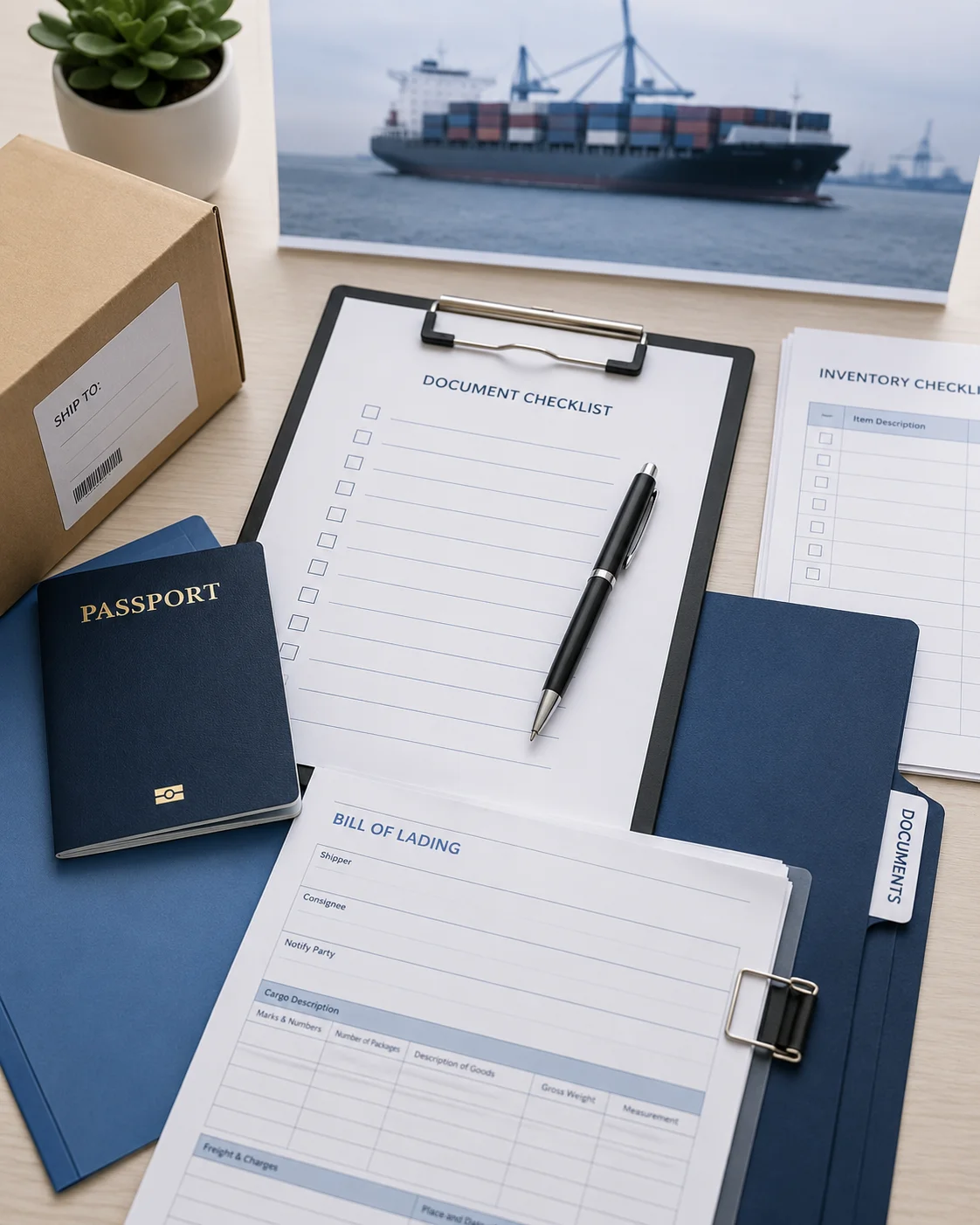
Documents required for importing used household goods, personal effects, and related shipments.
- Copy of passport
- Letter of employment
- Original packing list
- Original bill of lading (OBL) — no express release accepted — or air waybill (AWB)
- Freight invoice, or OBL showing freight charges
- Original valued inventory in English or French, dated and signed by the owner
- Invoice for all new items (if applicable)
- For diplomats: certificate of free entry from the Ministry of Foreign Affairs
Specific Information
Diplomatic shipments: Diplomats must obtain a certificate of free entry from the Ministry of Foreign Affairs. If granted, the owner is liable only for the statistic tax of 1.5% of the CIF value.
NGO expatriate staff: Personal effects of NGO expatriate staff may be exempted from duty and taxes, provided they are imported within the first 6 months upon arrival. UN agencies may have different agreements. The exemption requires approval from the Ministry of Foreign Affairs and the OBR.
Pre-shipment inspection: If the shipment value exceeds USD 500, a pre-shipment inspection may be requested, along with an import licence.
Express release not accepted: Only original bills of lading are accepted.
Documents must arrive first: All documents must be provided to the agent prior to the arrival of the shipment to obtain duty-free clearance (for qualifying categories).
Deposit on technical items: A deposit will be needed for any technical items being imported such as computers, phones, DVD players, etc.
EAC membership: Burundi is a member of the East African Community (EAC). The EAC Customs Management Act governs customs procedures. The EAC Common External Tariff applies to goods from outside the community.
Duties & Taxes
No blanket duty-free exemption for non-diplomatic shipments. All used household goods for non-diplomatic shipments are subject to import duties and taxes of approximately 7.5% of the CIF value. This applies regardless of how long the goods have been owned or used.
New items within shipments: All new household goods for non-diplomatic shipments are charged duty and taxes as commercial goods. Average duties on new items are approximately 40% of the CIF value.
Taxe de voirie: If the owner works for an NGO, embassy, or international organisation, a "taxe de voirie" of 0.85% of CIF value is applicable on all diplomatic shipments.
Prohibited & Restricted Items
Prohibited Items
- Narcotics and illegal drugs — Strictly prohibited
- Weapons, explosives, and ammunition without authorisation — Prohibited
- Knives and deadly weapons — Prohibited
- Hazardous materials and hazardous wastes — Prohibited
- Counterfeit money and goods — Prohibited
- Pornographic and obscene materials — Prohibited
- Matches manufactured with white phosphorus — Prohibited
- Distilled beverages containing essential oils or chemical products injurious to health — Prohibited
- Any product containing mercury — Prohibited
- Used tyres for light commercial vehicles and passenger cars — Prohibited
- Some agricultural and industrial chemicals — Prohibited
- Any article bearing the Armorial Ensign or Coat of Arms of an EAC partner state without authority — Prohibited
Restricted / Dutiable Items
Duty-Free Traveller Allowances
Per VisaHQ:
- 1,000 cigarettes
- 1 kg tobacco
- 1 litre of alcoholic beverages
Per Hinterlandtravel (EAC framework):
- Perfume and eau de toilette up to 500ml (of which 125ml may be perfume)
- Personal goods up to the value of RF 500,000 (Burundian franc equivalent)
Restricted Items
- Alcohol within household shipments: Only "Fond de Cave" is acceptable and duty-free, maximum 20 bottles
- Firearms and ammunition `PERMIT REQUIRED` — Authorisation from the territorial administration required
- Pre-shipment inspection: Required for shipments valued over USD 500
- Import licence: Required for shipments valued over USD 500
- Technical items (computers, phones, DVD players) — Deposit required upon import
- Postal franking machines `PERMIT REQUIRED` — Permit from competent authority required
- Plants and plant products `PERMIT REQUIRED` — Phytosanitary certificate required
- Meat and meat products `PERMIT REQUIRED` — Health certificate required
- Endangered species `CITES` — Protected species permits may be required
EAC Export Restrictions (for reference)
The following may not be exported from Burundi under EAC regulations:
- Waste and scrap of ferrous scrap iron
- Timber from any wood grown in EAC partner states
- Fresh unprocessed fish (Nile Perch and Tilapia)
- Wood charcoal
Importing a Used Personal Vehicle
Required Documents
- All household goods documents listed above
- Vehicle registration / title
- Purchase invoice
- OBL must show: chassis number, engine number, cubic capacity, year of manufacture, brand, and model
Specific Information
Vehicle age restriction: 8 years maximum. Cars older than 8 years are not allowed for importation into Burundi. If imported in violation, a fine of USD 1,000 is levied by customs.
OBL specifications: The bill of lading must clearly show the chassis number, engine number, cubic capacity, year of manufacture, brand, and model of the vehicle. Missing information will delay clearance.
Duties on vehicles: Subject to import duties and taxes. Diplomats may import vehicles with reduced duties under the certificate of free entry.
Driving: Driving is on the RIGHT-hand side of the road.
Pets
- Veterinary health certificate from the country of origin, clearing the animal of any infectious diseases
- Rabies vaccination certificate from the country of origin
Health certificate: Must certify the animal is free from infectious diseases.
Rabies vaccination: Certificate required from the country of origin. Must be current.
Quarantine: Not specified for compliant animals. Contact the destination agent.
Official authority: Contact the Ministry of Agriculture for current pet import requirements.
Consignment Instructions
Recommended: Contact the destination agent to ensure all requirements have been met prior to import, especially for differences regarding air / sea shipments.
Documents first: All documentation must reach the agent before the shipment arrives.
Express release: Not accepted. Original OBLs required.
Pre-shipment inspection: Triggered for shipments over USD 500 — a very low threshold.
Baggage clearance: Cleared at the first airport of entry. Transit passengers with destinations outside Burundi who do not leave the transit area are exempt.
Routing / port of entry: Burundi is landlocked, bordered by the Democratic Republic of the Congo, Rwanda, and Tanzania. Burundi has no seaport. Sea freight is typically routed through the Port of Dar es Salaam (Tanzania) and transported overland, or via Mombasa (Kenya) through Uganda and Rwanda. Melchior Ndadaye International Airport (Bujumbura) is the main international airport. Customs clearance offices are located in Bujumbura, Kayanza, Gitega (the political capital since 2019), and the Kobero border crossing.
Currency: Burundian franc (BIF). Local currency: no restrictions on import/export. Foreign currencies: up to USD 10,000 may be imported.
Cultural & Other Information
- OpenFactBook (replaces CIA World Factbook): https://www.openfactbook.org/countries/burundi/
- Wikipedia: https://en.wikipedia.org/wiki/Burundi
- Office Burundais des Recettes (OBR): https://www.obr.bi/
- Burundi Trade Information Portal: https://info.commerce.bi/
Key country facts: Burundi is a small landlocked country in the Great Lakes region of East/Central Africa, bordered by the Democratic Republic of the Congo, Rwanda, and Tanzania. The political capital is Gitega (since 2019); the economic capital and largest city is Bujumbura. Official languages are Kirundi and French; Swahili is also spoken. The currency is the Burundian franc (BIF). Burundi is a member of the EAC. It is one of the world's poorest countries, with approximately 87% of the population living below the World Bank poverty threshold. The customs regime is governed by the EAC Customs Management Act and administered by the OBR. Driving is on the right-hand side.
Important notes for movers: The absence of a blanket duty-free exemption for non-diplomatic household goods is the headline finding. All non-diplomatic shipments pay approximately 7.5% of CIF value on used goods (and approximately 40% on new items). Only diplomats and certain NGO/international organisation staff may qualify for reduced rates. The USD 500 threshold for pre-shipment inspection and import licensing is very low and will be triggered by virtually any household goods shipment. The 8-year vehicle age limit is strict, with a USD 1,000 fine for violations. The alcohol "Fond de Cave" allowance of 20 bottles is relatively generous. The routing through Dar es Salaam adds transit time and cost.
Regulatory Updates
- 2019: Political capital moved from Bujumbura to Gitega. Customs clearance operations continue in Bujumbura.
- 2017: WTO Trade Facilitation Agreement entered into force, applicable to Burundi as a member.
- Ongoing: EAC Customs Management Act governs customs procedures. OBR is the principal revenue collection body.
Useful resources