

Country Guides
Cape Verde

Start here
Overview
Explore sections
Guide Details
Household Goods
Documents
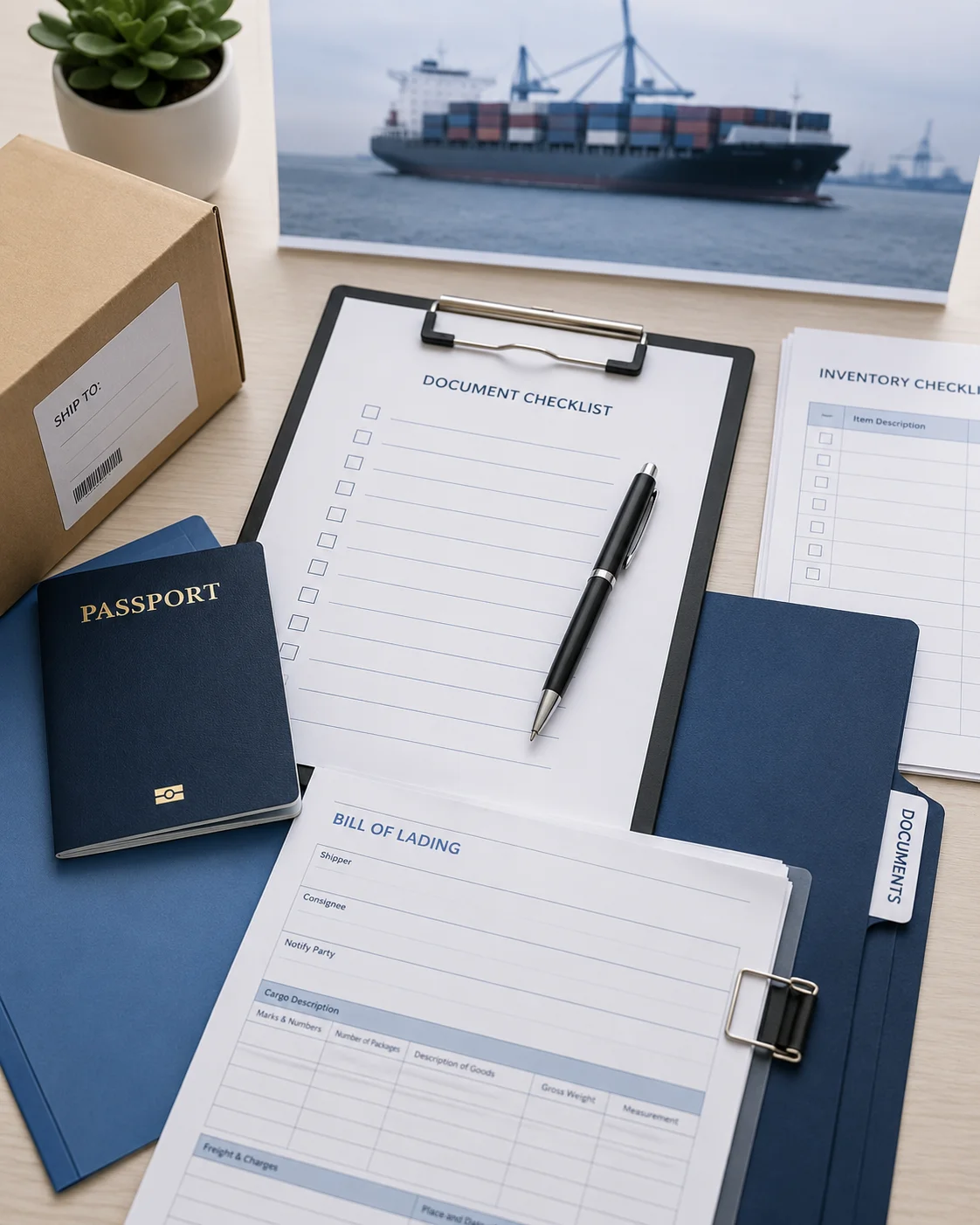
Documents required for importing used household goods, personal effects, and related shipments.
- Copy of passport
- Bill of lading (OBL) / air waybill (AWB)
- Commercial invoice
- Certificate of origin (when required)
- Packing list / inventory
- Proof of residence or employment in Cape Verde
- Health or phytosanitary certificates (for applicable goods)
Specific Information
Import licensing: Import operations require a commercial operator certificate and, depending on the goods, an import licence. Both are issued by the Chambers of Commerce.
Shipping options: Sea freight takes 3-6 weeks. Air freight is available weekly for smaller consignments. Most shipments arrive by sea.
Duties & Taxes
Duty-free conditions — Returning citizens: Personal effects may be imported duty-free if the import occurs within 6 months of the owner's initial arrival in Cape Verde and all documentation is available.
Duty-free conditions — Foreign diplomats: Personal effects may be imported duty-free during residence in Cape Verde, provided documentation is available.
Used personal items are tax-free. Used personal items such as furniture and household basics are duty-free for import by persons relocating to Cape Verde on a permanent or long-term basis. Only used items qualify. New items are taxed as commercial cargo at applicable rates.
New items: Subject to customs duties. Rates range from 0% to 50% depending on the item. A special consumption tax of 10-150% applies to goods deemed superfluous, luxurious, or socially undesirable. New items should be declared separately with invoices.
VAT: 15% standard rate applies to most imported goods (confirmed by PwC). Used personal effects qualifying for duty-free treatment are also exempt from VAT.
Prohibited & Restricted Items
Prohibited Items
- Narcotics and illegal drugs — Strictly prohibited
- Weapons without licence — Prohibited
- Endangered species and their products `CITES` — Prohibited or restricted
- Counterfeit goods — Prohibited
- Hazardous waste — Prohibited
Restricted / Dutiable Items
Duty-Free Traveller Allowances
- 200 cigarettes, or 50 cigars, or 250g tobacco (or a mix not exceeding 250g)
- Alcohol in quantities corresponding to personal needs
- Perfume in quantities corresponding to personal needs
- Tools, instruments, and portable utensils related to profession
- Other goods for personal use (jewellery, sporting equipment, musical instruments, toys)
Restricted Items
- Firearms, ammunition `PERMIT REQUIRED` — Special licence required
- Drugs and controlled substances `PERMIT REQUIRED` — Special licence required
- Animals, plants, and animal products `PERMIT REQUIRED` — Health and phytosanitary certificates required
- Medicines — Subject to sanitary controls and non-automatic licensing
- Fuel — Subject to legal restrictions
- Weapons — Subject to legal restrictions
Special Consumption Tax
Items deemed superfluous or luxurious are subject to a special consumption tax of 10-150%. Locally produced alcoholic beverages receive exemptions from the ad valorem component.
Importing a Used Personal Vehicle
Required Documents
- Bill of lading
- Vehicle registration / title
- Purchase invoice
- Proof of ownership
Specific Information
Foreign diplomats, technicians, and coopérants: May import a personally owned vehicle (POV) duty-free.
All others: Duties and taxes apply. Percentages vary according to the vehicle type, age, and value. Contact the destination agent for current rates.
Driving: Driving is on the RIGHT-hand side of the road.
Pets
- Health certificate from the country of origin
- Rabies vaccination certificate (for dogs)
- Phytosanitary certificate (for plants; health certificate for animals)
Dogs: An additional health certificate is required when importing dogs into Cape Verde.
CITES: The import of certain endangered species of plants, live animals, and their products is prohibited or restricted under CITES.
Official authority: Contact the Ministry of Agriculture for current pet import requirements.
Consignment Instructions
Recommended: Contact the destination agent to ensure all requirements have been met prior to import, especially for differences regarding air / sea shipments.
Agent recommended: Use a registered agent to handle importing, shipping, and clearance. The customs process requires local knowledge.
Used vs. new: Only used items are duty-free. New items are taxed as commercial cargo. Ensure the inventory clearly distinguishes between used and new items.
6-month deadline: For returning citizens, goods must arrive within 6 months of the owner's initial arrival.
Routing / port of entry: Cape Verde is an archipelago of 10 islands in the central Atlantic Ocean, approximately 570 km off the west coast of Africa. The capital is Praia (Santiago island). The primary sea port is Porto da Praia (Santiago). Amílcar Cabral International Airport (Sal island) and Nelson Mandela International Airport (Santiago) handle international flights. Inter-island transport is by domestic flights (Binter Canarias / TICV) or ferry (CV Interilhas).
Island logistics: Goods arriving at one island that need to reach another island require inter-island transport, adding time and cost. Confirm the destination island with the agent.
Currency: Cape Verdean escudo (CVE), pegged to the euro at CVE 110.265 = EUR 1.
Cultural & Other Information
- OpenFactBook (replaces CIA World Factbook): https://www.openfactbook.org/countries/cabo-verde/
- Wikipedia: https://en.wikipedia.org/wiki/Cape_Verde
- trade.gov — Cabo Verde Import Requirements: https://www.trade.gov/country-commercial-guides/cabo-verde-import-requirements-and-documentations
- Feel Cape Verde — Customs and Regulations: https://feelcaboverde.com/en/customs-and-regulations-cape-verde/
Key country facts: Cape Verde (officially Cabo Verde) is an archipelago of 10 volcanic islands in the central Atlantic Ocean, approximately 570 km west of Senegal. The capital is Praia on Santiago island. The official language is Portuguese; Cape Verdean Creole (Kriolu) is widely spoken. The currency is the Cape Verdean escudo (CVE), pegged to the euro. Cape Verde is a member of ECOWAS (though with special economic partnership status). Customs duties range from 0% to 50%. VAT is 15%. The economy relies on tourism, remittances, and services. Driving is on the right-hand side.
Important notes for movers: The archipelago geography is the defining logistical challenge. Goods may arrive at one island but need to reach another, requiring inter-island ferry or air transport. Confirm the exact destination island with the agent early in the process. The distinction between used items (duty-free) and new items (taxed as commercial cargo at potentially very high rates, including the special consumption tax of up to 150% on luxury goods) is critical. The 6-month arrival deadline for returning citizens applies. Vehicle import is duty-free only for diplomats, technicians, and coopérants; all others face duties at variable rates.
Regulatory Updates
- 2026: State Budget Law for 2026 increased specific tax on cigarettes from CVE 150 to CVE 180 per pack. New real estate taxes entered into force from January 1, 2026.
- 2020: National Certification Commission (CONCERT) created to develop certification processes.
- Ongoing: Cape Verde's customs nomenclature is based on the Harmonized System. Import licensing follows a general automatic regime with non-automatic exceptions for controlled goods.
Useful resources