

Country Guides
Cayman Islands

Start here
Overview
Explore sections
Guide Details
Household Goods
Documents
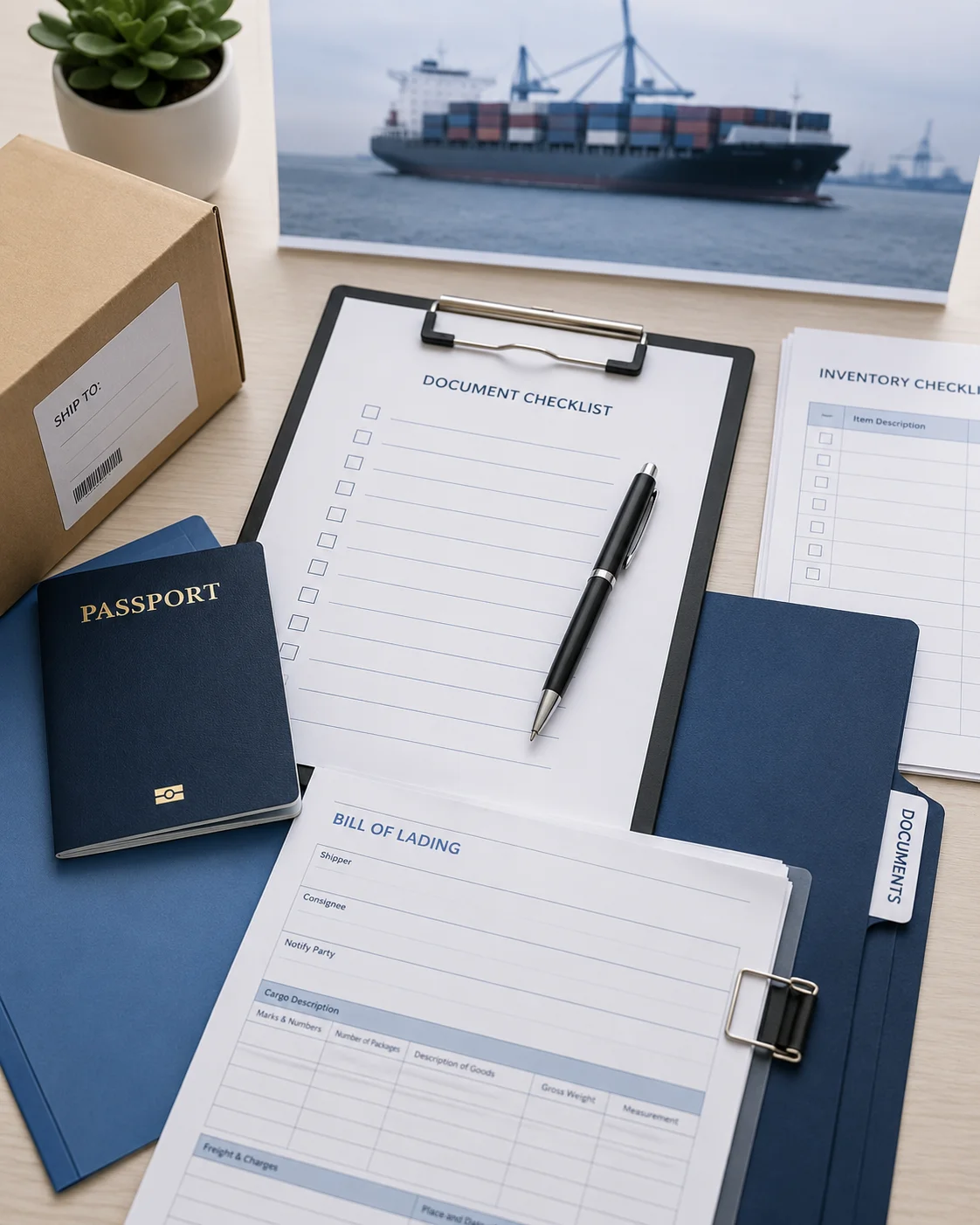
Documents required for importing used household goods, personal effects, and related shipments.
- Declaration for Unaccompanied Baggage form (from CBC)
- Customs Import Entry form (C5)
- Proof of residency (work permit or other means)
- Passport
- Detailed packing list with new items clearly separated and identified
- Bill of lading / air waybill — rated, with express release stating total freight cost from origin to destination
- Invoices for all new items (no handwritten notations permitted)
Specific Information
The 6-month clock starts on arrival, not work permit approval. This is an important distinction.
300% penalty for undeclared new items. The Customs Department inspects personal shipments on arrival and can charge a duty penalty of 300% on any items they determine were imported without proper declaration. This is strictly enforced. Movers must ensure the packing list clearly distinguishes new from used items.
2-year disposal restriction: Articles admitted duty-free must not be sold, hired, lent, or otherwise disposed of to other persons for at least 2 years. They must be re-exported at the end of the importer's stay if not consumed or used up.
6-month extension possible: If goods cannot be imported within the 6-month window, a written request for extension can be made to the Collector of Customs (PO Box 898, Grand Cayman KY1-1103, Tel: 345-949-4579).
Customs Online System (COLS): All declarations must be submitted through COLS within 7 days of arrival of goods.
Trader Identification Number (TIN): Required for import declarations. Free of charge and usually obtained quickly from CBC.
Storage and demurrage: Storage fees start on the 6th day after arrival. Demurrage charges start on the 15th day after arrival. Storage at the Port Authority is open/uncovered — LCL and FCL cannot be accommodated in the on-site warehouse during hurricane season (June-November).
Inland freight costs: Must be reflected on documentation regardless of origin.
Documents to destination agent 15 days prior: All documents must arrive to the destination agent 15 days prior to the shipment's arrival for diplomatic/privileged imports requiring Ministry of Foreign Affairs free entry.
Duties & Taxes
Duty-free conditions: Used personal and household effects are admitted duty-free if: the owner is entering the Cayman Islands to take up employment or residency for a period exceeding 12 months; the goods have been owned for at least 6 months prior to entry; and the goods are imported within 6 months of arrival.
New items are NEVER duty-free. Items purchased within the last 6 months must be clearly separated and identified on the packing list. Standard duty rate on new items is 22% of CIF value. Household goods and personal items in the lower-rate category typically range 0-10% depending on value.
Prohibited & Restricted Items
Prohibited Items
- All firearms, weapons, ammunition, explosives, knives, bows, catapults, and manually operated weapons — Prohibited without permit
- Narcotics and controlled drugs — Strictly prohibited
- Motorcycles with sidecars — Prohibited
- Animals from Asia, Africa, Central/South America, Cuba, Puerto Rico, Haiti, Dominican Republic — Prohibited
- Banned dog breeds (Malinois, Rottweiler, Tosa, Dogo Argentino, Fila, Shar-Pei, Pit Bull, Akita, Staffordshire Terriers, American Bulldog, Dogue de Bordeaux, all Mastiffs) — Prohibited
- Counterfeit goods — Prohibited
- Obscene material — Prohibited
Restricted / Dutiable Items
Duty-Free Traveller Allowances
Returning residents:
- CI$500 per person (approximately USD 610) duty-free on personal and household goods
- 200 cigarettes or 250g tobacco (18+)
- 1 litre spirits, or 4 litres wine, or 1 case of beer not exceeding 8 litres (18+)
- Purchases exceeding CI$500 are charged 22% duty
- Christmas period: the allowance may be temporarily increased to CI$1,000
Minors under 18: May not import spirits, alcoholic beverages, or tobacco.
Restricted Items
- Alcohol: 2 litres allowed subject to duty; excess requires a liquor licence
- Tobacco: 200 cigarettes or 250g tobacco; excess incurs duty
- Radio or radar apparatus `PERMIT REQUIRED` — Relevant licence, permit, or certificate required
- Marine radio transmitting equipment (A.M. mode, 1605-4000 kHz) — Prohibited
- Firearms and weapons `PERMIT REQUIRED` — All firearms and weapons including ammunition, explosives, knives, bows, catapults prohibited without permit
- Animals `PERMIT REQUIRED` — Permit from Department of Agriculture required
- Plants `PERMIT REQUIRED` — Phytosanitary controls apply
Importing a Used Personal Vehicle
Required Documents
- Bill of lading
- Vehicle title / registration
- Purchase invoice
- Import entry form
Specific Information
Vehicle duty rates:
- Cars: 29.5% to 42% depending on CIF value
- Motor cycles up to 90cc: 32% duty
- Motor cycles over 90cc: 37% duty
- Environmental tax: USD 90 per motorcycle
- Motorcycles with sidecars: prohibited
Left-hand drive: The Cayman Islands drives on the LEFT-hand side of the road. Both left- and right-hand drive vehicles are found.
Driving: Driving is on the LEFT-hand side of the road.
Pets
- Import permit from the Cayman Islands Department of Agriculture Per the Atlas International guide and CBC regulations:
- Veterinary health certificate Per the Atlas International guide and CBC regulations:
- Rabies vaccination certificate Per the Atlas International guide and CBC regulations:
Minimum age: 10 months. Cats and dogs must be at least 10 months old.
Country restrictions (CRITICAL): No animal of any description may be imported from any country in Asia, Africa, Central and South America, Cuba, Puerto Rico, Haiti, or the Dominican Republic. This is a very broad geographic ban.
Banned breeds: The following breeds or cross-breeds, including genetic material, are prohibited: Malinois, Rottweiler, Japanese Tosa, Dogo Argentino, Fila Brasileiro, Shar-Pei, Pit Bull Terrier, Akita, Staffordshire Terriers (both types), American Bulldog, Dogue de Bordeaux, and Mastiff (all types).
Import permit required: Must be obtained from the Department of Agriculture before the pet arrives.
Birds: Also require a permit.
Consignment Instructions
Recommended: Contact the destination agent to ensure all requirements have been met prior to import, especially for differences regarding air / sea shipments.
Separate new from used items: The single most important packing instruction for the Cayman Islands. New items must be clearly identified on the packing list with invoices. The 300% penalty for undeclared new items is real and enforced.
COLS declaration: Must be submitted within 7 days of goods arrival.
TIN: Obtain a Trader Identification Number from CBC before importing.
Document lead time: 15 days prior for diplomatic/privileged shipments requiring MFA free entry.
Hurricane season storage: Port Authority storage is open/uncovered. During June-November (hurricane season), warehouse facilities cannot accommodate LCL or FCL containers. Plan accordingly.
Routing / port of entry: George Town Harbour (Grand Cayman) for sea freight. Owen Roberts International Airport (Grand Cayman) for air freight. Cayman Brac and Little Cayman have smaller facilities. The Cayman Islands are located in the western Caribbean Sea, approximately 150 miles south of Cuba and 180 miles northwest of Jamaica.
No income tax or VAT: The Cayman Islands has no direct taxation (no income tax, no capital gains, no VAT). Customs duty is the primary source of government revenue. Standard rate is 22% on most consumer goods.
Currency: Cayman Islands dollar (KYD/CI$), pegged to the US dollar at CI$1.00 = USD 1.20 (or USD 1 = CI$0.833). US dollars are widely accepted.
Cultural & Other Information
- OpenFactBook (replaces CIA World Factbook): https://www.openfactbook.org/countries/cayman-islands/
- Wikipedia: https://en.wikipedia.org/wiki/Cayman_Islands
- CBC: https://gov.ky/web/cbc
- CBC — Imports: https://gov.ky/web/cbc/trade/imports
- CBC — Allowances: https://gov.ky/web/cbc/trade/imports/allowances
Key territory facts: The Cayman Islands is a British Overseas Territory comprising three islands (Grand Cayman, Cayman Brac, and Little Cayman) in the western Caribbean Sea. The capital is George Town on Grand Cayman. The official language is English. The currency is the Cayman Islands dollar (CI$), pegged to the US dollar. The territory has no direct taxation. It is a major international financial centre. The U.S. Embassy in Kingston, Jamaica, has consular responsibility. Driving is on the left-hand side.
Important notes for movers: The 300% penalty for undeclared new items is the headline risk. Movers must ensure every new item is clearly identified and separated on the packing list. The 6-month ownership requirement and 6-month import window (from date of arrival, not work permit) are standard conditions. The 2-year disposal restriction is enforced. The pet import restrictions are among the most severe in the Caribbean: a broad geographic ban on animals from Asia, Africa, Central/South America, and several Caribbean nations; a 10-month minimum age; and an extensive banned breed list (12+ breeds). Hurricane season (June-November) creates storage risks for port-side containers.
Regulatory Updates
- 2025: Cabinet approved amendments to the Customs and Border Control (Visas, Entry and Landing) Regulations (2025 Revision) for enhanced border security.
- Ongoing: COLS (Customs Online System) continues as the mandatory electronic declaration platform. TIN registration required for all importers.
Useful resources