

Country Guides
Chad

Start here
Overview
Explore sections
Guide Details
Household Goods
Documents
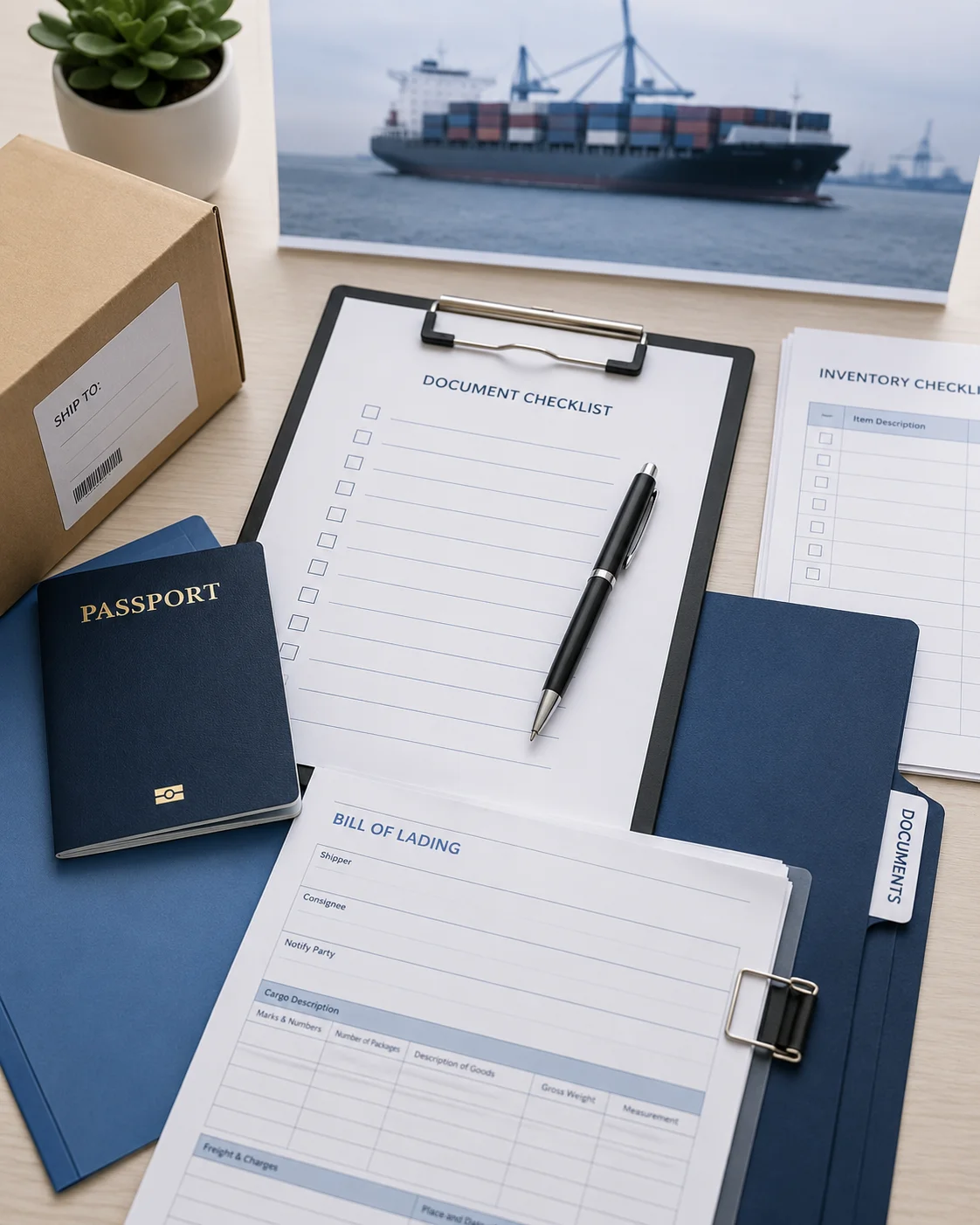
Documents required for importing used household goods, personal effects, and related shipments.
- Copy of passport
- Packing list
- Original bill of lading (OBL) -- no express release accepted / air waybill (AWB)
- Original valued inventory in French, dated and signed by the owner of the goods
- Invoices for all electrical items less than 6 months old
- Resident or work permit, or letter from the employer
- BSC (Bordereau de Suivi de Cargaison) / Cargo Tracking Note (CTN)
- Non-sale certificate (déclaration sur l'honneur stating that the owner will not sell personal effects in Chad)
- Move certificate (Certificat de Déménagement) from City Hall or Police Station
Specific Information
These are assessed on the declared value of the shipment. This is a critical point for cost estimates and customer expectations.
Diplomatic shipments: A certificate of free entry may be granted by Customs for diplomatic imports if all documentation requirements are met. Documents must be provided to the destination agent prior to the shipment's arrival to obtain duty-free clearance.
Non-sale certificate: Must explicitly state that the owner of the goods will not sell his or her personal effects in Chad.
Move certificate (Certificat de Déménagement): This is a requirement specific to Chad. The certificate must be obtained from the City Hall (Mairie) or Police Station at the point of origin. This document is not always familiar to origin agents in Western countries; confirm the requirement and format with the destination agent.
BSC / CTN requirement: The Bordereau de Suivi de Cargaison is compulsory for all sea shipments entering Chad. It must be obtained at the port of origin before the shipment departs.
All shipments are physically inspected by Customs.
CEMAC framework: Chad is a member of CEMAC (Economic and Monetary Community of Central Africa), along with Cameroon, Central African Republic, Republic of Congo, Equatorial Guinea, and Gabon. CEMAC countries apply a Common External Tariff (CET) on imports from third countries. A Community Integration Tax (TCI) of 1% applies to imports from outside CEMAC. An ECCAS Community Integration Contribution of 0.4% and an OHADA levy of 0.05% also apply. As of January 2026, the broader CEEAC-CEMAC common external tariff harmonization (rates 0% to 40%) is being implemented across member states.
Currency: CFA Franc BEAC (XAF), pegged to the Euro at a fixed rate of 1 EUR = 655.957 XAF. Currency may be freely imported if declared on arrival. Local currency export is limited to XAF 10,000.
Language: French and Arabic are the official languages. All customs documentation, inventories, and declarations must be in French.
Duties & Taxes
Non-diplomatic shipments are NOT duty-free. Unlike many countries, Chad does not provide full duty-free entry for non-diplomatic household goods shipments. Non-diplomatic shipments are subject to:
- 2% "Taxe statistique" (statistical tax)
- 20% "Droits de douane" (customs duties)
VAT rate: Chad applies a VAT rate of 18% on most imported goods.
Prohibited & Restricted Items
Prohibited Items
- Arms, ammunition, and explosives (without prior authorization) PERMIT REQUIRED
- Narcotics and illegal drugs
- Pornography, defamatory, or obscene publications
- Counterfeit goods
- Products made from endangered species without proper CITES documentation CITES
Restricted / Dutiable Items
Duty-free allowances for personal imports (traveler's baggage):
- 400 cigarettes
- 125 cigars
- 500 grams of tobacco (note: VisaHQ indicates women may only import cigarettes, not cigars or loose tobacco)
- 3 bottles of wine
- 1 bottle of spirits
Alcohol within household goods shipments: Only "Fond de Cave" (wine cellar stock) is accepted within a household goods shipment, and is duty-free up to a maximum of 20 bottles. Alcohol exceeding 20 bottles or not properly labeled as Fond de Cave will be subject to full duties and may be confiscated.
Firearms and ammunition: Authorization from the territorial administration is required prior to import. These must be declared.
Importing a Used Personal Vehicle
Required Documents
- Original vehicle registration card
- Insurance certificate
- Original bill of lading (OBL) / air waybill (AWB)
- Original purchase invoice
- Non-sale certificate
Specific Information
Duty rates: Import taxes on motor vehicles are approximately 61% of CIF value (cost, insurance, freight). Exact rates depend on the age, engine power, and type of vehicle.
Age restriction: vehicles older than 3 years cannot be imported. This is a strict requirement. Vehicles manufactured more than 3 years before the date of import will be refused entry. This applies to personal vehicles in household goods shipments as well as standalone vehicle imports. Confirm the exact cutoff date calculation with the destination agent.
OBL requirements: The original bill of lading must include chassis number, engine number, cubic capacity, year of manufacture, brand, and model. Incomplete vehicle documentation will delay or block clearance.
Road conditions: Chad has very limited paved road infrastructure. Most roads outside N'Djamena are unpaved and frequently impassable during the rainy season (June to October). Four-wheel-drive vehicles are essential for travel outside the capital.
Driving: Driving is on the right-hand side of the road.
Pets
- Certificate of vaccination (must include rabies)
- Health certificate issued by a veterinarian in the country of departure, dated no more than 14 days prior to arrival
Health certificate timing: The health certificate must show current vaccinations administered by a veterinarian in the country of departure and must be dated no more than 14 days prior to arrival in Chad. Government endorsement of the health certificate by the veterinary authority in the country of origin is strongly recommended.
Rabies vaccination: Mandatory for all dogs and cats. The vaccination must be current at the time of entry. The rabies vaccine should be administered after microchip implantation.
Microchip: While not explicitly required under Chadian regulations, ISO-compliant microchipping (ISO 11784/11785) is strongly recommended for identification purposes and is required by most airlines and for re-entry to many countries.
CDC high-rabies-risk classification: Chad is classified as a high-risk country for dog rabies by the U.S. CDC and the World Organisation for Animal Health (WOAH). This has significant implications for pets returning to the United States or other countries with strict rabies import controls. Owners relocating to Chad with dogs should obtain the CDC's Certification of U.S.-Issued Rabies Vaccination form from a USDA-accredited veterinarian before departing the United States. USDA export health certificates issued after July 31, 2025, are no longer accepted for re-entry to the U.S. Plan for return travel requirements before departure.
No import permit required for accompanied pets entering with their owners, based on available information. Commercial and unaccompanied pet imports may require additional permits. Confirm with the destination agent.
Limited veterinary services: Veterinary care in Chad is extremely limited, particularly outside N'Djamena. Pet owners should ensure all vaccinations, treatments, and health checks are completed before travel. Bring sufficient supplies of any pet medications.
Consignment Instructions
Recommended: Contact the destination agent to ensure all requirements have been met prior to import, especially for differences regarding air / sea shipments.
Pre-arrival documentation is critical. All documents, especially for diplomatic shipments seeking duty-free clearance, must be provided to the destination agent before the shipment arrives. There is no retroactive application for free-entry status.
French-language inventory required: The valued inventory must be in French, dated, and signed by the owner. This is a strict requirement.
Move certificate (Certificat de Déménagement): This document from City Hall or Police Station at the origin must be included. Confirm the exact format required with the destination agent, as this is not a standard document in many countries.
BSC / CTN at origin: The Bordereau de Suivi de Cargaison must be obtained at the port of origin for all sea shipments. Cannot be obtained retroactively.
Routing: Chad is landlocked. The primary shipping route for sea freight is via the port of Douala (Cameroon), with overland transport to N'Djamena. Alternative routes include transit through the port of Cotonou (Benin) and overland, or overland from Sudan, Libya, Niger, Nigeria, or the Central African Republic. Air freight arrives at N'Djamena Hassan Djamous International Airport (NDJ).
Transit challenges: Overland transit from Douala to N'Djamena is approximately 1,800 km and can take 2 to 4 weeks depending on road conditions, rainy season disruptions, and customs processing at the Cameroon-Chad border. Road infrastructure is poor. No rail service exists in Chad.
Security environment: The security situation in Chad is volatile, particularly in border regions (Libya, Sudan, Lake Chad basin). Travel advisories should be consulted. Armed escort may be required for certain routes.
Unpredictable expenses: Border delays, road conditions, security escorts, and variable port handling charges can substantially increase costs. Budget for significant contingencies.
ISPM 15 (wood packaging): All wood packaging materials must comply with ISPM 15 standards (heat treated or fumigated, with the IPPC stamp).
Cost expectation management: Because non-diplomatic shipments are subject to 2% statistical tax and 20% customs duties (in addition to CEMAC taxes and VAT), the total landed cost for a household goods shipment to Chad can be substantially higher than countries that offer duty-free entry for personal effects. Movers should communicate this clearly to customers during the quotation process.
Cultural & Other Information
- OpenFactBook (replaces CIA World Factbook): https://www.openfactbook.org/countries/chad/
- Wikipedia: https://en.wikipedia.org/wiki/Chad
- Chad Customs Authority: https://www.douanes.td/ *(site under construction as of June 2026 — new DGDDI website forthcoming)*
- CEMAC Commission: https://cemac.int/
- U.S. State Department Travel Advisory: https://travel.state.gov/en/international-travel/travel-advisories/chad.html
- U.S. Trade.gov -- Chad: https://www.trade.gov/country-commercial-guides/chad-distribution-and-sales-channels
- Foreign Embassies in Chad: http://www.embassy.org/embassies/td.html
- CDC -- High-Risk Countries for Dog Rabies: https://www.cdc.gov/importation/dogs/high-risk-countries.html
Key country facts: Chad is a landlocked country in north-central Africa, bordered by Libya to the north, Sudan to the east, the Central African Republic to the south, Cameroon and Nigeria to the southwest, and Niger to the west. The capital and largest city is N'Djamena. Official languages are French and Arabic, with over 120 indigenous languages spoken. The country spans Saharan desert in the north, Sahelian semi-arid zone in the center, and tropical savanna in the south. Chad is one of the poorest and least developed countries in the world.
Security advisory: Multiple governments issue elevated travel warnings for Chad. The U.S. State Department advisory should be consulted for current conditions. Crime, civil unrest, terrorism, and kidnapping are cited as risks. The border regions with Libya, Sudan, Nigeria (Lake Chad area), and the Central African Republic are particularly volatile.
Infrastructure: Infrastructure is extremely limited. There is no railway system. Most roads are unpaved. Electricity supply is unreliable outside central N'Djamena. Warehouse and storage facilities are limited. All of these factors directly affect the logistics, timing, cost, and risk profile of any relocation shipment.
Important note for movers: The combination of no duty-free entry for non-diplomatic shipments, high transit costs through landlocked routing, poor infrastructure, and security challenges makes Chad one of the more expensive and complex destinations in the IAM network. Comprehensive pre-move planning and close coordination with the destination agent are essential. Customers should be clearly informed of the expected total costs, including duties and taxes, during the quotation process.
Useful resources