

Country Guides
Costa Rica

Start here
Overview
Explore sections
Guide Details
Household Goods
Documents
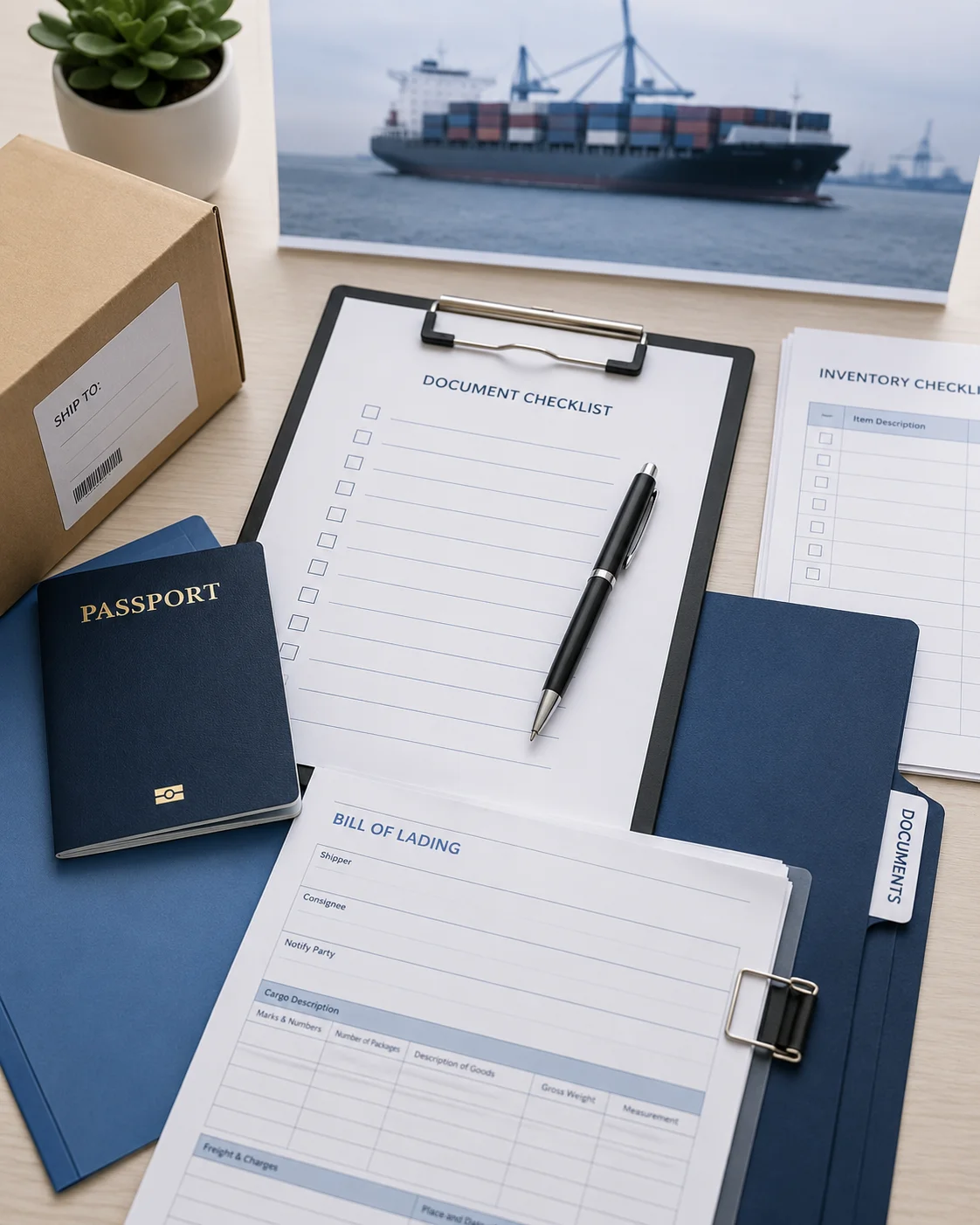
Documents required for importing used household goods, personal effects, and related shipments.
- Copy of shipper's passport (front page), or Costa Rican ID (cédula) for Costa Rican citizens
- Rated original bill of lading (OBL), airway bill (AWB), or "Carta de Porte"
- Packing list or inventory
- Translation of the packing list in Spanish (required per Art. 317 of Costa Rica's customs law, RGLA)
- Detailed packing list indicating brand, serial number, and model of all electric appliances and electronics
- One probative document establishing the importer's status (see below)
Probative documents by importer category:
For Costa Rican citizens returning after living abroad: consular certification of residency abroad, or a supplementary document such as a house rental, lease, or purchase agreement showing the place of residence and period of time spent abroad (minimum 6 months). Citizens who have not lived outside Costa Rica for longer than 12 months cannot import household goods.
For foreign citizens coming to work in Costa Rica: work permit issued by the General Immigration and Alienage Direction, or a copy of the authorization permit request before Immigration and Foreign Service, plus a copy of the labor agreement from the contracting company.
For foreign citizens with permanent residency: residence ID card in force, from the date residency was granted.
For foreign citizens who were permanent residents abroad for at least 6 months: consular certification of residency abroad or supplementary document showing the place and duration of residency.
Additionally required: property registration certificate of property acquired in Costa Rica, or copy of a lease or rent agreement in Costa Rica, authenticated by a lawyer.
- Copy of shipper's passport (front page) and diplomatic ID
- Rated original OBL, AWB, or "Carta de Porte"
- Packing list or inventory
- Translation of the packing list in Spanish
- Detailed packing list with brand, serial number, and model of all electric appliances and electronics
- Tax exemption documentation
Specific Information
Important restriction: If the transferee is a Costa Rican resident who has not lived outside Costa Rica for longer than 12 months, they cannot import any household goods into the country.
Physical inspection: Mandatory for all shipments. Costa Rican customs authorities verify that there are no differences between the quantities and weights declared on the shipping documents and the actual shipment contents.
Piece count and weight matching: The number of pieces and weight reported on the OBL must match the actual number of pieces and weight. If they do not match, customs will apply a fine of USD 500 and clearance will be delayed 4 to 6 weeks.
ISPM 15: Liftvans, airvans, wooden crates, and boxes arriving in containers or single shipments must be fumigated per ISPM-15 guidelines and visibly marked on at least two opposite sides of the container in permanent black ink. Certain wood packing materials are exempt from ISPM-15 regulations; contact the destination agent for specifics. Additionally, Costa Rica has adopted ISPM-15 (also referred to as NIMF-15) for standardizing the treatment of wood packing materials used in international trade.
Wooden items: Wooden ornaments and hangers are not allowed. Wooden crates require a permit from the Ministry of Agriculture. Wicker and rattan baskets or any product made of those materials are not allowed (furniture made with wicker and rattan is allowed).
Duties & Taxes
Duty-free conditions: Diplomat shipments enter duty free. All other shippers (both foreigners and returning Costa Ricans) are subject to import duties and taxes. There is no general duty-free exemption for household goods shipments in Costa Rica.
Partial tax exemption for returning Costa Rican citizens: Costa Rican citizens who have lived abroad for a minimum of 6 months may apply for a partial tax exemption. This exemption applies only for one item per type (for example, one microwave, one washing machine, one bed, one table, chairs, etc.). The shipper must obtain a certification from the Costa Rican consulate in the origin country indicating the number of years lived abroad. Additional formalities for this status must be completed in Costa Rica.
Prohibited & Restricted Items
Prohibited Items
- Narcotics, drugs (importation prohibited; permits from the College of Pharmacy and Ministry of Health apply for legitimate medical needs). PERMIT REQUIRED
- Pornographic and subversive materials
- Explosives
- Items not being part of the normal household
- Wooden ornaments and hangers
- Wicker and rattan baskets (furniture made from wicker/rattan is allowed)
Restricted / Dutiable Items
The following items are subject to taxes and/or require permits:
Arms and ammunition: importation prohibited for private individuals. Permit provisions for returning citizens or residents may apply in some cases; confirm with the destination agent.
Plants: require a phytosanitary certificate and permit from the Ministry of Agriculture prior to import.
New household goods and new furniture: require an original invoice or a statement under oath of the value of the item. Subject to taxes.
Household and electrical appliances: the brand, serial number, and model must be listed on the packing list.
Wedding trousseaux, inheritances, gifts, and souvenirs: subject to taxes. Require original commercial invoices and Spanish translation.
Carpets: subject to taxes.
Antiques and works of art (more than 100 years old): subject to taxes. Require original commercial invoices and Spanish translation.
Wooden furniture and ornaments: subject to taxes. Require a permit from the Ministry of Agriculture for wooden crates. Wooden ornaments and hangers are not allowed. Wicker/rattan baskets are not allowed (wicker/rattan furniture is allowed).
Precious metal objects (jewelry, coins, etc.): require purchase receipts or invoices. Subject to taxes.
Non-motorized vehicles (bicycles, watercraft, etc.): duties depend on value, year, model, cubic centimeters, and features. Subject to taxes.
Wine and alcohol: require permits from the Ministry of Health and Ministry of Economy. Subject to taxes. Prohibited in air and LCL shipments. For FCL shipments, a maximum of 5 liters is permitted. For diplomats, wine and alcohol import is permitted; quantity depends on the annual allowance agreed between the Ministry of Foreign Affairs and each embassy.
Tins and food: require a permit from the Ministry of Health (3 copies). Subject to taxes.
Refrigerators, freezers, air conditioning: require permits from the Ministry of ECA (Costa Rican technical standards authority). Subject to taxes.
Medicines, narcotics, drugs, soaps, perfumes, shampoo, creams, cosmetics, and other personal hygiene articles: require permits from the Ministry of Health. Subject to taxes.
Duty-free allowances (traveler's baggage, per VisaHQ):
- 400 cigarettes
- 50 cigars
- 500 grams of tobacco
- 5 liters of liquor
Importing a Used Personal Vehicle
Required Documents
- Copy of shipper's passport (front page) or Costa Rican ID
- Rated original bill of lading or "Carta de Porte"
- Original vehicle property deed or original circulation permit
- Original purchase invoice
- Subject to DEKRA permits
- Additional documents for the motor vehicle import process must be presented in Costa Rica
Specific Information
Duties: Subject to taxes. Duties range from 45% to 70% of the retail value of a vehicle. The import of motor vehicles is generally not recommended, as duties may exceed the value of the vehicle.
Total loss restriction: Vehicles that have been declared as "total loss" at the origin country cannot be imported.
Contact the destination agent for additional information on current duty rates and exemptions, as rates depend on the vehicle's value, year, model, cubic centimeters, and features.
Pets
- Copy of shipper's passport (front page) or Costa Rican ID
- Rated original AWB
- Health certificate (veterinary health certificate for export)
- Up-to-date vaccination cards, including rabies vaccination record
- Invoice or affidavit indicating the animal's value and characteristics
- Permit from the National Animal Health Service (SENASA)
- APHIS Form 7001 (international health certificate) is recommended for US-origin pets
Documentation timing: All documentation must be received by the destination agent prior to the arrival of the animal and is subject to examination upon arrival.
Rabies vaccination: Animals over 3 months of age must be vaccinated against rabies.
Quarantine: Quarantine policy is not consistently documented across sources. Pets deemed unhealthy upon examination may be kenneled in a government facility. Shippers should confirm the current quarantine policy with the destination agent before shipping.
Taxes: Pet import is subject to payment of taxes.
CDC rabies risk status: Costa Rica is not on the CDC's list of high-risk countries for dog rabies. Standard CDC requirements apply for dogs returning to the United States from Costa Rica.
Common mistake: Failing to send documentation to the destination agent in advance of the animal's arrival. All paperwork must precede the pet.
Consignment Instructions
Recommended: Contact the destination agent to ensure all requirements have been met prior to import, especially for differences regarding air, sea, and road shipments.
Inventory requirements: A detailed packing list is required, translated into Spanish (Art. 317, RGLA). The packing list must include the brand, serial number, and model of all electric appliances and electronics. The number of pieces and weight on the OBL must exactly match the actual shipment contents; discrepancies result in a USD 500 fine and a clearance delay of 4 to 6 weeks.
Probative document requirement: All shippers (except diplomats) must provide a "probative document" establishing their importer status. This document may be no more than 6 months old and must relate to the importer's category (returning citizen, foreign worker, permanent resident, etc.). Without this document, customs clearance cannot proceed.
Clearance timeline: Plan for approximately 22 working days for clearance at the bonded warehouse in San José. Diplomat shipments require the shipper to be registered at the Ministry of Foreign Affairs, and the tax exemption process must be done directly by the shipper's entity.
Alcohol in shipments: Wine and alcohol are prohibited in air and LCL shipments. Only FCL shipments may include up to 5 liters, and Ministry of Health permits are required.
Wood and plant products: ISPM-15 compliance is strictly enforced. Wooden items require agricultural permits. Wooden ornaments, hangers, and wicker/rattan baskets are prohibited.
Cultural & Other Information
- OpenFactBook -- Costa Rica (replaces CIA World Factbook): https://www.openfactbook.org/countries/costa-rica/ (verified 200)
- Wikipedia -- Costa Rica: https://en.wikipedia.org/wiki/Costa_Rica (returns 403 to bots; accessible in browsers)
- Costa Rica Customs / Tax Authority (Ministerio de Hacienda): https://www.hacienda.go.cr/ (returns 400 to this proxy but serves "Ministerio de Hacienda" content; browser-accessible)
- SENASA (National Animal Health Service / Pet Travel Regulations): https://www.senasa.go.cr/ (verified 200, "Inicio")
- Costa Rica Ministry of Foreign Affairs: https://www.rree.go.cr/ (verified 200)
- PetTravel.com -- Costa Rica: https://www.pettravel.com/information/pet-passports/costa-rica-pet-import-requirements/ (verified 200)
- USDA APHIS -- Pet Travel to Costa Rica: https://www.aphis.usda.gov/pet-travel/us-to-another-country-export/pet-travel-us-costa-rica (returns 503 to this proxy; confirmed live via search — correct current URL, supersedes the dead link noted in the prior version of this guide)
- U.S. Trade.gov -- Costa Rica Import Tariffs: https://www.trade.gov/country-commercial-guides/costa-rica-import-tariffs (verified 200)
Useful resources