

Country Guides
Djibouti

Start here
Overview
Explore sections
Guide Details
Household Goods
Documents
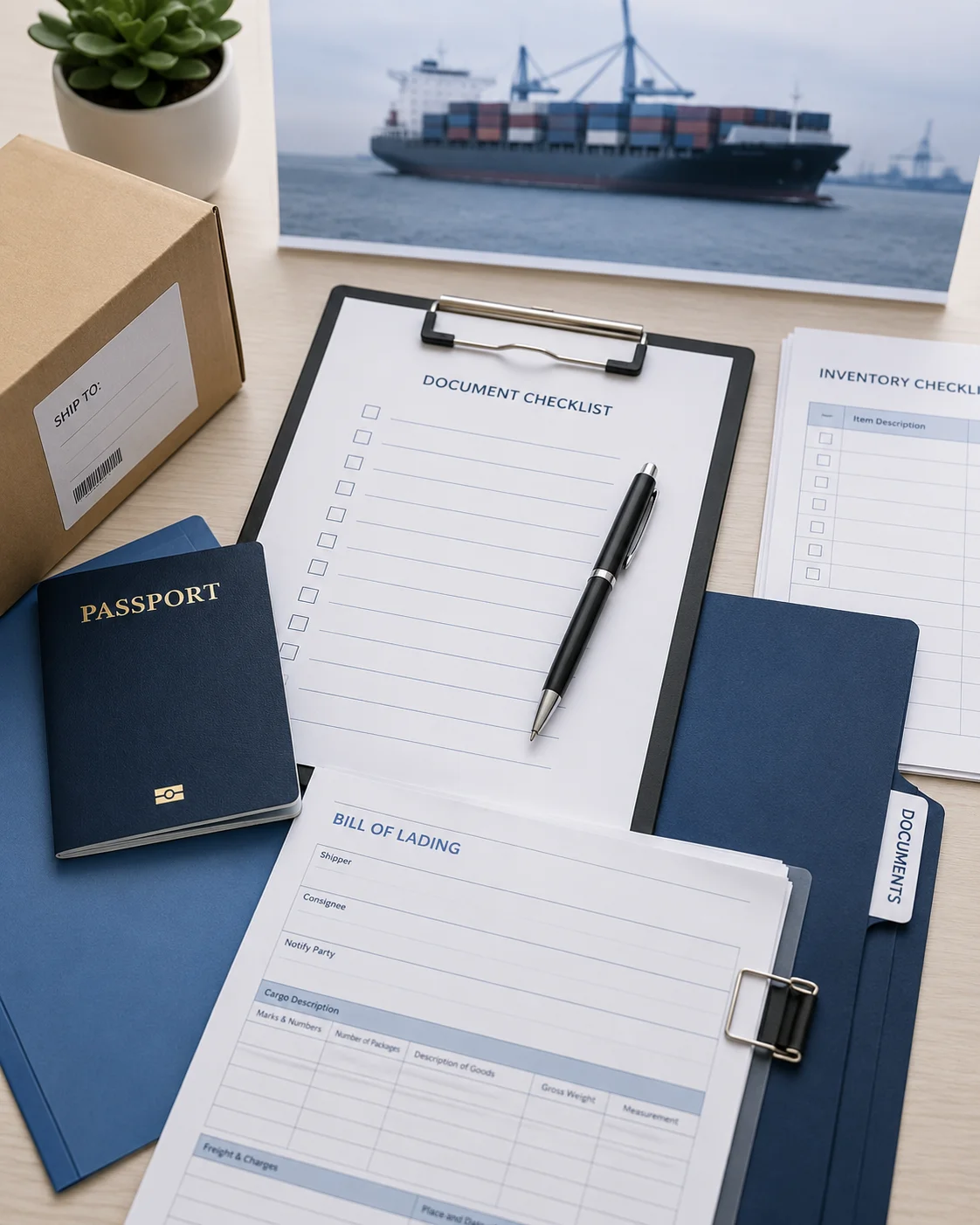
Documents required for importing used household goods, personal effects, and related shipments.
Requirements differ by importer category:
- Copy of passport
- Detailed inventory, dated and signed, valued in EUR or USD
- Original invoices less than 6 months old showing the destination address (handwritten invoices are rejected by customs)
- New personal effects form
- Tax-refund request form, dated and signed
- Certificate of change of residence
- Certification concerning prohibited and dangerous objects or items
- Transfer letter
- Certification concerning prohibited and dangerous items
- Passport
- Visa
- Residency permit (if applicable)
- Evidence of yellow fever vaccination
- Original bill of lading (OBL) / sea waybill / air waybill (AWB)
- Packing list
- Letter of transfer / letter of employment
- Letter of change of residence (returning citizens)
- Diplomatic franchise (diplomats)
Specific Information
Customs inspection: Local customs inspect imported shipments. The inventory must show a destination address.
Customs discretion: Customs officials make the final decision on the application of duties and taxes. This decision also depends on the client's ability to provide original purchase invoices.
Invoice requirements: Customs do not accept export sales slips, sales receipts, or purchase orders. Only original invoices are accepted for new items.
Separate inventories for new and used goods: If the move contains both used and new personal effects, submit one inventory for used items and a separate inventory for new items.
Visa note: Visas may be obtained after entering the country, but obtaining one prior to entry is strongly recommended. The time on the Djiboutian visa is the permitted stay duration without a residency permit. Overstaying incurs an exit tax of approximately USD 60.00 (generally added to airline ticket cost). All fees must be paid in cash.
Yellow fever vaccination: Evidence of yellow fever vaccination is required for entry.
Security considerations: Persons traveling to Djibouti are encouraged to research and consider travel warnings regarding safety and security.
Duties & Taxes
Duties and taxes on imported goods: Imported goods are liable for taxes and surcharges of 23% (calculated on the value of goods) plus 10% VAT. These taxes may apply to both new and used goods depending on the type of product and whether the goods are used in local business. For example, household products such as diapers, laundry powder, and soap are not considered used household goods and their import can lead to customs holds and extra charges.
Prohibited & Restricted Items
Prohibited Items
The prohibited items list includes:
- Weapons and ammunition — strictly prohibited
- Drugs and narcotics — strictly prohibited
- Counterfeits — prohibited
- Drones — prohibited
- Cigarettes within shipments — prohibited (only traveler allowances permitted)
- Airsoft and paintball equipment — recently classified as dangerous; now prohibited
- Pornographic or subversive materials — prohibited
- Ivory — prohibited
- Ostrich eggs — prohibited
- Turtle shell — prohibited
- Coral — prohibited
- Shells — prohibited
- Stuffed animals — prohibited
- Animal skins — prohibited
- Any other species covered by the Washington Convention (CITES) `CITES`
- Knives and other deadly weapons — prohibited
- Photographic equipment — an older source notes this may lead to confiscation or arrest; confirm current status with destination agent
Restricted / Dutiable Items
Traveler Allowances (17 years and older)
Per VisaHQ:
- 200 cigarettes, or 50 cigars, or 100 cigarillos, or 250g tobacco
- 1 litre of spirits over 22%, or 2 litres of alcoholic beverages up to 22%, or 2 litres of wine
- 50g perfume
- 250ml eau de toilette
Alcohol
Alcohol import is not prohibited but is discouraged through prohibitive taxes: 33%-147% (depending on alcohol strength) plus 10% VAT. For wine and all other alcohol, a detailed and separate inventory from personal effects must be submitted.
Restricted Items
- Cigarettes — prohibited within shipments; allowed only within traveler allowances
- Alcohol — not prohibited but subject to prohibitive taxes (33%-147% plus 10% VAT); requires separate detailed inventory
- Household products (washing powder, diapers, soap, etc.) — not considered used household goods; import can lead to customs holds and extra charges
- Medications — for personal use only
Importing a Used Personal Vehicle
Required Documents
- Detailed inventory, dated and signed, valued in EUR/USD **Used vehicles:**
- Original car registration **Used vehicles:**
- Certificate of non-pledge (valid for one month) **Used vehicles:**
- Original purchase invoice **Used vehicles:**
- Certificate of registration or deed of sale signed by the original owner (original) **Used vehicles:**
- Certified deed of act of transfer, legalized (original) **Used vehicles:**
- Technical inspection authorization (original, issued by a structure approved by the country of origin of the vehicle) **Used vehicles:**
- Interpol control document (original) **Used vehicles:**
- Legalized copy of export declaration from the country of origin **Used vehicles:**
- Identity document or passport of the owner **Used vehicles:**
- Detailed inventory, dated and signed, valued in EUR/USD **New vehicles with WW plates:**
- Original car registration (attention to the date of validation) **New vehicles with WW plates:**
- Certificate of non-pledge (valid for one month) **New vehicles with WW plates:**
- Identity document or passport of the owner **New vehicles with WW plates:**
- Original invoice with destination address **New vehicles (duty-free, without registration plate):**
- Ex 1 n°3 form **New vehicles (duty-free, without registration plate):**
- Diplomatic passport for protocol exemption **New vehicles (duty-free, without registration plate):**
Specific Information
Documentation requirements:
Vehicles are taxed: All vehicles (new or used) are taxed in Djibouti. The amount of tax charged is provided upon presentation of a copy of the registration card and the Argus value (a standard vehicle valuation reference).
Vehicle age limit (8 years): Used vehicles intended for the transport of persons and goods must be less than 8 years old. This applies to tourist vehicles, taxis, buses of 26-36 seats, buses up to 36 seats, and trucks from 3.5T up to over 5T.
Exemptions from the age limit: The 8-year rule does not apply to: foreign diplomats resident in the Republic of Djibouti; Djiboutian diplomats and Djiboutian international civil servants moving at the end of their mission abroad; and all Djiboutians residing abroad for professional reasons who are returning to Djibouti.
Right-hand-drive vehicles are prohibited. This is strictly enforced.
Engine and chassis numbers: The client must provide their local mover with the engine and chassis numbers of any vehicle imported into Djibouti. The chassis number can be found on the vehicle registration certificate.
Driving: Driving is on the RIGHT-hand side of the road.
Pets
- Rabies vaccination certificate Based on general practice for the region and limited available information:
- Veterinary health certificate issued by a licensed veterinarian in the country of origin Based on general practice for the region and limited available information:
- Microchip identification (recommended) Based on general practice for the region and limited available information:
Detailed pet import requirements for Djibouti are not well documented in available reference materials.
Contact the destination agent for current, verified pet import requirements before shipping any animal to Djibouti.
CDC high-risk rabies country: Djibouti IS on the U.S. CDC's list of high-risk countries for dog rabies. This is relevant for pets traveling from Djibouti to the United States, as CDC dog import requirements for high-risk countries are significantly more stringent. Source: CDC High-Risk Countries List — verified 200.
Limited official information: Djibouti's pet import regulations are not well-documented in publicly available English-language sources. The destination agent is the essential point of contact for current requirements.
Consignment Instructions
Contact the destination agent to ensure all requirements have been met prior to import, especially for differences regarding air/sea shipments.
Customs inspection is standard: All imported shipments are inspected by local customs. Factor in additional time for clearance.
Inventory requirements: Inventories must be detailed, dated, signed, and valued in EUR or USD. The inventory must show a destination address. Separate inventories are required for new vs. used items, and for alcohol vs. personal effects.
Cash payments: All government fees must be paid in cash.
Handwritten invoices rejected: Original invoices for new items cannot be handwritten.
Household products caution: Items like laundry powder, diapers, and soap are not classified as household goods and will attract duties and potential customs holds. Advise customers not to include bulk quantities of consumable household products.
Port of entry: The Port of Djibouti is the country's primary port and one of the busiest in East Africa, serving as a major transit point for landlocked Ethiopia.
Military presence: Djibouti hosts several foreign military bases (U.S., French, Chinese, Japanese, Italian). Military personnel relocations are common and follow specific procedures with transfer letters.
Cultural & Other Information
- OpenFactBook — Djibouti (replaces CIA World Factbook) — verified 200
- Wikipedia — Djibouti — verified 403 to bots, works in browser
- USDA APHIS — Export Live Animals to Djibouti — verified 200 (livestock only; no pet-specific page)
- VisaHQ — Djibouti Customs — verified 200
Language: French and Arabic (both official). Somali and Afar are widely spoken.
Currency: Djiboutian franc (DJF). Pegged to the U.S. dollar at approximately 177.72 DJF per USD. The U.S. dollar is widely accepted.
Climate: Extremely hot and arid. Temperatures regularly exceed 40°C (104°F). This should be considered when planning shipment timing, particularly for temperature-sensitive items.
Strategic location: Djibouti is located at the southern entrance to the Red Sea, on the Bab el-Mandeb strait, making it a critical shipping and logistics hub. The Port of Djibouti serves as the primary import/export point for landlocked Ethiopia.
Useful resources