

Country Guides
Dominican Republic

Start here
Overview
Explore sections
Guide Details
Household Goods
Documents
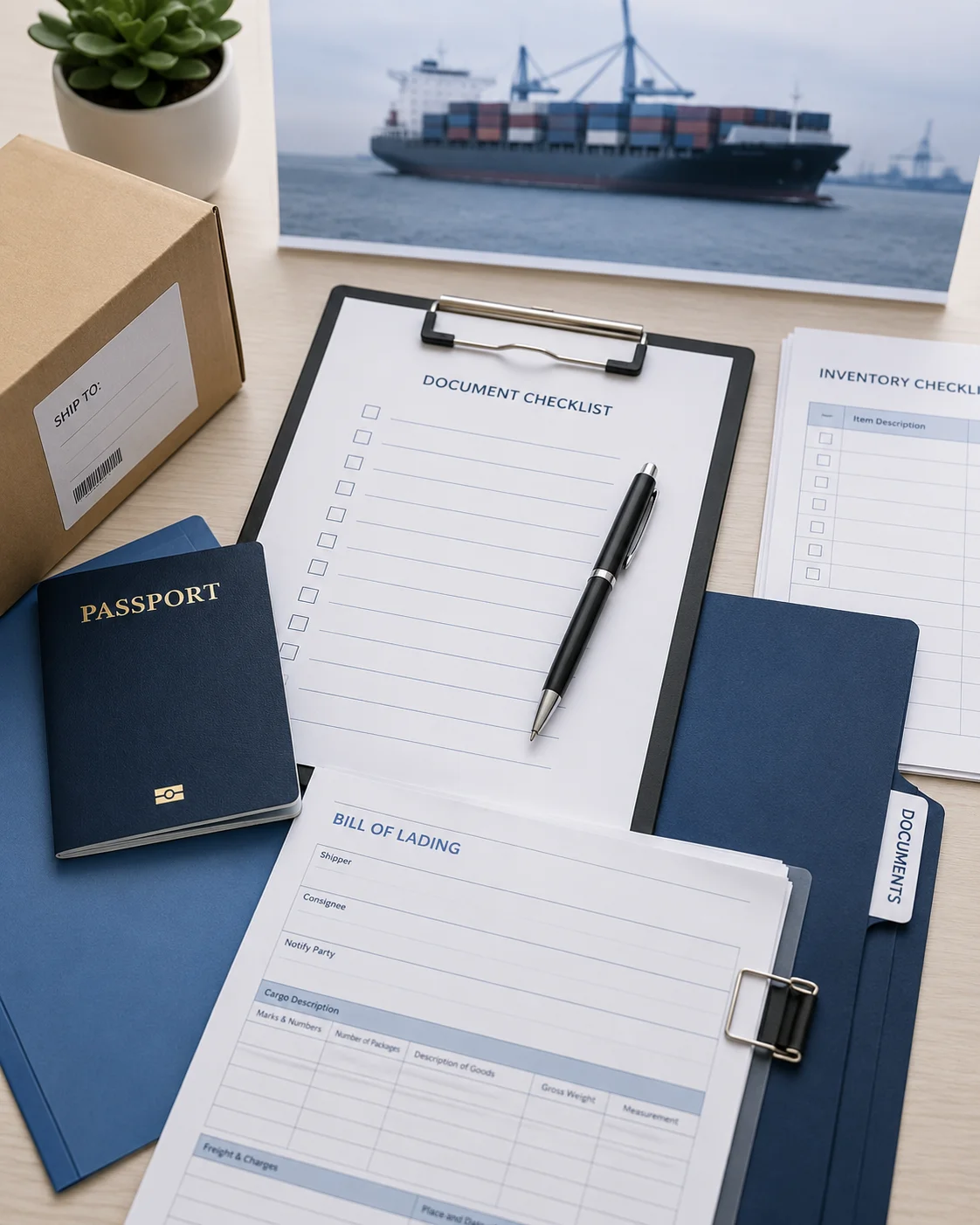
Documents required for importing used household goods, personal effects, and related shipments.
- Passport copy
- Dominican Republic resident carnet, or documentation from the Migration Office certifying that the residence application is in process (if applying for the Law 146-00 partial tax reduction)
- Original bill of lading (OBL) or air waybill (AWB)
- Inventory list in Spanish or English
- Valid passport and proof of residence abroad for 2 or more years
- Original bill of lading (OBL) or air waybill (AWB)
- Inventory list in Spanish or English
- Residence carnet or Dominican ID (cédula)
- Original bill of lading (OBL) or AWB
- Detailed inventory in Spanish or English
- Letter of transfer
- Contact at the embassy
- The consignee must be the name of the embassy along with their RNC (tax registration number)
- Marriage or divorce certificate (if applicable)
- Commercial invoice (if new furniture and household goods are included)
Specific Information
Shipper presence: The shipper's presence is not required during shipment inspection unless the shipper requests it, or the shipper has Dominican residency and is applying for an exemption from taxes and duties on used electrical appliances and furniture.
Demurrage charges: All shipments without exception must pay demurrage charges for use of the container, including storage at the port/airport/warehouse, fumigation fee, and marine line charges.
Works of art and antiques: Require a commercial invoice and packing list with pictures if shipped separately. No additional documents required if included as part of the household goods shipment.
ISPM 15: Wood packaging materials must comply with ISPM 15. Heat treatment (HT) to a minimum core temperature of 56°C for 30 minutes, or fumigation with methyl bromide (MB) at a minimum temperature of 10°C for a minimum 16-hour exposure. The mark must be visible, legible, permanent, in black ink (not red or orange), on at least two opposite sides. Labels and adhesives are not allowed.
Currency: Dominican peso (DOP). Approximately 1 USD = 60 DOP.
Duties & Taxes
Partial tax exemption (Law 146-00): Both foreigners and returning Dominican residents who have been outside the country for more than 2 years with less than 180 days visited to the Dominican Republic during that time may apply for Law 146-00 to obtain a partial reduction of taxes and duties on used household goods. The Dominican Republic resident permit is not necessary for the basic importation of household goods, but is required to apply for the Law 146-00 tax reduction. The exoneration is partial, not full.
Taxes on appliances: New and used electric appliances are subject to taxes and duties. Electrical appliances must have serial number and brand declared on the inventory.
New furniture and household goods: Require a commercial invoice and are subject to full payment of duties.
Inheritances: Subject to payment of duties (same documents as removal goods plus inheritance documentation).
Wedding trousseaux: Duty-free entry, same documents as removal goods plus marriage certificate.
Carpets: Subject to payment of duties even if part of household goods.
Prohibited & Restricted Items
Prohibited Items
- Firearms, ammunition, explosives, and dangerous goods — customs will seize the entire shipment if any are found, and the shipper could face imprisonment
- Pornographic and subversive materials — prohibited
- Illegal drugs — strictly prohibited; severe criminal penalties including deportation
- Precious metal objects (jewelry) within shipments — prohibited
- Money/currency within shipments — prohibited
- Gas, gasoline, and batteries within shipments — prohibited
- Chemical products within shipments — prohibited
Restricted / Dutiable Items
Traveler Allowances
Per VisaHQ:
- 200 cigarettes, or 1 box of cigars (not exceeding 50)
- 2 litres of alcoholic beverages
- Gift articles not exceeding USD 100 in value
- Perfume for personal use
- Personal belongings in reasonable quantities
Restricted Items
- Alcohol and wine within shipments — only small quantities for personal consumption permitted; if more than 24 bottles, a detailed separate inventory is required listing type, alcoholic content, value, and capacity of each item; diplomats may have exceptions regarding bottle limits (check with embassy before shipping)
- Food items and tinned goods — restricted; only small quantities for personal consumption permitted
- Medicines, narcotics, and drugs — duty-free entry if prescribed by a doctor (prescription required); otherwise strictly prohibited and the shipper may face criminal prosecution, penalties, or deportation
- Live plants — phytosanitary certificate from origin required prior to arrival plus a permit from Dominican Agriculture after arrival; plants should NOT be sent as part of the household goods shipment or risk confiscation/destruction upon arrival
- Firearms — military permit for personal firearms must be obtained in person after the owner's arrival but prior to shipment arrival; unauthorized firearms found in the shipment will result in criminal prosecution and penalties `PERMIT REQUIRED`
- New furniture and household goods — commercial invoice required; subject to duties
- New electrical appliances — subject to duties
- Appliances, spare parts, and machines — subject to duties on customs valuation
- Precious metal objects (jewelry) — prohibited within shipments
- Money/currency — prohibited within shipments
- Gas, gasoline, and batteries — prohibited within shipments
- Chemical products — prohibited within shipments
Importing a Used Personal Vehicle
Required Documents
- Original bill of lading
- Original title of ownership
- Vehicle registration
- Commercial invoice
Specific Information
Vehicle age limit (5 years): The year of manufacture of the vehicle cannot be older than 5 years; otherwise, customs will forbid its importation. This is strictly enforced.
Taxes and duties: Non-diplomatic vehicles are subject to taxes and duties. These can be substantial.
Partial exemption (Law 168): Returning residents who have been outside the country for more than 2 years with less than 180 days in the Dominican Republic at the time of the vehicle's arrival can apply for Law 168 to obtain a partial exoneration. The owner must have owned the vehicle for more than 1 year. Foreigners with Dominican citizen status who meet the same residency-abroad criteria may also apply.
Diplomats: May import motor vehicles duty-free.
Non-motorized bicycles: May be imported free of duties if included as part of the household effects shipment.
Motorboats: Subject to taxes even if used. An older baseline source cites approximately 20% of the purchased price, though this figure could not be independently confirmed.
Motorcycles: Subject to duties.
Contact the destination agent before shipping any vehicle. Always confirm with the destination agent before shipping motor vehicles for shipping instructions.
Driving: Driving is on the RIGHT-hand side of the road.
Pets
- ISO 11784/11785 compliant microchip (no other form of identification is acceptable per PetRelocation) Per PetTravel.com (February 2026), USDA APHIS, BringFido, PetRelocation, and the Puerto Plata government portal:
- Rabies vaccination certificate: vaccination must be administered between 30 days and 12 months prior to arrival; the certificate must state the microchip number, date of inoculation, product name, serial number, and validity period Per PetTravel.com (February 2026), USDA APHIS, BringFido, PetRelocation, and the Puerto Plata government portal:
- Veterinary health certificate issued within 15 days of travel by a licensed veterinarian Per PetTravel.com (February 2026), USDA APHIS, BringFido, PetRelocation, and the Puerto Plata government portal:
- For U.S. origin: the health certificate must be issued by a USDA-accredited veterinarian and endorsed by USDA APHIS Per PetTravel.com (February 2026), USDA APHIS, BringFido, PetRelocation, and the Puerto Plata government portal:
- The health certificate must include: owner's name and address, complete identification of the animal (name, breed, sex, color, age, microchip/tattoo number), vaccines applied, vermifuge treatments, and external parasite control Per PetTravel.com (February 2026), USDA APHIS, BringFido, PetRelocation, and the Puerto Plata government portal:
- The health certificate must certify the animal was examined within 72 hours of departure and found free of infectious or contagious diseases, and treated against external and internal parasites Per PetTravel.com (February 2026), USDA APHIS, BringFido, PetRelocation, and the Puerto Plata government portal:
- The health certificate must confirm the animal comes from an area free of severe illness for the preceding 3 months Per PetTravel.com (February 2026), USDA APHIS, BringFido, PetRelocation, and the Puerto Plata government portal:
- Per BringFido, the health certificate must be certified by the Agriculture Department of the originating state and apostilled by the state government (for U.S. origin) Per PetTravel.com (February 2026), USDA APHIS, BringFido, PetRelocation, and the Puerto Plata government portal:
- For birds: import permit required from the Director of Livestock (Dirección General de Ganadería) Per PetTravel.com (February 2026), USDA APHIS, BringFido, PetRelocation, and the Puerto Plata government portal:
- For other animals (not dogs/cats): authorization from the Department of Agriculture and National Zoo required; the kind of animal must be advised in advance Per PetTravel.com (February 2026), USDA APHIS, BringFido, PetRelocation, and the Puerto Plata government portal:
Ports of entry for pets: Pets entering by air should arrive via international airports in Santo Domingo, Puerto Plata, Samaná El Catey, or Punta Cana.
48-hour advance notification: Importers should notify veterinary officials of their pet's arrival 48 hours ahead of time to allow for inspection.
No quarantine for dogs and cats: Pets are not quarantined if they meet all requirements. Birds are quarantined for a minimum of 10 days.
Pets may be imported duty-free.
Inspection fee: Animal Control at the arrival airport must release the pet and check documents upon arrival for an additional fee.
CDC high-risk rabies country: The Dominican Republic IS on the U.S. CDC's list of high-risk countries for dog rabies. This is critically important for anyone planning to return to the United States with a dog after living in the Dominican Republic. Per PetTravel.com, U.S.-vaccinated dogs returning from the DR must have: (1) a Certification of U.S.-Issued Rabies Vaccination and Microchip Form completed by a USDA-accredited veterinarian before departing the U.S. (this form cannot be issued retroactively), and (2) a completed CDC Dog Import Form. Some airlines have stopped flying dogs to the U.S. from high-risk rabies countries including the DR. Source: CDC High-Risk Countries List — verified 200.
Common mistakes: Not obtaining the health certificate apostille (for U.S. origin). Not notifying veterinary officials 48 hours before arrival. Not having the Certification of U.S.-Issued Rabies Vaccination form completed before leaving the U.S. (required for return). Assuming the health certificate from origin is valid for 30 days when the Dominican Republic requires it within 15 days.
Consignment Instructions
Contact the destination agent to ensure all requirements have been met prior to import, especially for differences regarding air/sea shipments.
Demurrage is unavoidable: All shipments without exception must pay demurrage charges for container use, port/airport/warehouse storage, fumigation fees, and marine line charges. These costs should be factored into every relocation quote.
Clearance timeline: Expect 2-3 weeks from shipment arrival to dispatch for standard shipments. Diplomatic shipments clear in 3-4 days once the exemption is processed.
Inventory detail for electrical appliances: Every electrical appliance must have its serial number and brand declared on the inventory. Failure to do so will delay clearance and may result in additional duties.
Alcohol inventory requirements: If alcohol exceeds 24 bottles, a detailed separate inventory is mandatory listing type, alcoholic content, value, and capacity for each item.
Do not ship plants with household goods. They require separate phytosanitary certification and a Dominican Agriculture permit obtained after arrival. Including them in the household goods shipment risks confiscation and destruction.
Do not ship firearms without prior arrangement. The military permit must be obtained in person after the owner's arrival but before the shipment arrives. This requires careful timing coordination with the destination agent.
Vehicle shipping requires advance coordination. Contact the destination agent before shipping any vehicle. The 5-year age limit is strictly enforced.
Apostille requirement for pet health certificates (U.S. origin): Per BringFido, the health certificate must be certified by the Agriculture Department of the originating state and apostilled. This adds processing time that must be planned for.
Cultural & Other Information
- OpenFactBook — Dominican Republic (replaces CIA World Factbook) — verified 200
- Wikipedia — Dominican Republic — verified 403 to bots, works in browser
- Dominican Customs Authority (Dirección General de Aduanas) — verified 200
- Dominican Ministry of Foreign Affairs (MIREX) — verified 200
- Dominican General Directorate of Livestock (Ganadería) — verified 200 (note: the "www." prefix returns a 404; use the bare domain)
- Dominican Internal Revenue Service (DGII) — now confirmed Active (200) — prior verification could not confirm this
- USDA APHIS — Pet Travel to Dominican Republic — returns 503 to this proxy (standard WAF/IP block); confirmed live in prior checks
- PetTravel.com — Dominican Republic Pet Import Requirements — verified 200
- VisaHQ — Dominican Republic Customs — verified 200
Language: Spanish is the official language. English is spoken in tourist areas and business settings.
Currency: Dominican peso (DOP). Approximately 1 USD = 60 DOP. U.S. dollars are widely accepted.
Key laws referenced:
- Law 146-00: Provides partial tax/duty reduction for household goods importation by returning residents and qualifying foreigners who have been abroad 2+ years with less than 180 days in the DR during that period.
- Law 168: Provides partial exoneration for vehicle importation by returning residents and qualifying foreigners meeting the same residency-abroad criteria, provided the vehicle has been owned for more than 1 year.
Useful resources