

Country Guides
Ecuador

Start here
Overview
Explore sections
Guide Details
Household Goods
Documents
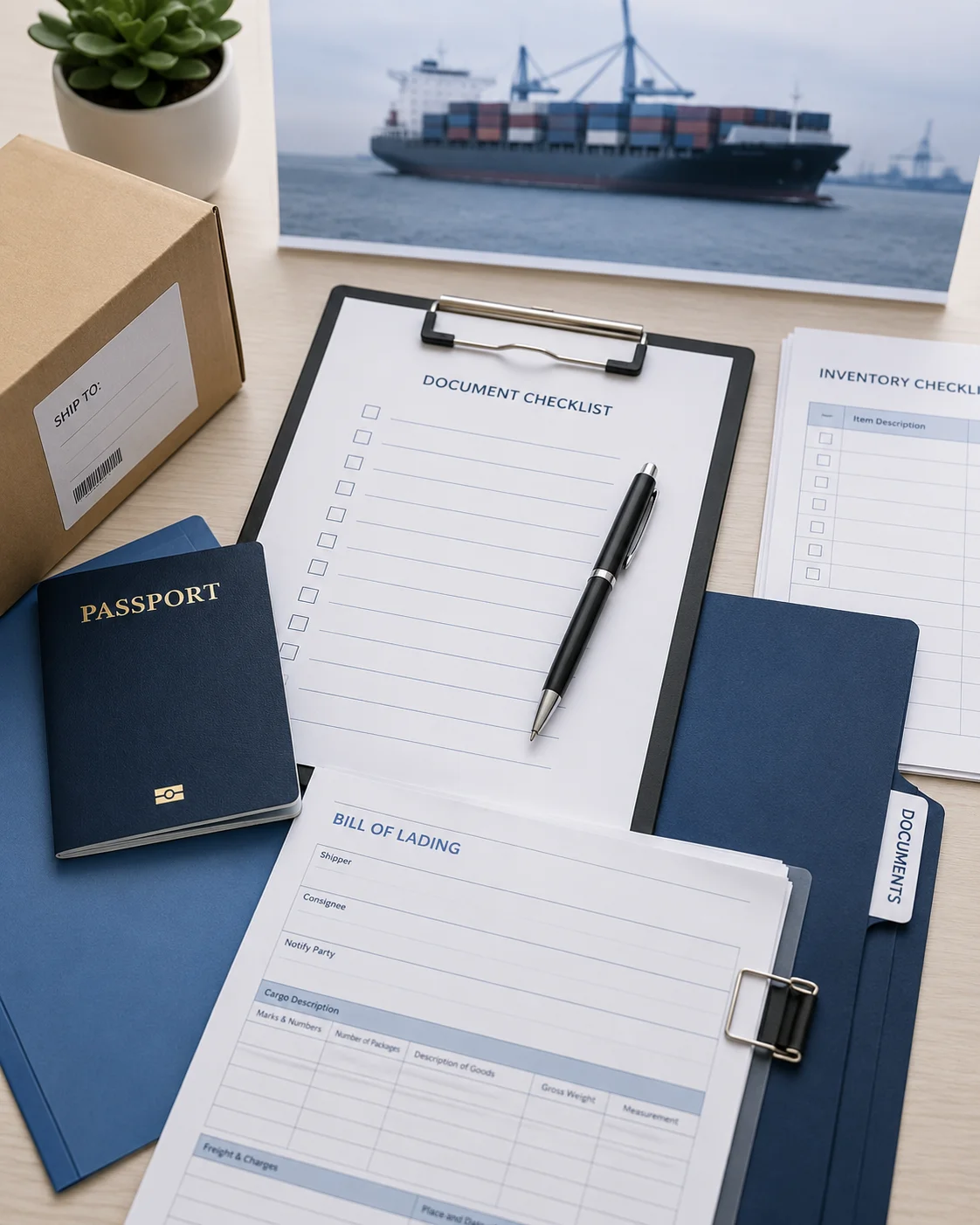
Documents required for importing used household goods, personal effects, and related shipments.
Ecuador's customs regime for household goods (menaje de casa) is governed by the Código Orgánico de la Producción, Comercio e Inversiones and SENAE resolutions. Requirements differ significantly between returning Ecuadorians, foreigners, and diplomats.
- Color copy of the importer's citizenship card (current marital status must be visible)
- Color copy of the importer's passport
- Color copy of the importer's granted visa issued by the competent migration authority, or other document accrediting migratory condition
- Color copy of the importer's voting certificate
- Address where the importer plans to reside, with a color copy of a basic service bill (water, electricity) from the Ecuador residence, dated within 3 months prior to shipment release
- Color copies of Ecuadorian passports for all family members
- Returning Migrant Certificate: sworn statement, migratory movements, and 3 documents from origin certifying the importer's stay abroad
- Professional title or courses taken (if work equipment is included)
- Detailed inventory of goods
- Color copy of the importer's passport and passports of family members
- Color copy of the importer's and family's import visa (permanent or temporal visa required)
- Original certificate of migratory movements for the importer and family members
- Documents justifying the visa granted (work contract or assignment letter)
- Address where the importer plans to reside, with color copy of a basic service bill dated within 3 months prior to shipment release
- Detailed inventory of importing goods
- Professional title or courses taken (if work equipment is included)
- Color copy of the importer's passport or ID card
- Inventory of legalized goods
- Note Verbale issued by the Foreign Ministry for household goods and motor vehicles
- Release agreements issued by Customs for household goods and motor vehicles
- Diplomatic franchise
- Original bill of lading (OBL) / air waybill (AWB) (2 originals)
- The OBL/AWB must include the consignee's passport number (or RUC/ID number for Ecuadorians)
- The OBL cargo description box must state: "EFECTOS PERSONALES Y MENAJE DE CASA USADOS" (Used personal effects and household goods)
- Transportation insurance policy issued in Ecuador (required by law to determine CIF value)
- Migratory certificate issued at destination by Migration Police
- Verification certificate issued locally by an inspection company (for shipments valued over USD 4,000)
Specific Information
Repeat importation: Household goods can be imported more than once as long as 10 years have elapsed since the last importation. An older baseline source states the shipper can import again after maintaining residence in Ecuador for at least 5 years with no more than 150 days abroad; the 10-year figure is more recent and should be used.
One shipment only: Only one shipment is admitted duty-free. If 2 shipments are sent (e.g., a small airfreight plus a container), one of them will be subject to import taxes.
One item per type: Only one of each item is allowed, including appliances. Duplicate items are subject to duties. Customs accepts one electrical appliance of each type; extras incur duties at approximately 43-45% of CIF value.
Clothing limit: Up to 200 kg net of clothing, footwear, and accessories per member of the family unit.
Alcohol limit: Up to 50 litres of alcoholic beverages may be included, without exceeding 2 litres of the same characteristics (brand/type). Quantities exceeding this are subject to taxes.
Eligible goods: Eligible goods can be new or used as long as they are acquired by the importer for everyday use.
Electrical appliances: Must specify year and serial number on inventory.
Shipments valued over USD 4,000: Must be inspected at origin before embarkation (customs value, not replacement value). The inspection is requested and coordinated by the destination agent. Lack of verification at origin will cause delays and additional costs. If a shipment arrives without the inspection certificate, the customer has 15 working days to request customs inspection at the port/airport. Cost of local verification may reach approximately USD 800 and take approximately 3 weeks.
Inspection at destination: A 15% sample of total household goods will be inspected. In case of inconsistencies, a fine for regulatory breach will be imposed. Undeclared items found during inspection are treated as a felony and may result in criminal prosecution.
Shipper must arrive first: The shipment must arrive after the client. The client should be in Ecuador 2 weeks prior to arrival of the shipment. If the shipment arrives after the client, they must not leave the country for more than 30 calendar days during the clearance period.
Inventory must be valued: Use declared value for customs purposes, not insurance or replacement value.
Packages identification: Packages and items must be identified with the importer's full name and their respective numbering. Clothing must be packed separately.
Non-compliant shipments: Subject to import taxes of approximately 43-45% of CIF value, calculated by customs after inspection.
Work equipment: Can be new or used, intended for the importer's activity, profession, art, or trade. Must not exceed 160 basic salaries (USD 482 x 160 = approximately USD 77,120 at the 2026 basic salary; previously USD 72,000 at the 2024 rate of USD 450). Professional title or documentation of courses taken must be provided.
ISPM 15: Wood packaging materials must comply with ISPM 15 (NIMF-15 in Spanish).
Currency: Ecuador uses the United States dollar (USD) as its official currency.
Duties & Taxes
Duty-free conditions (returning Ecuadorians): Must have stayed abroad for more than 2 years and not stayed more than 180 days in Ecuador within the 2 years prior to return. The exemption of taxes benefit must be requested within 36 months of arrival with intention of residing in Ecuador.
Duty-free conditions (foreigners): Must have a permanent or temporal visa. Must have stayed abroad for more than 2 years and not stayed more than 180 days in Ecuador within the 2 years prior to return. Shipments arriving up to 1 month before and 6 months after entering Ecuador may be considered as household goods. If the visa is not stamped on arrival, a guarantee (banking, cash, or insurance policy) equivalent to 120% of eventual taxes with 180 working-day validity must be presented. If the working visa is not presented to customs within 90 days, the guarantee is forfeited and full duties apply.
Prohibited & Restricted Items
Prohibited Items
- Narcotics and drugs — strictly prohibited; severe criminal penalties
- Pornographic materials — prohibited
- Firearms and ammunition — prohibited without Ministry of National Security permit `PERMIT REQUIRED`
- Live plants — prohibited without phytosanitary certificate and Ministry of Agriculture permit
- Foodstuffs, including spices — prohibited
- Appliances using refrigerant R12-R15 — prohibited
- Cleaning products — prohibited
- Creams, colognes, perfumes, and cosmetics — prohibited within shipments
- Pitbull dog breeds — prohibited from entry
Restricted / Dutiable Items
Traveler Allowances
Per VisaHQ:
- 300 cigarettes, or 50 cigars, or 200g tobacco
- 1 litre of alcoholic beverages
- Perfume for personal use in reasonable quantities
Restricted Items Within Household Goods Shipments
- Electrical appliances — one of each type permitted duty-free; additional items incur duties at approximately 43% of CIF value
- Wine — up to 50 litres permitted; an older baseline source cites 4 litres with duties of approximately 10% CIF, but the higher figure is more current. Authorization of the Health Minister and Sanitary Register may be required. All quantities exceeding limits attract duties.
- Alcohol — permitted in reasonable quantities; included in the 50-litre overall limit for all alcoholic beverages
- Cigarettes and cigars — permitted in reasonable quantities
- Firearms and ammunition — permit from the Ministry of National Security required for returning citizens or residents `PERMIT REQUIRED`
- Plants — phytosanitary certificate and permit from the Ministry of Agriculture required prior to import `PERMIT REQUIRED`
- Precious metal objects (jewelry, coins) — subject to taxes of 20% of value
- Spare parts, machines, and appliances — commercial invoice, import permit, inspection certificate, and OBL/AWB required; subject to duties on customs valuation
- New goods — commercial invoice required; subject to duties
Importing a Used Personal Vehicle
Required Documents
- Original commercial invoice **For returning Ecuadorians (used vehicles):**
- Title of ownership **For returning Ecuadorians (used vehicles):**
- Registration **For returning Ecuadorians (used vehicles):**
- License number or equivalent document issued at origin **For returning Ecuadorians (used vehicles):**
- Customs export declaration number **For returning Ecuadorians (used vehicles):**
- Registered vehicle value from the country of origin **For returning Ecuadorians (used vehicles):**
- ANEXO III form (Ecuadorian immigrant with household goods and vehicle) **For returning Ecuadorians (used vehicles):**
- Original commercial invoice **For returning Ecuadorians (new vehicles):**
- Title of ownership **For returning Ecuadorians (new vehicles):**
- Vehicle subcategory code (issued in Ecuador by the SRI) **For returning Ecuadorians (new vehicles):**
- Payment receipt **For returning Ecuadorians (new vehicles):**
- Apostilled certificate issued by the dealer (including vehicle specs and net value with any discounts indicated) **For returning Ecuadorians (new vehicles):**
- Human mobility certificate **For returning Ecuadorians (new vehicles):**
- Customs export declaration number **For returning Ecuadorians (new vehicles):**
- Registered vehicle value from the country of origin **For returning Ecuadorians (new vehicles):**
- Foreign citizens cannot import cars or motorcycles as part of their household goods. Vehicle import for foreigners requires separate procedures and is generally subject to full duties. **For foreigners:**
- Legalized vehicle invoice and license number **For diplomats:**
- Vehicle subcategory code (issued at SRI) **For diplomats:**
- Original invoice or notarized copy in the importer's name with vehicle value **For diplomats:**
- Title of ownership **For diplomats:**
- Diplomatic franchise **For diplomats:**
- Export customs declaration number and vehicle value from country of departure **For diplomats:**
- Certificate from dealer certifying the market value **For diplomats:**
Specific Information
Vehicle must ship with household goods: The vehicle must be shipped under the same bill of lading as the household goods. It must be mentioned at the end of the packing list and in the B/L with complete specifications.
Vehicle value limits (returning Ecuadorians): Vehicle imports must not exceed 80 basic salaries (USD 482 x 80 = approximately USD 38,560 at the 2026 basic salary; previously USD 36,000 at the 2024 rate). Motorcycle imports must not exceed 25 basic salaries (USD 482 x 25 = approximately USD 12,050; previously USD 11,250). If the vehicle exceeds these limits by up to 10 additional basic salaries (approximately USD 4,820), 100% taxes will be paid on the exceeded amount only.
Used vehicle depreciation: For used vehicles, the acquisition price is determined by market price at the model's release date, multiplied by a yearly depreciation percentage.
Students returning: People who left Ecuador for study reasons can import a motorcycle but not a car.
Foreigners cannot import vehicles duty-free: This is a significant restriction. Foreign citizens are explicitly excluded from importing vehicles as part of their household goods under the menaje de casa regime.
Non-exempt vehicle duty: Approximately 65% of CIF value.
Import permit required: The import permit must be approved in Ecuador prior to import.
Origin inspection: The vehicle must be inspected at origin prior to import, even if sharing a container with household goods.
Motorcycles: Must be valued at no more than USD 8,000 at time of purchase with a maximum engine capacity of 650cc. Note: some sources use a basic salary formula instead (25 x USD 450 = USD 11,250); confirm the current applicable threshold with the destination agent.
Diplomats: May import new or used vehicles duty-free with authorization from the Ministry of Foreign Affairs.
Driving: Driving is on the RIGHT-hand side of the road.
Pets
- ISO 11784/11785 compliant microchip (strongly recommended; not yet mandatory but considered international standard and essential for identification) Per PetTravel.com (February 2026), USDA APHIS, Agrocalidad procedures, CuencaLawyer (2024), and Gringo Visas:
- Rabies vaccination for all dogs and cats over 3 months of age, administered at least 21 days (some sources say 30-60 days) and no more than 12 months before arrival; the health certificate must state vaccine brand, batch number, dates of administration and expiry Per PetTravel.com (February 2026), USDA APHIS, Agrocalidad procedures, CuencaLawyer (2024), and Gringo Visas:
- Internal and external parasite treatment within 21 days of export (for nematodes, cestodes, fleas, and ticks) Per PetTravel.com (February 2026), USDA APHIS, Agrocalidad procedures, CuencaLawyer (2024), and Gringo Visas:
- Veterinary health certificate (Zoo-Sanitary Export Certificate) issued within 10 days of travel by a licensed veterinarian, in Spanish Per PetTravel.com (February 2026), USDA APHIS, Agrocalidad procedures, CuencaLawyer (2024), and Gringo Visas:
- For U.S. origin: must be issued by a USDA-accredited veterinarian and endorsed by USDA APHIS within 10 days of travel Per PetTravel.com (February 2026), USDA APHIS, Agrocalidad procedures, CuencaLawyer (2024), and Gringo Visas:
- The certificate must confirm the animal was examined, found free of infectious or contagious diseases, and treated against internal and external parasites Per PetTravel.com (February 2026), USDA APHIS, Agrocalidad procedures, CuencaLawyer (2024), and Gringo Visas:
- For pets arriving as air cargo: a Permiso Zoosanitario para la Importación (PZI) must be obtained from Agrocalidad through their online GUIA system before shipping Per PetTravel.com (February 2026), USDA APHIS, Agrocalidad procedures, CuencaLawyer (2024), and Gringo Visas:
- For pets arriving in-cabin or as checked baggage with the passenger: no import permit is required; present the health certificate upon arrival Per PetTravel.com (February 2026), USDA APHIS, Agrocalidad procedures, CuencaLawyer (2024), and Gringo Visas:
Cats ARE allowed in Ecuador. One older industry source (Blue Horizon Shipping) states "cats are not allowed in Ecuador," but this is contradicted by USDA APHIS, PetTravel.com, Agrocalidad's own procedures, CuencaLawyer, EcuaPass, and multiple other current (2025-2026) sources, all of which explicitly include cats in Ecuador's pet import requirements. Cats are permitted.
Pitbull breeds are not permitted entry to Ecuador per PetTravel.com (February 2026).
Up to 3 pets: Up to three dogs, cats, or birds (or a combination) may be imported. EcuaPass (2026) suggests no strict limit, but importing 3+ pets increases complexity.
No quarantine: Ecuador does not quarantine healthy dogs and cats that meet all requirements. If documents are in order and the pet is healthy upon inspection, the animal is released immediately.
Agrocalidad inspection on arrival: Upon landing (Quito or Guayaquil), proceed to the Agrocalidad office in the airport's customs area. The on-duty veterinarian conducts a document review and physical inspection. Fee: approximately USD 26.21-26.88 per pet, payable at the airport (cash or card). Email notification to Agrocalidad is recommended 48 hours before arrival.
Pets arriving as cargo: Must stay overnight at customs. The owner is responsible for feeding and walking them. Requires the PZI obtained through Agrocalidad's GUIA online system before shipping.
Ports of entry for pets: Mariscal Sucre International Airport (Quito), José Joaquín de Olmedo Airport (Guayaquil), Carlos Concha Torres Airport (Esmeraldas). Land entry at International Bridge Rumichaca (Carchi), Loja, or El Oro.
CDC high-risk rabies country: Ecuador IS on the U.S. CDC's list of high-risk countries for dog rabies. This affects anyone returning to the U.S. with a dog. U.S.-vaccinated dogs must have a Certification of U.S.-Issued Rabies Vaccination form completed before departing the U.S. (cannot be issued retroactively). Source: CDC High-Risk Countries List — verified 200.
Common mistakes: Not having the health certificate endorsed by USDA within the 10-day window (the certificate expires quickly). Not getting the PZI for cargo pets before shipping. Not having documents in Spanish. Assuming the process is the same for cabin pets vs. cargo pets (it is not). Not factoring in the Agrocalidad inspection fee. Shipping pitbull breeds.
Consignment Instructions
Contact the destination agent to ensure all requirements have been met prior to import, especially for differences regarding air/sea shipments.
Shipper must arrive before shipment: The client should be in Ecuador at least 2 weeks before the shipment arrives. Shipments arriving before the client will incur taxes.
One shipment only: Only one shipment is admitted duty-free. Do not split into air and sea unless prepared to pay duties on one of them.
One item per type: Duplicate appliances, furniture items, or electronics will attract duties. Advise customers to bring only one of each.
Valued inventory required: The inventory must be valued at customs value (not replacement or insurance value). Overvaluation based on insurance amounts will increase duty liability.
OBL requirements: The bill of lading must include the consignee's passport number (or RUC/ID for Ecuadorians). The cargo description must state "EFECTOS PERSONALES Y MENAJE DE CASA USADOS." Contact the destination agent for specific required wording.
Transportation insurance must be issued in Ecuador. This is required by law. It does not replace insurance issued at origin.
Pre-shipment inspection for shipments over USD 4,000: Mandatory and coordinated by the destination agent. Without the inspection certificate, the customer has 15 working days to request local verification (approximately USD 800 and 3 weeks).
Clearance timelines: 4-5 weeks in Guayaquil, 1-2 weeks in Quito.
Criminal penalties for undeclared items: Items not declared on the inventory may result in felony criminal prosecution. Items that do not belong to the shipper (gifts or favors for others) disqualify the entire shipment from tax-exempt status.
Foreigners cannot import vehicles: This is critical for foreign assignees. Only returning Ecuadorians and diplomats can import vehicles as part of household goods.
Galapagos Islands: The Galapagos Islands are part of Ecuador but have their own strict environmental regulations. Shipments to the Galapagos require additional permits and inspections. Contact the destination agent.
Cultural & Other Information
- OpenFactBook — Ecuador (replaces CIA World Factbook) — verified 200
- Wikipedia — Ecuador — verified 403 to bots, works in browser
- Ecuadorian Customs (SENAE) — verified 200
- USDA APHIS — Pet Travel to Ecuador — verified 200
- PetTravel.com — Ecuador Pet Import Requirements — verified 200
- Trade.gov — Ecuador Customs Regulations — verified 200
- VisaHQ — Ecuador Customs — verified 200
Currency: United States dollar (USD). Ecuador adopted the USD as its official currency in 2000.
Language: Spanish is the official language. All customs documentation must be in Spanish.
Altitude: Quito sits at approximately 2,850m (9,350 ft). This affects pets (acclimatization needed) and certain goods (pressurized containers, etc.).
Basic salary reference (2026): USD 482/month, per Ministerial Agreement MDT-2025-195 effective January 1, 2026 (up from USD 470 in 2025 and USD 450 in 2024). This figure is used to calculate vehicle and work equipment import value limits, and is adjusted annually by the Ecuadorian Ministry of Labour. At the current USD 482 basic salary: the 80-basic-salary vehicle limit is approximately USD 38,560 (cars) and the 25-basic-salary limit is approximately USD 12,050 (motorcycles); the 160-basic-salary work equipment limit is approximately USD 77,120. These figures supersede the USD 450-based calculations cited in earlier guide versions and should still be confirmed with the destination agent, as customs may apply the salary figure in effect at the time of a specific transaction.
Useful resources