

Country Guides
Equatorial Guinea

Start here
Overview
Explore sections
Guide Details
Household Goods
Documents
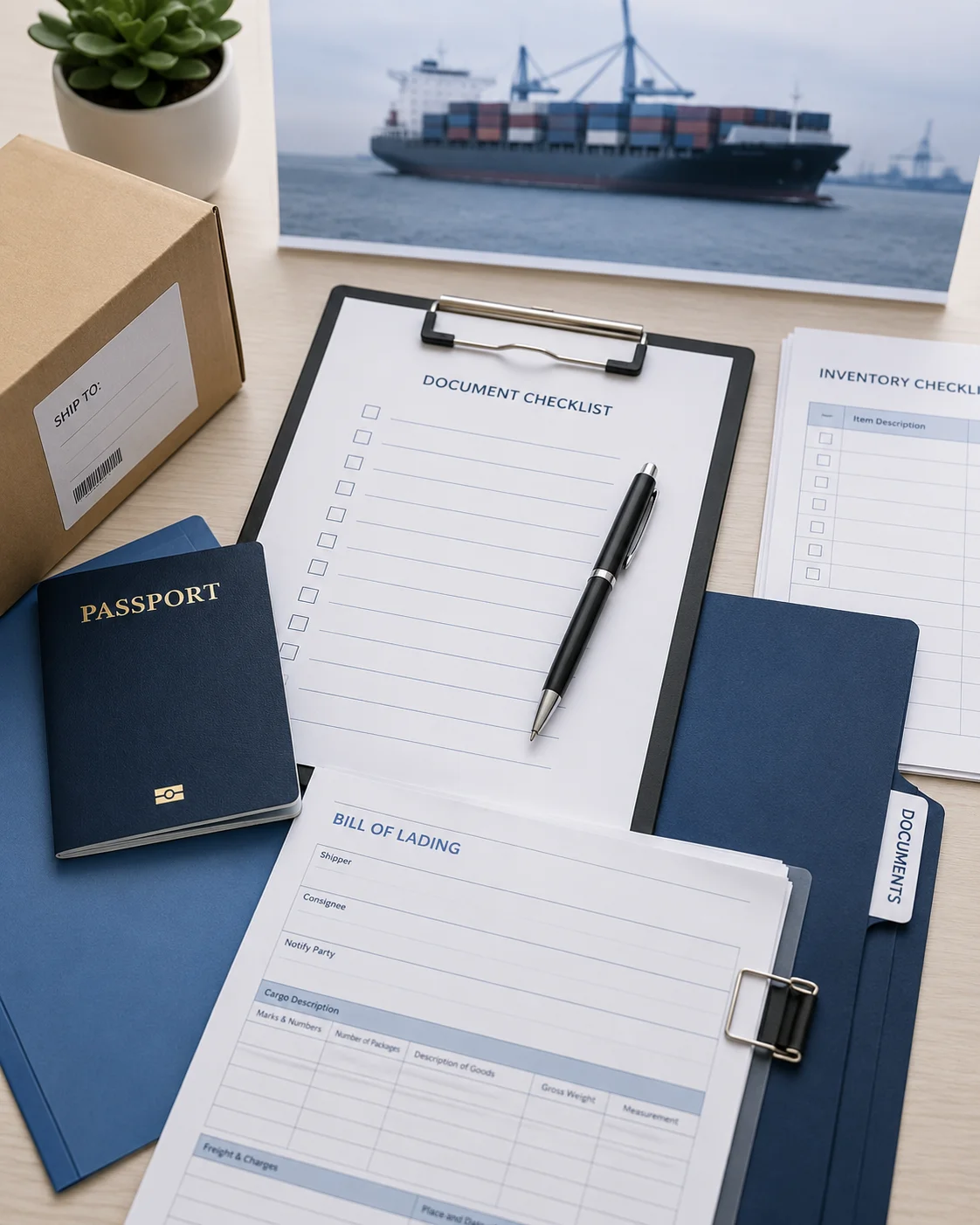
Documents required for importing used household goods, personal effects, and related shipments.
- Copy of passport
- Packing list in English, French, or Spanish
- Original visa
- Original bill of lading (OBL) / air waybill (AWB)
- Detailed valued inventory in French or Spanish, dated and signed by the shipper
- Purchase invoices clearly identifying electrical items with date, year, and place of purchase
- Invoices for all electrical items less than 6 months old
- Original certificate of transfer on employer letterhead with start date of employment
- Move certificate issued by the City Hall at origin
- Duty-free certificate (diplomats)
- Diplomatic franchise (diplomats)
- Change of residence certificate and detailed valued inventory list, stamped and signed by the Consulate of Equatorial Guinea in the origin country (returning citizens)
Specific Information
Shipper presence not required: The shipper's attendance is not required for import customs clearance.
Diplomatic franchise timeline: It takes approximately 8 days to obtain the franchise. Demurrage and storage charges may accrue during this period.
Inventory requirements: Must be valued and in French or Spanish. Electrical items require purchase invoices clearly identifying the item, date, year, and place of purchase. Items less than 6 months old require invoices.
Duties & Taxes
Household goods are NOT duty-free for most importers. Used household goods are not duty-free for returning residents, returning diplomats, or people coming to work in Equatorial Guinea, except for those working for companies that have a protocol agreement with the government in which an exemption of duties is clearly stipulated. This is a critical distinction: unless the employer has a government protocol agreement, duties will be charged.
Tax schedule:
- Diplomats: no duties or taxes
- Used household goods: 10% on declared value per the valued inventory list
- New car: 51.9%
- Appliances: 38%
- Food: 30% (no tax if reasonable quantity)
- Alcohol or tobacco: 110% (no tax if reasonable quantity)
Prohibited & Restricted Items
Prohibited Items
- Drugs — strictly prohibited
- Pornography, defamatory, or obscene publications — prohibited
- Clothing resembling military uniforms — prohibited
- Books and movies relating to wars or terrorist events — prohibited
- Binoculars and high-tech cameras — prohibited
Restricted / Dutiable Items
Traveler Allowances
Traveler allowances include:
- 200 cigarettes, or 50 cigars, or 250g tobacco
- Perfume in reasonable quantity
- Currency greater than XAF 50,000 must be declared
Restricted Items
- Alcohol — only "Fond de Cave" (personal wine collection) acceptable, maximum 20 bottles, duty-free
- Firearms and ammunition — authorization from the territorial administration required `PERMIT REQUIRED`
- Appliances — subject to 38% duty
- Food — subject to 30% duty (no tax if reasonable quantity)
- Alcohol and tobacco within shipments — subject to 110% duty (no tax if reasonable quantity)
Importing a Used Personal Vehicle
Required Documents
- Copy of passport
- OBL / AWB
- Letter of employment
- Purchase invoice
- Insurance document
- Sale/purchase certificate
- Car registration documents
- Inspection certificate (service)
- Pictures of the car
Specific Information
Duty-free if personal effects (6 months ownership): If the car is imported as personal effects, under the name of the shipper, and was owned for at least 6 months, then no import duties are charged. If these conditions are not met, duties of 51.9% CIF value apply.
Non-diplomatic vehicles: 62% CIF duties are applicable for non-diplomatic shipments that do not qualify for the personal effects exemption.
Pre-authorization required: Authorization from the Ministry of Transportation in Equatorial Guinea and from the Port Authorities is required and must be obtained before shipping from the origin port. This is essential; failure to obtain pre-authorization will prevent customs clearance.
OBL specifications: Must show chassis number, engine number, cubic capacity, year of manufacture, brand, and model.
Driving: Driving is on the RIGHT-hand side of the road.
Pets
- ISO 11784/11785 compliant microchip Per PetTravel.com (January 2025):
- Rabies vaccination certificate (vaccination administered between 30 days and 12 months before arrival) Per PetTravel.com (January 2025):
- Veterinary health certificate issued shortly before travel by a licensed veterinarian in the country of origin Per PetTravel.com (January 2025):
- Government endorsement of the health certificate is recommended but not required Per PetTravel.com (January 2025):
No import permit required: Per PetTravel.com, pet dogs and cats entering Equatorial Guinea with their owners do not need an import permit.
No quarantine: Equatorial Guinea does not quarantine cats and dogs that meet all requirements. All animals are subject to examination by a customs veterinarian on arrival.
No rabies titer test required: A rabies titer test is not required for entry from any country.
No banned breeds: Equatorial Guinea does not publish a list of banned dog breeds.
CDC high-risk rabies country: Equatorial Guinea IS on the U.S. CDC's list of high-risk countries for dog rabies. This affects anyone returning to the U.S. with a dog. U.S.-vaccinated dogs must have a Certification of U.S.-Issued Rabies Vaccination form completed before departing the U.S. Source: CDC High-Risk Countries List — verified 200.
Screwworm country: Equatorial Guinea is also on the USDA's list of countries affected by New World screwworm. Dogs traveling from Equatorial Guinea to the U.S. must be inspected for screwworm within 5 days prior to entering the United States and the results must be negative.
Common mistakes: Not having the microchip implanted. Not getting the CDC Certification of U.S.-Issued Rabies Vaccination form before leaving the U.S. Overlooking the screwworm inspection requirement for U.S. return.
Consignment Instructions
Contact the destination agent to ensure all requirements have been met prior to import, especially for differences regarding air/sea shipments.
Pre-authorization for vehicles is mandatory. Authorization from the Ministry of Transportation and Port Authorities must be obtained before shipping from the origin port. Failure to obtain this will prevent clearance.
Valued inventory required: The inventory must be valued, in French or Spanish, and include full details for electrical items.
Protocol agreements: Confirm with the employer whether a government protocol agreement exists that grants duty exemption. Without one, all household goods are subject to 10% duty.
Franchise processing (diplomats): Allow approximately 8 days for the franchise to be processed. Demurrage and storage charges may accrue during this time.
Ports of entry: Malabo (Bioko Island) and Bata (mainland/Río Muni) are the two primary ports. Confirm which port will receive the shipment with the destination agent.
CEMAC membership: Equatorial Guinea is a member of the Central African Economic and Monetary Community (CEMAC). The currency is the Central African CFA franc (XAF), pegged to the euro.
Cultural & Other Information
- OpenFactBook — Equatorial Guinea (replaces CIA World Factbook) — verified 200
- Wikipedia — Equatorial Guinea — verified 403 to bots, works in browser
- PetTravel.com — Equatorial Guinea Pet Import Requirements — verified 200
- VisaHQ — Equatorial Guinea Customs — verified 200
Languages: Spanish, French, and Portuguese are all official languages. Spanish is the most widely spoken.
Currency: Central African CFA franc (XAF). Pegged to the euro at 1 EUR = 655.957 XAF.
Geography: Equatorial Guinea consists of a mainland portion (Río Muni) and several islands, the largest being Bioko (where the capital Malabo is located). Shipments may need to be routed to different ports depending on the final destination within the country.
Oil economy: Equatorial Guinea is one of sub-Saharan Africa's largest oil producers. Many relocations involve oil and gas industry personnel. These companies often have the government protocol agreements that enable duty-free household goods importation.
Useful resources