

Country Guides
Eswatini (formerly Swaziland)

Start here
Overview
Explore sections
Guide Details
Household Goods
Documents
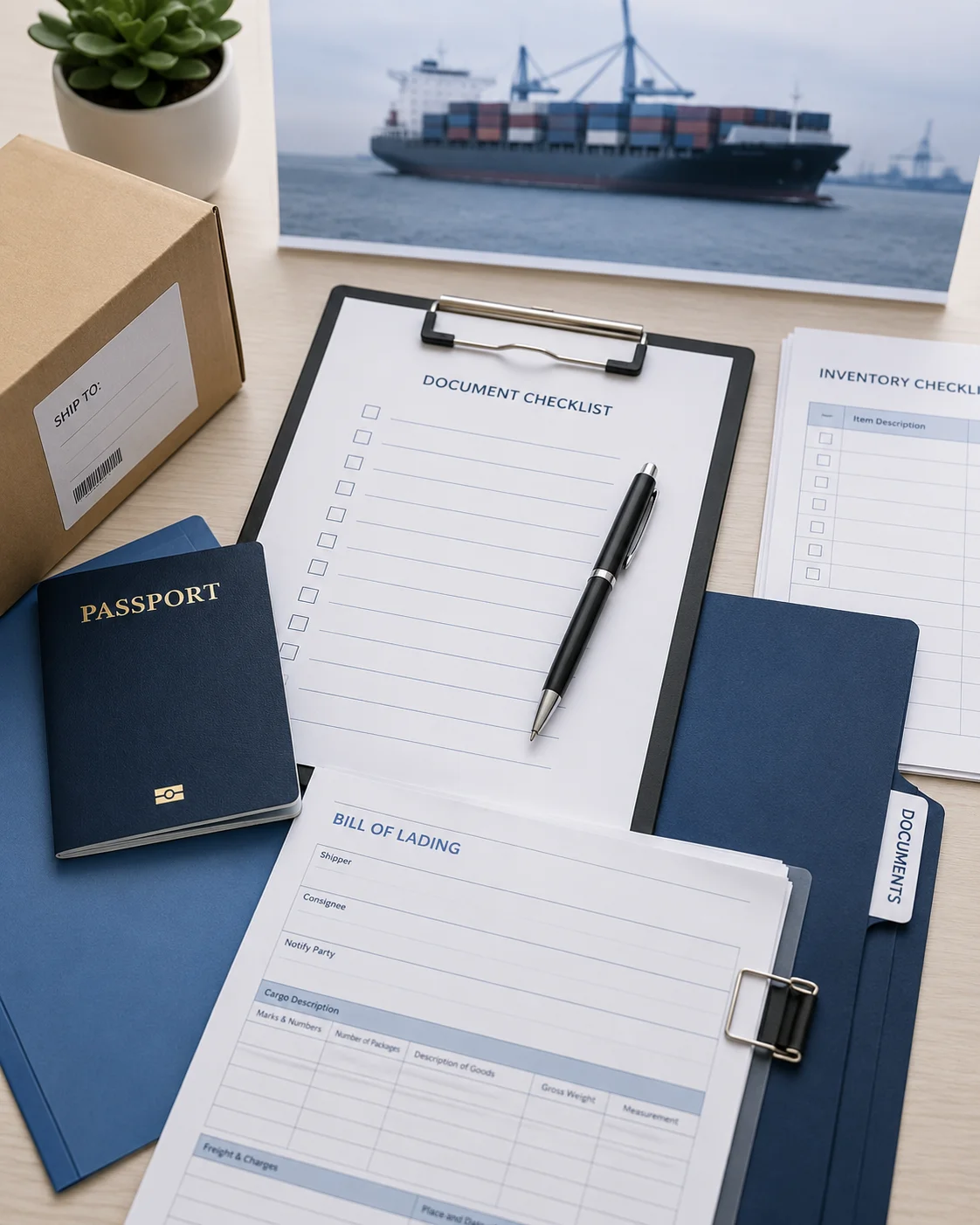
Documents required for importing used household goods, personal effects, and related shipments.
- Copy of passport showing entry permit
- Packing list
- Original bill of lading (OBL) / air waybill (AWB) — no express release accepted
- Original inventory (in English, dated, valued, and signed by the shipper)
- Residence permit / work permit
- CE 101 form
- DA65 or NEP form (returning citizens)
Specific Information
Returning citizens (DA65/NEP forms): To re-enter Eswatini with items that do not have serial numbers, returning citizens must have DA65 or NEP forms completed upon their departure from Eswatini. Without these forms, goods may be detained and proof of local purchase required upon re-entry.
No express release: The original bill of lading is required; express release is not accepted.
SACU membership: Eswatini is a member of the Southern African Customs Union (SACU) along with Botswana, Lesotho, Namibia, and South Africa. The five countries share a common external tariff. South Africa generally sets the tariff schedule in consultation with SACU members. Goods consigned to Eswatini from outside SACU must be cleared through customs at the first port of importation into SACU (typically a South African port).
Customs declaration: For personal declarations worth less than E15,000, use "Form E." For all other declarations, use the SAD500 form. Declarations are made through the ASYCUDA system.
Currency: Eswatini lilangeni (SZL), plural emalangeni. Pegged at par to the South African rand (ZAR). South African rand is widely accepted.
Cash declaration: All persons entering or leaving Eswatini with cash or negotiable bearer instruments valued at more than E15,000 (or equivalent) must declare to police or customs. Failure to declare carries fines up to E30,000 or imprisonment up to 5 years.
Duties & Taxes
No tax on used household goods. Used household goods enter free of duty and tax. New goods within the shipment are subject to 15% VAT (confirmed by PwC Tax Summaries 2026).
Prohibited & Restricted Items
Prohibited Items
- Unlawful drugs and narcotics — strictly prohibited
- Pornography — prohibited
- Local currency (emalangeni) — import prohibited
- Potassium bromides — prohibited
- Counterfeit items — prohibited
- Alcohol — treatment varies by source; some permit 1 bottle with duty; confirm current status with destination agent
Restricted / Dutiable Items
Traveler Allowances (from outside SACU, over 20 years)
- 400 cigarettes, or 50 cigars, or 250g tobacco
- Perfume: 10 fl. oz.
- New goods and groceries for personal consumption up to E1,000 per individual or E2,000 per family (one such importation per day; additional new goods above these allowances subject to 15% VAT)
Restricted Items
- Firearms and ammunition — authorization from the Firearms Licensing Board required `PERMIT REQUIRED`
- Alcohol — 1 bottle permitted; duties of 15% apply
- Cosmetic creams — must be registered with the Ministry of Health
- Live animals — health certificate required along with complete and valid inoculations
Importing a Used Personal Vehicle
Required Documents
- Original registration card
- Original bill of lading (OBL) / air waybill (AWB)
- Purchase invoice
- DA 304A form
- Interpol clearance
- Import certificate
Specific Information
Duty-free if owned 12+ months: If the vehicle has been owned and used by the shipper for more than 12 months, no duties apply. If less than 12 months, 15% duty is levied (confirmed by PwC Tax Summaries 2026).
One vehicle per person: Only 1 car per shipper is allowed duty-free. Additional vehicles will have duties levied.
Interpol clearance required: This is mandatory and verifies the vehicle is not stolen. Obtain before shipping.
Port of entry: Most sea freight enters Eswatini through South African ports (Durban is the closest major port) and is transported overland. Customs clearance at the SACU entry point occurs first.
Driving: Driving is on the LEFT-hand side of the road.
Pets
- Import permit from the General Direction of Plant and Animal Health, Ministry of Agriculture and Livestock (can be obtained prior to travel or upon arrival) and PetTravel.com (May 2025):
- Rabies vaccination certificate (vaccination administered at least 30 days prior to import but not more than 6 months, in the country of origin) and PetTravel.com (May 2025):
- Veterinary health certificate signed, stamped, and dated within 5 days of import and PetTravel.com (May 2025):
- Transit permit (if transiting through South Africa or other countries) and PetTravel.com (May 2025):
- ISO 11784/11785 compliant microchip (recommended by PetTravel.com but not mandatory ) and PetTravel.com (May 2025):
Pets must travel as manifested cargo., pets must travel as manifested cargo, not in the cabin. PetTravel.com confirms that the two airlines serving King Mswati III International Airport (Airlink and Eswatini Air) do not accept pets in the cabin but do accept them in the cargo hold.
No quarantine if requirements are met. Per PetTravel.com, quarantine will not be imposed if all import regulations are satisfied.
5-day health certificate validity: The veterinary health certificate must be signed, stamped, and dated within 5 days of import. This is one of the shortest validity windows in the project and requires careful timing coordination.
Transit through South Africa: Most international shipments to Eswatini transit through South Africa. Pets transiting South Africa to SADC member nations (including Eswatini) must be accompanied by a South African veterinary in-transit permit and comply with South Africa's pet import requirements. Per PetTravel.com's South Africa page, pets entering Eswatini from South Africa as SADC members do not need a separate import permit but do need proof of current rabies vaccination and a health certificate from a licensed veterinarian.
SADC pet movement: Within SADC member states (including South Africa, Botswana, Lesotho, Namibia), pet movement is simplified. Pets returning to South Africa from Eswatini after a stay of less than 10 days do not need blood tests.
CDC high-risk rabies country: Eswatini IS on the U.S. CDC's list of high-risk countries for dog rabies. This affects anyone returning to the U.S. with a dog. U.S.-vaccinated dogs must have a Certification of U.S.-Issued Rabies Vaccination form completed before departing the U.S. Source: CDC High-Risk Countries List — verified 200.
Common mistakes: Not timing the health certificate within the 5-day window. Not obtaining a South African transit permit when transiting through South Africa. Not having the import permit (can be obtained on arrival but pre-arrangement is safer). Not shipping pets as manifested cargo (cabin transport is not available on airlines serving Eswatini).
Consignment Instructions
Contact the destination agent to ensure all requirements have been met prior to import, especially for differences regarding air/sea shipments.
Transit through South Africa is standard. Eswatini is a landlocked country surrounded almost entirely by South Africa (with a short border with Mozambique in the east). Most sea freight arrives at the port of Durban, South Africa and is transported overland. Customs clearance at the SACU entry point occurs before the goods reach Eswatini.
Original bill of lading required. Express release is not accepted. Ensure the original OBL is available for clearance.
DA65/NEP forms for returning citizens. Citizens who departed Eswatini should have completed DA65 or NEP forms on departure. Without these, goods without serial numbers may be detained on re-entry. This is a pre-departure requirement that movers should advise returning citizens about before they leave.
7-day clearance deadline. Goods must be cleared within 7 days of deemed importation.
Interpol clearance for vehicles. This must be obtained before shipping and verifies the vehicle is not stolen. Processing times vary by country of origin.
Currency pegged to rand. The lilangeni is at par with the South African rand. Both currencies circulate freely in Eswatini.
Cultural & Other Information
- OpenFactBook — Eswatini (replaces CIA World Factbook) — verified 200
- Wikipedia — Eswatini — verified 403 to bots, works in browser
- Eswatini Revenue Service (ERS) — resolves and TLS-connects normally; returns 503 to this proxy (standard WAF/IP block), browser-accessible; confirmed live via search results
- PetTravel.com — Eswatini Pet Import Requirements — verified 200
- Trade.gov — Eswatini Customs Regulations — verified 200
- Trade.gov — Eswatini Import Tariffs — verified 200
- VisaHQ — Eswatini Customs — verified 200
Country name: The country was officially renamed from the Kingdom of Swaziland to the Kingdom of Eswatini in April 2018. Some customs forms and systems may still use the old name.
Languages: English and siSwati are both official languages.
Currency: Eswatini lilangeni (SZL), pegged at par to the South African rand (ZAR). Both currencies circulate.
SACU context: As a SACU member, Eswatini shares a common external tariff with South Africa, Botswana, Lesotho, and Namibia. Goods moving between SACU members are not subject to customs duties but may be subject to internal taxes (VAT).
Customs administration: Customs and excise in Eswatini is administered by the Eswatini Revenue Service (ERS, formerly Swaziland Revenue Authority) under the Customs and Excise Act of 1971.
Useful resources