

Country Guides
French Polynesia

TERRITORY NOTE: French Polynesia is a French overseas collectivity (collectivité d'outre-mer) in the South Pacific. It has significant autonomy and operates its own customs regime -- it is not part of the EU customs territory and EU import rules do not apply. Customs and tax matters are administered by the Direction des Impôts et des Contributions Publiques (DICP). The local currency is the CFP franc (XPF), pegged to the euro at 119.33 XPF/EUR.
Pets, restricted items, and prohibited items require particular attention and close coordination with the local agent, given French Polynesia's distinct regulatory environment.
Start here
Overview
Explore sections
Guide Details
Household Goods
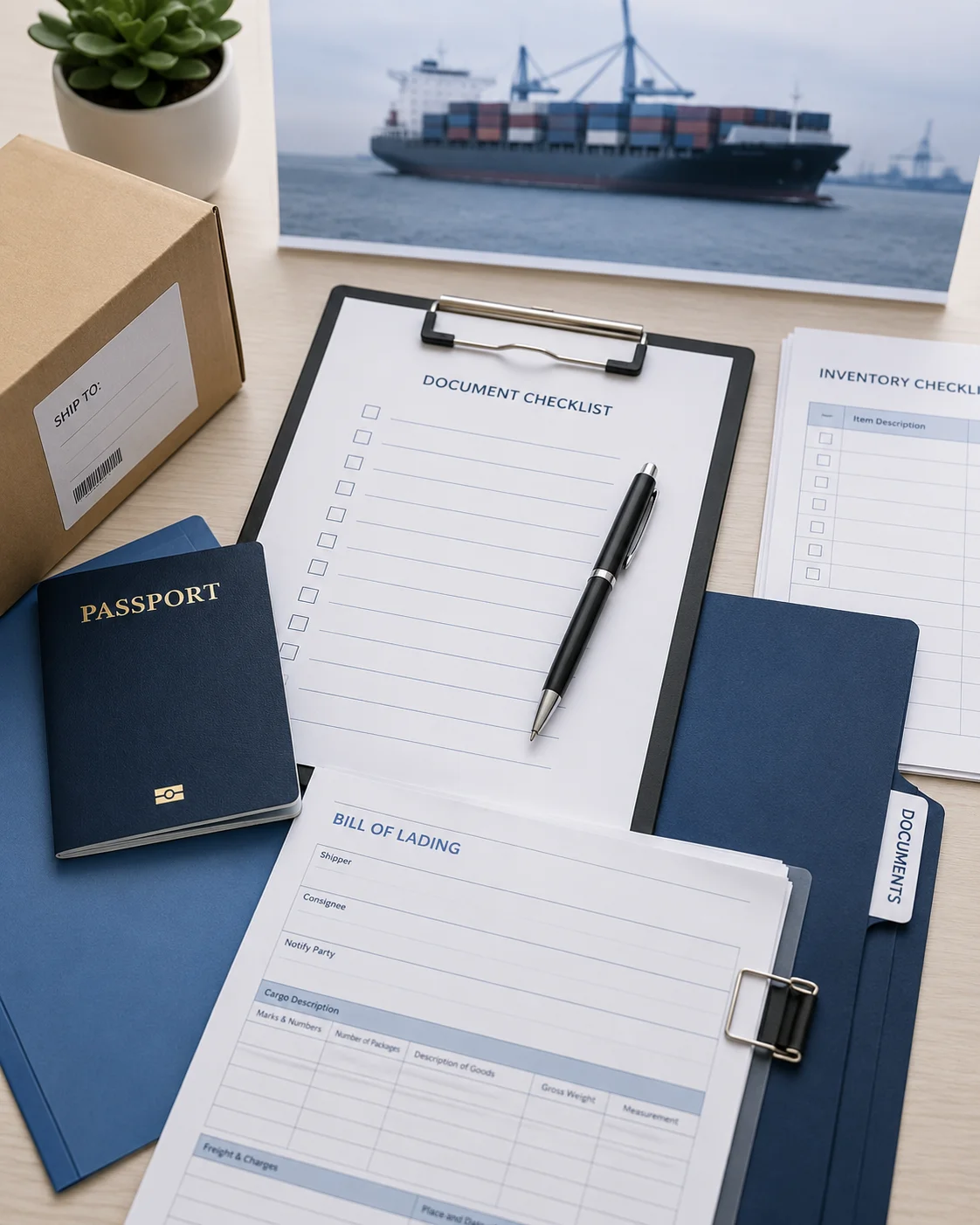
Documents
Documents required for importing used household goods, personal effects, and related shipments.
- Packing list
- Copy of valid passport
- Original bill of lading (OBL; no express/telex release accepted) or air waybill (AWB)
- Original inventory in French, dated, valued, and signed by the owner of the goods
- Invoices for electrical and hi-fi appliances, including any items purchased less than 6 months prior to the shipment's arrival
- Residence permit, work permit, or letter of employment confirming the start of a new contract in French Polynesia
- Non-sale certificate
Specific Information
Telecommunications and radio equipment. Telephones, telex machines, fax machines, and all transmitter-receiver equipment must bear EEC approval before they can be used in French Polynesia. These items must be submitted to the relevant authority for authorization. Customs may destroy or dispose of non-approved equipment. Allow approximately 2 additional days for clearance of these items following confirmation of EEC approval.
Language. All inventories must be in French and valued in euros (or XPF equivalent).
ISPM 15. All wood packaging materials must comply with ISPM 15 and bear the appropriate treatment mark.
Duties & Taxes
6-month ownership rule. Every item owned by the importer for less than 6 months at the time of the shipment's arrival in French Polynesia is subject to customs duty based on CIF value. Only goods owned for 6 months or more qualify for duty-free transfer-of-residence treatment.
Prohibited & Restricted Items
Prohibited Items
- Narcotics and controlled substances
- Firearms and ammunition without prior authorisation from the territorial administration
- Telecommunications equipment lacking EEC approval (subject to seizure and destruction)
- Pets from non-approved countries of origin transiting through rabies-positive countries
- Species protected under CITES without valid permits
- Pornographic materials involving minors
- Goods subject to French or international sanctions applicable to French overseas collectivities
Restricted / Dutiable Items
French Polynesia operates its own tariff schedule independent of France. All imports are subject to local duties unless specifically exempted. Items of particular note:
- Firearms and ammunition: require a special permit from the territorial administration prior to import; subject to duty
- Telecommunications equipment (telephones, telex, fax, transmitter-receivers): must bear EEC approval for use in French Polynesia; submitted to authorisation on arrival; unapproved equipment may be destroyed
- New goods and electrical items: any item owned less than 6 months is dutiable on CIF value; invoices required
- Alcohol and tobacco: subject to local excise duties; confirm thresholds with the destination agent
- Medications: personal-use quantities permitted with appropriate documentation; controlled substances require additional authorisation
- Plant material and foodstuffs: subject to phytosanitary inspection; some items restricted under biosecurity rules
- Currency: large amounts must be declared; confirm thresholds with the destination agent
Contact the DICP (service-public.pf/dicp) or the destination agent for current tariff rates by commodity code.
Importing a Used Personal Vehicle
Required Documents
- Original registration card
- Copy of the owner's driver's licence
- Original purchase invoice
- Non-sale certificate
- EUR 1 movement certificate (if vehicle is of EU origin)
Specific Information
French Polynesia drives on the right. Vehicles must meet local roadworthiness requirements before registration. Vehicles of EU origin with an EUR 1 certificate benefit from preferential tariff treatment.
Contact the destination agent for current duty rates, which are assessed on CIF value and vary by vehicle type and age. French Polynesia's local tariff schedules are separate from metropolitan France and subject to revision by the Polynesian government.
Pets
- ISO 11784/11785-compliant 15-digit microchip (or legible tattoo) **From rabies-free countries:**
- Import permit from the relevant authority, obtained in advance **From rabies-free countries:**
- Health certificate issued by a licensed veterinarian, endorsed by a government veterinarian, confirming the pet has resided in the rabies-free country for 6 months prior to export; crate seal number must appear on the certificate **From rabies-free countries:**
- Two parasite treatments (internal and external) within 30 days of entry, at least 14 days apart, with the second treatment within 4 days of transport **From rabies-free countries:**
- Notification of arrival provided in advance **From rabies-free countries:**
- ISO 11784/11785-compliant 15-digit microchip (or legible tattoo; microchip must precede rabies vaccination) **From non-rabies-free countries:**
- Rabies vaccination administered after microchipping, after 3 months of age, and more than 6 months before entry; must be current **From non-rabies-free countries:**
- Rabies titer test (FAVN recommended) administered at an OIE-approved laboratory, no sooner than 30 days after the rabies vaccination, and between 3 months and 12 months before entry; original results required for import permit application **From non-rabies-free countries:**
- Import permit obtained in advance; a quarantine reservation certificate confirming the 3-month post-vaccination/titer-test delay has been respected must accompany the permit application **From non-rabies-free countries:**
- Health certificate issued by a licensed veterinarian within a short period before departure, endorsed by a government veterinarian; crate seal number must appear on the certificate **From non-rabies-free countries:**
- Two parasite treatments (internal and external) within 30 days of entry, at least 14 days apart, with the second treatment within 4 days of transport **From non-rabies-free countries:**
Important: French Polynesia has a strict biosecurity regime. The country classification system determines the requirements applicable to each pet. Pets must not transit through any country not classified as rabies-free. Crates must be sealed by government officials in the originating country.
No quarantine if compliant. Pets meeting all requirements are not subject to quarantine. Non-compliant pets will be quarantined, returned to the origin country, or euthanized at the importer's expense.
Minimum age. Puppies and kittens must be a minimum of 10 months of age to complete the full process and enter French Polynesia. Pets under 3 months of age cannot be vaccinated for rabies.
Port of entry. Pets entering by air must arrive at Fa'a'ā International Airport in Tahiti. Advance notification of arrival is required. Pets entering by private boat require prior approval from the Ministry of Agriculture.
Sealed crates. Crates must be sealed by government officials in the originating country. The seal number must be recorded on the health certificate.
Leishmaniasis screening. Dogs that have lived in a country affected by leishmaniasis within the 6 months prior to entry must present a negative screening test result within 30 days of entry, regardless of vaccination status.
Restricted breeds. The following breeds require a pedigree certificate issued by an FCI-recognised organisation to enter French Polynesia: American Staffordshire Terrier, Rottweiler, Dogo Argentino, Fila Brasileiro, Broholmer, German Mastiff, Majorca Mastiff, Bordeaux Mastiff, Bulldog, Bullmastiff, Mastiff, Neapolitan Mastiff, Italian Cane Corso, and Tosa.
Other animals. Birds, reptiles, amphibians, rodents, and rabbits are not subject to rabies requirements but require an import permit and health certificate. CITES-protected species require additional permits.
CITES. Exotic pets, parrots, turtles, and other protected species are subject to CITES controls. Verify before shipping.
Special Categories
Country Classifications
Rabies-free countries (pets resident here for at least 6 months qualify for simplified requirements): Australia, Bahrain, Barbados, Falkland Islands, Fiji, Guam, Hawaii, Iceland, Japan, New Caledonia, New Zealand, Norfolk Island, Singapore, Vanuatu, Wallis and Futuna.
All other countries are classified as non-rabies-free and are subject to full requirements including a rabies titer test.
Consignment Instructions
Recommended: Contact the destination agent to ensure all requirements have been met prior to import, especially for differences regarding air and sea shipments.
French Polynesia is served primarily by sea through the port of Papeete (on Tahiti) and by air via Fa'a'ā International Airport (PPT). The port of Papeete handles the bulk of household goods freight. Inter-island shipping within French Polynesia is provided by local operators; confirm current schedules and costs with the destination agent if the final destination is not Tahiti.
All inventories must be in French and valued in euros or XPF. New items must be separately inventoried and accompanied by original invoices. The non-sale certificate must be included for all shipments.
The 6-month ownership rule is strictly applied. Items purchased in the months immediately before relocation that cannot be evidenced as owned for 6 months will be assessed duty on CIF value. Importers should retain purchase documentation for all electrical and hi-fi items regardless of age.
Telecommunications and radio equipment will cause delays if EEC approval documentation is not included from origin. Do not pack these items without first confirming compliance with the destination agent.
Papeete port handling and storage costs can accumulate quickly. Ensure all documentation is complete before the shipment departs.
Cultural & Other Information
- OpenFactBook -- French Polynesia
- Wikipedia -- French Polynesia
- French Polynesia Government Portal -- service-public.pf
- DICP (Customs and Tax Authority) -- service-public.pf/dicp
- DIREN (Environment / Biosecurity) -- service-public.pf/diren
- French Ministry of Foreign Affairs -- diplomatie.gouv.fr
- PetTravel.com -- French Polynesia Pet Import Requirements
- embassypages.com/frenchpolynesia *(WAF-protected; accessible in browser)*
French Polynesia is an archipelago of 118 islands and atolls in the South Pacific, grouped into five administrative subdivisions: the Society Islands (including Tahiti and Bora Bora), the Tuamotu Archipelago, the Marquesas Islands, the Austral Islands, and the Gambier Islands. The total population is approximately 280,000, with roughly two-thirds living on Tahiti. The capital is Papeete. French and Tahitian are the official languages. The economy is driven by tourism and black pearl exports. As a French collectivity, French Polynesia has a high degree of autonomy over its internal affairs, including taxation and customs, but France retains responsibility for defence and foreign affairs.
Useful resources
Quick Links & Resources
French Polynesia has no independent foreign representation. Consular services are provided through French embassies and consulates worldwide.