

Country Guides
Guatemala

Start here
Overview
Explore sections
Guide Details
Household Goods
Documents
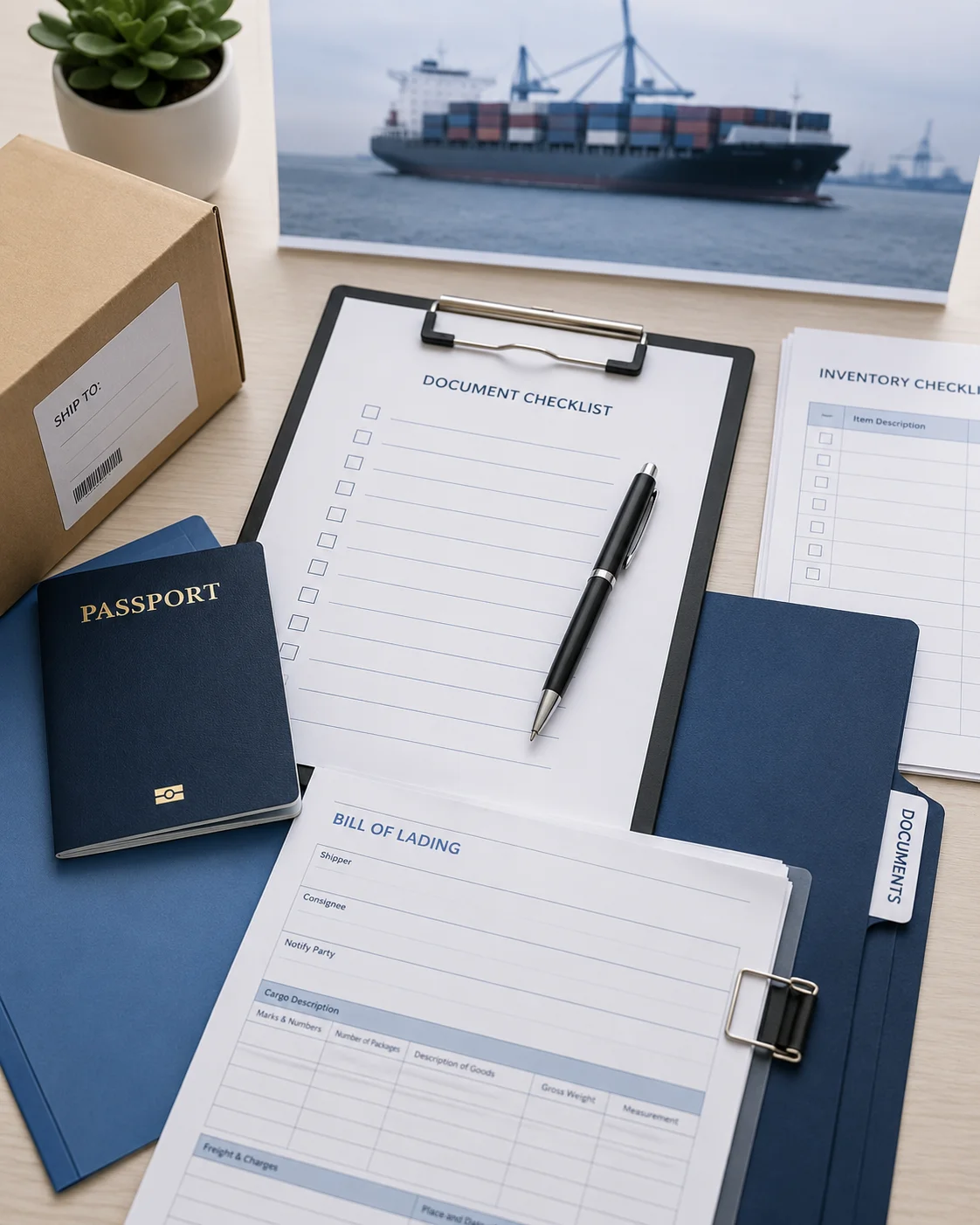
Documents required for importing used household goods, personal effects, and related shipments.
- Original passport with entry stamp, plus 1 complete photocopy
- Original bill of lading (OBL) or air waybill (AWB) -- 2 originals of each required
- Original packing list in English or Spanish
- Delivery and billing instructions including insurance information
- Tributary Identification Number (NIT) card or RTU printout (required for Guatemalan nationals and expatriates)
- Copy of duty-free exemption documentation (diplomats only)
Specific Information
Tributary Identification Number (NIT): Every person clearing a shipment through Guatemalan customs must have a NIT, which is a personal tax identification number obtained from the Superintendencia de Administracion Tributaria (SAT). If the owner does not yet have a personal address in Guatemala, an employer address may be used on the application. An alternative form is the RTU, which is the same tax ID presented as two sheets of paper showing the date the ID was updated and printed. Processing typically takes 1 hour to 1 day.
Name and address matching (critical): The address on the NIT card must match the name used on the original bill of lading, air waybill, or cargo manifest exactly. If they do not match, the shipment cannot be cleared. Ensure the destination agent has the correct consignment instructions before shipping.
Valued bill of lading: The original bill of lading must include a declared value for the shipment.
Antiques and art: Antiques, artifacts, carpets, and paintings are permitted if declared as part of the household goods shipment in reasonable quantities and listed on the packing list.
Household goods and vehicles on separate documents: Guatemala customs does not allow household goods and a vehicle to be declared on the same bill of lading, even if both are shipped in the same container. Each must have its own OBL.
ISPM 15: All wood packaging materials must comply with ISPM 15 standards (heat-treated or fumigated and marked).
Duties & Taxes
Duties and taxes: Household goods are generally subject to import duties and taxes. Guatemala uses the CIF (Cost, Insurance, Freight) method to calculate duties. The standard VAT rate is 12%. Duty rates vary by product category under the Central American Common Tariff (CAUCA/RECAUCA). Diplomats with proper exemption documentation may be exempt.
Prohibited & Restricted Items
Prohibited Items
- Narcotic drugs and illegal substances (PROHIBITED)
- Pornographic materials (PROHIBITED)
- Weapons, explosives, and ammunition without authorization (PERMIT REQUIRED)
- Knives and other dangerous weapons (PROHIBITED)
- Milk and milk products (PROHIBITED per VisaHQ; may be subject to phytosanitary restrictions rather than absolute prohibition -- confirm with destination agent)
- Wild plants and unprocessed plant products (RESTRICTED)
- Counterfeit goods (PROHIBITED)
- Endangered species and CITES-listed products without permits (CITES)
Restricted / Dutiable Items
Duty-Free Allowances (personal baggage)
Tobacco products:
- 80 cigarettes, OR
- 100 g (3.5 oz) of tobacco
Alcoholic beverages:
- 2 bottles of liquor or spirits
Other:
- No restrictions on perfume quantities
- Other goods up to a value of USD 500
Firearms: Authorization from the Ministry of Defense is required, plus a special import permit. PERMIT REQUIRED.
Alcohol/wine within household shipments: Permission from the Health Ministry is required, and a maximum of 6 bottles is permitted. An original commercial invoice and certificate of origin are required for alcohol imports.
Food items: Limited to 2 kg within household goods shipments.
Currency: Amounts of USD 10,000 or equivalent must be declared to customs authorities.
Importing a Used Personal Vehicle
Required Documents
- Car condition report
- Original bill of lading (OBL) -- separate from household goods
- Original vehicle commercial invoice
- Original vehicle title, registration, or proof of ownership
- Original receipts of payment, transfer, or check submitted
Specific Information
Bill of lading vehicle details: The OBL must include: chassis number, engine number, number of doors, make, year, style, color, number of cylinders, vehicle identification number (VIN), fuel type, and cubic centimeters (cc).
Incomplete documentation fee: If the required vehicle documents are unavailable or incomplete, the owner will be charged approximately USD 150 for a customs inspection.
Vehicle age restriction: Guatemalan regulations allow the import of vehicles that are up to 10 years old. Vehicles older than 10 years from the date of manufacture may not be imported.
Duties and taxes on vehicles: Vehicles are subject to import duties and VAT (12%). Duty rates vary by vehicle type and value.
Pets
- Original invoice (if pet was purchased)
- Original air waybill
- Vaccination certificate (rabies plus additional vaccines; see below)
- Veterinary health certificate issued in the country of origin
Rabies vaccination: Dogs and cats must have a current rabies vaccination administered at least 30 days but not more than 12 months prior to entry. Guatemala does not accept multi-year rabies vaccinations. The administering veterinarian must issue, sign, and stamp the certificate.
Additional vaccinations required: Dogs must also be vaccinated against distemper, hepatitis, leptospirosis, and parvovirus. Cats must be vaccinated against FVRCP (feline viral rhinotracheitis, calicivirus, and panleukopenia).
Microchip: Pets must be fitted with an ISO-compatible microchip, implanted before the rabies vaccination.
Health certificate: A veterinary health certificate must be issued by a licensed veterinarian in the origin country, certifying the pet is healthy, free of contagious diseases, and has been treated for internal and external parasites. The certificate should be issued within 10 days of travel (some airlines require within 7 days). It should be in Spanish or accompanied by a Spanish translation.
USDA endorsement (for US-origin pets): The health certificate should be endorsed by USDA APHIS through the VEHCS system.
Import permit: An import permit is generally NOT required for personal pet travel to Guatemala, though regulations can change. For commercial animal imports, MAGA (Ministry of Agriculture, Livestock, and Food) requires a valid import permit.
Timing of arrival: Pets should arrive at the beginning of the week to avoid being held in customs care over weekends. Flights should arrive in the morning.
Duties on pets: Pets are subject to the payment of duties unless they are pedigreed animals (which may enter duty-free per VisaHQ). Confirm with the destination agent.
Puppies and kittens: Animals under 3 months of age may enter Guatemala without a rabies vaccination but must have all other required documentation.
No breed bans: Guatemala does not publish a list of banned dog breeds.
Electronic documents: Send electronic copies of all documents to the destination agent in advance to obtain the veterinary health certificate from MAGA/SEPA; this process takes approximately 3 business days.
CDC high-rabies-risk: Guatemala IS on the CDC's list of high-risk countries for dog rabies. Dogs returning to the United States from Guatemala will need to meet the CDC's requirements for dogs from high-risk countries, including the CDC Dog Import Form and either a Certification of U.S.-Issued Rabies Vaccination form (completed before departure from the U.S.) or additional documentation including a rabies titer test. Dogs must be at least 6 months old, microchipped, and appear healthy upon return to the U.S.
Special Categories
Discrepancies and Clarifications
- Tobacco allowances: The IAM 2016 guide does not specify tobacco allowances. VisaHQ lists 80 cigarettes or 3.5 oz tobacco. Hinterland Travel and other sources are broadly consistent. This guide uses the VisaHQ figures.
- Alcohol in shipments: The IAM guide states "6 bottles maximum" with Health Ministry permission required plus a commercial invoice and certificate of origin. VisaHQ lists "2 bottles of liquor" as the personal duty-free allowance. These refer to different contexts: personal baggage (2 bottles) vs. household shipment (6 bottles with permit). Both are included.
- Milk products prohibition: VisaHQ lists "Milk and milk products" under prohibited items. This likely refers to phytosanitary restrictions on commercial dairy imports rather than small quantities for personal use, but this should be confirmed with the destination agent. The IAM guide does not mention this restriction.
- Pedigreed pets duty-free: VisaHQ states "Only pedigreed pets will be allowed to enter the country for free." The IAM guide simply says "Pets are subject to the payment of duties." The pedigree exemption is unverified through official sources.
- Rabies vaccination timing: PetTravel.com states 30 days to 12 months before entry. Some other sources mention 21 days. The 30-day figure is used here as the more conservative and more frequently cited requirement. Confirm with the destination agent or MAGA.
- Vehicle age restriction: The IAM guide states "10 years of age or older" can be imported, which is ambiguous. Based on cross-referencing, the regulation allows import of vehicles up to 10 years old (i.e., no older than 10 years from manufacture). This should be confirmed with the destination agent.
Unverified Items
- Whether milk/dairy products are truly prohibited or simply restricted under phytosanitary rules
- Whether the pedigreed pet duty exemption is still in effect
- Exact current duty rates for household goods by category
- Whether the 30-day pre-vaccination waiting period for rabies (vs. 21 days) is the current official requirement
- Clarification of the vehicle age restriction (vehicles up to 10 years old, or vehicles 10+ years old?)
Consignment Instructions
Recommended: Contact the destination agent to ensure all requirements have been met prior to import, especially for differences regarding air and sea shipments.
NIT/RTU requirement (critical): The owner must obtain the Tributary Identification Number (NIT) or RTU before the shipment can be cleared. The address on the NIT must match the consignee details on the bill of lading exactly. Obtain correct consignment instructions from the agent BEFORE shipping.
Separate documentation for vehicles: Household goods and vehicles cannot share the same bill of lading. Ship them on separate OBLs even if they are in the same container.
Packing list: Must be in English or Spanish and should list all items with descriptions.
MAGA/SEPA inspection: Upon arrival, shipments may be inspected by OIRSA (the regional phytosanitary inspection entity for Central America). Original copies of all required documents must be presented. The importer must also pay duties to SAT via deposit at an approved bank.
Timing: Send electronic copies of all documents to the destination agent well in advance of arrival to allow time for pre-clearance processing.
Cultural & Other Information
- OpenFactBook (replaces CIA World Factbook): https://www.openfactbook.org/countries/guatemala/ (verified 200)
- Wikipedia -- Guatemala: https://en.wikipedia.org/wiki/Guatemala (verified 403 to bots; works in browser)
- Superintendencia de Administracion Tributaria (SAT): https://portal.sat.gob.gt/portal/ (verified 200)
- Ministry of Agriculture, Livestock, and Food (MAGA): https://www.maga.gob.gt/ (verified 200)
- Ministry of Foreign Affairs (MINEX): https://www.minex.gob.gt/ (verified 403 to bots; Cloudflare-protected, browser-accessible)
- Trade.gov -- Guatemala Import Tariffs: https://www.trade.gov/country-commercial-guides/guatemala-import-tariffs (verified 200)
- Trade.gov -- Guatemala Prohibited & Restricted Imports: https://www.trade.gov/country-commercial-guides/guatemala-prohibited-restricted-imports (verified 200)
- USDA APHIS -- Pet Travel to Guatemala: https://www.aphis.usda.gov/pet-travel/us-to-another-country-export/pet-travel-us-guatemala (returns 503 to this proxy; standard WAF/IP block, confirmed live)
- PetTravel.com -- Guatemala: https://www.pettravel.com/information/pet-passports/guatemala-pet-import-requirements/ (verified 200; updated from legacy /immigration/Guatemala.cfm path)
- VisaHQ -- Guatemala Customs: https://www.visahq.com/guatemala/customs/ (verified 200)
Useful resources