

Country Guides
Haiti

Start here
Overview
Explore sections
Guide Details
Household Goods
Documents
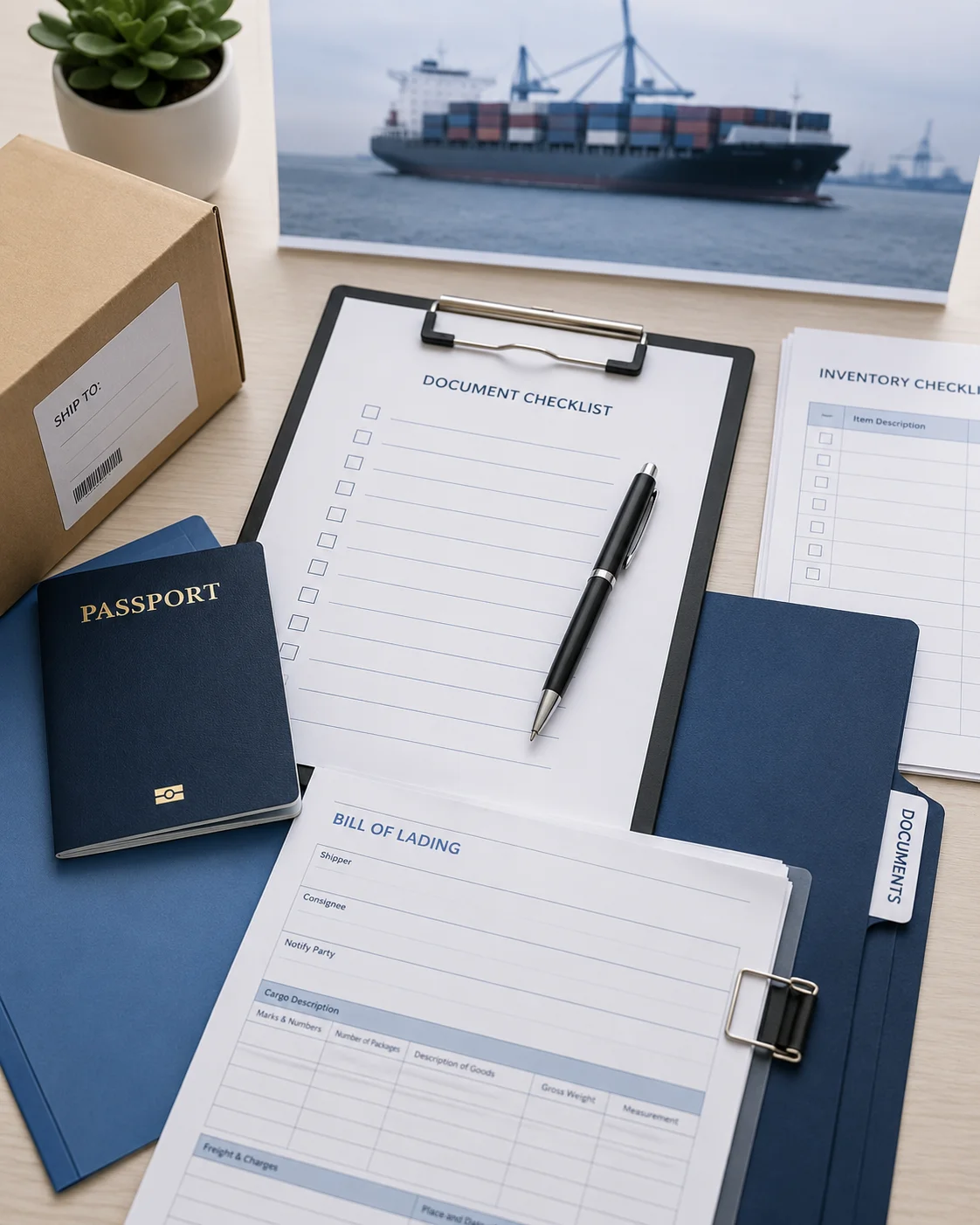
Documents required for importing used household goods, personal effects, and related shipments.
- Valid Haitian passport
- Copy of Haitian ID (Matricule Fiscale)
- Correspondence from the Haitian Consulate certifying the consignee is a returning citizen
- Original bill of lading (OBL) or air waybill (AWB)
- Detailed packing list in English or French
- Listing of imported items with estimated values
- Valid passport
- Original bill of lading (OBL) or air waybill (AWB)
- Detailed packing list in English or French
- Listing of imported items with estimated values
- Work permit or employment documentation (if importing for employment purposes)
- Diplomatic passport
- Carte du Protocole from the Haiti Ministry of Foreign Affairs
- Document acknowledging diplomat status
- Original bill of lading (OBL) or air waybill (AWB)
- Packing list in English or French
Specific Information
Duties for foreign citizens: Non-citizens entering Haiti for employment purposes are generally subject to import duties, especially if the shipment contains new items. Duty rates vary by item category. Confirm current rates with the destination agent.
Language: Packing lists and documentation should be in English or French (Haiti's two official languages are French and Haitian Creole).
ISPM 15: Wood packaging (crates, pallets) should comply with ISPM 15 (International Standards for Phytosanitary Measures No. 15) requirements. A phytosanitary certificate is required for wood items in the shipment.
Duties & Taxes
Duty-free conditions: Shipments for diplomats and returning Haitian citizens are exempt from customs duties and taxes. Returning citizens must provide consulate certification of their status.
New items in shipments: New goods included in household shipments may attract higher duty, even for otherwise exempt categories. It is advisable to separate new items or declare them specifically.
Prohibited & Restricted Items
Prohibited Items
- Illegal drugs and narcotics
- Firearms and ammunition (other than sporting guns with prior consul permit) PERMIT REQUIRED
- Knives and deadly weapons
- Macaws and parrots
- Live flora or fauna (without appropriate permits) CITES
- Fertilizer
- Toxic waste
- Counterfeit money and goods
- Pornographic material
Restricted / Dutiable Items
Duty-free personal allowances (per VisaHQ):
- 200 cigarettes, or 50 cigars, or 1 kg of tobacco
- 1 litre of alcoholic beverages and spirits
- A small quantity of perfume for personal use
- Other legal personal goods up to a value of HTG 2,500
Currency declaration: Local or foreign currency exceeding HTG 200,000 must be declared to the customs department when entering or leaving the country.
Restricted items requiring permits or certificates:
- Wood (phytosanitary certificate required)
- Meat (phytosanitary certificate required)
- Chemicals (phytosanitary certificate required)
- Medicines (phytosanitary certificate required)
- Sporting firearms (permit from a Haitian consul required before entry)
- Birds, cats, and dogs (veterinary health certificate required)
Importing a Used Personal Vehicle
Required Documents
- Original vehicle title
- Original purchase invoice
- Original bill of lading
Specific Information
Terminal deposit: Most port terminals require an approximate USD 300 deposit for all used vehicles transiting through their facility. This deposit may or may not be refundable; confirm terms with the destination agent.
Vehicle age restrictions: Haiti has historically restricted the import of older vehicles. Confirm current age limits with the destination agent, as enforcement can vary.
Duties on vehicles: Imported vehicles are subject to customs duties and taxes. Rates depend on engine size, vehicle age, and type. Duty exemptions may apply for diplomats and returning citizens (confirm with the agent).
Port of entry: Vehicles typically clear through the port of Port-au-Prince.
Pets
- Vaccination record (rabies and other standard vaccinations)
- Original veterinary health certificate issued within 7 days of arrival
- Rabies vaccination certificate (dogs over 3 months: administered at least 21 days but no more than 11 months before arrival,; PetTravel states 21 days to 12 months)
Microchip: Not required by Haiti, but recommended. PetTravel recommends an ISO 11784/11785 compliant 15-digit microchip. If the pet is microchipped, all documents should reference the microchip number.
Rabies vaccination: All dogs and cats over 3 months of age must be vaccinated against rabies. The vaccination must be administered at least 21 days before arrival. Per PetTravel, multi-year rabies vaccinations are not recognized unless administered within 12 months of import. Rabies titer test results or veterinary exemption letters are not accepted as substitutes for proof of vaccination.
Rabies titer test: Not required to enter Haiti from any country. However, Haiti is classified as a high-rabies-risk country by the World Organisation for Animal Health (WOAH), so a titer test may be required for the pet to return to the country of origin.
CDC high-rabies-risk country: Haiti is on the U.S. CDC list of high-risk countries for dog rabies. Dogs entering the United States from Haiti are subject to enhanced CDC import requirements, including a CDC Dog Import Permit, valid rabies vaccination, and microchip. If the pet will eventually return to the U.S., owners should plan for these re-entry requirements before departure.
Health certificate: Must be issued by a licensed veterinarian within 7 days of travel. PetTravel recommends (but does not require) that the governing authority in the country of origin endorse the forms. The certificate must include owner information, pet details, vaccination records, and a veterinary attestation that the pet is free of symptoms of contagious disease.
Other vaccinations: Dogs should be vaccinated against distemper, hepatitis, parvovirus, and leptospirosis. Cats should be vaccinated against feline viral rhinotracheitis, calicivirus, and panleukopenia. These can be recorded on the health certificate.
Import permit: Not required for dogs, cats, or ferrets entering Haiti as personal pets from any country.
Quarantine: No quarantine if all import regulations are met. Non-compliant pets may be quarantined (if facilities are available), returned to the origination country, or euthanized at the importer's expense.
Parrots and macaws: Cannot be imported into Haiti.
No banned breeds list: Haiti does not publish a list of banned dog breeds. Importers are responsible for their pet's behavior.
Parasite treatments: Optional but recommended. Should be administered shortly before import with products approved in the country of origin.
Entry by air: Pets should enter via Port-au-Prince International Airport (Toussaint Louverture International Airport). Pets can arrive as in-cabin, checked baggage, or air cargo per airline policies. The owner should be present at customs clearance. Importers should inform veterinary officials in advance.
CITES: Importation of species covered by the Convention on International Trade in Endangered Species (CITES) requires additional permits. This is particularly relevant for parrots, turtles, and other exotic species.
Special Categories
Common Mistakes
- Presenting a health certificate issued more than 7 days before arrival
- Failing to vaccinate for rabies at least 21 days before arrival
- Attempting to import parrots or macaws (prohibited)
- Not planning for enhanced CDC re-entry requirements when returning a dog to the U.S. from Haiti
Discrepancies
- Rabies vaccination validity window: The IAM guide (2016) states the rabies certificate must be issued "more than 21 days prior to arrival but not more than 11 months." PetTravel (2026) states "between 21 days and 12 months prior to entering Haiti." The difference is 11 months vs. 12 months. PetTravel is the more recently updated source. Recommend confirming with the destination agent.
Unverified Items
- Specific current duty rates for household goods and vehicles could not be verified against official Haitian government sources because the customs authority website is not accessible. The IAM guide's general statements about duty exemptions for diplomats and returning citizens are consistent with VisaHQ.
- Vehicle age restriction details could not be independently verified against a current official source. The destination agent should be consulted.
- The USD 300 terminal deposit for vehicles (from the 2016 IAM guide) could not be verified as current. The amount may have changed.
Consignment Instructions
Recommended: Contact the destination agent to ensure all requirements have been met prior to import, especially for differences regarding air and sea shipments.
Port of entry: The primary seaport is Port-au-Prince. Air cargo clears through Toussaint Louverture International Airport (PAP).
Security and logistics: Haiti's infrastructure and security situation can create unpredictable delays and costs. Demurrage, storage, and port handling fees can accumulate rapidly. The destination agent should be closely involved throughout the process.
Inventory requirements: A detailed packing list with estimated values is required for all shipments. Items should be listed in English or French.
Inspections: Customs inspections are common and may be thorough. Ensure all documentation is complete and accurate to minimize delays.
Unpredictable expenses: Port congestion, handling fees, and administrative charges can vary significantly. Budget for contingencies and work with an experienced local agent.
Cultural & Other Information
- OpenFactBook (replaces CIA World Factbook): https://www.openfactbook.org/countries/haiti/ (verified 200)
- Wikipedia -- Haiti: https://en.wikipedia.org/wiki/Haiti (verified 403 to bots; works in browser)
- Direction Générale des Impôts (DGI -- tax authority): https://dgi.gouv.ht/ (verified 200; French-language site)
- Ministry of Foreign Affairs (Ministère des Affaires Étrangères et des Cultes): https://mae.gouv.ht/ (verified 200; French-language site)
- Ministry of Agriculture: https://agriculture.gouv.ht/ (returns 202; behind captcha wall, not content-verified)
- PetTravel.com -- Haiti: https://www.pettravel.com/information/pet-passports/haiti-pet-import-requirements/ (verified 200)
- VisaHQ -- Haiti Customs: https://www.visahq.com/haiti/customs/ (verified 200)
- CDC High-Risk Countries for Dog Rabies: https://www.cdc.gov/importation/dogs/high-risk-countries.html (verified 200)
Note: Haiti's customs authority (Administration Générale des Douanes, AGD) still does not have a functioning public website as of June 2026. The domains douanes.gouv.ht and agd.gouv.ht were re-checked and remain genuinely unreachable.
Useful resources