

Country Guides
Kazakhstan

Start here
Overview
Explore sections
Guide Details
Household Goods
Documents
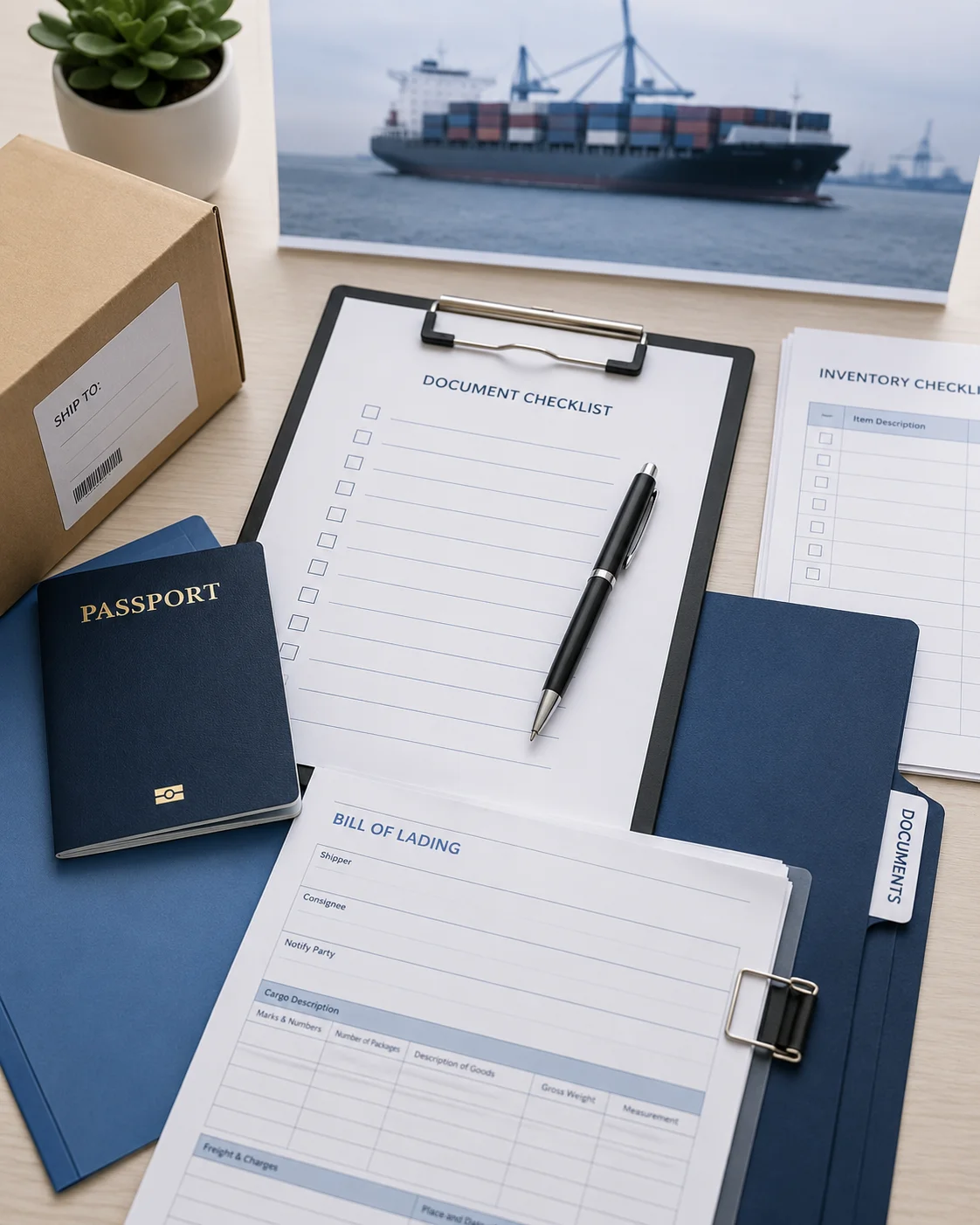
Documents required for importing used household goods, personal effects, and related shipments.
- Copy of passport
- Copy of valid Kazakh visa (must be valid on the shipment's arrival date)
- Copy of valid diplomatic card (if applicable)
- Document copy with Individual Identification Number (IIN)
- Employment confirmation on employer letterhead (3 originals; sample provided by local agent). Required for all shipments; specifically mandatory for shipments above 200 kg
- Notarized power of attorney (or POA on employer letterhead) for the local agent to handle customs processing (3 originals; sample provided by local agent)
- Notarized power of attorney for rail terminal handling, if applicable (2 originals)
- Customs brokerage agreement (provided by local agent, 2 originals)
- Detailed valued packing list in English with description, quantity, and weight of each carton
- Original bill of lading (OBL) / air waybill (AWB)
- ID card copy
- Notarized power of attorney for local agent to handle customs process (3 originals)
- Notarized power of attorney for rail terminal handling, if applicable (2 originals)
- Employment confirmation on employer letterhead (3 originals)
- Customs brokerage agreement (provided by local agent, 2 originals)
- Updated original certificate of tax registration number
- Detailed valued packing list in English
- OBL / AWB
- Original OBL / AWB or telex release
- Franchise letter / diplomatic card copy
- Packing list / inventory
- Passport copy
- Registration with the Ministry of Foreign Affairs of Kazakhstan
Specific Information
No general duty-free exemption exists. This is one of the most important facts about importing to Kazakhstan. All inbound non-diplomatic shipments are subject to customs duties and taxes calculated on the CIF value (cost + insurance + freight as listed in the waybill and shipping documentation, plus the declared customs value of goods in the detailed valued inventory). The only duty-free shipments are those moving between EAEU member states: Russia, Belarus, Kyrgyzstan, and Armenia.
Regulatory update (January 2026): Kazakhstan's VAT rate increased from 12% to 16%, effective January 1, 2026. This affects the total customs charges on all imported household goods.
Customs charges (non-EAEU shipments):
- Customs fee: KZT 20,000 per declaration
- Customs duty: 0-20% of CIF value per kg net weight (depending on origin and commodity classification)
- Customs VAT: 16% of (CIF value + customs duty + customs fee) [updated from 12% effective January 2026]
- Exact charges can only be confirmed during the customs clearance process
Do not send insurance or valuation documents with the shipment. The customs value declared should be realistic but should not include insurance documents showing the full replacement value, as this will result in significantly higher duty calculations. The declared customs value may be lower than insurance value but must be realistic enough to be accepted by customs officers.
New items are strictly prohibited within household goods shipments. Shipments are declared as "used household goods," and goods in original factory packaging or with tags may be confiscated. Very minor new items (e.g., lingerie, toys) marked as "new" on the packing list may be accepted, but this is not guaranteed.
National Security Committee (NSC) permission is required for all electronic appliances and costs approximately EUR 80 / USD 100. Permission takes 7-10 working days. The list of items requiring NSC permission is extensive and includes: computers, laptops, printers, scanners, DVD/CD players, stereo systems, telephones, alarm systems, cameras, navigators, iPads/tablets, mobile phones, Wi-Fi routers, modems, baby monitors, headphones, drones, cordless phones, remote controls, and any wireless or Bluetooth equipment. The packing list must include the manufacturer name, make/model, and serial number for all electronics.
Satellite antennas and GPS navigators require a separate import permission from the Radio Frequency Control Department, also taking approximately 7-10 working days.
Packing list requirements are extremely detailed. General descriptions such as "kitchenware," "bath items," or "garage stuff" are unacceptable. Items must be individually defined (e.g., "3 ceramic pots, 18 spoons, 2 Teflon pans, 7 bathroom towels"). Electronics must include manufacturer name, make/model, and serial number. All documents must be readable, true, correct, and consistent across all paperwork. Any weight, value, or other discrepancy will cause delays and potential hold of the cargo.
Two import regimes:
- *Permanent import (free circulation):* Full customs charges paid at once before clearance. Kazakhstani citizens must import on a permanent basis and obtain a "FAP card" (foreign activity participant card), valid for one year, requiring additional documents and 2 working days to process.
- *Temporary import:* Available for up to 3 years maximum. Only the customs fee is paid upfront; the total duty and VAT amount is split into 3% periodic dues paid monthly. Temporary import validity is tied to the consignee's visa validity. Goods imported temporarily cannot be consumed, sold, or given away. At each visa extension, the temporary import must also be extended for the same goods, or the goods must be exported or converted to permanent import with full remaining duty/VAT payment. Temporary import is advisable only for stays of a few months to one year due to the complicated and time-consuming extension process and penalties for non-timely renewal.
Non-residents may only import household electrical appliances on a temporary import basis.
Diplomatic shipments: Furniture as part of diplomatic shipments must be cleared separately on a temporary import basis, with tenure based on the diplomatic card validity or the mission's accreditation period. Diplomatic vehicles must be registered with the MFA. Embassy employees import customs duties-exempt but are subject to inspection.
Declaration deadline: Customs declaration must be submitted within 30 calendar days of air shipment arrival or within 30 days of surface cargo registration at the customs bonded warehouse. If the declaration is not submitted within the prescribed period or customs dues are not paid timely, official fines and penalties will be imposed, the shipment will be considered contraband and held (accumulating storage charges), documents will be passed to the Customs Smuggling Department and Administrative Court, and all court processing fees will be collected from the consignee.
Prohibited & Restricted Items
Prohibited Items
- New items (within household goods shipments declared as used)
- Cash (within shipments)
- Food items of any kind (including dry, canned fish and meat, spices)
- Beverages, including alcohol (non-diplomatic shipments)
- Jewellery, precious stones, other high-value items, sets, and collections
- Articles made of precious metals (gold, silver), including silverware
- Weapons and ammunition
- Toxic and radioactive materials
- Flammables
- Pornography
- Religious information or items
- Rare animal and bird species, skins, horns [CITES]
- Stuffed animals and birds
- Books published earlier than 1961
- Used tyres
- Plants
- Soil
- Any equipment containing Freon
- Lenses (optical)
- Medicines including medical kits
- All medical appliances (thermometers, pulsometers, inhalers, massagers)
- New liquids (gel, shampoo, etc.)
- Detergent
Printed/audio/video materials prohibited: Materials containing extremism or terrorism content; pornography; election/referendum propaganda violating Customs Union laws; Nazi symbols and attributes or similar imagery; any information that could harm the political or economic interests, state security, health, or morals of the Republic of Kazakhstan.
Restricted / Dutiable Items
Alcohol: Import is not allowed for non-diplomatic shipments. Diplomats are permitted 3 litres.
Satellite antennas and GPS navigators: Require import permission from the Radio Frequency Control Department (7-10 working days). [PERMIT REQUIRED]
All electronics: Require NSC permission (see extensive list in Section 1). [PERMIT REQUIRED]
Live animals: Special permit required. [PERMIT REQUIRED]
Perfume: Reasonable quantities permitted duty-free.
Carpets, paintings, musical instruments, art objects, antique items, large souvenirs, and other artefacts: Permitted but must be documented in detail (author, name, dimensions, material, description, value, year of production) for future re-export. Musical instruments must be accompanied by their original passport.
New items: Subject to confiscation if found in a household goods shipment declared as "used."
Cash and monetary instruments: Export from Kazakhstan of cash foreign currency and/or monetary instruments exceeding the equivalent of USD 10,000 is prohibited. Also prohibited: gold refined bars of 5-100 grams issued by the National Bank of Kazakhstan, and refined gold over 100 grams.
Importing a Used Personal Vehicle
Required Documents
- Original certificate of title / technical passport (must state the same owner as the consignee on the waybill; must arrive with the vehicle)
- Pro-forma invoice with vehicle details: chassis number, engine number, production year, model, colour, and reasonable customs value
- Original bill of lading / air waybill
- Original customs declaration
- Notarized power of attorney for local agent (3 originals)
- Commitment letter on employer letterhead (for temporary importation)
Specific Information
Euro 5 emission standard required. All vehicles must conform to Euro 5 standards, in effect since 2018. Non-compliant vehicles will be refused entry.
Right-hand-drive vehicles are prohibited. This ban has been in effect since January 1, 2007.
All vehicles are subject to certification (except diplomatic vehicles).
Vehicles are customs-cleared separately from the household goods shipment.
Customs charges for vehicles:
- Customs duty for vehicles under 10 years old with engine volume up to 3,000 cc: 30-35% of CIF value, but not less than 1.2-5.8 EUR multiplied by the engine volume in cubic centimetres
- Customs duty for vehicles over 10 years old: same rate structure
- Excise duty for vehicles with engine volume over 3,000 cc: 30-35% of CIF value, but not less than 0.5 EUR multiplied by engine volume in cubic centimetres
- Customs fee: KZT 20,000 per declaration
- Customs VAT: 16% of (CIF value + duty + fee + excise, if applicable)
Conditional pricing: Customs authorities evaluate vehicles based on their own Customs Commodity Register and database of previously imported vehicles of the same type. The customs value may be assessed higher than the declared value. This means exact vehicle customs charges cannot be quoted in advance and may change during the clearance process, potentially requiring the entire process to restart with additional payment.
Temporary vehicle import: Vehicles (cars, motorcycles, jet skis, yachts, etc.) can be imported temporarily subject to a customs fee of 0.2% of CIF value paid quarterly, plus periodic dues of 3% of the total customs duty and VAT amount paid monthly.
Registration: After customs release, vehicles must be registered with local traffic police. The original import customs declaration is required. Interpol hijacking records are checked before plates and a "technical passport" (equivalent to certificate of title) are issued.
Pets
- Vaccination certificate (rabies plus additional species-specific vaccinations)
- Copy of pet's original passport (if available)
- Import Health Certificate Form 15 (if veterinary passport is not available)
- Veterinary health certificate issued within 5 days of travel, signed and stamped by a government veterinarian in the origination country
- Invoice for pet (owner's data and complete information: name, colour, quantity, country of origin, purchasing value)
- Copy of owner's passport
- Copy of owner's visa
- Ticket of the owner (for accompanied pets only)
- Power of attorney issued in Kazakhstan (for unaccompanied pets)
- Import permit from Kazakhstani veterinary authorities (if importing more than 2 pets of the same species; takes approximately 7-10 working days)
Microchip: Not strictly required but strongly recommended. Should be a 15-digit ISO 11784/11785 Annex A compliant chip. If implanted, the microchip number should appear on all documentation.
Rabies vaccination: Required no sooner than 21 days and no more than 11 months before entry. Multi-year vaccines must be validated by the veterinarian on the health certificate.
Additional vaccinations required: Dogs must be vaccinated against canine distemper, canine hepatitis, canine leptospirosis (unless currently being treated), and canine parvovirus. Cats must be vaccinated against feline viral rhinotracheitis, feline panleukopenia, and feline leukemia. Cats must also be checked for dermatophytoses; cats with this condition should not be imported.
Vaccination timing: Pets should be vaccinated within 60-30 days before departure for proper effect and reaction identification.
Parasite treatment: Internal and external parasite treatments are required prior to entry. The treatment for Echinococcus multilocularis (tapeworm) plus flea and tick treatments should be discussed with the veterinarian and recorded on the health certificate.
Quarantine: No quarantine for compliant pets. Non-compliant pets may be quarantined, returned, or euthanized at the importer's expense.
Origin country restriction: Pets must originate from countries that have not had a rabies incident within the past 6 months.
Rabies titer test: Not required for entry into Kazakhstan from any country.
Customs charges for unaccompanied pets (cats and dogs): Customs duty at 10% of CIF value; customs fee of approximately EUR 50; VAT at 16% of (CIF value + duty + fee). Accompanied pets (traveling with the owner) are free of customs charges.
Document verification timeline: All documents should be verified by the local agent's customs division and local veterinary authorities a minimum of 10-15 days before the pet's planned arrival date.
More than 2 pets: If importing more than 2 pets of the same species under one owner, an import permit must be obtained from the Kazakhstani local veterinary authority centre, taking approximately 7 working days.
Alcohol allowance for pet shipments: N/A, but note that alcohol import within any shipment is prohibited for non-diplomats (diplomats are allowed 3 litres).
Consignment Instructions
Contact the destination agent to ensure all requirements have been met prior to import, especially regarding differences between air, sea, and surface (rail/road) shipments.
Surface shipment transit declaration: Surface shipments must be placed and registered at a customs bonded warehouse within the deadline (maximum 30 days) according to the transit customs declaration ("DKD") issued at the customs border point upon entry to Kazakhstan.
Inventory requirements: Detailed valued packing list in English is mandatory. Every item must be individually described with quantity and weight per carton. Electronics must include manufacturer, make/model, and serial number. General or vague descriptions will be rejected. All information across all documents must be identical with no discrepancies.
Pre-declaration: Technically possible if all documents (packing list, detailed valued inventory, invoice, rated final waybill) are sent in advance and conform exactly to those arriving with the shipment. However, pre-declaration is not recommended because frequent discrepancies between advance documents and actual shipping documents force the entire customs process to restart with additional charges.
Storage charges:
- Air shipments: Storage begins accumulating immediately upon arrival. Hours are rounded to calendar days (arrival at 11:50 PM counts as day 1; midnight the next day begins day 2). Rate approximately KZT 9 per kg/per day; terminal handling charge approximately KZT 12 per gross kg.
- Surface shipments: Storage begins upon arrival at terminal; separate customs bonded warehouse storage charges begin from registration date (which may differ from arrival date). Rail/truck terminal storage is separate from and additional to customs bonded warehouse charges.
Penalties for late declaration: If the customs declaration is not submitted within 30 days or customs dues not paid timely: fines and penalties imposed on the consignee; shipment treated as contraband and held (accumulating storage); documents transferred to the Customs Smuggling Department and Administrative Court; court processing fees collected from consignee before release. If a submitted declaration is not released within 10 days, the pre-paid customs fee is cancelled and must be paid again with a new declaration.
Exchange rate risk: If goods are pre-declared and there is a difference in the exchange rate between the date of preliminary customs declaration and the date of actual shipment arrival/clearance, the difference must be paid before customs release.
Cultural & Other Information
- OpenFactBook -- Kazakhstan (verified 200)
- Wikipedia -- Kazakhstan (verified 200)
- State Revenue Committee (KGD) -- English (verified 200)
- Ministry of Foreign Affairs (verified 200 -- resolved from May 2026 timeout)
- Committee for Veterinary Control and Supervision (verified 200)
- E-Government Portal -- Customs Rules for Personal Goods (verified 200)
Useful resources
Quick Links & Resources
Registered through local traffic police upon customs clearance