

Country Guides
Lesotho

Start here
Overview
Explore sections
Guide Details
Household Goods
Documents
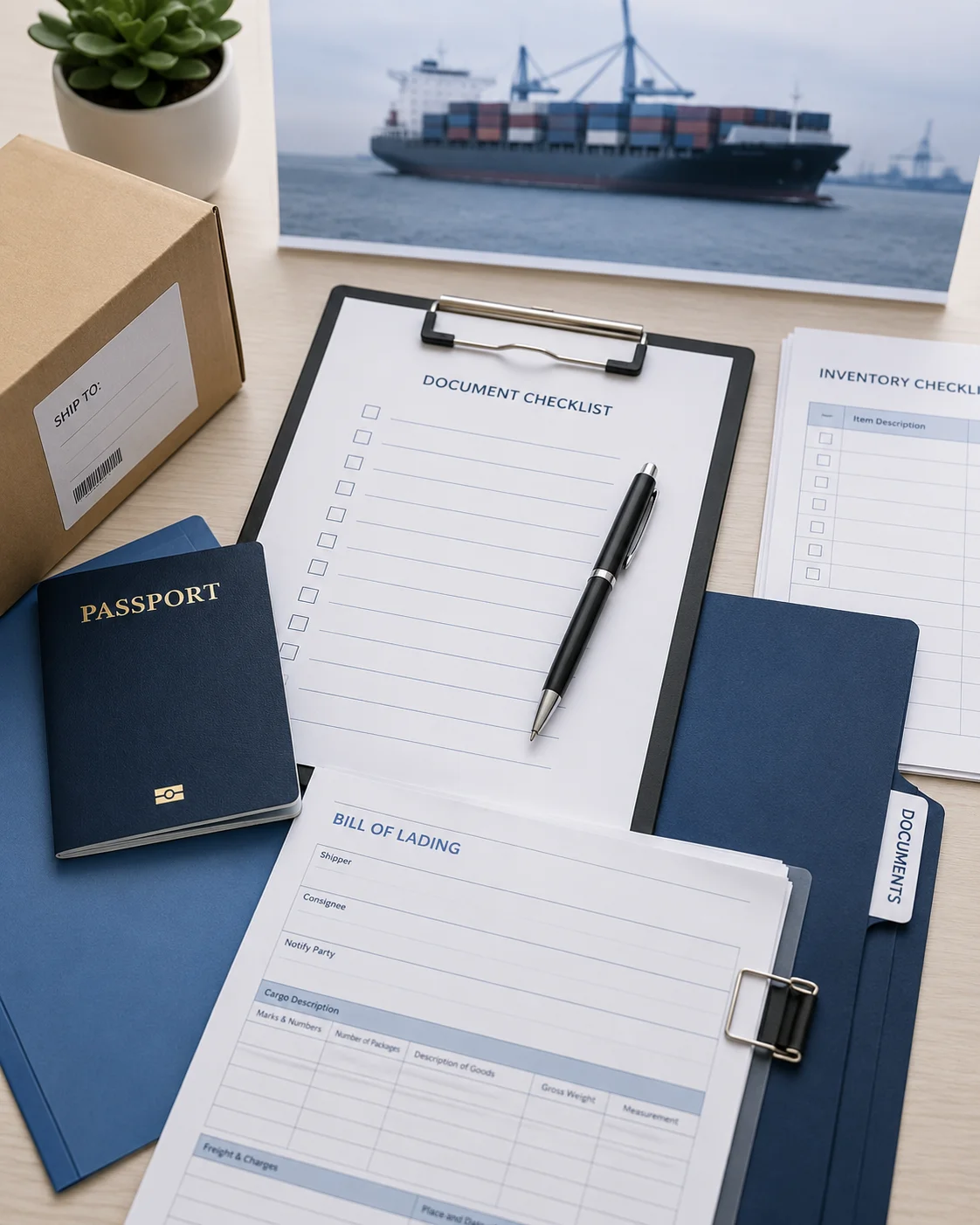
Documents required for importing used household goods, personal effects, and related shipments.
- Copy of passport
- Copy of work permit or residence permit
- C/E MISC 1 document (customs form, obtained from the Lesotho Revenue Authority or destination agent)
- Letter of value (secondhand value for customs purposes)
- Clearing instructions
- Original bill of lading (OBL) or air waybill (AWB)
- Packing list / inventory
- Copy of passport
- C/E MISC 6 (Diplomatic Missions) or C/E MISC 3 (NGOs)
- Letter of value (secondhand value for customs purposes)
- Clearing instructions
Specific Information
Owner presence required: The client must be present in Lesotho at least 2 weeks before the arrival of the consignment. This is a strict requirement. Diplomatic officials are exempt from the presence requirement.
Employer endorsement: All documents must be signed and stamped by the client's employer in Lesotho. For diplomats and NGO staff, documents must be signed and stamped by the Head of Mission in Lesotho.
Customs inspection: All shipments are subject to customs inspection.
Goods without serial numbers: Must be declared at customs for approval before entry into the country.
SACU context: Lesotho is a member of the Southern African Customs Union (SACU) along with South Africa, Botswana, Namibia, and Eswatini. All sea freight transits through South African ports (typically Durban), as Lesotho is landlocked and entirely surrounded by South Africa. Goods cleared through any SACU member do not require additional customs duties in Lesotho, but Lesotho's own customs documentation (C/E MISC 1 or C/E MISC 6) is still required for household goods import clearance.
Import customs clearing timeline: Approximately 7 working days after submission of completed, signed, and stamped documents to the Lesotho Revenue Authority.
ISPM 15 (wood packaging): All wood packaging materials must comply with ISPM 15 standards (heat treated or fumigated, with the IPPC stamp).
Document submission deadline: All documents should be forwarded to the destination agent at least 2 weeks before the consignment arrives in Lesotho. Failure to comply will result in demurrage, container detention, and storage charges.
Duties & Taxes
Duty-free conditions: Used household goods and personal effects are imported duty- and tax-free if owned by the client for more than one year. This applies to both returning residents and foreign citizens with valid work/residence permits.
Prohibited & Restricted Items
Prohibited Items
- Illegal drugs and narcotics
- Weapons, explosives, and ammunition
- Flick knives, swords, assegais, and other dangerous weapons
- Pornographic material
- Blasphemous materials
- Dairy and meat products
- Counterfeit money and goods
- Gambling machines
- Spirits and alcohol (classification varies by source, listed as either prohibited or subject to restricted allowances; the discrepancy may relate to alcohol within household goods shipments vs. traveller's baggage -- confirm with destination agent)
Restricted / Dutiable Items
Duty-free allowances for personal imports (traveller's baggage):
- 400 cigarettes
- 50 cigars
- 250 grams of tobacco
- 2 litres of wine
- 1 litre of other alcoholic beverages
- 50 ml of perfume
- 250 ml toiletries
- Other legal gifts up to LSL 500
Important: South African nationals are banned from importing any alcohol into Lesotho. Given the close economic relationship between the two countries and the large number of Basotho who reside in South Africa, this is a practical restriction that should be confirmed with the destination agent.
Livestock, seeds, bulbs, plants, and trees: May not be imported without payment of customs and sales duty and are subject to quarantine restrictions.
Goods with serial numbers: Must be declared at the customs department before being granted admission into the country.
Importing a Used Personal Vehicle
Required Documents
- Vehicle registration certificate **For Returning Residents / Non-Diplomats:**
- Copy of passport **For Returning Residents / Non-Diplomats:**
- Copy of work permit or residence permit **For Returning Residents / Non-Diplomats:**
- C/E MISC 1 document **For Returning Residents / Non-Diplomats:**
- Letter of value (secondhand value for customs purposes) **For Returning Residents / Non-Diplomats:**
- Clearing instructions **For Returning Residents / Non-Diplomats:**
- Vehicle registration certificate **For Diplomats and NGOs:**
- Copy of passport **For Diplomats and NGOs:**
- C/E MISC 6 (Diplomatic Missions) or C/E MISC 3 (NGOs) **For Diplomats and NGOs:**
- Letter of value (secondhand value for customs purposes) **For Diplomats and NGOs:**
- Clearing instructions **For Diplomats and NGOs:**
- Import permit from the Department of Trade and Industry *
- Invoice from the supplier (new vehicles) *
Specific Information
Duty-free conditions (used vehicles): Used motor vehicles are imported duty- and tax-free if owned by the client for more than one year. The same owner presence requirement applies: the client must be present in Lesotho at least 2 weeks before the vehicle arrives.
Second vehicle: Import customs duties and taxes will be charged on the import of a second vehicle.
Diplomatic vehicles: New and used vehicles are imported duty- and tax-free for diplomatic officials. Presence in Lesotho is not required for diplomatic staff.
Left-hand drive vehicles: Cannot be imported. Lesotho drives on the left side of the road and uses right-hand drive vehicles.
New vehicles: May be imported but will require an invoice from the supplier.
Employer endorsement: Same requirement as household goods. Documents must be signed and stamped by the client's employer in Lesotho (or Head of Mission for diplomats/NGOs).
Pets
- Vaccination record (rabies and other standard vaccinations)
- Veterinary health certificate issued by a licensed veterinarian in the country of origin
Rabies vaccination: All cats and dogs over three months of age must be vaccinated for rabies between 30 days and 12 months prior to travel. The vaccination must be administered by a licensed veterinarian. Rabies titer test results or veterinary exemption letters are not accepted as substitutes for proof of vaccination.
Microchip: PetTravel.com (February 2026) indicates pets should have an ISO 11784/11785 microchip, consistent with the regional SACU/SADC standard.
Additional vaccinations: Dogs should be vaccinated against distemper, hepatitis, parvovirus, leptospirosis, and parainfluenza. Cats should be vaccinated against feline viral rhinotracheitis, calicivirus, and panleukopenia. These should be recorded on the international health certificate.
Minimum age: Puppies and kittens under 3 months old do not need rabies vaccination but may need proof that the mother was vaccinated for rabies more than 30 days and less than 1 year before their birth (based on regional SACU practice).
Authorization for animals and pets: Animals and pets require authorization before import. Confirm the current process with the destination agent.
Entry point: Pets arriving by air should enter via Moshoeshoe I International Airport (MSU) in Maseru.
Breed restrictions: Wolf hybrids and, unless 5th generation removed from the pedigree, Savannah and Bengal cats cannot be imported under standard pet import regulations (per PetTravel.com).
Regional movement (SADC): Pets moving between SACU/SADC member nations (Botswana, Lesotho, South Africa, Eswatini, Namibia, Zimbabwe, Malawi) generally have simplified requirements. An interterritorial health certificate issued in the origin SADC country may suffice. Confirm with the destination agent.
CDC high-risk rabies implications for return travel to the United States: Lesotho IS confirmed on the CDC's high-risk list for dog rabies (confirmed June 2026 via the CDC page). Dogs returning to the United States from countries on the CDC's high-risk list must meet additional requirements including the Certification of U.S.-Issued Rabies Vaccination form (completed before departure from the U.S.) or the Certification of Foreign Rabies Vaccination and Microchip form, plus a rabies titer test or 28-day quarantine at a CDC-registered animal care facility. Plan return travel requirements before departure. Source: CDC High-Risk Countries for Dog Rabies
Consignment Instructions
Recommended: Contact the destination agent to ensure all requirements have been met prior to import, especially for differences regarding air and sea shipments.
Routing: Lesotho is landlocked, entirely surrounded by South Africa. All sea freight enters through South African ports (typically Durban or Cape Town) and is transported overland to Lesotho. Air freight arrives at Moshoeshoe I International Airport (MSU) in Maseru.
Document lead time: All documents must be forwarded to the destination agent at least 2 weeks before the consignment arrives in Lesotho. Required documents include the commercial invoice, copy of client passport, and complete contact details of the client in Lesotho.
Failure to provide documents on time will result in demurrage, container detention, and storage charges.
Customs clearance timeline: Approximately 7 working days after submission of completed, signed, and stamped documents to the Lesotho Revenue Authority.
Currency: Lesotho loti (LSL), pegged 1:1 to the South African rand (ZAR). Both currencies are accepted throughout Lesotho.
Language: English and Sesotho are the official languages. Documentation in English is acceptable.
Cultural & Other Information
- OpenFactBook -- Lesotho (replaces CIA World Factbook)
- Wikipedia -- Lesotho
- Lesotho Revenue Authority (LRA) -- returns 503; WAF block, browser-accessible
- Lesotho Government Portal
Geography: Lesotho is a small, mountainous country (30,355 sq km) entirely surrounded by South Africa. It is one of only three countries in the world that are enclaved within another country (along with Vatican City and San Marino). The entire country sits above 1,400 metres elevation, earning it the nickname "Kingdom in the Sky."
Logistics note: Because of Lesotho's geography, all international shipments transit through South Africa. Border crossing at Maseru Bridge is the primary entry point for overland freight. Delays at the border are possible and should be factored into delivery timelines.
Useful resources