

Country Guides
Liberia

Start here
Overview
Explore sections
Guide Details
Household Goods
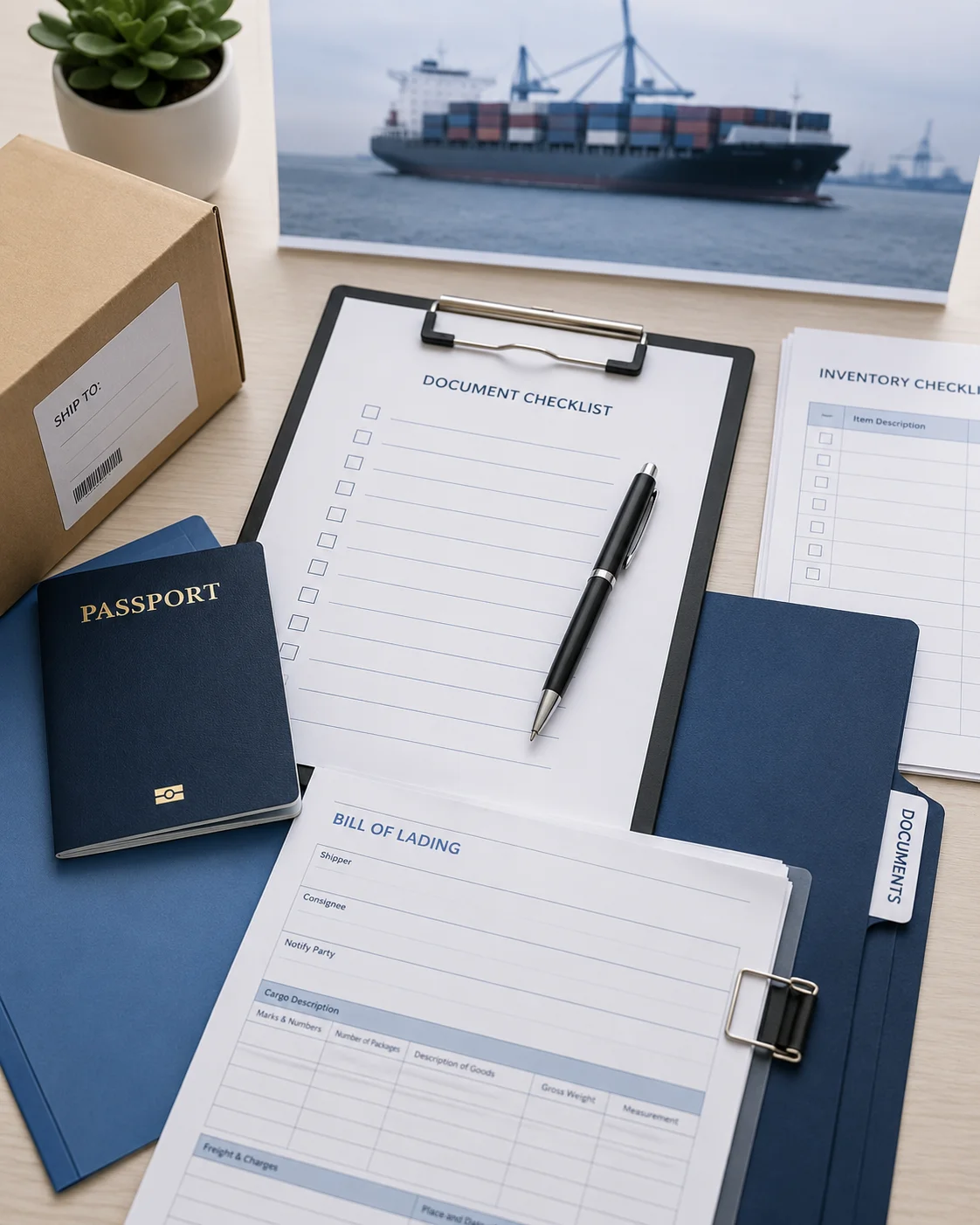
Documents
Documents required for importing used household goods, personal effects, and related shipments.
- Detailed inventory, valued in USD, showing the exact number of boxes packed, the type of goods, their value per unit, their quantity, the type of material (wood, iron, plastic, etc.), the purchase country, and the weight per box
- Company/NGO tax clearance and registration certificates
- Client's passport copy
- Request for importation approval letter on company/NGO letterhead addressed to LRA
- Original bill of lading (OBL) / telex release / air waybill (AWB)
- Packing list (in English)
- Passport copy
- Detailed inventory (same requirements as above)
- Valid TIN certificate (Tax Identification Number)
- Application letter for permission of importing personal effects addressed to LRA
- Diplomatic ID
- Passport copy
- Verbal note from the Embassy to the Ministry of Foreign Affairs confirming new diplomat posting in Liberia
- Approval request for duty-free importation addressed to Liberia Revenue Authority (LRA)
- Same regulations as diplomats apply
Specific Information
BIVAC pre-inspection (CRF): For duty-paid cargo, an import duty report (Clear Report of Findings / CRF) will be generated by BIVAC Liberia before the customs declaration can be initiated. This may include a destination physical inspection. BIVAC fees are billed at 1.20% of FOB value with a minimum fee of USD 190 for sea cargo, and 1.50% of CIF value with a minimum fee of USD 100 for air cargo. If not covered by the removal contract, contact the destination agent before delivery.
Port storage and demurrage: Frequent, averaging USD 150 to 300 per TEU. Documents with OBL / telex release must be delivered to the agent at least 10 days prior to shipment arrival to avoid these charges.
OBL / AWB labeling: Indicate "used personal effects" instead of "household goods" on the OBL/AWB. Detailed volumes of the household goods and personal effects should also be indicated on the OBL/AWB.
Valued inventory for exempt shipments: The invoice of the shipment must show the value that the government will waive to the employer or organization. Agents and customers should create an invoice from the value inventory list for diplomatic and exempt shipments.
ISPM 15 (wood packaging): All wood packaging materials must comply with ISPM 15 standards (heat treated or fumigated, with the IPPC stamp).
Duties & Taxes
Duties and taxes are applicable for all categories of customers except diplomats and exempted organization staff. Duties are calculated based on the valued inventory list and corresponding items' HS codes. This is a critical distinction from many other countries where household goods can be imported duty-free; in Liberia, the default is that duty is owed.
Customs duties payment: Settled by certified bank check addressed to Liberia General Revenue Account only.
Diplomatic exemptions: Diplomatic shipments are exempt from import duties and taxes. The diplomatic organization must provide the agent with the diplomatic exemption and documents received from the Liberian Ministry of Foreign Affairs.
Prohibited & Restricted Items
Prohibited Items
- Unlawful drugs
- Counterfeit items
- Pornographic material
- Meat and meat products
Special authorization required for:
- Arms and ammunition: Ministry of Internal Affairs, Intelligence section. PERMIT REQUIRED
- Plants: Ministry of Agriculture and Forestry. PERMIT REQUIRED
- Pharmaceuticals: Ministry of Health. PERMIT REQUIRED
Restricted / Dutiable Items
Duty-free allowances for personal imports (traveller's baggage):
- 200 cigarettes or 25 cigars or 250 grams of tobacco
- 1 litre of consumable spirits/wine
- 4 fluid ounces of perfume, 1 litre of eau de toilette
- New items valued at no more than USD 125
Currency limits: USD 10,000 limit on the amount of local or foreign currency that can be imported. All local or foreign cash exiting Liberia exceeding USD 7,500 must be declared at customs. Large sums can only be exported as bank drafts, traveller's cheques, or similar instruments.
Flowers, plants, and seeds: Require a valid health certificate from the country of origin.
Food: Reasonable quantities are allowed in shipments; larger quantities are restricted.
Rough diamonds: Can only be imported under strict international trade laws (Kimberley Process).
Importing a Used Personal Vehicle
Required Documents
- Original registration card / vehicle registration documents
- Copy of passport
- Original commercial invoice (if available)
- Chassis/engine number
Specific Information
Vehicle age limit: An older baseline source states vehicles older than 12 years cannot be imported. A more recent source states only vehicles less than 10 years old can be imported. The more recent figure likely reflects the current regulation. Confirm with the destination agent.
Left-hand drive only: Only left-hand drive cars can be imported into Liberia. Liberia drives on the right side of the road.
Chassis and engine numbers: Must be indicated on the OBL.
Pets
- Import permit (from the Ministry of Agriculture)
- Rabies vaccination certificate (from country of origin)
- Veterinary health certificate (from country of origin)
Rabies vaccination: All cats and dogs must be vaccinated for rabies between 30 days and 12 months prior to entry. The vaccination must be administered by a licensed veterinarian.
Additional vaccinations: Dogs should be vaccinated against distemper, hepatitis, leptospirosis, and parvovirus. Cats should be vaccinated against feline viral rhinotracheitis, panleukopenia, and feline leukemia. Vaccinations should be recorded on the international health certificate at intervals required by veterinary health procedures of the origination country.
Documents must accompany the animals at all times during transit.
Import permit: Required from the Liberian Ministry of Agriculture. This must be obtained before travel.
Parasite treatment: PetTravel.com (May 2025) notes that Liberia does not require parasite treatments for internal and external parasites, though pet owners are advised to treat their pets regardless.
CDC high-risk rabies implications for return travel to the United States: Liberia is on the CDC's high-risk country list for dog rabies. Dogs returning to the United States from Liberia must meet CDC requirements for dogs from high-risk countries, including the Certification of U.S.-Issued Rabies Vaccination form (completed before departure from the U.S.) or the Certification of Foreign Rabies Vaccination and Microchip form, plus a rabies titer test or 28-day quarantine at a CDC-registered animal care facility. Plan return travel requirements before departure.
Consignment Instructions
Recommended: Contact the destination agent to ensure all requirements have been met prior to import, especially for differences regarding air and sea shipments.
Document lead time: Documents with OBL / telex release must be delivered to the destination agent at least 10 days prior to shipment arrival. A copy of the OBL/AWB should be forwarded to the destination agent to start the clearance process prior to arrival.
Port of entry: Roberts International Airport (ROB) for air freight; Freeport of Monrovia for sea freight.
Customs clearance timeline: 2 to 3 weeks for air shipments, 3 to 5 weeks for sea shipments. This is significantly longer than most countries and must be factored into delivery timelines and cost estimates.
Demurrage and storage: Average USD 150 to 300 per TEU. This is a frequent and significant cost that should be communicated to customers during the quotation process.
BIVAC fees: Not always included in removal contracts. Confirm with the destination agent whether BIVAC inspection fees (minimum USD 100 air, USD 190 sea) are included or will be billed separately.
Language: English is the official language. All documentation should be in English.
Currency: Liberian dollar (LRD) and US dollar (USD) both circulate. Customs duties are settled in the Liberia General Revenue Account by certified bank check.
Security environment: Liberia has made significant progress since the end of civil conflict (2003), but infrastructure remains limited and logistics can be challenging. Road conditions outside Monrovia are poor, especially during the rainy season (May to October).
Useful resources