

Country Guides
Libya

Start here
Overview
Explore sections
Guide Details
Household Goods
Documents
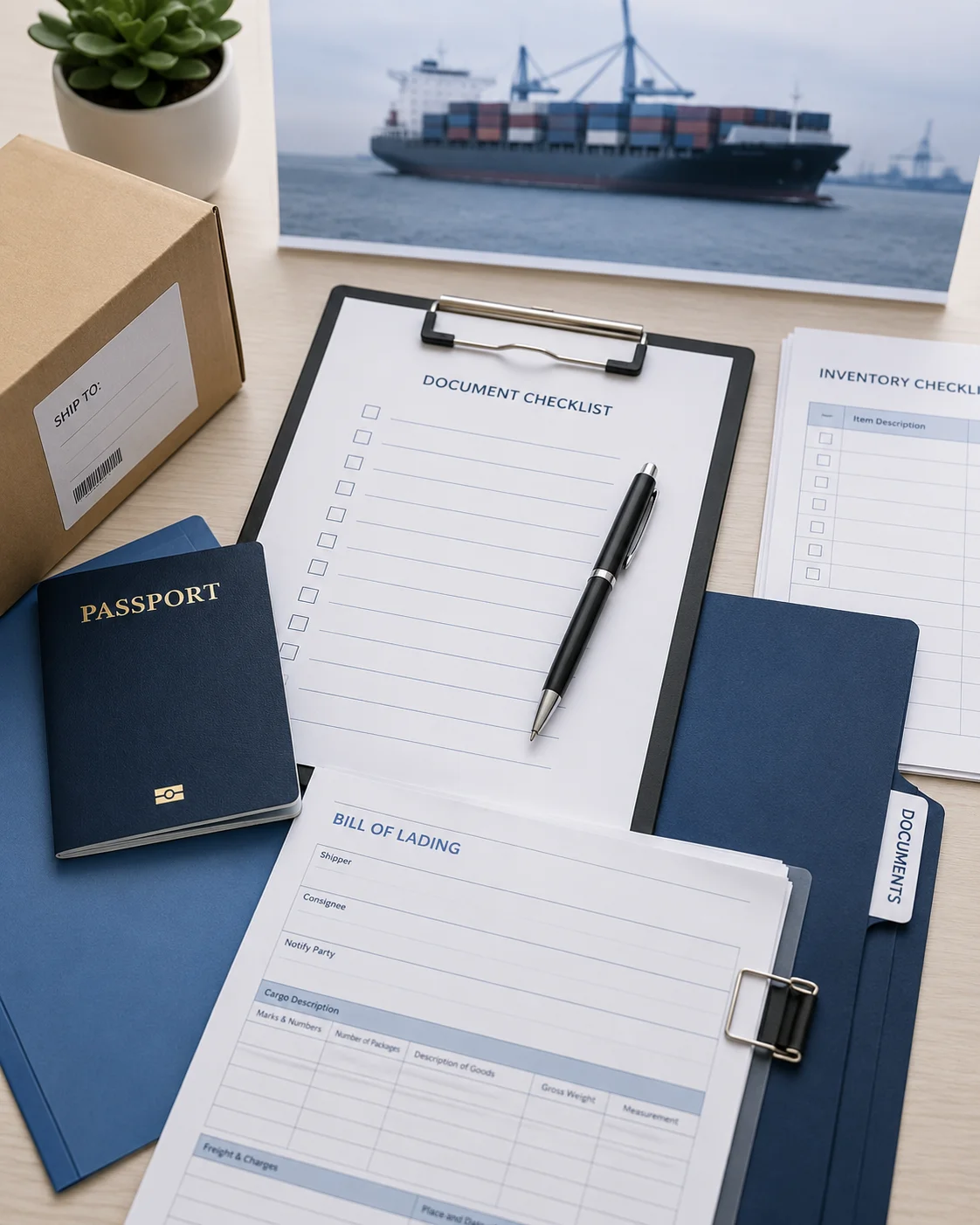
Documents required for importing used household goods, personal effects, and related shipments.
- Copy of passport (identification pages and passport translation page in Arabic)
- Packing list
- Entrance visa / work permit
- Original bill of lading (OBL) / telex release / air waybill (AWB)
- Letter of employment
- Statistics code (provided by Libyan employer)
- Copy of passport (identification pages and passport translation page in Arabic)
- Packing list
- Original bill of lading (OBL) / telex release / air waybill (AWB)
- Letter from the Libyan Consulate detailing the owner's organization abroad; alternatively, if the employing entity has a branch in Libya, a letter from the employing branch is acceptable
- Copy of passport
- Entrance visa / work permit
- Original bill of lading (OBL) / telex release / air waybill (AWB)
- Diplomatic franchise from the Ministry of Foreign Affairs
Specific Information
Arabic translation required: The passport must include an Arabic translation page, or a certified Arabic translation should be provided. This is a strict requirement.
Statistics code: Foreigners must obtain a statistics code from their Libyan employer before customs clearance can begin.
Owner presence: Not required for customs clearance.
Document timing: Import documents should be ready prior to shipment arrival at the port or airport to minimize port charges.
Duties: Approximately 10% duty may apply on shipments above the customs estimate value. Diplomats are exempt.
ISPM 15 (wood packaging): All wood packaging materials must comply with ISPM 15 standards (heat treated or fumigated, with the IPPC stamp).
Prohibited & Restricted Items
Prohibited Items
- Narcotics
- Pornographic materials
- Counterfeit items
- Explosive materials
- Alcohol and spirits (absolute prohibition; Libya is a dry country under Islamic law)
- Guns and firearms
- Pork and pork products
- All goods of Israeli origin (complete ban)
Restricted / Dutiable Items
Duty-free allowances for personal imports (traveller's baggage):
- 200 cigarettes or equivalent tobacco products
Currency: Non-residents may import or export unlimited foreign currency, provided it is declared at customs. All residents and foreign visitors are prohibited from importing or exporting any Libyan dinar. An additional 6 LYD airport tax is payable at the airport of departure by all foreign travellers.
Plants and plant products: Require a plant quarantine certificate.
Insecticides: May only be imported with a permit from the Secretariat of Agriculture and Agrarian Reform's Plant Protection Department. PERMIT REQUIRED
Display signs, tickets, and cards: Must be written in Arabic to be admitted into the country.
Fresh eggs: Must be stamped with the name of the exporting company, the country of origin, and the date of production.
Importing a Used Personal Vehicle
Required Documents
- Original bill of lading (OBL)
- Purchase invoice
Specific Information
Returning citizens: Cannot import vehicles older than 5 years from date of manufacture. A 10% duty is applicable after the customs estimation process.
Foreigners: Must pay 25% of the vehicle's value as a deposit, and a temporary import regime is applied. The deposit is refunded after the foreigner's final departure from Libya.
Pets
- Vaccination record (rabies)
- Veterinary health certificate (2 copies, from the country of origin)
Documents must accompany pets entering Libya at all times.
Two copies of the health certificate are required, which is unusual and should be noted during the documentation process.
Rabies vaccination: Required for all dogs and cats. The vaccination must be administered by a licensed veterinarian in the country of origin.
CDC high-risk rabies implications for return travel to the United States: Libya is on the CDC's high-risk country list for dog rabies. Dogs returning to the United States from Libya must meet CDC requirements for dogs from high-risk countries. Plan return travel requirements before departure.
Consignment Instructions
Recommended: Contact the destination agent to ensure all requirements have been met prior to import, especially for differences regarding air and sea shipments.
Security environment: Libya has been in a state of political instability and civil conflict since 2011. The country effectively operates under two rival governments, and the security situation varies significantly by region. Travel advisories from the U.S. State Department, UK Foreign Office, and other governments should be consulted before any shipment is planned. Many Western embassies have been closed or relocated. The availability and reliability of moving services, customs processing, and port operations can be unpredictable.
Ports of entry: Tripoli International Airport (TIP) for air freight; Port of Tripoli and Port of Misrata for sea freight. Port operations may be disrupted by security conditions.
Arabic documentation: All official documentation interacting with Libyan customs may need to be in Arabic or accompanied by Arabic translation. This includes passport pages, packing lists, and correspondence.
Alcohol prohibition: Libya is a dry country. Absolutely no alcohol or alcoholic beverages of any kind may be imported, whether in household goods, personal effects, or traveller's baggage. This applies to all categories of importers including diplomats. Violations carry severe penalties.
Israeli boycott: Libya maintains a complete ban on all goods of Israeli origin. Any items with Israeli markings, labels, or origin will be confiscated and may result in legal consequences.
Language: Arabic is the official language. English is used in some business contexts but should not be relied upon for customs documentation.
Currency: Libyan dinar (LYD). The official exchange rate and black market rate have historically diverged significantly. All cost estimates should be treated as approximate.
Cultural & Other Information
Useful resources