


Start here
Overview
Explore sections
Guide Details
Household Goods
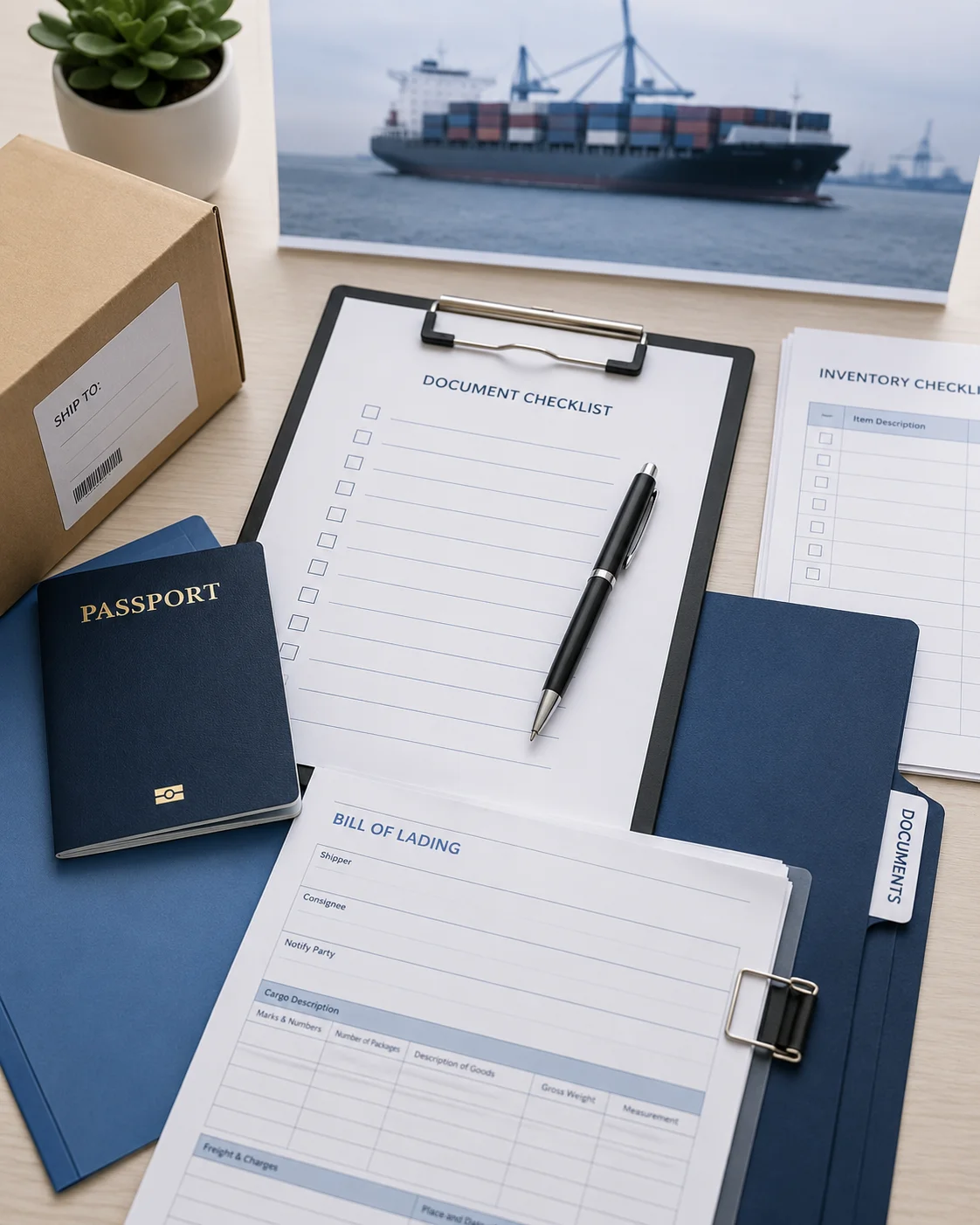
Documents
Documents required for importing used household goods, personal effects, and related shipments.
If the Certificate de Franchise en Douane cannot be provided (e.g. because the importer does not yet hold a permanent residence permit), the following must be submitted instead:
- Copy of passport or national ID card
- Packing list in French or German, detailed and numbered, listing all contents with estimated values, dated and signed by the owner
- Original bill of lading (express release) or airway bill (AWB)
- Certificate de Franchise en Douane (customs exemption certificate)
- *Issued by the Luxembourg Customs and Excise Agency (Administration des douanes et accises). If the importer does not yet hold a permanent residence permit, alternative documentation may be substituted (see below).*
- Customs declaration in French or German, signed by the owner in original
- Inventory list in French or English (3 originals, completed and signed on every page by the owner)
- Attestation from employer or "Fiche de Renseignements" confirming the transfer of residence
- T-Form (for transit within the EU) if the shipment includes new furniture or goods
- Original purchase invoice and consumption declaration (COM 4) for any new furniture and goods
- Attestation from employer confirming residence outside EU territory for the preceding 12 months
- Copy of rental contract or lease in Luxembourg
- If the employer cannot provide the attestation, utility bills covering the 12 months prior to arrival in Luxembourg
- Declaration 136 F provided by the diplomatic organization or embassy in Luxembourg
- Packing list and bill of lading / airway bill
- Diplomatic passport or official identification
- *Diplomatic removals are duty-free entry provided the 136 F declaration is furnished. Clearance is coordinated through the Protocol Department of the Ministry of Foreign Affairs.*
Specific Information
Pre-arrival import: The exemption from customs duties can be requested up to 6 months before the actual change of residence, provided the importer signs a formal commitment to establish effective residence within 6 months and deposits a security with the Customs and Excise Agency.
New goods within shipments: All new furniture and goods (items still in original packaging, with tags, or otherwise unused) are subject to customs duties and taxes. New items require a T-Form, original purchase invoice, and consumption declaration (COM 4).
Intra-EU moves: Removals within EU territory are not subject to customs duties or taxes, though a packing list and transport documentation are still recommended.
Certificate of residence: The certificate must be issued by the local authorities (Commune) of the new domicile in Luxembourg, showing the nationality, previous residence abroad for at least 12 months, the date of registration of domicile in Luxembourg, and (for nationals) stating that the applicant has not previously resided in Luxembourg. For citizens who previously lived in Luxembourg, two certificates may be required: one from the former Commune of residence showing the date of emigration, and one from the new Commune.
ISPM 15 (wood packaging): All solid wood packaging material (pallets, crates, dunnage) used in shipments entering Luxembourg from outside the EU must comply with ISPM 15 standards (heat-treated or fumigated, bearing the IPPC stamp). Non-compliant wood packaging may be refused entry, treated at the importer's expense, or destroyed.
EORI number: An EORI (Economic Operators Registration and Identification) number is required for customs declarations. The destination agent typically handles this.
Wedding trousseau / gifts: Duty-free import of wedding gifts and trousseau is permitted subject to specific documentation: Form 136, an inventory certificate from local authorities abroad confirming the applicant resided with their parents before marriage, a marriage certificate, and a document confirming one spouse resided in Luxembourg and the other abroad. At least one person in the couple must have been resident in Luxembourg.
Deposit / bank guarantee: Where the Certificate de Franchise en Douane is not available at the time of import, a provisional exemption of duties may be granted against a deposit covering: approximately 3.5% of the declared value (import charges), 17% VAT (calculated on the declared value), and a flat fee of approximately EUR 200 to secure correct settlement of the customs documents. The deposit is refunded upon presentation of the final Certificate de Franchise en Douane and completion of formalities.
Resale restriction: Goods imported duty-free under the transfer-of-residence relief may not be lent, pledged, hired out, transferred, or sold for a period of 12 months from the date of import. Disposal within this period triggers payment of the full customs duties and VAT that would have been due at import.
Duties & Taxes
Duty-free conditions (transfer of residence): Under EU Council Regulation 1186/2009, personal property may be imported duty-free when the importer transfers their normal place of residence to Luxembourg, provided they have resided outside the EU customs territory for at least 12 consecutive months, the goods have been in the importer's possession and use for at least 6 months, and the goods are intended for personal use at the new residence. Goods must be imported within 12 months of the date residence is established. Personal property may be imported in several stages within this 12-month window; all items must appear on the initial inventory even if shipped later.
VAT: Luxembourg's standard VAT rate is 17%, the lowest in the EU. Reduced rates of 14%, 8%, and a super-reduced 3% apply to specific categories of goods (food, books, children's clothing, pharmaceuticals, etc.), but these are not generally relevant to household goods shipments.
Prohibited & Restricted Items
Prohibited Items
- Narcotic drugs and psychotropic substances
- Firearms and ammunition [Permit Required]
- *Import possible only with a valid European Firearms Pass (within EU) or a Luxembourg police-issued import authorization (from non-EU)*
- Ivory and products derived from protected species (tortoise shell, coral, reptile skins, certain tropical hardwoods) [CITES]
- *Import requires a valid CITES permit*
- Counterfeit and pirated goods
- Stolen or illegally exported artistic, historical, or archaeological objects
- Certain dangerous dog breeds (Pit Bull Terriers, American Staffordshire Terriers, Tosa Inus)
- Meat, milk, and dairy products from non-EU countries
- *Limited exceptions: up to 10 kg from the Faroe Islands, Greenland, and Iceland. Up to 2 kg of powdered baby milk, baby food, and special medical food from other non-EU countries, provided sealed, branded, and not requiring refrigeration. Up to 20 kg of eviscerated fish.*
- Medicines without prescription or documentation [Permit Required]
- *Medicines for personal use are permitted in quantities consistent with personal needs, accompanied by a prescription or doctor's letter*
- Certain plant and plant products without a phytosanitary certificate [Permit Required]
Restricted / Dutiable Items
Intra-EU Imports (from another EU Member State)
There are no customs limits on goods transported between EU member states for personal use. However, Luxembourg customs officials may question travellers carrying quantities above the following indicative thresholds:
Tobacco: 800 cigarettes, 400 cigarillos (max 3g each), 200 cigars, 1 kg smoking tobacco.
Alcohol: 10 litres of spirits over 22% ABV, 20 litres of spirits/fortified wine under 22% ABV, 90 litres of wine (max 60 litres sparkling), 110 litres of beer.
Quantities exceeding these thresholds may be seized if customs officials determine they are of a commercial nature.
Non-EU Imports (by Air or Sea)
Travellers aged 17 or over arriving from outside the EU by air or sea may import the following duty-free:
Tobacco (one of): 200 cigarettes, or 100 cigarillos, or 50 cigars, or 250 g smoking tobacco. These are alternative allowances and may be combined proportionally.
Alcohol: 1 litre of spirits over 22% ABV, or 2 litres under 22% ABV. Plus: 4 litres of still wine. Plus: 16 litres of beer.
Other goods: Personal items of a non-commercial nature up to EUR 430 per person (EUR 150 for travellers under 15). Medication for personal use only.
Non-EU Imports (by Land)
Luxembourg shares no land borders with non-EU countries (bordered by Belgium, France, and Germany, all EU members). However, goods entering the EU via a non-EU country and arriving overland in Luxembourg are subject to the standard non-EU land allowances: 40 cigarettes, personal goods up to EUR 300, and proportionally reduced alcohol allowances.
Alcohol Within Household Shipments
These rates should be confirmed with the destination agent, as Luxembourg has since increased its standard VAT to 17%.
Dangerous Objects
An authorization from the Ministry of Justice is required prior to import of dangerous objects (knives, crossbows, certain sporting weapons). Contact the destination agent for current requirements.
Currency
No restrictions on transporting cash between EU member states. When entering from outside the EU, cash amounts equivalent to EUR 10,000 or more (in any currency, including traveller's cheques and other monetary instruments) must be declared to customs.
Importing a Used Personal Vehicle
Required Documents
- Copy of passport or national ID card
- Original vehicle registration certificate (title) from the country of origin (all parts)
- Original purchase invoice (if the owner is not shown on the registration document)
- Customs declaration in French, signed by the owner
- Original bill of lading or airway bill
- Proof of insurance covering the previous 6 months
- Certificate of residence from the Commune
- Proof of ownership and use abroad for at least 6 months
- T-Form (for transit within the EU)
- European Certificate of Conformity (COC) if available
- For diplomats: letter from the Ministry of Foreign Affairs verifying diplomatic status
Specific Information
Duty-free conditions: Vehicles may be imported duty-free under the transfer-of-residence provisions (EU Regulation 1186/2009) if the vehicle has been in the owner's possession and use for at least 6 months, has recorded more than 6,000 km at the time of registration with the local authorities (Commune), and the owner is transferring their normal residence to Luxembourg. The vehicle must be for personal use only.
Resale restriction: The vehicle may not be sold or transferred before 12 months after the move. Disposal within this period triggers full customs duty and VAT liability.
Registration with SNCA: All vehicles must be registered with the SNCA (Societe Nationale de Circulation Automobile). After declaring arrival in Luxembourg, the owner has 6 months to register the vehicle. Registration can be initiated via MyGuichet.lu or by contacting SNCA directly (nplaques@snca.lu). The registration certificate consists of two parts: Part 1 (grey, kept in the vehicle) and Part 2 (yellow, kept securely elsewhere).
Tax stamp (Droit de Chancellerie): A EUR 50 tax stamp is required to complete registration, payable at SNCA offices or by bank transfer.
Technical inspection: The technical inspection (controle technique) must be valid to register the vehicle. A valid inspection certificate from the country of purchase is accepted if the requirements are equivalent. Otherwise, an inspection must be performed at an approved Luxembourg inspection body. Vehicles imported from outside the EU typically require inspection.
Homologation (non-EU vehicles): Vehicles without a European Certificate of Conformity (particularly those manufactured for non-EU markets such as the US) require a technical report from an approved technical service centre. The SNCA will verify compliance with EU type-approval requirements during registration. This can be time-consuming and may require modifications (headlight alignment, emissions equipment, safety features). Confirm feasibility with the destination agent before shipping.
Vehicles from other EU member states: If the vehicle has a European COC, the SNCA verifies technical data from the file during registration. If the COC is unavailable but the vehicle was previously registered in another EU country and all technical data are documented, the SNCA can still proceed. If technical data are incomplete, a report from an approved technical service centre will be required.
Intra-EU transfers: Vehicles transferred from another EU member state do not require customs clearance but must still be registered with SNCA and have a valid technical inspection. VAT is generally not payable on intra-EU transfers of used personal vehicles.
Pets
- Valid European Pet Passport issued by an authorized veterinarian in the country of departure From Another EU / EEA Member State
- Must contain up-to-date rabies vaccination record and microchip details From Another EU / EEA Member State
- ISO-compliant microchip (ISO 11784/11785, 15-digit) From Another EU / EEA Member State
- Microchip must have been implanted before the rabies vaccination was administered From Another EU / EEA Member State
- Valid rabies vaccination From Another EU / EEA Member State
- Primary vaccination must have been given at least 21 days before travel. Booster vaccinations must be administered before the previous vaccination expires to remain valid. From Another EU / EEA Member State
- ISO-compliant microchip (ISO 11784/11785, 15-digit) From a Non-EU Country
- If a non-ISO microchip is used, the owner must provide their own compatible reader From a Non-EU Country
- Valid rabies vaccination administered after the microchip was implanted From a Non-EU Country
- Minimum age for vaccination: 12 weeks. At least 21 days must elapse after primary vaccination before travel. From a Non-EU Country
- EU Animal Health Certificate issued by an official (government) veterinarian in the country of departure From a Non-EU Country
- Must be issued no more than 10 days before the pet arrives in the EU. Valid for onward travel within the EU for 4 months or until the rabies vaccination expires, whichever is sooner. From a Non-EU Country
- Rabies antibody titration test (RNATT) result of at least 0.5 IU/ml From a Non-EU Country
- Required when travelling from countries not listed in Annex II of EU Regulation 577/2013 (i.e. most non-EU countries outside of Norway, Switzerland, etc.). Blood sample must be taken at least 30 days after vaccination and at least 3 months before travel. The test must be performed at an EU-approved laboratory. Once a valid titre result is obtained, it remains valid for life provided rabies boosters are kept current. From a Non-EU Country
- Written declaration that the movement is non-commercial (max 5 pets per person, no change of ownership) From a Non-EU Country
Regulatory note: Luxembourg is one of the EU member states that permits entry of young, unvaccinated pets (under 12 weeks) or young vaccinated-but-not-yet-immune pets (12-16 weeks) from other EU countries, subject to specific conditions. See details below.
Identification: An ISO 11784/11785 compliant microchip is the only accepted form of identification. Tattoos are accepted only if applied before 3 July 2011 and remain clearly legible.
Minimum age: Pets must be at least 15 weeks old to enter Luxembourg from a non-EU country under standard rules (12 weeks minimum vaccination age + 21-day waiting period). However, Luxembourg permits entry of young, unvaccinated pets (under 12 weeks) or vaccinated-but-not-yet-immune pets (12-16 weeks) from other EU countries, provided the pet carries a declaration that it has had no contact with wild animals susceptible to rabies since birth, or is accompanied by its vaccinated mother.
Restricted breeds: Luxembourg prohibits the import of certain dog breeds considered dangerous, including Pit Bull Terriers, American Staffordshire Terriers, and Tosa Inus. Any attempt to import these breeds will result in the animal being returned to the country of origin or, in extreme cases, euthanized at the owner's expense.
Registration requirement: Dogs must be microchipped and registered with the local commune within 4 months of birth or within 1 month of acquisition or arrival in the country. Cat microchipping is mandatory, though registration is not.
Quarantine: Luxembourg does not impose quarantine on pets that arrive with all required documentation in order. Non-compliant animals may be placed in isolation at the owner's expense, returned to the country of origin, or euthanized.
Echinococcus treatment: Luxembourg does not require tapeworm (Echinococcus multilocularis) treatment for dogs. This requirement applies only to Finland, Ireland, Malta, Norway, and Northern Ireland.
Designated points of entry: When arriving from a non-EU country, pets must enter through a designated travellers' point of entry where veterinary border checks are carried out.
Common mistakes that cause delays: Microchip implanted after (rather than before) the rabies vaccination, rendering the vaccination invalid. Rabies booster given after the previous vaccination expired, resetting the 21-day waiting period. Antibody titre test blood sample taken fewer than 30 days after vaccination. EU Animal Health Certificate issued more than 10 days before arrival in the EU. Attempting to import restricted dog breeds. Travelling with more than 5 pets without competition/show documentation.
Consignment Instructions
Recommended: Contact the destination agent to ensure all requirements have been met prior to import, especially for differences regarding air / sea / road shipments.
Inventory requirements: A detailed, itemized packing list is required for all shipments. The list must be in French or German (English is also accepted for the inventory), describe each item with estimated values, and be dated and signed by the owner on every page. All items must appear on the initial inventory even if they are shipped in stages.
Language: Luxembourg has three official languages: Luxembourgish, French, and German. All customs documentation must be in French or German. The destination agent will typically prepare the customs declaration in French for the owner's signature.
Shipment timing: Goods must be imported within 12 months of the date residence is established in Luxembourg. Pre-arrival imports are possible up to 6 months before the change of residence, with a formal commitment and security deposit.
Split shipments: Goods may be imported in several stages within the 12-month window. Each partial shipment must be accompanied by a partial list corresponding to the items being imported, and must reference the initial commitment form.
Customs inspection: Luxembourg Customs reserves the right to inspect any shipment. The owner of the goods will need to sign the customs declaration in original, along with the passport copy, packing list, and attestation that the belongings are used.
Owner presence: The owner's signature is required on the customs declaration. If the owner cannot be present, a signed power of attorney (proxy) may be given to the mover or a third party (such as a spouse) to act on their behalf.
Presentation of goods: Personal belongings and related customs formalities can only be processed on working days during the opening hours of customs offices.
Port of entry: Luxembourg is landlocked. Sea shipments typically enter the EU through ports in Belgium (Antwerp) or the Netherlands (Rotterdam) and are transported overland. Air shipments arrive via Luxembourg Findel Airport, which handles significant cargo volume through Cargolux, one of Europe's largest cargo airlines. Customs clearance at Findel is generally efficient, with most parcels clearing within 1-2 days.
Unpredictable expenses: Importers should budget for potential storage charges if clearance is delayed, deposit amounts pending proof of residence, agent handling fees, and sworn translation costs if documents are not in French or German. The SNCA may also require certain vehicle-related documents to be translated by a sworn translator.
Cultural & Other Information
- OpenFactBook -- Luxembourg *(community-maintained successor to the CIA World Factbook, which was discontinued in February 2026)*
- Wikipedia -- Luxembourg
- Luxembourg Customs and Excise Agency (Administration des douanes et accises) *(French/German only)*
- Guichet.lu -- Declaring Personal Property When Moving to Luxembourg
- SNCA -- Vehicle Registration Authority
- Guichet.lu -- Importing a Vehicle to Luxembourg
- Luxembourg Ministry of Foreign and European Affairs
- Luxembourg Food Safety Authority (Securite alimentaire)
- EU Pet Travel Rules
International Association of Movers (IAM) 1600 Duke Street, Suite 440 · Alexandria, VA 22314, USA Phone: +1 703-317-9950 · iamovers.org
Useful resources