

Country Guides
Malawi

Start here
Overview
Explore sections
Guide Details
Household Goods
Documents
Documents required for importing used household goods, personal effects, and related shipments.
Requirements differ depending on the importer's status. In all cases, the consignee must have arrived in the country before the goods arrive and must be physically present at customs to sign for duty-free forms. The consignee and consignor on the shipping documents must be the same person.
- Copy of passport showing nationality and date of arrival
- Copy of diplomatic card from the employing organization (the card's color is required by Customs)
- Notification of arrival issued by the Treasury Department
- Inventory list with serial numbers for all electrical appliances
- Bill of lading or airway bill
- Duty waiver
- Copy of passport showing nationality and date of arrival
- Resident permit or temporary employment permit
- Letter of employment from the employer
- Inventory list with serial numbers for all electrical appliances
- Bill of lading or airway bill
- Duty waiver
Returning residents who have been abroad for less than one year are not eligible for duty-free import. They must instead provide: passport copy, invoices/receipts for goods being imported, certificate of origin, bill of lading or airway bill, and an inventory/packing list. Full duties and taxes will apply.
- Copy of passport showing nationality
- Proof from passport that the resident has been out of the country for more than one year
- Inventory list with serial numbers for all electrical appliances
- Bill of lading or airway bill
- Duty waiver
- For those who were working or studying abroad: proof of termination of employment or completion of studies
- Returning Malawian diplomats: letter from the Ministry of Foreign Affairs
- Certified copy of the will
- Statement of the value of the goods by the executor of the estate
- Written undertaking not to sell or dispose of the goods by the executor
- Copy of the death certificate
- Inventory list
- Bill of lading or airway bill
- Duty-free, provided the goods are forwarded to beneficiaries in Malawi and are not for sale
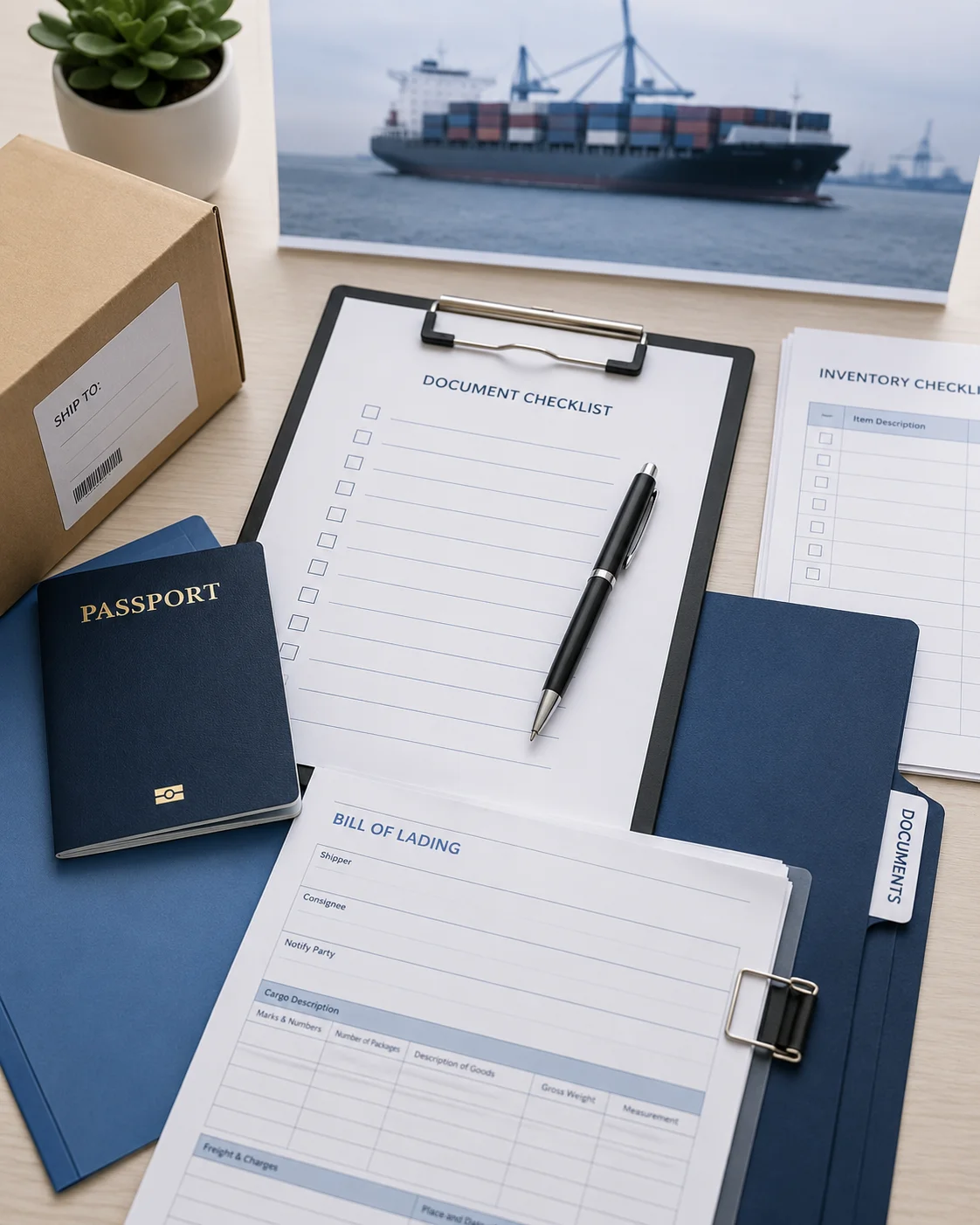
Specific Information
Non-household items: Building materials and similar non-household goods are dutiable even when shipped as part of a household removal.
Alcohol within shipments: Diplomats and returning residents (absent more than one year) may import up to 5 litres of alcohol, of which no more than 2 litres may be spirits. Non-diplomat new residents may import a maximum of 1 litre of alcohol. Quantities above these limits incur duty and tax.
Office equipment: Duties are required on office equipment including computers, cash registers, and fax machines. Duty is assessed on the value including freight.
Consignee/consignor match: The consignee on the import documentation must be the same as the consignor on the shipping documents. Mismatches will cause delays or denial of duty-free entry.
Duties & Taxes
Duty-free conditions: Goods may be imported duty-free provided the consignee has arrived in Malawi before the goods, goods are imported within 6 months of the resident's arrival or within 6 months of the work/resident permit being granted, and goods have been used for more than 6 months. New furniture and household goods are dutiable regardless of the importer's status; invoices are required.
Prohibited & Restricted Items
Prohibited Items
- Narcotic drugs and psychotropic substances
- Pornographic materials
- Offensive weapons, including spring-blade (flick) knives
- Forged documents
- Counterfeit money and goods
- Firearms and ammunition [Permit Required]
- *May be imported with a special permit from the Ministry of Home Affairs*
- Citrus fruits, seeds, and deciduous plants [Permit Required]
- *May not be imported unless an import license has been obtained in advance from the competent agricultural authorities*
- Game traps and mist nets for the capture of wild birds
- Endangered species and CITES-listed products [CITES]
- *Any products or parts derived from protected species require a valid CITES permit*
- Any restricted good imported without the relevant permit is treated as a prohibited import
Restricted / Dutiable Items
Traveller Duty-Free Allowances
The following items may be imported duty-free by travellers aged 18 and over:
Tobacco (one of): 200 cigarettes, or 250 g of tobacco in any other form.
Alcohol (all of): 1 litre of spirits, plus 1 litre of wine or beer.
Perfume: 250 ml eau de toilette and 50 ml perfume.
Other goods: Personal goods up to a value of MWK 300,000 per traveller.
Items Requiring Licenses or Permits
Malawi maintains an extensive licensing regime under the Control of Goods Act (COGA), enacted in 2020. The Ministry of Industry and Trade issues import and export licenses and frequently reviews the lists of goods subject to licensing. The following categories require an import license or permit:
- Wild animals, trophies, and wild animal products
- Meat (bovine and swine), live poultry, day-old chicks, dressed/undressed poultry, fish (frozen, dried, or live), table eggs, fresh milk
- Fresh fruits and vegetables (extensive list including bananas, potatoes, onions, tomatoes, and others)
- Grains including rice, maize (in all forms), beans, groundnuts
- Refined and crude cooking oil, cane sugar, bottled water
- Fertilizers, certain pesticides (dieldrin, aldrin)
- Pharmaceuticals
- Gold
- Clothing and uniforms designed for military or police use
- Radioactive substances
- Exercise books, kitchen and table salt
Currency
There are no specific published limits on currency import, but travellers should declare significant amounts of foreign currency to avoid complications at the border. Confirm current currency declaration requirements with the destination agent.
Importing a Used Personal Vehicle
Required Documents
- Invoice and proof of ownership (must demonstrate ownership for more than one year)
- Copy of passport showing nationality and date of arrival
- For diplomats: copy of diplomatic card (color required) and notification of arrival from the Treasury Department
- Bill of lading or airway bill
- Duty waiver
Specific Information
Duties and taxes: Motor vehicles imported for new and returning residents are subject to 110% import duties, plus 18% excise duty, plus 16.5% VAT. A duty waiver may be granted if the following conditions are met: the owner has been out of the country for more than one year, the vehicle has been owned and used for more than one year, the owner has arrived in the country before the vehicle, and the vehicle is imported within 6 months of arrival or permit issuance.
One vehicle per family: The duty waiver is limited to one motor vehicle per family.
Five-year resale restriction: The vehicle may not be lent, hired, given away, or otherwise disposed of within 5 years of the date of customs clearance. Disposal within this period triggers full payment of the duties that would have applied at import.
Owner presence: The consignee must be physically present at customs to sign for the duty-free forms. The vehicle must arrive after the owner.
Driving side: Malawi drives on the left. Both left-hand drive and right-hand drive vehicles are permitted, though right-hand drive is standard.
Pets
- Import permit, obtained in advance from the Malawi Veterinary Department
- Rabies vaccination certificate (vaccination administered between 30 days and 12 months prior to entry)
- Veterinary health certificate issued by an official (government-authorized) veterinarian in the country of origin
- Microchip identification (ISO 11784/11785 recommended but not strictly required; alternative identification such as tattoo or tag ID is accepted)
Vaccination requirements: All dogs and cats must be vaccinated against rabies between 30 days and 12 months before entering Malawi. Dogs should also be vaccinated against distemper, hepatitis, leptospirosis, and parvovirus. Cats should be vaccinated against feline viral rhinotracheitis, panleukopenia, and feline leukemia. All vaccinations must be recorded on the health certificate and administered by an official, registered veterinarian.
Minimum age: Puppies and kittens should not be vaccinated for rabies before 3 months of age. They must be vaccinated after 3 months and then wait 30 days before travel, making the effective minimum age approximately 4 months.
Import permit: An import permit must be obtained from the Veterinary Department before departure. This is not optional. Contact the destination agent to initiate the application process.
Rabies titre test: Not required for entry to Malawi.
Inspection on arrival: All animals are subject to inspection upon arrival and must be certified as free from disease.
SADC regional movement: Malawi is a SADC (Southern African Development Community) member. Pets travelling between SADC countries (Botswana, Lesotho, Malawi, Namibia, South Africa, Eswatini, Zimbabwe) benefit from simplified documentation requirements, typically requiring only proof of rabies vaccination and a health certificate from a licensed veterinarian.
Common mistakes: Failing to obtain the import permit before departure. Rabies vaccination administered fewer than 30 days or more than 12 months before entry. Vaccinations administered by veterinary nurses or welfare organization staff rather than a registered veterinarian (not accepted for export purposes).
Consignment Instructions
Recommended: Contact the destination agent to ensure all requirements have been met prior to import, especially for differences regarding air / sea / road shipments.
Port of entry: Malawi is landlocked. The best sea port for shipments into Malawi is Beira (Mozambique), with the bill of lading addressed to the Blantyre or Lilongwe inland container terminals. Major shipping lines operating in Malawi include Mediterranean Shipping Company (MSC), CMA-CGM, and Maersk.
Airports of entry: Kamuzu International Airport (LLW) in Lilongwe and Chileka International Airport (BLZ) in Blantyre. Major airlines serving Malawi include Malawian Airlines, South African Airways, Kenya Airways, and Ethiopian Airlines.
Clearance time: Shipments are typically cleared within 3 working days from the time of arrival at either Blantyre or Lilongwe terminals.
Owner presence: The consignee must arrive in Malawi before the goods and must be physically present at customs to sign duty-free forms. Proxy arrangements are not commonly available; confirm with the destination agent.
Timing: Goods must be imported within 6 months of the returning resident's arrival or within 6 months of the work or resident permit being granted.
Physical inspection: Customs officials may demand physical examination of household effects.
Land borders: Malawi's primary land border crossing with Mozambique is the Mwanza border, which is the busiest entry point. Cargo also enters through border crossings with Zambia and Tanzania. Inland clearance can be arranged in Blantyre (Southern Region), Lilongwe (Central Region), or Mzuzu (Northern Region) through the Malawi Revenue Authority.
Visa note: As of January 2026, Malawi has implemented a new reciprocal visa regime. Citizens of countries that previously enjoyed visa-free access (including the US, UK, France, Belgium, and Canada) may now require a visa. Electronic visas can be applied for at http://www.evisa.gov.mw. Confirm current visa requirements before travel.
Cultural & Other Information
- OpenFactBook -- Malawi *(community-maintained successor to the CIA World Factbook, which was discontinued in February 2026)*
- Wikipedia -- Malawi
- Malawi Revenue Authority (MRA)
- Government of the Republic of Malawi
- U.S. State Department -- Malawi Travel Advisory
- U.S. Commercial Service -- Malawi Import Tariffs
- U.S. Commercial Service -- Malawi Prohibited and Restricted Imports
International Association of Movers (IAM) 1600 Duke Street, Suite 440 · Alexandria, VA 22314, USA Phone: +1 703-317-9950 · iamovers.org
Useful resources