

Country Guides
Malaysia

Start here
Overview
Process Step
1 stepClearance typically takes 3 to 5 working days for household goods. Diplomatic shipments take 2 to 3 weeks due to Ministry of Foreign Affairs approval requirements.
Explore sections
Guide Details
Household Goods
Documents
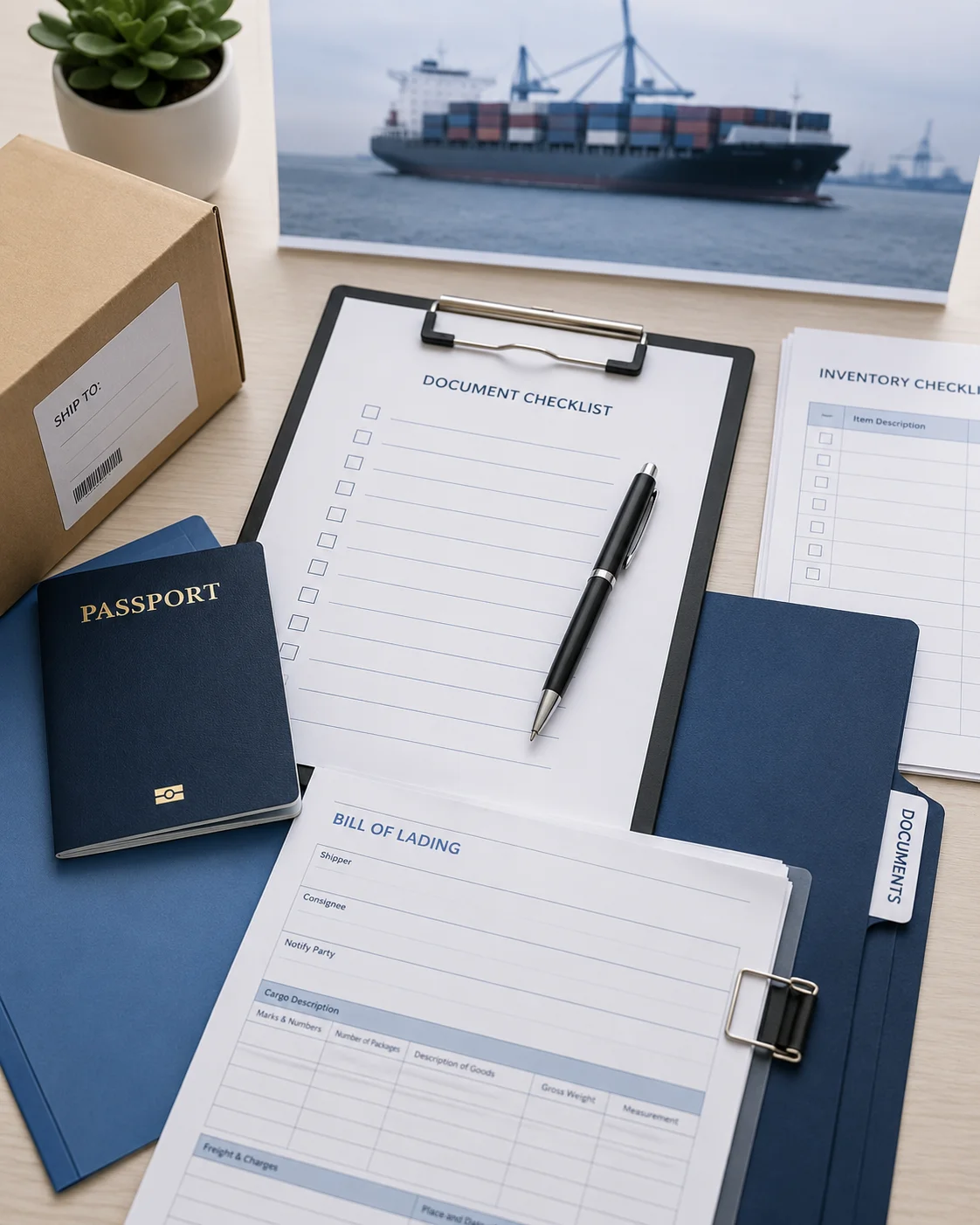
Documents required for importing used household goods, personal effects, and related shipments.
- Copy of airway bill or original bill of lading (express release preferred)
- Copy of packing list
- Passport copy (page with photograph)
- Copy of work permit and/or letter of employment confirming employment in Malaysia
- Full contact address of the owner in Malaysia
- List of electrical items including item name, model, make, serial number, and year of purchase
- List of books, VCDs, DVDs, CDs, etc. included in the shipment
- All documents listed above, plus:
- Malaysian identity card (IC), front and back
- Copy of work permit or letter of employment from the country of origin
- Malaysian Customs Form No. 1 (8 copies)
- Letter of authority
- Original bill of lading
- Packing list
- Diplomatic exemption letter from the Ministry of Foreign Affairs (obtained by the Embassy)
Specific Information
Customs examination: All shipments of personal and household effects may be subject to 100% customs examination. The packing list must tally with the goods packed. Discrepancies will result in delays and potential duties.
Electrical items: Some entry ports require an electrical board permit for all electrical goods. The list of electrical items must include the item name, model, make, serial number, and year of purchase. This is not required for the port of entry at Port Klang but may be required elsewhere.
Telecommunications equipment: Fax machines, cordless phones, cellular phones, modems, and answering machines require an import permit from the Malaysian Communications and Multimedia Commission (MCMC). To apply, provide the model/type, serial number, country of origin, and reasons for importing to the destination agent.
Consignment: Goods should be consigned to the shipper c/o the destination agent, with the destination agent listed as the notify party. All necessary documents with the customer's contact address, and whether the shipment is door-to-door or door-to-port, must be sent to the destination agent well in advance.
ISPM 15 (wood packaging): All solid wood packaging material must comply with ISPM 15 and bear the IPPC mark. Treatment must be performed by companies accredited under the Malaysian Fumigation Accreditation Scheme (MAFAS). ISPM 15 markings may be in any color except red and orange, and stickers are not permitted.
Malaysia uses 220-240 volt electricity. Appliances from 110V countries may require transformers.
Censorship: Books, VCDs, DVDs, CDs, and similar media may be subject to screening by the Government Film Censor Board. All tapes and discs may be viewed before release, a process that takes approximately 2 to 3 weeks. There is no guarantee of return if content is not approved. A screening fee of approximately USD 3.00 per item applies.
Duties & Taxes
Duty-free conditions: All used household goods and personal effects that have been owned and used by the shipper for more than 6 months may be imported into Malaysia duty-free. The shipper must be the owner of the goods. Items less than 6 months old are subject to customs duties and taxes; original invoices with values stated are required.
Diplomatic clearance: The diplomatic exemption letter from the Ministry of Foreign Affairs takes approximately 7 to 10 business days to obtain. Documents must be endorsed by the Embassy and approved by the Ministry before goods can be cleared, a process that can take 2 to 3 weeks.
Prohibited & Restricted Items
Prohibited Items
- Narcotic drugs (opium, heroin, morphine, marijuana, and others)
- *Malaysia imposes the mandatory death penalty for drug trafficking. The government does not differentiate between "hard" and "soft" drugs; penalties are the same.*
- Firearms, gas pistols, electric shock batons, stun guns, ammunition, and explosives [Permit Required]
- *Mandatory death sentence for illegal possession of firearms*
- *Swords require a separate import permit applied for by the owner*
- Indecent or obscene materials (video cassettes, DVDs, films, books, magazines)
- Daggers, flick-knives, butterfly knives, and certain martial arts weapons
- Counterfeit currency
- Radio transmitters, walkie-talkies, citizen band radios, cordless telephones [Permit Required]
- *An import permit is required for all telecommunications equipment*
- Meat, poultry, and many other animal products
- *Check with the destination agent for specific prohibitions*
- Plants, plant products, trees, shrubs, potatoes, certain vegetables, fruit, bulbs, and seeds [Permit Required]
- *Require approval from the Ministry of Agriculture and must be shipped separately*
- Animals and birds (alive or dead), including stuffed specimens, and products from protected species (furs, skins, ivory, reptile leather) [CITES]
- Soil and live pests (rats, snails, insects)
- Bullet-proof vests, steel helmets, and defensive clothing
- Imitation firearms and hand grenades
- Coral (alive or dead)
- Fireworks and explosives (including flares with a barrel)
- Batik sarong (commercially restricted)
- Non-branded pharmaceutical drugs
Restricted / Dutiable Items
Traveller Duty-Free Allowances
The following allowances apply to non-residents visiting Malaysia for more than 72 hours, and Malaysian residents who have been abroad for more than 72 hours.
Tobacco: As of late 2025, Malaysia has removed all duty-free allowances for tobacco products. Any quantity of cigarettes, cigars, or tobacco products must be declared upon arrival and is subject to customs duty and tax. This is a significant change from previous regulations and catches many travellers off guard.
Alcohol: 1 litre of spirits, wine, or liquor per person. Family pooling is not permitted (you cannot combine allowances with a travel companion).
Food: Commercially produced foodstuff up to RM 75 (approximately USD 17) per traveller. Some food items require permits.
Other goods: Personal goods not exceeding RM 500 in value per person.
Electrical devices: One unit of each type of appliance per person. Additional units may incur import duties and taxes.
Alcohol Within Household Shipments
Alcohol is subject to very high duties/taxes in Malaysia, ranging from approximately 150% to 250% of the value of goods, or approximately USD 30 to USD 50 per litre depending on the alcohol content. There is no tax-free allowance for alcohol arriving in unaccompanied shipments. If alcohol is included, a separate inventory must be prepared detailing each bottle (brand, country of origin, alcohol content, and container size) and submitted to the destination agent for an import permit application. The permit process takes several weeks and is not always approved. It is strongly recommended that shippers do not include alcohol in their shipments.
Antiques and Artifacts
An import permit from the National Museum is required, applied for by the owner in person. An origin certificate, photograph, and valuation report are also required.
Currency
Travellers may import Malaysian Ringgit up to an amount equivalent to USD 10,000. There is no restriction on the amount of foreign currency that may be imported, but amounts equivalent to USD 10,000 or more must be declared.
Importing a Used Personal Vehicle
Required Documents
- Original passport (1 copy)
- Original vehicle registration certificate (1 copy)
- Proof of ownership
- Original insurance policy from the country of origin proving use (1 copy)
- Letter from the owner requesting permission to import a motor vehicle
- Original purchase invoice (for new vehicles)
- Original import permit from the Ministry of Investment, Trade and Industry (MITI)
- Original bill of lading
Specific Information
Import duties and taxes: All motor vehicles imported into Malaysia attract very high duties and taxes. Import duties range from approximately 150% to 300% of the CIF value depending on the engine capacity (cc). These rates apply to both new and used vehicles.
Import permit required: The owner must apply in person for an import permit from the Ministry of Investment, Trade and Industry (MITI) in Kuala Lumpur before importation. The permit is assessed per vehicle and approval is not guaranteed. The process can take 7 to 14 working days.
Documentation timing: All vehicle documentation must be submitted a minimum of 7 days prior to the arrival of the vessel, or 2 days prior to the arrival of the flight, to avoid additional charges. This requirement does not apply to diplomats.
Driving side: Malaysia drives on the left. Right-hand drive vehicles are standard.
Practical note: Given the extremely high duty rates, most expatriates and returning residents purchase vehicles locally rather than importing. Confirm current duty rates and feasibility with the destination agent before shipping a vehicle.
Pets
- Import permit from MAQIS, obtained before departure
- *Application requires: pet's name, breed, sex, colour, age; copy of health certificate; owner's name and local contact in Malaysia; arrival date; whether pet travels as cargo or with owner*
- Health certificate or veterinary certificate from the country of origin
- *Must be issued within 7 days of departure and state that the animal has been free from rabies during the preceding 6 months*
- Rabies vaccination certificate (vaccination given at least 14 days before departure for Peninsular Malaysia)
- Microchip (ISO standard)
- Two copies of a recent photograph of the pet
Regulatory note: West Malaysia (Peninsular) and East Malaysia (Sabah and Sarawak) have completely different sets of government regulations for pet imports. The requirements below apply primarily to Peninsular Malaysia (West Malaysia). Always confirm specific requirements for Sabah or Sarawak with the destination agent.
2024 rule changes: Malaysia's pet import regulations became more demanding following rule changes in 2024. Owners now need DVS (Department of Veterinary Services) pre-approval and a MAQIS (Malaysian Quarantine and Inspection Services) import permit before travelling.
Quarantine (Peninsular / West Malaysia): Pets from most countries are subject to a minimum 7-day quarantine at the government quarantine station at Kuala Lumpur International Airport (KLAQS). Pets arriving from "Scheduled Countries" (countries classified as rabies-free, including Singapore, Australia, New Zealand, UK, Ireland, Japan, and Sweden) are exempt from quarantine if all documentation requirements are met. Pets from non-scheduled countries may face a minimum 14-day quarantine, extendable up to 6 months based on a case-by-case risk assessment.
Quarantine (East Malaysia / Sabah and Sarawak): Quarantine periods range from 30 to 180 days. The government State Veterinary Department may consider house quarantine after the first 30 days, subject to a formal application and approval during the first week of quarantine.
Rabies titre test: For pets from countries not classified as rabies-free, a Rabies Antibody Neutralisation Test (RNATT/FAVN) may be required. Blood must be drawn at least 30 days after vaccination, tested at an OIE/WHO-approved laboratory, and the owner must then wait 3 months from the date of a successful result before travel. The result is valid for 12 months if rabies boosters are kept current. Confirm with DVS whether this is required from your specific country.
Minimum age: Dogs and cats must be at least 3 months old at the time of import.
Parasite treatment: Dogs and cats must be treated for internal and external parasites (nematodes, cestodes, fleas, ticks) 2 to 7 days before departure.
Prohibited breeds: Dogo Argentino, Fila Brasileiro, Japanese Tosa, Pit Bull Terrier, and American Pit Bull Terrier. These breeds cannot be imported under any circumstances. Bengal and Savannah cats are not permitted unless they are 5th generation removed from the pedigree.
Restricted breeds (special permit required): German Shepherd, Dobermann, Rottweiler, Belgian Shepherd, East European Shepherd, Bull Mastiff, Bull Terrier, and Canary Dog. Importing these breeds requires a pedigree certificate, microchip, confirmation the dog is a family pet (not for breeding or sale), a letter confirming the dog will be kept in the compound at all times and muzzled and leashed outside, and two photographs. The government veterinary officer will inspect the owner's residence before approving the import permit. Allow at least 3 working weeks for processing.
Quarantine logistics: Space must be reserved at the quarantine station in advance. No food is provided during quarantine; the owner must supply sufficient food or pay for food at the station. The owner may visit during office hours and on weekends by prior arrangement. Pets arriving after 10:00 PM incur an overtime charge of approximately USD 80.
Common mistakes: Failing to obtain the import permit before departure. Arriving without pre-booked quarantine space. Not declaring the pet's arrival details (flight number, date, time) to the veterinary department before departure. Attempting to import a prohibited breed. Not providing sufficient food for the quarantine period.
Consignment Instructions
Recommended: Contact the destination agent to ensure all requirements have been met prior to import, especially for differences regarding air / sea shipments and the critical distinction between West Malaysia and East Malaysia.
Port of entry: The principal port for Peninsular Malaysia is Port Klang (near Kuala Lumpur). Air shipments arrive via Kuala Lumpur International Airport (KLIA). East Malaysia (Sabah and Sarawak) has separate ports and airports with different regulations.
West Malaysia vs. East Malaysia: This is the single most important distinction for shipments to Malaysia. Sabah and Sarawak on Borneo have their own immigration and customs controls, separate from Peninsular Malaysia. Requirements for household goods, vehicles, and especially pets differ significantly. Always confirm which part of Malaysia the shipment is destined for.
Documentation timing: All documents, including the customer's contact address and shipment type (door-to-door or door-to-port), must be sent to the destination agent well in advance to avoid delays. For vehicles, documentation must arrive at least 7 days before the vessel or 2 days before the flight.
Customs clearance: Clearance typically takes 3 to 5 working days for household goods. Diplomatic shipments take 2 to 3 weeks due to Ministry of Foreign Affairs approval requirements.
Owner presence: Sources differ on whether the customer must be present when goods arrive; an older baseline source states the owner must be present, while a more recent source states this is not required. Confirm the current requirement with the destination agent, as this may vary by port and shipment type.
Cultural & Other Information
- OpenFactBook -- Malaysia *(community-maintained successor to the CIA World Factbook, which was discontinued in February 2026)*
- Wikipedia -- Malaysia
- Royal Malaysian Customs Department
- Ministry of Investment, Trade and Industry (MITI) -- vehicle import permits
- Road Transport Department (JPJ) -- vehicle registration
- Malaysian Quarantine and Inspection Services (MAQIS) -- pet import permits
- U.S. State Department -- Malaysia Travel Information
International Association of Movers (IAM) 1600 Duke Street, Suite 440 · Alexandria, VA 22314, USA Phone: +1 703-317-9950 · iamovers.org
Useful resources