

Country Guides
Maldives

Start here
Overview
Process Step
1 stepCustoms examination is standard for all shipments of personal effects. The importer (or their authorized agent) must submit documents to the Documentation Section first, then the Cargo Examination Section for physical inspection.
Explore sections
Guide Details
Household Goods
Documents
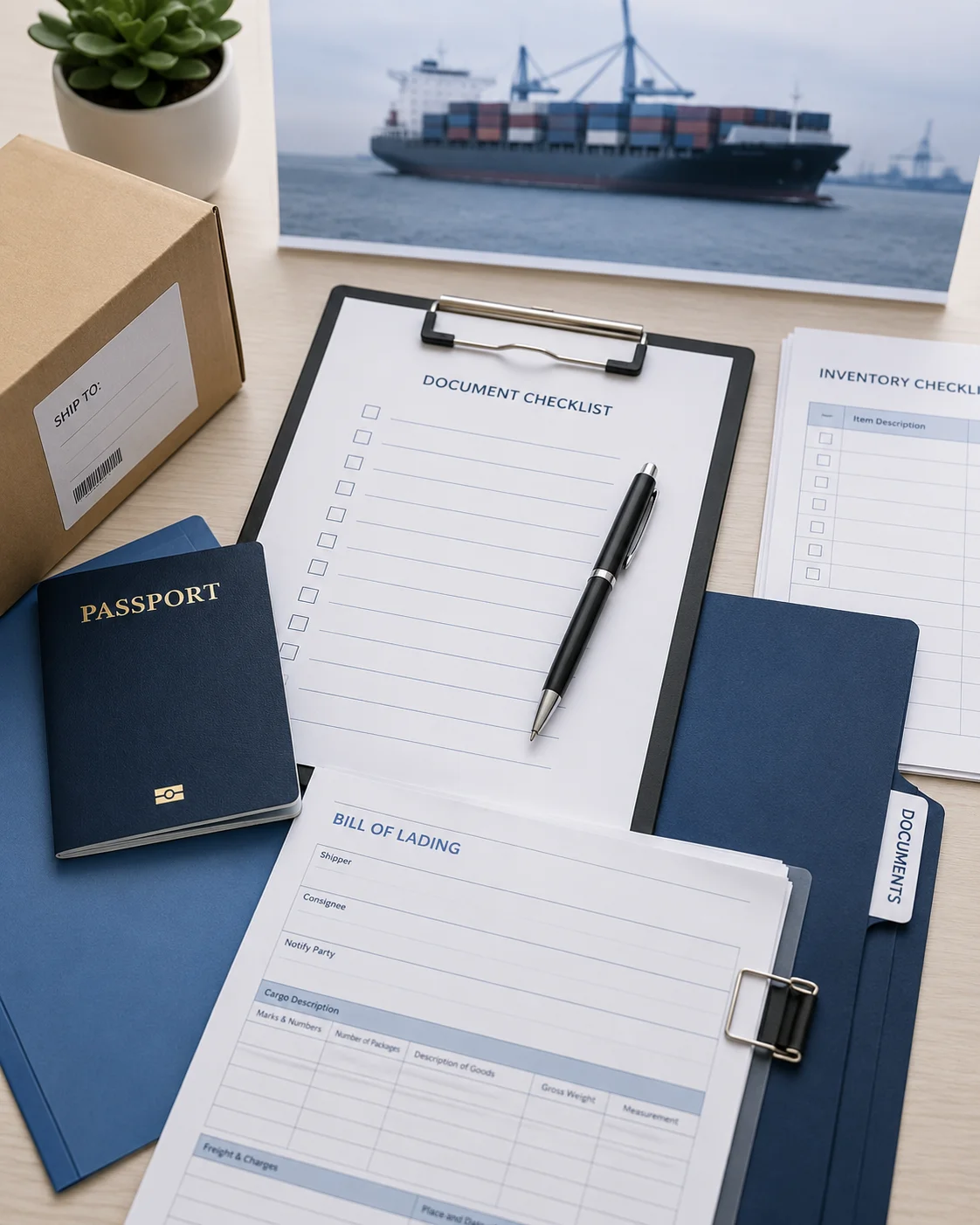
Documents required for importing used household goods, personal effects, and related shipments.
If the owner is abroad when the goods arrive, a copy of the passport enclosed with a letter from the owner explaining the situation may be accepted in lieu of the original.
- Letter requesting release of personal effects, stating dates of departure from and arrival in the Maldives and visa details
- Detailed inventory/packing list of personal effects
- Original passport plus a copy (identification page and visa page)
- Delivery order
- Work permit card (for foreign citizens)
Specific Information
Important context: The Maldives is an Islamic republic. Customs regulations reflect Islamic law and values. Alcohol, pork products, religious materials offensive to Islam, and idols for worship are strictly prohibited from personal import. These items must not be included in any household goods shipment. See the Prohibited Items section for a complete list.
Consignment name: Goods imported for personal use must be consigned under the name of the individual. If goods are consigned under a company name, they will be treated as a commercial import and the standard import declaration process applies with full duties.
Duties & Taxes
Duty-free categories: The following categories of personal effects may be imported under the duty-free allowance declared by the President of the Maldives: pre-used goods brought by Maldivian nationals returning after living abroad for 6 months or more; pre-used items brought by foreign professionals (as classified by the Ministry of Human Resources) coming to work in the Maldives for more than 6 months; personal effects imported for own use by Maldivians and foreigners already living in the Maldives; and goods carried by Maldivians and foreigners at the time of entering the country.
Duty-free threshold: Personal goods valued below MVR 10,000 on an FOB basis (excluding freight and insurance) are exempt from import duty. If the FOB value exceeds MVR 10,000, a goods declaration form must be submitted and duty is charged on the amount above the MVR 10,000 threshold. This threshold was recently increased from MVR 6,000.
Import duty rates: The Maldives applies varying import duty rates depending on the type of goods, generally ranging from 5% to 25%. Certain essential items are duty-free while luxury goods attract higher rates.
Prohibited & Restricted Items
Prohibited Items
The following items are prohibited from import, production, handling, sale, distribution, or possession in the Maldives. The Maldives enforces these prohibitions strictly.
- Narcotic drugs and psychotropic substances
- *The penalty for drug trafficking is life imprisonment. The Maldives takes an extremely strict approach to drug offenses.*
- Alcohol and alcoholic beverages [Permit Required -- licensed resorts only]
- Pork and all pork by-products
- Dogs and dangerous animals
- Religious materials considered offensive to Islam
- Idols for worship
- Pornographic material, including sex toys
- Vaporizer (vaping) devices, accessories, and parts
- Firearms, ammunition, and explosives [Permit Required]
- *Requires prior approval from the Ministry of Defense and National Security*
- Counterfeit goods and currency
- Live pigs
Restricted / Dutiable Items
Traveller Duty-Free Allowances
Tobacco (as of November 1, 2024): The Maldives has eliminated all duty-free allowances on tobacco products. Only travellers on a tourist visa are permitted to bring limited quantities for personal use: up to 200 cigarettes, or 25 cigars, or 250 g of tobacco. Quantities exceeding these limits will be retained by Customs for a maximum of 30 days and can be collected at the departure terminal at Velana International Airport before leaving the Maldives. Non-tourist travellers bringing tobacco products that do not meet the Ministry of Health's labelling requirements will have those items confiscated. All tobacco products must carry a health warning label as prescribed by the Ministry of Health.
Vaping devices (as of November 15, 2024): A complete ban on the import of vaporizer devices, accessories, and parts is in effect, including those brought by visitors for personal use. Devices will be confiscated at the border and returned upon departure.
Alcohol: The importation of alcohol and alcoholic beverages by individuals is strictly prohibited. Do not purchase alcohol at duty-free shops or on flights en route to the Maldives, as these items will be confiscated upon arrival. Alcohol is available only at licensed tourist resorts and hotels, which import under special licenses from the Ministry of Economic Development.
Personal goods: Clothing, jewellery, toiletries, reading material, and electronics in reasonable quantities for personal use are duty-free. Other personal goods up to a value of MVR 10,000 (FOB) are duty-free.
Professional equipment: If bringing large quantities of photographic or diving equipment, it is advisable to inform the destination resort in advance and provide a detailed list with serial numbers to avoid delays at customs. Items left behind after departure may be liable for import duty.
Medicines: Personal medication may be carried provided it is accompanied by a valid medical prescription from a registered medical practitioner and the quantity does not exceed requirements for the duration of the stay. Regulations may change, so confirm with Customs that specific medications are permitted.
Currency
Travellers may bring in any amount of currency under USD 30,000 without declaration. Amounts of USD 30,000 or more must be declared to Customs.
Importing a Used Personal Vehicle
Required Documents
- Copy of passport (data page and visa page)
- Vehicle registration documents and proof of ownership
- Invoice or declaration of value
- Bill of lading or airway bill
- Work permit (for foreign citizens)
Specific Information
Practical considerations: The Maldives consists of approximately 1,192 small coral islands spread across 26 atolls. Most islands, including resort islands, are extremely small with limited or no road infrastructure. Motor vehicles are primarily used on the capital island of Male, the airport island of Hulhumale, and a small number of larger inhabited islands. There is virtually no demand for private vehicle importation by individuals relocating to resort islands or smaller inhabited islands.
Import duties: Motor vehicles are subject to import duty based on the CIF value and vehicle type. Rates vary and should be confirmed with the destination agent. Used vehicles may face additional scrutiny.
Registration: Vehicles must be registered with the Maldives Transport Authority. Given the extremely limited road network and the small size of most islands, confirm with the destination agent whether vehicle importation is practical for your specific destination.
Pets
Dogs are prohibited. The importation of dogs into the Maldives is strictly prohibited under all circumstances, regardless of breed, size, or purpose. This includes service and assistance dogs. There are no exceptions.
Cats: Cats may be imported into the Maldives. No import permit is required for cats travelling with their owners. Cats must enter via Velana International Airport (Male). They may travel in the cabin, as checked baggage, or as air cargo depending on airline policy. Upon arrival, all cats are examined by a government veterinarian and must show no evidence of communicable diseases.
Minimum age: Kittens must be at least 3 months old before receiving rabies vaccination, then must wait 30 days before travel, making the effective minimum age approximately 4 months.
Breed restrictions: Savannah and Bengal cats are not permitted unless proof is provided that they are 5th generation removed from the pedigree.
Other animals: Birds, reptiles, rodents, and other animals (except dogs) may be imported with special permission and require veterinary certificates. Check with the relevant Maldivian authorities and be aware that CITES restrictions apply to endangered species.
Veterinary services: There is no well-established veterinary service infrastructure in the Maldives outside Male. Pet owners relocating to resort islands or remote atolls should consider this carefully.
Common mistakes: Attempting to import a dog (prohibited under all circumstances). Not obtaining a health certificate before departure. Arriving at a resort island with no veterinary support available.
Special Categories
Documents Required (Cats Only)
- Veterinary health certificate issued by a licensed veterinarian in the country of origin, confirming the cat is free from infectious and contagious diseases
- Rabies vaccination certificate (vaccination administered between 30 days and 12 months before travel)
- Microchip (ISO 11784/11785 recommended but not strictly required)
Additional Restricted Items (Require Permits or Certificates)
- Arms and ammunition (Ministry of Defense permit)
- Radio and wireless communication equipment (must be declared for frequency approval by the Communications Authority of Maldives)
- Plants, live animals, and birds (phytosanitary/sanitary certificate required; items confiscated without documentation)
- Food supplements (require health clearance from the Maldives Food and Drug Authority)
Export Restrictions
The following may not be exported from the Maldives in any form: black corals, stony corals, Triton shells, pearl oysters, lobsters, turtles, and turtle shells.
Consignment Instructions
Recommended: Contact the destination agent to ensure all requirements have been met prior to import. The Maldives has unique logistical challenges as an island nation with no land connections and limited port infrastructure.
Port of entry: All international shipments enter through Male, either via the commercial port on Male island or via Velana International Airport (formerly Ibrahim Nasir International Airport) on Hulhule island. There is no direct shipping to individual resort islands or outer atolls; onward transport must be arranged separately, typically by speedboat, ferry, or domestic flight/seaplane.
Onward logistics: The Maldives has no road connections between atolls. Goods destined for outer islands or resorts must be transshipped from Male by sea or by domestic air transport. This adds cost, time, and logistical complexity that should be factored into planning.
Customs clearance: Customs examination is standard for all shipments of personal effects. The importer (or their authorized agent) must submit documents to the Documentation Section first, then the Cargo Examination Section for physical inspection.
Islamic law compliance: Before shipping, carefully review the prohibited items list. Alcohol, pork products, religious materials offensive to Islam, and idols for worship must not be included in any shipment. Customs will confiscate any prohibited items, and violations may result in fines or prosecution.
Visa information: Tourist visas for up to 30 days are granted on arrival at Male Airport for all nationalities, provided the traveller holds a passport valid for at least 6 months and a confirmed onward/return ticket. Work permits and long-stay visas must be arranged in advance through the employer or sponsoring organization.
Cultural & Other Information
- OpenFactBook -- Maldives *(community-maintained successor to the CIA World Factbook, which was discontinued in February 2026)*
- Wikipedia -- Maldives
- Maldives Customs Service
- Ministry of Foreign Affairs -- Maldives
- U.S. Commercial Service -- Maldives Market Overview
- PetTravel.com -- Maldives Pet Import Requirements
- Hinterlandtravel -- Maldives Customs Regulations
International Association of Movers (IAM) 1600 Duke Street, Suite 440 · Alexandria, VA 22314, USA Phone: +1 703-317-9950 · iamovers.org
Useful resources