

Country Guides
Mali

Start here
Overview
Process Step
1 stepSea freight clearance takes approximately 5 to 7 days after all documentation is in order. Air freight clearance takes 2 to 3 days. The Kati terminal handles vehicle inspection for road-arriving containers.
Explore sections
Guide Details
Household Goods
Documents
Documents required for importing used household goods, personal effects, and related shipments.
Requirements vary significantly by importer category. All inventories must be in French, valued in euros, dated, and signed by the owner. The employer's NIF (tax identification) code at destination must be provided to the local agent.
- Transfer letter from the diplomatic organization
- Valued inventory, dated and signed by the client, in French
- Copy of valid passport
- Certificate of work start date, supplied by the employer in Mali, dated, signed, and stamped
- NIF code of the employer at destination
- Diplomatic franchise/exemption (see Specific Information below)
- End of assignment certificate
- Certificate of change of residence from the embassy or city hall in the country of origin
- Copy of valid passport
- Valued inventory in French
- Transfer order and/or move certificate
- Valued inventory, dated and signed by the client, in French
- Copy of valid passport
- Certificate of work start date, supplied by the employer in Mali, dated, signed, and stamped
- NIF code of the employer at destination
- Letter of employment
- Copy of passport showing entry permit
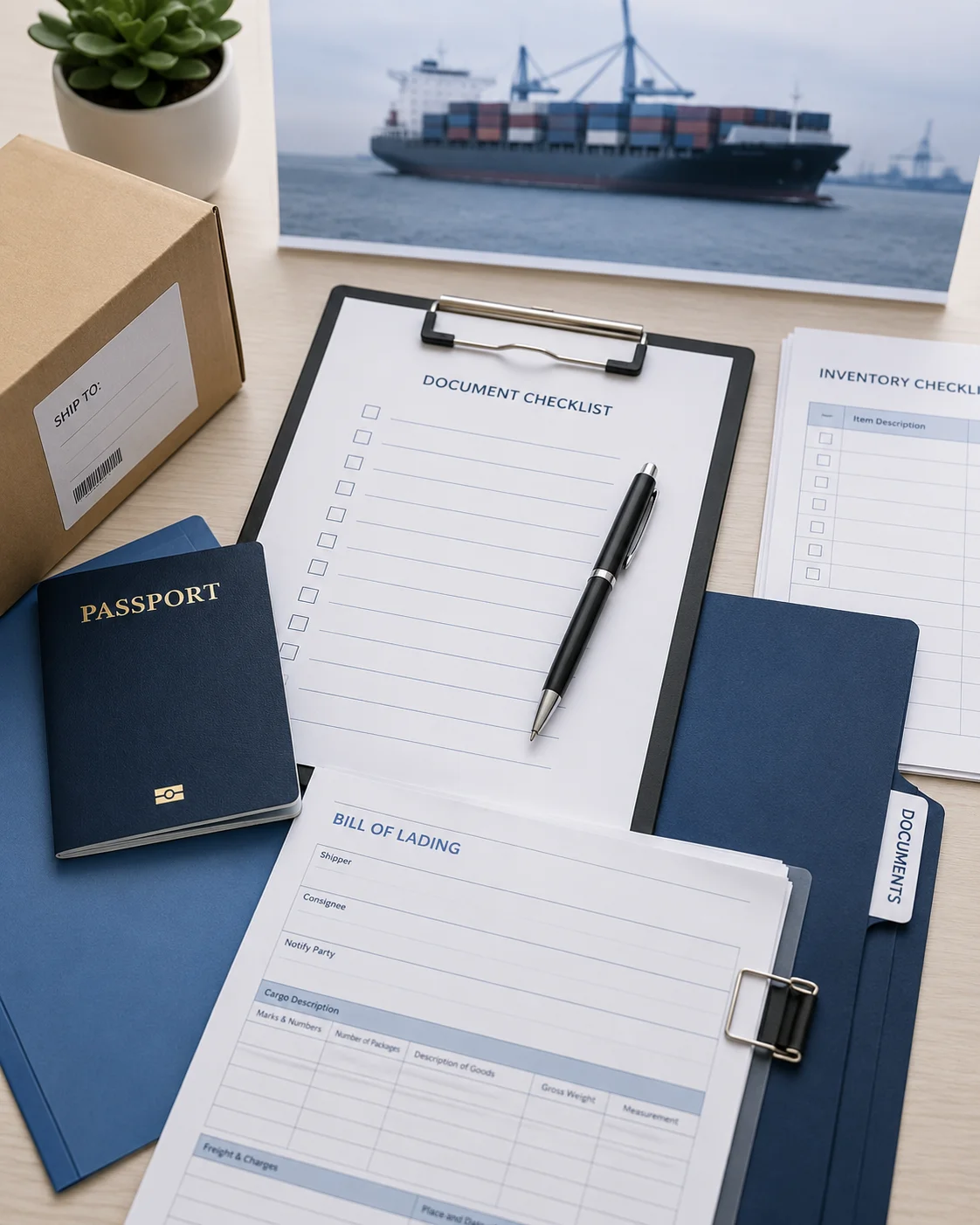
Specific Information
Political context: Mali is governed by a military transitional government following coups in 2020 and 2021. In January 2024, Mali withdrew from ECOWAS along with Burkina Faso and Niger, forming the Alliance of Sahel States (AES). These political changes may affect customs procedures, transit routing, and diplomatic exemption processing times. Confirm all requirements with the destination agent before shipping.
Exemption for private citizens and expatriates: Private citizens not being sent to Mali by their company cannot benefit from the customs exemption, regardless of their status. It is the welcoming entity's NIF code that enables the shipper to be linked to the employer and benefit from the exemption. If the exemption is granted, private citizens and expatriates pay duties of 2.5% of the declared value of the inventory.
Redevance Statistique (statistical fee): 2.5% of the valued inventory for non-Malian citizens; 3.5% for returning Malian citizens. Diplomats are exempt.
Air freight under 200 kg: Personal effects shipments with a gross weight below 200 kg may clear customs without a formal exemption, subject to payment of approximately EUR 200 in additional fees. This simplified procedure applies only to personal effects, not to materials or equipment.
Road shipments: Customs clearance can be done at the border for non-diplomatic clients. The Fonds de Garantie Routier is a 1% tax on the valued inventory for all shipments transported by road from Abidjan (Ivory Coast) to Bamako.
Documentation language: All inventories and customs documentation must be in French.
Duties & Taxes
Duty-free conditions: A certificate for free entry must be obtained from the Malian Customs head office. Once this certificate is obtained, used personal effects may be imported duty-free. The process to obtain the free-entry certificate takes approximately 20 to 40 days. Documents must be received by the destination agent at least 15 days before the shipment arrives.
New items: All new household items (less than 6 months old) are taxed at 44.28% of the declared value. Original invoices less than 6 months old are required for all new items. New items must be listed separately on the inventory with exact amounts matching the invoices. Diplomats may be exempt if the Protocol Office signs the exemption request.
Diplomatic exemption process: The diplomat must have the Protocol Office sign the exemption request. The document must be issued by the diplomat's administration at origin and then validated by the Malian authority before being handed to the local agent. The validated exemption (Protocol plus customs) must be completed before the container arrives at port. Protocol validation takes 3 to 20 days depending on the embassy's efficiency. Customs validation requires an additional 7 to 15 days. Documents must be received by the agent at least 15 days before the shipment arrives.
Prohibited & Restricted Items
Prohibited Items
- Weapons (certificate/permit required)
- Narcotic drugs and psychotropic substances
- Counterfeit items and currency
- Cigarettes
- Alcohol exceeding declared quantities
- Books, films, and pictures contrary to local customs (subject to censorship and confiscation)
- Ivory [CITES]
- Ostrich eggs [CITES]
- Turtle shells [CITES]
- Coral [CITES]
- Shells (certain species)
- Stuffed animals
- Animal skins
- All species listed under the Washington Convention (CITES)
Restricted / Dutiable Items
Dutiable Items
- New household items (less than 6 months old): 44.28% of declared value
- New computers: 65% duty (excludes diplomats, embassies, and persons with authorization from Malian Customs)
- New electrical items: subject to duty at standard rates
- Prescription medications: health certificate required
Firearms
Firearms and ammunition require authorization from the territorial administration.
Alcohol and Tobacco
Alcohol exceeding declared quantities is prohibited. Cigarettes are also listed as prohibited in some sources. Confirm current allowances with the destination agent, as enforcement may vary.
Currency
Confirm current currency import/export regulations with the destination agent. As a WAEMU member, Mali uses the West African CFA Franc (XOF), which is pegged to the euro.
Trade Levies
Mali applies WAEMU's Common External Tariff (CET) on extra-regional imports. In March 2025, AES countries adopted a community levy of 0.5% on imports from non-AES countries. Mali also applies a 0.2% AfCFTA levy on imports from non-African Union countries. These levies are in addition to standard customs duties.
Importing a Used Personal Vehicle
Required Documents
- Purchase invoice or certificate of value
- Copy of the vehicle registration documents
- Owner's passport or ID document
- Original transfer letter
- Original bill of lading or airway bill
- Non-sale certificate
Specific Information
Import duties: All non-diplomatic importers pay 44.28% in duties and taxes on motor vehicles. For new vehicles, the tax is 44% of the Argus value plus EUR 40 per year of age; for vehicles 10 years or older, the tax is 44% of the Argus value plus EUR 400.
Diplomatic exemption: Diplomats are exempt from tax on motor vehicles. The exemption applies to one vehicle only.
Temporary admission: The length of temporary admission for vehicles is generally granted for a period of 2 years, renewable.
Vehicles in containers: Any container arriving by road via Dakar that stops at the Kati terminal will have the vehicle removed for customs inspection. All costs for offloading are borne by the shipper or the shipping company at origin. The container must be opened in the customer's presence unless the customer gives written authorization to open without them. Crane costs at Kati terminal are approximately 90,000 FCFA. After inspection, the local agent needs 5 to 7 days to complete customs clearance before the vehicle can be collected. The client must arrange insurance for the transfer from the terminal to their residence. Once a vehicle is offloaded from the container, it cannot be reloaded.
Registration process: After clearing customs, the local agent begins the temporary registration (IT document) procedure with the Customs one-stop shop. This takes between 30 and 45 days. Once obtained, the customs one-stop shop forwards the vehicle file to the administrative garage and issues a docket number within 7 to 10 days. The client then uses this docket number to complete the vehicle's final registration.
Pets
- Vaccination record (rabies and other standard vaccinations)
- Veterinary health certificate / sanitary certificate from the country of origin
Health certificate: The veterinary health certificate must be issued within 3 days of import. It must specify that the animal has been free from any infectious disease or rabies for at least 6 weeks prior to import.
Rabies vaccination: All dogs and cats should have current rabies vaccination. Dogs should also be vaccinated against distemper, hepatitis, parvovirus, and leptospirosis.
Government endorsement: The health certificate should be endorsed by the relevant government veterinary authority in the country of origin (e.g. USDA for US, CFIA for Canada, DDPP for France).
Limited information: Mali does not have a dedicated PetTravel.com page, and detailed requirements from Malian veterinary authorities are not readily available online. Confirm all pet import requirements with the destination agent before shipping, as regulations may have changed under the current transitional government.
Consignment Instructions
Recommended: Contact the destination agent to ensure all requirements have been met prior to import, especially for differences regarding air / sea / road shipments. Mali's political situation is fluid; confirm routing, transit permissions, and customs procedures before booking shipments.
Routing: Mali is landlocked. Sea shipments typically arrive via the port of Dakar (Senegal) or Abidjan (Ivory Coast) and travel overland to Bamako. The primary routing is by road through Ivory Coast. All containers arriving at the TOE (Terminal Opérations Extérieures) Bamako are scanned.
Air shipments: Air cargo arrives via Bamako-Senou International Airport (BKO). If all documents are in order when the shipment arrives, customs clearance takes 2 to 3 days for air freight.
Road transit charges: The Fonds de Garantie Routier is a 1% tax on the valued inventory for all shipments transported by road from Abidjan to Bamako.
Express releases: Express releases are accepted but incur additional fees of approximately EUR 100.
Document timing: Documents must be received by the destination agent at least 15 days before the shipment arrives. For diplomatic shipments, the exemption must be validated before the container arrives at the transit port (Dakar or Abidjan).
Free-entry certificate: The process to obtain the certificate takes 20 to 40 days. Plan accordingly and submit all documentation as early as possible.
Customs clearance: Sea freight clearance takes approximately 5 to 7 days after all documentation is in order. Air freight clearance takes 2 to 3 days. The Kati terminal handles vehicle inspection for road-arriving containers.
Security considerations: Northern and central Mali face ongoing security challenges. Confirm the safety of overland routing with the destination agent and monitor travel advisories from the U.S. State Department and other government sources.
Cultural & Other Information
- OpenFactBook -- Mali *(community-maintained successor to the CIA World Factbook, which was discontinued in February 2026)*
- Wikipedia -- Mali
- U.S. Commercial Service -- Mali Import Tariffs
- U.S. State Department -- Mali Travel Advisory
*Note: Mali's government websites (including douanes.ml and diplomatie.gouv.ml) may be intermittently unreachable, which may reflect the ongoing political transition. Confirm current requirements with the destination agent.*
International Association of Movers (IAM) 1600 Duke Street, Suite 440 · Alexandria, VA 22314, USA Phone: +1 703-317-9950 · iamovers.org
Useful resources