

Country Guides
Martinique

STATUS NOTICE: Martinique is a French overseas department (département d'outre-mer) and an outermost region of the European Union. EU law applies, including EU customs regulations and the EU pet travel framework. However, Martinique is outside the EU VAT area and the EU excise duty area. It levies its own local consumption tax, the Octroi de Mer, in place of VAT on imported goods. VAT in Martinique is 8.5% (vs. 20% on the French mainland).
Pet, restricted items, and vehicle sections were largely deferred to the local agent. This guide fills those gaps using the EU pet framework, French customs authority guidance, and current sources.
Start here
Overview
Explore sections
Guide Details
Household Goods
Documents
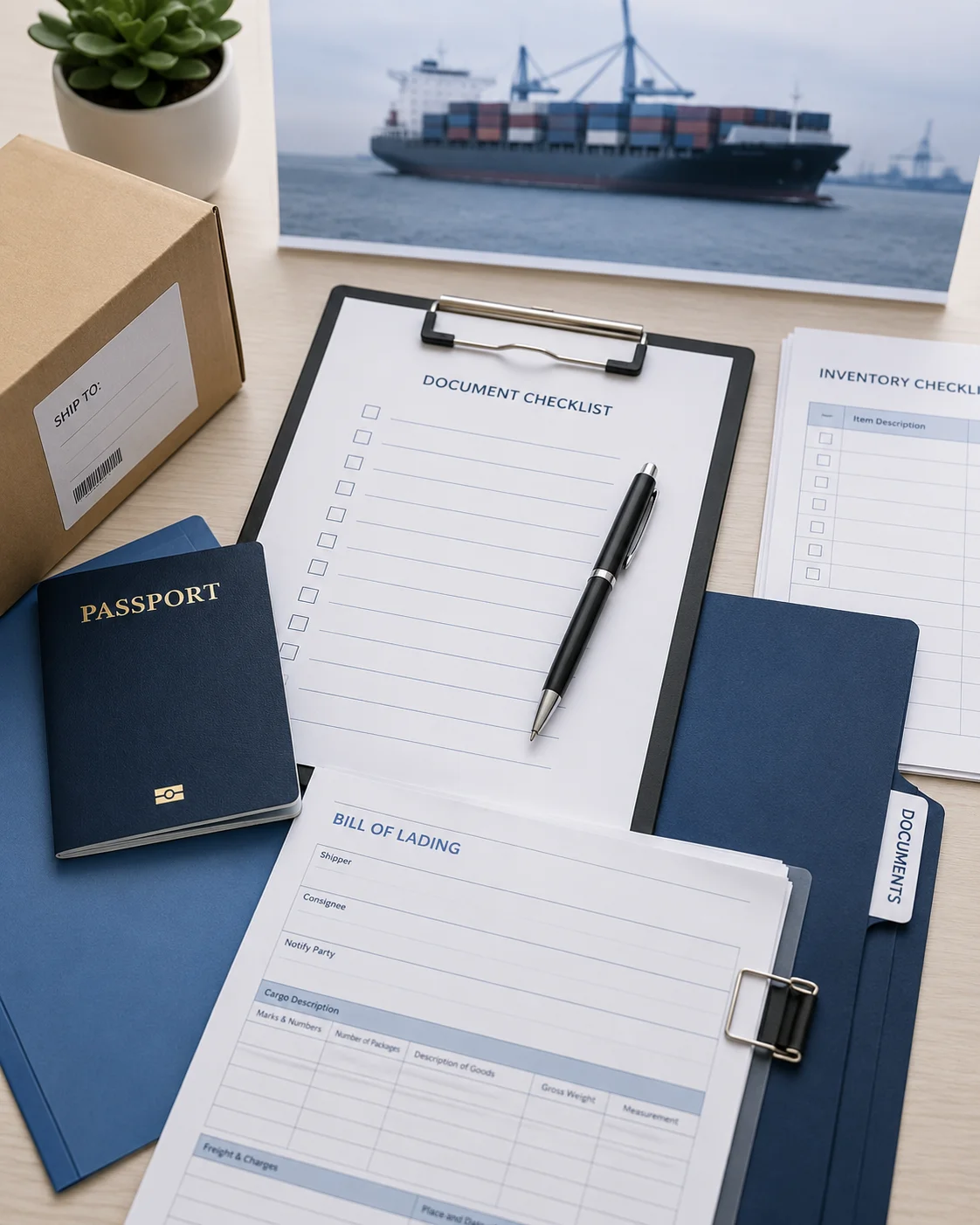
Documents required for importing used household goods, personal effects, and related shipments.
- Proof of domicile from the previous country of residence (e.g., utility bill, rental contract, property sale certificate)
- Proof of residence in Martinique dated within the last 3 months
- Signed packing list
- Copy of valid passport
- Original bill of lading (no express/telex release accepted) or air waybill (AWB)
- Original inventory in French, dated, valued, and signed by the owner of the goods
- Certificate of change of residence or working contract
- Non-sale certificate
- Original customs documents
- Employer's letter of transfer (if applicable)
Specific Information
Octroi de Mer. The Octroi de Mer is a local production and import tax applied in France's overseas departments. For used personal effects that do not qualify for duty-free admission, the applicable rates are 7% Octroi de Mer plus 2.5% additional rights and transit taxes. New furniture requires an invoice and is taxed at 8.5% VAT plus 15% Octroi de Mer plus 2.5% additional rights plus transit dues.
ISPM 15. All wood packaging materials (pallets, crates, dunnage) must comply with ISPM 15 and bear the appropriate treatment mark.
Language. All inventories must be in French, dated, valued, and signed by the owner. English-language inventories are not accepted.
Martinique is part of the EU customs territory, so goods moving from mainland France or another EU member state are treated as intra-EU movements and are not subject to customs duties. However, the Octroi de Mer local tax applies regardless of origin.
Duties & Taxes
Duty-free admission for a transfer-of-residence shipment requires that the goods have been owned and used by the importer for at least 6 months prior to arrival, that the importer is genuinely transferring habitual residence to Martinique, and that the goods will not be sold or transferred for at least 12 months after import. All required documents (see above) must be presented at customs.
Prohibited & Restricted Items
Prohibited Items
- Narcotics and controlled substances (without authorization)
- Firearms and ammunition without prior authorization from the Prefecture de la Martinique
- Alcohol in quantities beyond permitted limits without proper declaration and duty payment
- Species protected under CITES without valid permits
- Wolf hybrids, Savannah cats, and Bengal cats unless 5th generation or more removed from the wild ancestor
- Mastiff breeds, Boerboels, and their crosses (live animals)
- Counterfeit goods and pirated materials
- Material that violates EU sanctions regimes
Restricted / Dutiable Items
From EU member states: Goods moving between Martinique and EU member states are not subject to customs duties. However, all goods entering Martinique are subject to the Octroi de Mer regardless of origin.
From non-EU countries (by air or sea):
- Alcohol: subject to excise duties and Octroi de Mer; quantities above personal-use thresholds are dutiable
- Tobacco products: subject to excise duties; limited quantities permitted duty-free
- New or unused goods: subject to customs duties plus 8.5% VAT plus Octroi de Mer; invoices required
- Firearms and ammunition: require prior authorization from the territorial administration (Prefecture)
- Medications: quantities beyond personal use require documentation; controlled substances require additional authorization
- Plant material and foodstuffs: subject to phytosanitary controls; some items restricted
Contact the destination agent for current Octroi de Mer rate schedules by commodity code, as rates vary significantly by product category.
Importing a Used Personal Vehicle
Required Documents
- Original bill of lading or air waybill
- Copy of the vehicle's registration certificate
- Certificate of change of residence or working contract
- Certificate of non-pledge (certificat de non-gage) confirming no outstanding finance or liens
- Declaration of value
Specific Information
Martinique follows French vehicle regulations and EU type-approval rules. Vehicles approved in another EU member state (with EU whole-vehicle type approval) can be registered in Martinique without additional technical certification. Vehicles from outside the EU will require compliance with EU safety and emissions standards and may require technical inspection before registration.
Vehicles imported under a transfer-of-residence exemption must have been owned and used by the importer for at least 6 months prior to the transfer and must not be sold or transferred for at least 12 months after import.
Contact the local agent for current registration procedures and inspection requirements, as these are handled through the Prefecture de la Martinique.
Pets
- ISO 11784/11785-compliant 15-digit microchip **From EU member states and Part 1 listed countries (resident pets):**
- Current rabies vaccination administered after microchipping **From EU member states and Part 1 listed countries (resident pets):**
- EU Pet Passport or government-issued Pet Passport (Part 1 listed countries) **From EU member states and Part 1 listed countries (resident pets):**
- 21-day wait after primary rabies vaccination before travel **From EU member states and Part 1 listed countries (resident pets):**
- No import permit required **From EU member states and Part 1 listed countries (resident pets):**
- ISO 11784/11785-compliant 15-digit microchip **From Part 2 listed or unlisted countries:**
- Current rabies vaccination administered after microchipping **From Part 2 listed or unlisted countries:**
- Rabies titer test (FAVN or RFFIT) at an approved laboratory, administered no sooner than 30 days after the rabies vaccination **From Part 2 listed or unlisted countries:**
- Pet may enter Martinique no sooner than 3 calendar months after the blood draw date for the titer test **From Part 2 listed or unlisted countries:**
- Non-commercial EU Health Certificate issued by a licensed veterinarian and endorsed by a government veterinarian **From Part 2 listed or unlisted countries:**
- No import permit required **From Part 2 listed or unlisted countries:**
As an EU outermost region, Martinique applies EU pet import legislation in full.
Microchip before vaccination. The microchip must be implanted before or at the same time as the rabies vaccination. Documentation must reflect the microchip number. A tattoo applied before July 3, 2011 is acceptable if clearly legible and all rabies vaccinations were kept current.
Minimum age. Puppies and kittens must be at least 15 weeks old to travel from EU member states or Part 1/2 listed countries (12 weeks minimum age for vaccination plus 21-day wait). The minimum age to enter from an unlisted third country is 7 months.
Port of entry. Pets must arrive via Martinique Aimé Césaire International Airport. Pets may travel in cabin, as checked baggage, or as air cargo in IATA-compliant carriers.
Breed restrictions. The following breeds may only enter with a pedigree certificate: Staffordshire Terrier, American Staffordshire Terrier, Pit Bull, Tosa, and Rottweiler types. Mastiff breeds, Boerboels, and their crosses are not permitted.
Malaysia and Australia specifics. Pets originating from peninsular Malaysia must meet additional Nipah disease conditions. Cats from Australia must not have been in areas where Hendra disease has been confirmed in the past 60 days.
CITES. Exotic pets, turtles, parrots, and other protected species require CITES permits in addition to standard documentation.
Other animals. Birds, reptiles, amphibians, rodents, and rabbits are not subject to rabies requirements but may have additional health certificate requirements. Confirm with DGAL (Direction Générale de l'Alimentation) prior to shipping.
Consignment Instructions
Recommended: Contact the destination agent to ensure all requirements have been met prior to import, especially for differences regarding air and sea shipments.
All inventories must be submitted in French, fully valued, dated, and signed. English inventories are not accepted by French customs in Martinique.
Martinique is served primarily by air via Martinique Aimé Césaire International Airport (FDF) and by sea through the port of Fort-de-France. Shipments arriving by sea may face unpredictable port handling delays; confirm current port conditions with the local agent before booking.
Storage and demurrage costs can accumulate quickly at Fort-de-France. Ensure all documentation is complete and in French before the shipment departs origin.
Special territory note: Martinique is an EU outermost region, not metropolitan France. Do not treat it as equivalent to a shipment to mainland France. Octroi de Mer applies on arrival, and all customs processing is handled locally, not through metropolitan French customs.
Cultural & Other Information
- OpenFactBook — Martinique
- Wikipedia — Martinique
- French Customs Authority — douane.gouv.fr *(primary customs reference; French language)*
- French Ministry of Agriculture — agriculture.gouv.fr *(DGAL; pet and plant import regulations)*
- PetTravel.com — Martinique Pet Import Requirements
- embassypages.com/martinique *(WAF-protected; accessible in browser)*
Martinique is a Caribbean island of approximately 1,128 square km with a population of around 350,000. It is an outermost region of the EU and uses the euro. French is the official language; Antillean Creole is widely spoken. Fort-de-France is the capital. The economy is heavily reliant on agriculture (bananas, sugarcane, rum) and tourism.
Because Martinique is legally part of France, the CIA World Factbook historically listed its information within the France country entry. OpenFactBook maintains a dedicated Martinique entry.
Useful resources
Quick Links & Resources
Martinique has no independent foreign representation. Consular services are handled through French embassies worldwide. See .