


Start here
Overview
Explore sections
Guide Details
Household Goods
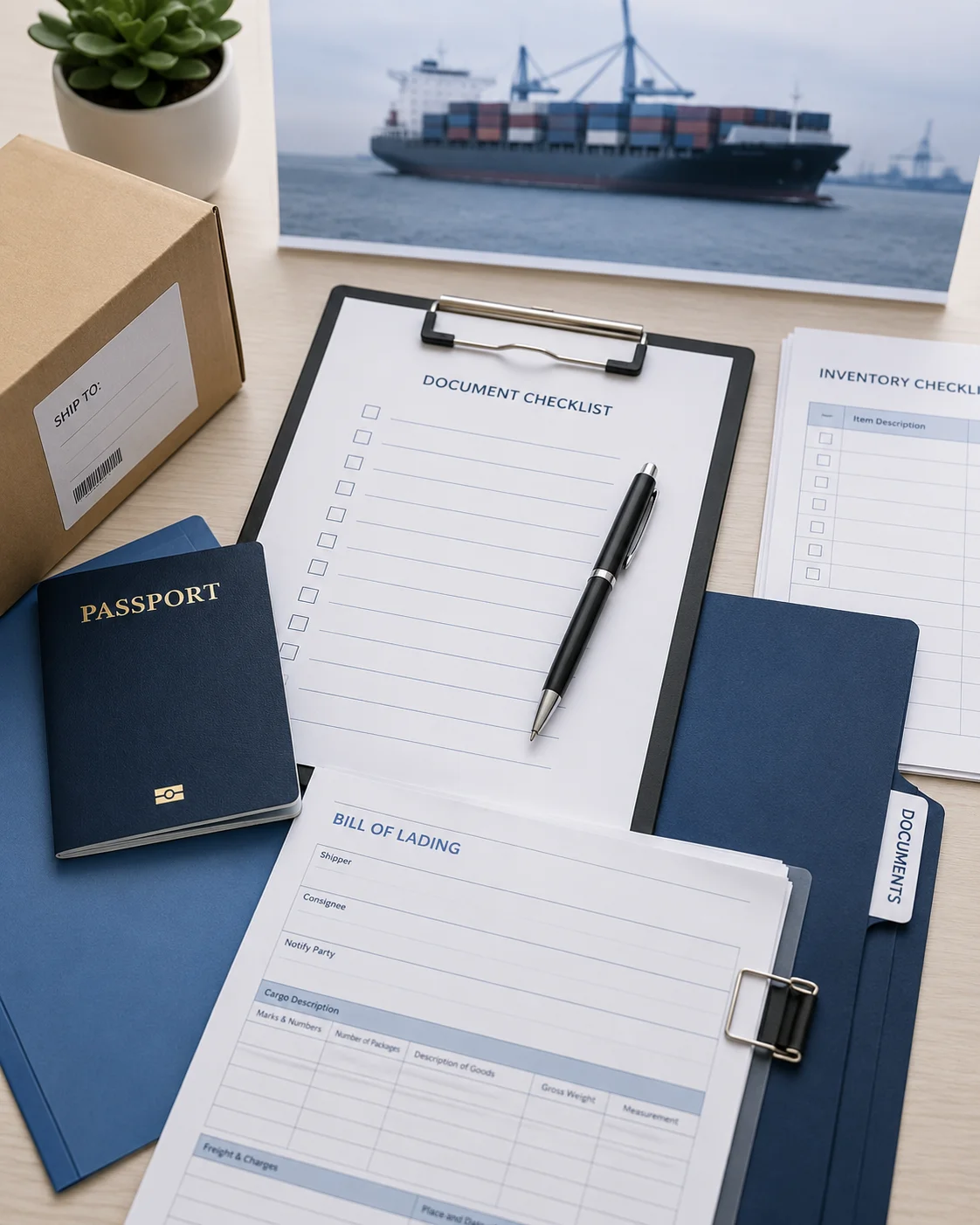
Documents
Documents required for importing used household goods, personal effects, and related shipments.
- Clear copy of passport
- Clear copy of temporary resident card (both sides)
- Letters for Mexican Customs (vary by port of entry; always confirm with the destination agent):
- Authorization letter to the customs broker
- Value form for customs
- Prohibited items declaration
- Customs form for new articles
- Express bill of lading (SWB) or airway bill (AWB)
- Letter of guarantee from the employer (must state the company is responsible for duties and taxes should the shipment not be re-exported when the employee leaves Mexico)
- Solidarity and compromise letter
- Full inventory list, including a separate list of electronics with brand, model, and serial number
- Clear copy of passport
- Clear copy of permanent resident card (both sides)
- Copy of CURP (Unique Code for Personal Registration)
- Copy of INE/IFE card (both sides)
- Original inventory stamped by the Mexican Consulate in the country of origin (the "Menaje de Casa" or consularized inventory, must be in Spanish)
- *All electrical appliances must include brand, model, and serial number*
- Letters for Mexican Customs (vary by port of entry; confirm with the destination agent)
- Express bill of lading (SWB) or airway bill (AWB)
Returning Mexican diplomats must also contact the Mexican Embassy or Consulate at origin to obtain a special visaed inventory, which is then used to obtain the Diplomatic Franchise from the SRE.
- Import permit ("Diplomatic Franchise") obtained by the corresponding embassy in Mexico City or international organization from the SRE (Secretariat of Foreign Affairs)
- Inventory list in Spanish
- Copy of diplomatic passport
- Copy of diplomatic carnet
- Origin and destination addresses
- Authorization letter to the customs broker
Specific Information
Critical: Do not ship household goods to Mexico until all documentation is complete and the destination agent has given the green light. The airport holds shipments for only 30 days and ports for only 60 calendar days. If documentation is not presented within those windows, the Mexican Government confiscates the shipment. Any item not included in the consularized inventory can be expropriated by the Mexican Government.
Mexico distinguishes between three categories of importer: temporary residents (foreign nationals on a temporary work visa), returning Mexican citizens and permanent residents, and diplomats. The documentation and procedures differ for each.
Menaje de Casa (consularized inventory): Returning Mexican citizens and permanent residents must have their inventory legalized (stamped) by the Mexican Consulate in the country of origin. This is non-negotiable. The consularized inventory must be in Spanish, and all articles in the shipment must be listed on it. Visaed inventories are valid for only 6 months from the date of issue.
Residency requirement: Returning Mexican citizens and permanent residents must show proof of having lived abroad for a minimum of 6 months. Mexican Customs require the shipment to be imported within the first 6 months after the visa was issued. After this period, the shipment will not be accepted.
Full address requirement: The destination address is mandatory and must match the address used to obtain the stamped inventories or resident credentials.
Tax ID on bills of lading (sea shipments): Under rule 2.4.5, all sea shipments to or from Mexico must show the Tax ID (RFC) number for all parties on the carrier bill of lading (shipper, consignee, and notify party). Mexican nationals must provide their RFC. Foreigners should use the generic RFC: EXTR920301TS4. Diplomatic goods use: EMB930401KH4. International organizations use: OIN930413N0. Tax ID information must be submitted at least 24 hours before vessel departure; failure to provide it may result in refusal to load.
Steamship line deposit: Mexican steamship lines require a deposit of approximately USD 1,000 when a shipment arrives in a container.
Duties & Taxes
Duty-free conditions: Used household goods and personal effects (items used for at least 6 months) may be imported duty-free, provided all documentation is in order and the goods are not intended for resale.
New items: Items less than 6 months old are considered new by Customs and are subject to duties of 20% plus 16% IVA (VAT). New items must be declared separately with proof of purchase. Importantly, duties on new items can only be paid for shipments arriving via NVO (Nuevo Laredo/Laredo); duties on new items cannot be processed at Veracruz port or Mexico City Airport. Do not pack used items in original packaging, as Customs will treat them as new, causing problems and delays.
Prohibited & Restricted Items
Prohibited Items
The following items are prohibited from household goods shipments. If prohibited items are found, the clearance of the entire shipment will be delayed, extra handling charges apply to remove the items, and the prohibited items will be confiscated. Severe penalties may be imposed.
- Beverages including wine, beer, spirits, and all alcoholic drinks
- Food items including spices, tinned products, canned goods
- Medicine and drugs
- Weapons and ammunition
- Detergents, soaps, and similar products
- Collectible items such as pens and coins
- Blank CDs, DVDs, or tapes
- Large quantities of similar objects (considered items for sale)
- Pornographic materials
- Cars, boats, and motorcycles (unless the client is a diplomat or temporary resident)
- Works of art and antiques
- Precious metal objects
- Inheritance items
- Fabrics
- Money
- Tires and automobile spare parts
- Corrosives and cleaning items
Restricted / Dutiable Items
Dutiable Items
- New items (less than 6 months old): 20% duty + 16% IVA (can only be cleared through Nuevo Laredo/NVO, not Veracruz or Mexico City Airport)
- Toilet paper, diapers, tissue paper, blank white paper
- Presents and souvenirs (subject to tax; consult with the destination agent)
Items Not Considered Household Goods
The following items are not classified as household goods under Mexican law and are subject to separate treatment, additional permits, or prohibition:
- Firearms, ammunition, and weapons
- Liquors, wine, and all alcoholic beverages
- Food (including canned goods, spices, tinned products)
- Drugs and medications
- Art collections (paintings and sculptures)
- Money
- Fabrics
- Corrosives and cleaning items
- Tires and automobile spare parts
- Articles related to the transferee's profession (small quantities may be permitted; advise the destination agent before shipping)
Diplomatic Alcohol/Food/Tobacco
Diplomats may import wines, liquors, canned food, and tobacco, but these require a separate diplomatic franchise and must be loaded into a separate crate or lift van, clearly identified. Both the household goods franchise and the alcohol/food franchise are required to clear customs. If combined in one container, the alcohol/food items will be separated and held until the separate franchise is obtained.
Currency
Confirm current currency import/export declaration requirements with the destination agent.
Importing a Used Personal Vehicle
Required Documents
- Copy of original temporary resident visa/card
- Purchase invoice or title of property
- Vehicle title
- Express bill of lading
- Copy of driver's license
- Owner's personal identification
- Letter of authorization for the agent to arrange transportation from port to final destination
- International credit card (for temporary import permit fee)
Specific Information
Mexican citizens and permanent residents cannot import vehicles into Mexico. This is a strict prohibition. Only temporary residents and diplomats may import motor vehicles.
Temporary residents: The owner must be present at the port of entry to clear Customs and obtain a temporary import permit. The temporary permit fee is approximately USD 500, payable by international credit card. Customs grants a permit for the period of validity of the temporary resident visa, which must be renewed before expiration. The vehicle should be shipped separately from the household goods.
Diplomats: May import a vehicle with a franchise arranged by the embassy. The agent can handle vehicle transportation with the corresponding diplomatic franchise.
Bicycles: Only bicycles that are part of the household goods and declared on the legalized inventory are allowed. Must be used, one per person.
Other vehicles: Boats, motorcycles, and other motor vehicles are prohibited for non-diplomatic imports.
Pets
- Copy of airway bill
- Sanitary original bill of lading
- General certificate of health from a veterinarian
- Vaccination certificate (rabies and other standard vaccinations)
- Copy of the owner's passport
- Copy of the veterinarian's professional registration card
Timing: Send all documents and the airway bill to the destination agent in advance to avoid delays. Arrange for the pet to arrive at the beginning of the week; pets arriving late in the week risk being held in Customs control over the weekend with no one to feed them.
High-value animals: If the value of the animal exceeds USD 5,000, authorization from the Secretary of Commerce and Industrial Promotion is required.
Duties: Pet imports are subject to payment of duties.
SENASICA: Mexico's National Service for Agrifood Health, Safety and Quality (SENASICA) regulates the import of live animals. An import health certificate from SENASICA or its recognition of the origin country's certificate may be required. Confirm current requirements with the destination agent.
Common mistakes: Sending pets over the weekend (no one available to care for them at Customs). Not sending documents to the destination agent before the pet arrives. Failing to include the veterinarian's professional registration information.
Consignment Instructions
Recommended: Contact the destination agent to ensure all requirements have been met prior to import. Mexico has one of the most strictly enforced customs regimes in the Americas. Do not ship until the destination agent confirms all documentation is complete.
Ports of entry: The principal sea ports are Veracruz (Gulf coast), Lazaro Cardenas (Pacific coast), and Manzanillo (Pacific coast). Overland entry is primarily through Nuevo Laredo (from the US via Laredo, Texas). Air shipments arrive via Mexico City International Airport (MEX) and other international airports.
Port-specific requirements: Documentation requirements vary by port of entry. Lazaro Cardenas requires additional documents (IFE credential and proof of residence copies). New items can only pay duties via NVO/Laredo, not through Veracruz or Mexico City Airport. Always confirm port-specific requirements with the destination agent.
Confiscation deadlines: Airports hold shipments for 30 days. Sea ports hold shipments for 60 calendar days. If documentation is not presented within these windows, the shipment is declared "abandoned" and confiscated by the Mexican Government.
Prepaid shipments only: Due to legal regulations, the destination agent does not accept C.O.D. charges. Only destination charges may come on a C.O.D. basis. All shipments must be prepaid.
ISPM 15 (strictly enforced): Mexico has adopted ISPM-15 for all wood packaging material. All wooden crates, pallets, and packaging must bear the IPPC treatment mark (heat treatment at minimum 56 degrees C core temperature for 30 minutes, or methyl bromide treatment). The mark must be in black ink, legible, permanent, and visible on at least two opposite sides. Labels and adhesives are not permitted for the ISPM-15 mark. Shipments arriving without the ISPM-15 seal will be returned to the country of origin at the shipper's or origin agent's expense.
Port conditions: Mexican ports and customs houses are saturated. Lift vans and containers may be placed in the open and must be well protected against rain.
Cultural & Other Information
- OpenFactBook -- Mexico *(community-maintained successor to the CIA World Factbook, which was discontinued in February 2026)*
- Wikipedia -- Mexico
- Servicio de Administracion Tributaria (SAT) -- Mexican Tax/Customs Authority
- SENASICA -- National Service for Agrifood Health, Safety and Quality
- PetTravel.com -- Mexico Pet Import Requirements
- Mexperience -- Importing Personal Goods to Mexico (Menaje de Casa)
- U.S. State Department -- Mexico Travel Information
International Association of Movers (IAM) 1600 Duke Street, Suite 440 · Alexandria, VA 22314, USA Phone: +1 703-317-9950 · iamovers.org
Useful resources