

Country Guides
Moldova

Start here
Overview
Process Step
1 stepSurface shipments for returning citizens with a Chisinau residence address are cleared in Chisinau. Clearance times depend on the completeness of documentation and the customs officer's valuation process.
Explore sections
Guide Details
Household Goods
Documents
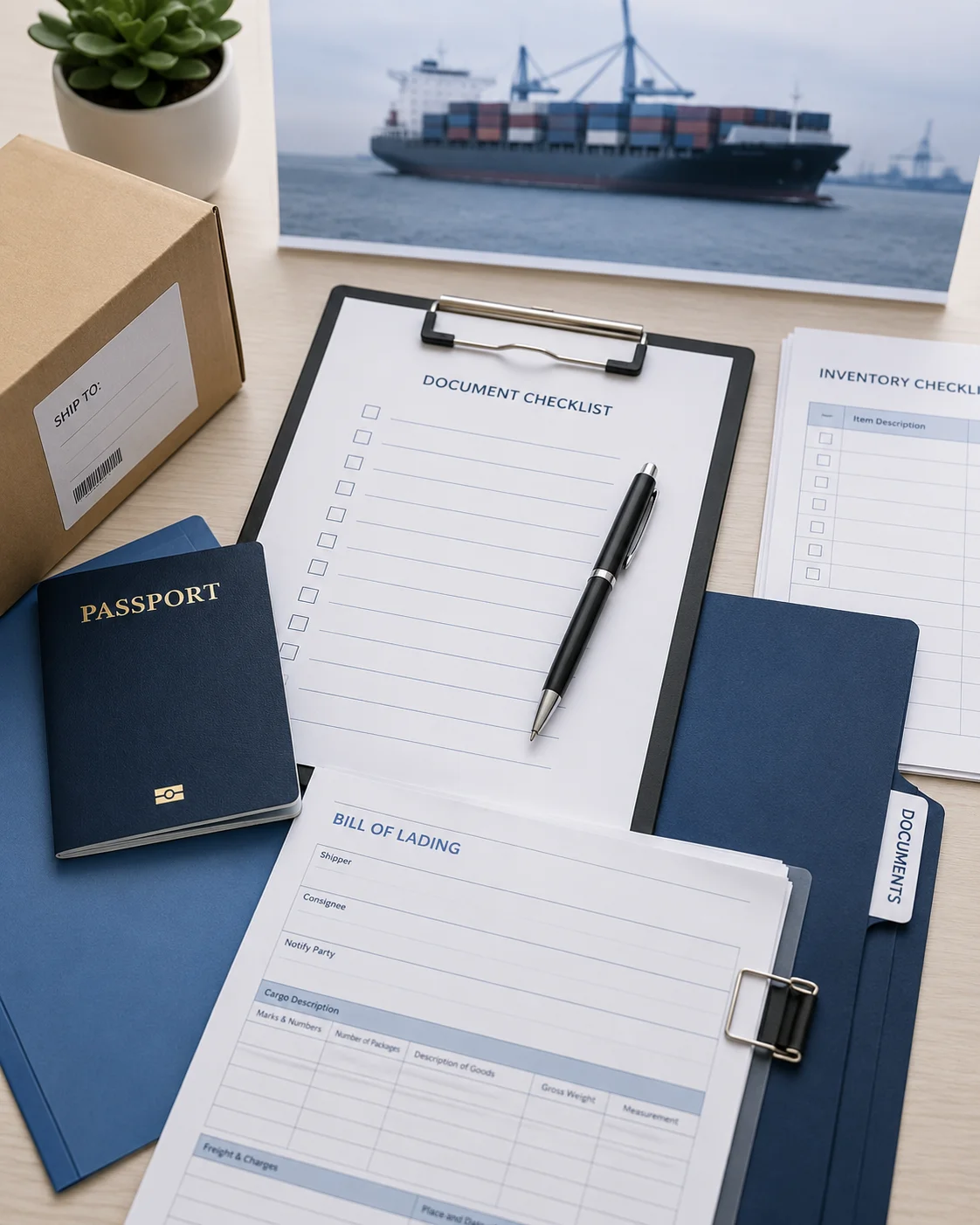
Documents required for importing used household goods, personal effects, and related shipments.
- Passport
- Moldovan identification card
- Detailed inventory
- Pro-forma invoice
- Passport
- Moldovan resident permit
- Detailed inventory
- Pro-forma invoice
- Passport
- Resident permit or work permit
- Letter of employment (must confirm the length of the contract in Moldova as guarantee for the temporary import)
- Detailed inventory
- Pro-forma invoice
- Diplomatic passport
- Accreditation card from the Moldovan Ministry of Foreign Affairs
- Detailed inventory
Specific Information
Regulatory update (January 2026): Moldova enacted Law No. 319/2025, effective January 1, 2026, which provides full exemption from import duties on personal belongings for Moldovan citizens returning for permanent residence. This law is designed to facilitate the return of Moldovan citizens from abroad by simplifying customs procedures and reducing relocation costs. See details below.
Moldova also adopted a new Customs Code effective January 1, 2024, which modernized customs procedures and abolished certain legacy processing charges. Moldova is an EU candidate country (candidate status granted 2022) with a Deep and Comprehensive Free Trade Area (DCFTA) agreement with the EU in force since 2016.
Returning Moldovan citizens (Law No. 319/2025, effective January 1, 2026): Moldovan citizens returning for permanent residence may import personal belongings free of import duties. Eligible items include furniture, household goods, clothing, and personal electronics. Items must not indicate a commercial purpose. The specific list of eligible goods is determined by the Government of Moldova. This measure is intended to support family reunification and encourage long-term relocation to Moldova.
Immigrants (one-time import): For immigrants with a Moldovan resident permit, the import of household goods into Moldova is duty-free on a one-time basis.
Temporary imports: The letter of employment must confirm the contract length in Moldova. Goods imported on a temporary basis are subject to renewal or re-export when the work permit expires.
Goods not previously exported: If the goods were not temporarily exported from Moldova (i.e. they are being imported for the first time, not returned), the shipment is subject to VAT of approximately 20%. Duties on new furniture range from 0% to 15% of the estimated value.
Customs inspection: All goods are inspected and valued by a Customs officer. For surface shipments destined for residents in Chisinau, the shipment will be brought to Chisinau for customs clearance.
Trade agreements: Moldova's DCFTA with the EU means that many goods originating from EU member states benefit from reduced or zero tariffs. Moldova also has free trade agreements with CIS countries, CEFTA members, Turkey, and EFTA countries. Ad valorem customs duties range from 0% to 25% depending on the product category.
Prohibited & Restricted Items
Prohibited Items
Moldovan Customs may prohibit the entry of goods that endanger or compromise the following interests:
- State security and public order
- Moral standards (pornographic or subversive materials)
- Environmental protection
- Protection of art objects and objects of historical or archaeological value
- Intellectual property rights
- Domestic market protection
- Public health interests
Specifically prohibited items include:
- Narcotic drugs and psychotropic substances
- Weapons, firearms, and ammunition [Permit Required]
- Counterfeit goods and currency
- Animal products not meeting veterinary standards
- Antiques and objects of historical/archaeological value (export restrictions apply; import may require permits)
- Pornographic or subversive materials
- Perishable food items
Restricted / Dutiable Items
Traveller Duty-Free Allowances
The following items may be imported duty-free in the quantities indicated (per person):
Tobacco (one of): 200 cigarettes, or 50 cigarillos, or 50 cigars.
Alcohol: 1 bottle of spirits, plus 5 litres of beer.
Other personal items: 3 leather goods or knitwear items; 2 pairs of shoes; 1 tape recorder, audio player, or similar device; 1 video recording or playback device; 3 watches; perfume in quantities for personal use only.
Note: Repeated imports of the same categories of duty-free goods within a certain period are treated as commercial imports, triggering full duties and commercial import formalities.
Currency
Travellers may import and export currency freely, but amounts exceeding EUR 10,000 (or equivalent) must be declared to Customs.
Importing a Used Personal Vehicle
Required Documents
- Vehicle title / registration certificate
- Original bill of lading
Specific Information
Regulatory update (January 2026): Under Law No. 319/2025, returning Moldovan citizens may import one passenger vehicle (tariff heading 8703) free of customs duties, provided the vehicle is no more than 10 years old, has a customs value not exceeding 550,000 MDL (approximately EUR 28,000), has an engine capacity not exceeding 3,000 cc, has no visible damage or defects, and is intended exclusively for personal use (not commercial or industrial). This is a significant change from the previous regime where all vehicles were subject to duties.
Age limit: Vehicles older than 10 years cannot be imported into Moldova.
Diplomats: May not import a motor vehicle until the accreditation card from the Moldovan Ministry of Foreign Affairs has been issued.
Temporary vehicle import: For temporary import of a personal vehicle, the owner must have registered the vehicle in the country of origin. A fee of approximately EUR 95 is collected by the Customs office. The temporary import is valid for up to 12 months, but can be extended annually or when the owner's resident permit expires and a new one is obtained. If the temporary import is not extended, the import file is forwarded to the contraband/smuggling department of the Customs office.
Non-returning residents: For non-citizens and temporary workers, vehicles remain subject to standard customs duties.
Pets
- ISO 11784/11785 microchip (implanted before rabies vaccination)
- Rabies vaccination certificate (vaccination administered at least 21 days before travel)
- Rabies antibody titre test (RNATT/FAVN) for pets from countries not classified as low-risk by Moldova or the EU, conducted at an approved laboratory with a result of at least 0.5 IU/ml
- *Blood sample must be taken at least 30 days after vaccination. A 3-month waiting period from the date of sampling may apply.*
- International veterinary health certificate issued by the official veterinary authority in the country of origin
- Government endorsement of the health certificate (e.g. USDA for the US, CFIA for Canada)
Moldova is progressively aligning its veterinary and pet travel regulations with EU standards as part of its EU candidacy process. Requirements have become more standardized in recent years.
EU alignment: As Moldova aligns its laws with EU regulations, the pet import framework increasingly mirrors EU Regulation 576/2013. Vaccinations other than rabies (distemper, hepatitis, parvovirus for dogs; panleukopenia, rhinotracheitis for cats) are recommended but not formally required.
Titre test: A rabies antibody titre test is required when entering Moldova from countries not on the approved low-risk list. This also applies when transiting through Romania to reach Moldova by land.
Minimum age: Pets must be at least 12 weeks old for rabies vaccination, with a 21-day waiting period after vaccination before travel.
Common mistakes: Not having the titre test completed before travel (required from many non-EU countries). Microchip implanted after rabies vaccination (invalidates the vaccination). Transiting Romania without meeting Romania's EU pet travel requirements.
Consignment Instructions
Recommended: Contact the destination agent to ensure all requirements have been met prior to import, especially for differences regarding air / sea / road shipments.
Port of entry: Moldova is landlocked. Sea freight typically arrives at the Romanian port of Constanta on the Black Sea and is transported overland to Chisinau. Air shipments arrive via Chisinau International Airport (KIV). Road shipments enter primarily through the Romanian border crossings.
Customs clearance: Surface shipments for returning citizens with a Chisinau residence address are cleared in Chisinau. Clearance times depend on the completeness of documentation and the customs officer's valuation process.
Transnistria: The breakaway region of Transnistria (Pridnestrovian Moldavian Republic) on Moldova's eastern border with Ukraine has its own de facto customs regime. Shipments transiting through or destined for Transnistria face additional complications. Confirm routing with the destination agent.
Electrical standard: Moldova uses 220V, 50Hz with European-style two-pin plugs (Type C and Type F).
Cultural & Other Information
- OpenFactBook -- Moldova *(community-maintained successor to the CIA World Factbook, which was discontinued in February 2026)*
- Wikipedia -- Moldova
- Customs Service of the Republic of Moldova
- U.S. Commercial Service -- Moldova Import Tariffs
- PetTravel.com -- Moldova Pet Import Requirements
- U.S. State Department -- Moldova Travel Information
International Association of Movers (IAM) 1600 Duke Street, Suite 440 · Alexandria, VA 22314, USA Phone: +1 703-317-9950 · iamovers.org
Useful resources