

Country Guides
Nepal

Explore sections
Guide Details
Household Goods
Documents
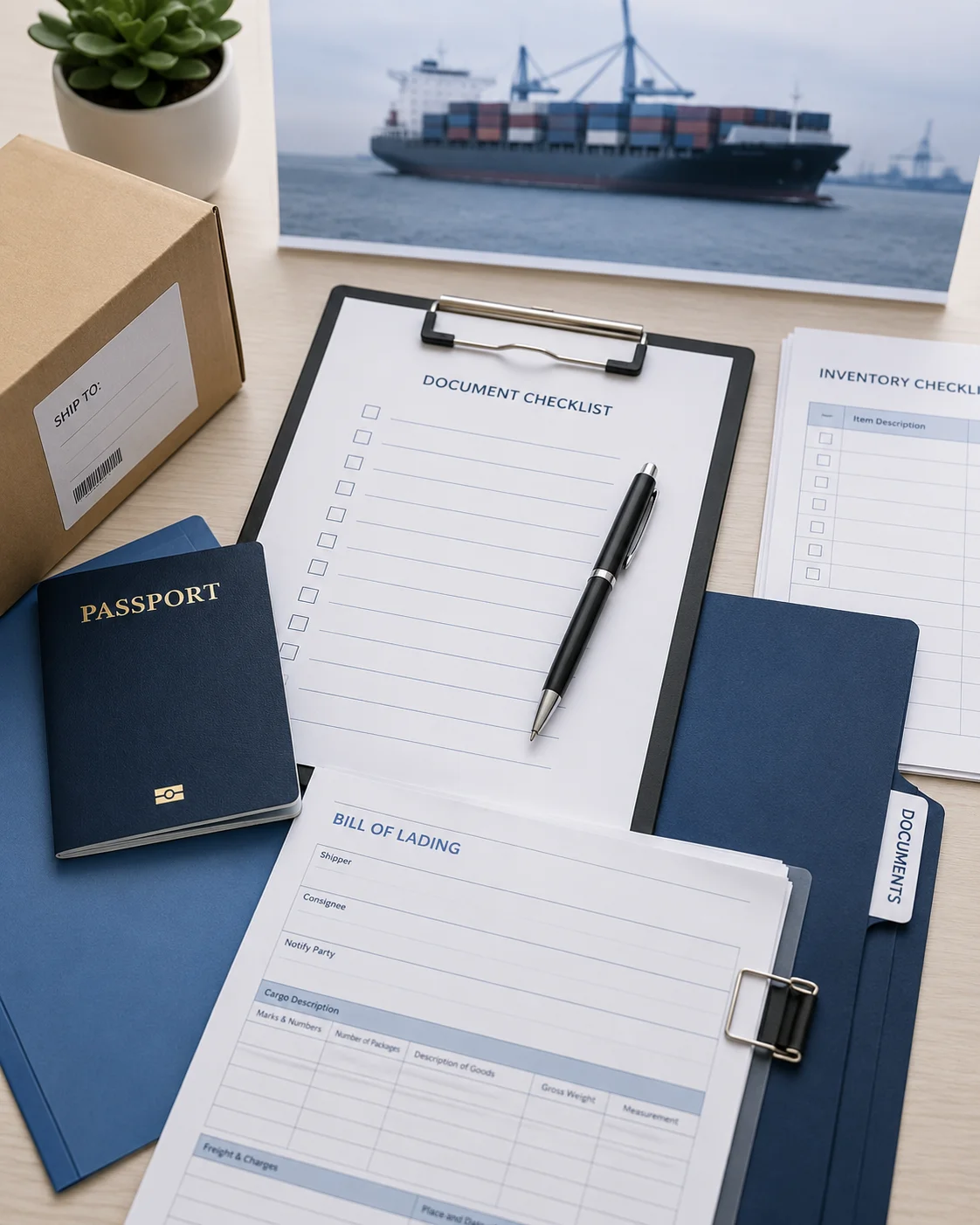
Documents required for importing used household goods, personal effects, and related shipments.
- Passport (copy including photo page; passports of all family members for foreign nationals and returning Nepalese)
- Original Bill of Lading (OBL) / Air Waybill (AWB)
- Comprehensive valued inventory in English. Descriptions such as "Misc." or "PBO" are not acceptable; each item must be listed individually with a used-goods value.
- Packing list
- Letter of Authorization allowing the destination agent to clear the shipment on the owner's behalf
- Insurance Certificate (original)
- Residence visa / Work visa
- Customer's contact phone number and address in Nepal
- Customs Transit Declaration (CTD) -- required for shipments cleared at Indian ports of entry (Kolkata is the primary sea entry point for Nepal)
All documents above plus:
- Import Permit issued by the Department of Commerce, Supplies and Consumer Protection. Allow approximately 2 weeks for processing.
- Import Licence issued by the Department of Commerce
- Investment license or business license (where applicable)
- Certificate from employer stating income source
- Diplomatic Exemption Certificate issued by the Ministry of Foreign Affairs
- Passport copy
- Comprehensive inventory list in English (with make, model, and serial numbers for all electronics and electrical items)
- Duty-Free Exemption Certificate issued by the Ministry of Foreign Affairs
- Passport copy
- Comprehensive inventory list in English
Specific Information
Foreign nationals working for registered foreign companies or aid organizations may import used household goods and personal effects duty-free if they meet the employment and permit criteria. The employer must provide the agent with an official letter verifying employment and authorising the agent to handle the shipment.
Returning Nepalese citizens are subject to duty and tax on used household goods. They must submit proof of work overseas, including a mention of annual salary, to initiate the import permit process.
Diplomatic shipments are granted tax and duty-free entry without inspection, provided Diplomat Status has been formally approved. The CIF value must be stated on the Exemption Certificate.
Privileged status shipments are granted duty-free entry but are subject to inspection. The CIF value must be stated on the Exemption Certificate.
All shipments are subject to customs inspection. The owner does not need to be present during clearance, but must have arrived in Nepal and be registered with the Ministry of Foreign Affairs before duty-free import documents can be processed.
Used household goods and personal effects for daily use -- clothes, books, kitchenware, glassware, china, and some furniture -- are allowed duty-free for non-diplomatic importers who hold a valid Import Permit. All duty-free items must enter Nepal within 6 months of the owner's arrival.
Only one sea shipment and one air shipment are permitted duty-free per owner of the goods. Any additional shipments are subject to duty and taxes.
All new items require original receipts and a Certificate of Origin. Electronics and electrical items must list make, model, and serial numbers on the inventory. Medications require original containers, a copy of the prescription, and a list of generic names.
Antiques, pure silver, and gold must be declared upon arrival and must be re-exported upon departure. They cannot be sold or transferred within Nepal.
India transit: Nepal is landlocked and most sea freight enters through Kolkata (India) and transits overland via the India-Nepal border. A Customs Transit Declaration (CTD) is required for this routing. Confirm current transit procedures and documentation requirements with the destination agent, as Indian customs procedures affect the overall timeline.
ISPM 15: All wooden packing materials must comply with ISPM 15 phytosanitary standards. Confirm with the destination agent before packing.
Prohibited & Restricted Items
Prohibited Items
The following items are prohibited from import into Nepal:
- Narcotics, illegal drugs, and controlled substances
- Pornography in any format
- Subversive and politically seditious materials
- Explosives, ammunition, and weapons (without special permit)
- Beef and any products containing beef. Nepal is a predominantly Hindu country and the cow is the national animal; beef products are strictly prohibited.
- Two-stroke motorcycles and three-wheel vehicles
- Used vehicles (for non-diplomatic, non-privileged importers)
- Vehicles over 5 years old
- Endangered species and products derived from CITES-listed wildlife *(CITES)*
Restricted / Dutiable Items
Traveller duty-free allowances (hand-carry): Tobacco up to 250 grams or approximately 250 cigarettes; whiskey or wine up to 1.15 litres, or beer up to 12 cans.
Alcohol in shipments: Alcohol in removal shipments should not exceed 1.15 litres or 12 cans of beer. Amounts above this are subject to duty.
New goods: All new items included in a removal shipment require original receipts and a Certificate of Origin and are subject to import duty and 13% VAT on the CIF value.
Electronics and electrical items: Subject to duty. Must be individually listed on the inventory with make, model, and serial numbers.
Firearms: Require an original purchase invoice and proof of registration in the country of origin. An import permit is required. Confirm current procedures with the destination agent well in advance.
Plants and plant products: Require an Import Permit from the Plant Quarantine and Pesticide Management Centre and a Phytosanitary certificate from the origin country.
Medications: Admitted in personal-use quantities with original containers, a copy of the prescription, and a list of generic names.
Antiques, silver, and gold: Must be declared on arrival. Cannot be sold within Nepal and must be re-exported on departure.
Importing a Used Personal Vehicle
Required Documents
- Certificate of Title and Registration (original)
- Commercial / Purchase Invoice (original, stating make, model, year of manufacture, engine number, and chassis number)
- Original Bill of Lading / Air Waybill
- Diplomatic Exemption Certificate (diplomats only)
Specific Information
Used vehicle import is not permitted for private individuals or returning Nepalese nationals.
Only diplomats and individuals with formally approved Privileged Status may import a used vehicle duty-free. The vehicle must meet at least Euro III emission standards. If the origin country uses a different emission classification, a certificate from the manufacturer, dealer, or a government body confirming equivalence to Euro III is required. The vehicle must be re-exported at the end of the assignment.
Two-stroke motorcycles and three-wheel vehicles are prohibited from import. Vehicles over 5 years of age are not permitted entry under any circumstances.
Non-diplomatic importers and returning citizens who do not hold privileged status may not import used vehicles. New vehicle import is subject to duties based on the type, age, and engine capacity of the vehicle; confirm current rates with the destination agent before proceeding.
Pets
- ISO-compatible microchip (15-digit ISO 11784/11785). Must be implanted before the rabies vaccination.
- Rabies vaccination certificate. Vaccination must be administered between 30 days and 12 months prior to entry. Puppies and kittens under 3 months of age are generally exempt from rabies requirements, but should be vaccinated on arrival.
- Core vaccinations: dogs must be vaccinated against distemper, hepatitis, leptospirosis, parvovirus, and parainfluenza; cats against rhinotracheitis, calicivirus, panleukopenia, and feline leukemia.
- International veterinary health certificate, issued within 10 days of travel, confirming the pet is healthy and free of disease communicable to humans. The certificate is valid for 30 days.
- Import permit from the Department of Livestock Services, required when importing 3 or more pets. For single pets or pairs, a permit is generally not required but confirm current requirements with the destination agent.
- Advance notification: notify the Kathmandu Animal Quarantine Office at least 24 hours before arrival with flight and pet details.
CDC high-risk country note: Nepal is classified as a high-risk country for dog rabies under US CDC regulations. Owners travelling from the United States must complete all CDC-required documentation before departure; this cannot be issued retroactively. Contact a USDA-accredited veterinarian well in advance.
All pets must enter Nepal via Tribhuvan International Airport in Kathmandu. Pets meeting all import requirements generally do not require quarantine on arrival. If documentation is incomplete, authorities may impose a 7-day quarantine at a government facility; all associated costs are the importer's responsibility.
An import tax of up to 40% of the pet's assessed value may be levied at customs; confirm the current rate with the destination agent before travel.
Birds, reptiles, exotic animals, and most non-domestic species are generally prohibited from import. Confirm with the Department of Livestock Services before attempting to import any pet other than a domestic dog or cat.
Wolf hybrids and Savannah and Bengal cats (unless 5th generation or more removed from wild pedigree) cannot be imported under standard regulations.
Plants, plant products, seeds, and fruits require an Import Permit from the Plant Quarantine and Pesticide Management Centre, and a Phytosanitary certificate from the country of origin.
Consignment Instructions
Recommended: Contact the destination agent to ensure all requirements have been met prior to import, especially for differences regarding air / sea / road shipments.
India transit routing: Most sea shipments for Nepal transit through Kolkata, India. This adds complexity, including Indian customs formalities, overland transport, and Nepalese border clearance. A Customs Transit Declaration (CTD) is required. The destination agent must coordinate both sides of the transit. Allow additional time and budget for this routing.
Import permit lead time: The Import Permit from the Department of Commerce takes approximately 2 weeks to process. Apply immediately once the decision to ship is confirmed; the permit must be in hand before the shipment arrives.
Owner registration: The owner must have arrived in Nepal and be registered with the Ministry of Foreign Affairs before duty-free clearance documents can be processed. Plan the owner's travel accordingly.
Inventory standards: All inventories must be in English with individual item descriptions and used-goods values. Shorthand such as "Misc." or "PBO" will cause delays. Electronics must list make, model, and serial numbers.
Customs clearance process: All shipments are subject to inspection. The customer must have documents available and be reachable during the clearance process. The agent clears on the owner's behalf with a signed Letter of Authorization.
Shipment limits: Only one duty-free sea shipment and one duty-free air shipment are permitted per owner per relocation. Additional shipments are dutiable.
Principal port of entry: Tribhuvan International Airport, Kathmandu (air). For sea freight, goods are routed through Kolkata, India to Nepal via road or rail.
Cultural & Other Information
Nepal is a landlocked federal democratic republic in South Asia, bordered by China (Tibet) to the north and India on three sides to the south, east, and west. It is home to eight of the world's ten highest mountains, including Mount Everest. The capital and largest city is Kathmandu. Nepali is the official language. The population is approximately 31 million. Nepal is predominantly Hindu with a significant Buddhist minority; Hinduism deeply influences daily life, law, and customs.
Nepal transitioned from a monarchy to a federal republic in 2008. The economy is heavily dependent on remittances from Nepalese workers abroad, tourism, and agriculture. Nepal is one of the least developed countries in the world by per capita income but is scheduled to graduate from Least Developed Country (LDC) status in 2026. Business is conducted primarily in Nepali and English in professional contexts. The Nepali calendar (Bikram Sambat) differs from the Gregorian calendar by approximately 56 to 57 years; government documents often use both systems.
The cow is Nepal's national animal and sacred in Hinduism. Beef and beef products are prohibited. Visitors and residents should be attentive to religious observances, temple protocols, and cultural sensitivities.
Reference Links
Useful resources