

Country Guides
Norway

Explore sections
Guide Details
Household Goods
Documents
Documents required for importing used household goods, personal effects, and related shipments.
Prior to or at the time of shipment ETA:
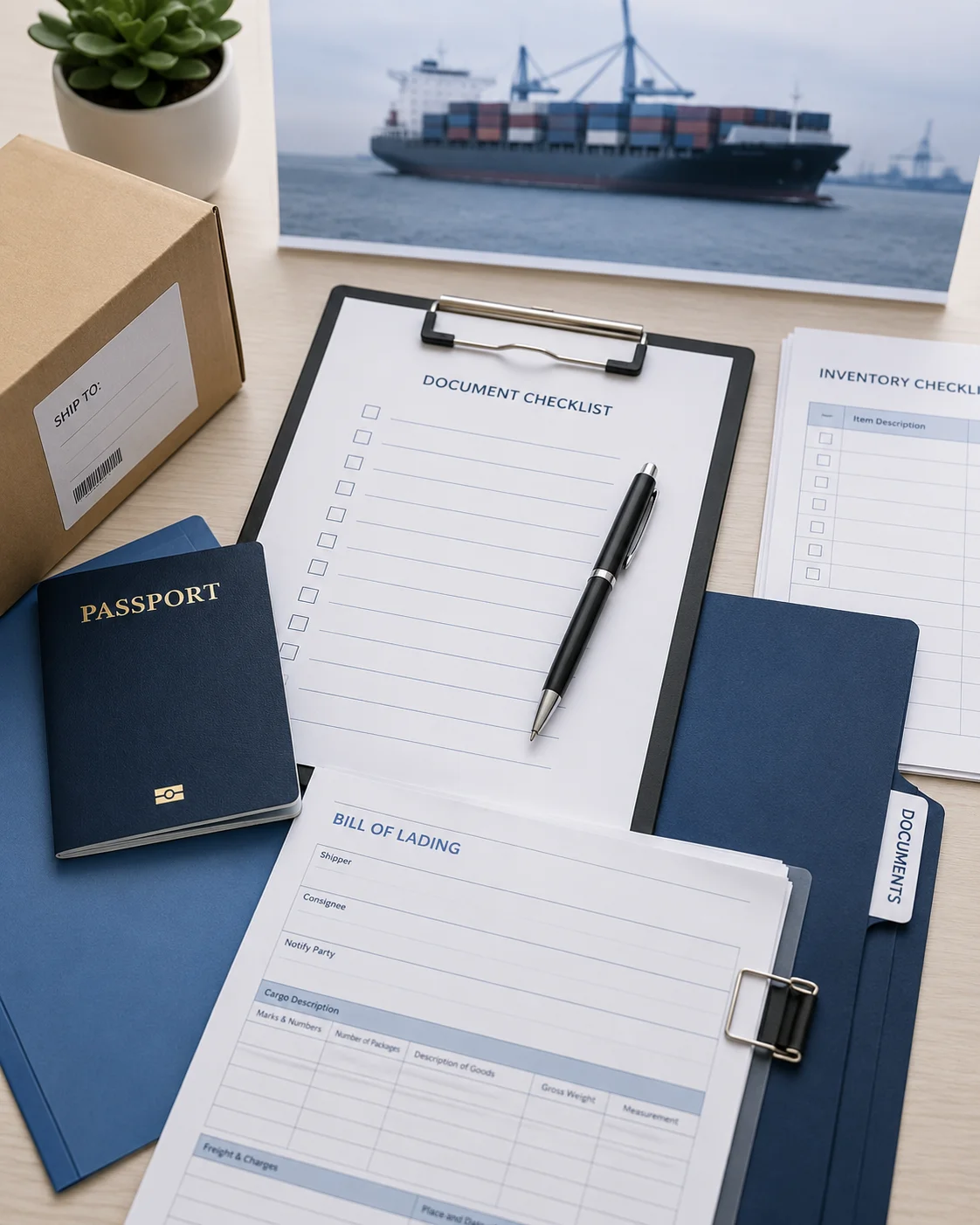
- Inventory list in duplicate, in Norwegian or English only
- Copy of passport (photo page only)
- Bill of Lading (OBL or Express/Sea Waybill) or Air Waybill (AWB). Express B/L or Sea Waybill is acceptable.
- Norwegian Customs Declaration Form RD-0030E (Importation of Removal Goods), completed and signed by the consignee
- Norwegian identification number (11 digits). If the importer does not yet have a Norwegian national identity number or D-number, they must apply to Norwegian Customs for a TRK number (Customs-registered customer number) before or at the time of declaration.
- A-2 form, duly attested by the Norwegian Ministry of Foreign Affairs. A valid Norwegian diplomatic ID card must be held by the transferee.
- Notarised letter from solicitor stating the applicant is the rightful owner
- Inventory list in duplicate (Norwegian or English only)
- Copy of passport (photo page only)
- B/L or AWB
- Application to Customs (instead of the RD-0030E customs declaration)
- Origin agent's complete shipping advice
- Norwegian ID number (11 digits)
Specific Information
Diplomatic shipments are duty-free subject to the A-2 form attestation. An annual quota on alcohol and tobacco may be in place by the Norwegian Ministry of Foreign Affairs for the respective embassy. It is the responsibility of the transferring diplomat to verify and comply with any such regulation.
Inherited items can be imported duty and VAT-free provided the notarised solicitor's letter is in place. For inherited motor vehicles, the standard vehicle import rules apply.
A used household goods shipment may be imported free of duties and taxes if all of the following conditions are met:
- The owner has lived abroad continuously for at least 1 year.
- The goods have been owned and used by the owner during that stay abroad and will continue to be used in Norway.
- The goods are being imported in connection with the move to Norway.
Any item owned and used for less than 12 months is considered new and is subject to import duties and taxes.
The value of the household goods is not relevant to the determination of duty-free status.
If more than 1 year has passed since the owner arrived in Norway, a separate application to Customs is required before the goods can be admitted duty-free. Similarly, a separate application is required if the owner wishes Customs to assess whether goods already brought to Norway can be classified as duty-free moving goods.
ISPM 15: All wooden packaging materials and dunnage must be treated and marked according to ISPM 15 standards. Non-compliant wood will be refused entry.
Norwegian ID / TRK number: A Norwegian identification number is required to file the customs declaration. Importers who do not yet have their national identity number or D-number must apply for a TRK number from Norwegian Customs. Allow time for this before the shipment arrives.
Prohibited & Restricted Items
Prohibited Items
The following items are prohibited from import into Norway:
- Narcotics and controlled substances
- Explosives and automatic weapons
- Spirits containing more than 60% alcohol by volume
- Prescription medicines (in shipments; must be hand-carried with a prescription)
- Potatoes
- Fresh meat
- Some vitamins (above Norwegian regulatory dosage limits)
- Reptiles and CITES-listed threatened species *(CITES)*
- Endangered animal and plant species *(CITES)*
- Poisons
- Counterfeit and pirated goods
Restricted / Dutiable Items
Alcohol: Extremely high Norwegian excise duties and taxes apply to all alcoholic beverages, even in small quantities. There is no duty-free allowance when alcohol is included in a household goods shipment. Separate import arrangements are required (special clearance and a detailed list including brand, volume, alcohol strength, and purchase value). Spirits containing more than 60% alcohol by volume cannot be imported. Including alcohol in a household goods shipment is strongly discouraged. Place any alcohol boxes at the door of the container for easy customs access and list them in full detail.
Tobacco: Subject to the same high duties as alcohol when included in a household goods shipment. No duty-free concession applies.
Weapons: A permit from the local police is required, preferably before the shipment arrives in Norway to avoid expensive transit storage. The importer typically needs membership in a hunting organisation or shooting club. Without police permission, weapons will be confiscated. Automatic weapons are prohibited.
Food: Food is prohibited in household goods shipments. Limited exceptions exist for canned food, dried food, and small personal quantities of spices. See the Mattilsynet website for current exceptions. Food products are not exempt from duties and taxes and must be declared. Fresh meat is prohibited.
Television sets: Customs will report television imports to the Norwegian Broadcasting Corporation (NRK), which will send an annual licence invoice to the owner.
Vitamins and supplements: Dosage allowances are strictly regulated in Norway. It is advised not to include vitamins or supplements in shipments.
Prescription medicines: Must be hand-carried by the owner of the goods with a prescription available for presentation to Customs on arrival. Not to be included in shipments.
Live plants: A phytosanitary certificate from the Plant and Wildlife Department in the country of origin is required. Import restrictions on certain species apply.
Cigarettes / tobacco (traveller allowance): For persons 18 years of age or older: 200 cigarettes, 200 grams of tobacco leaves, or 250 grams of other tobacco products.
Importing a Used Personal Vehicle
Required Documents
- Transit document (B/L or equivalent)
- Invoice or purchase contract showing the actual purchase sum
- Freight invoice and documentation of any costs accrued before the vehicle reached the Norwegian border (e.g., insurance)
- Original foreign registration document
- Certificate of Conformity (COC), if available
Specific Information
Motor vehicles are not considered part of household goods and cannot be imported duty- or tax-free in connection with a move. All vehicles imported into Norway are subject to Norwegian vehicle taxes, including:
- 25% VAT on the total value of the vehicle plus freight and insurance costs. Electric vehicles are subject to VAT only on the amount exceeding NOK 300,000.
- Engangsavgift (one-time registration tax), calculated based on CO2 emissions, nitrogen oxide emissions, net weight, and for some vehicles engine displacement or power. Previously registered vehicles benefit from a depreciation deduction (bruksfradrag) that increases with the vehicle's age from first registration abroad.
- Greenhouse gas tax.
The engangsavgift calculation is complex. Use the Norwegian Tax Administration's online calculator at skatteetaten.no to estimate costs before shipping. As a rough indicator, engangsavgift has historically run around 105% of current vehicle value for conventional vehicles, but actual rates vary significantly by vehicle type, emissions, and age.
Antique vehicles (30 years or older): Subject to 25% VAT only, no engangsavgift.
Electric vehicles: Norway has world-leading EV incentives. From 2023, a weight-based purchase tax of NOK 12.5 per kilogram for vehicle weight exceeding 500 kg applies to all vehicles including EVs. EV VAT concessions are extended through 2026 (subject to periodic review by EFTA authorities).
Temporary use: You may apply for temporary permission to drive a foreign-registered vehicle in Norway for up to 30 days in connection with moving. You must provide documentation of the move (certificate of change of address, employment contract, or similar).
Registration: All imported vehicles must be registered on Norwegian plates and are subject to annual road tax. After customs clearance, you may use the foreign registration plates for up to 30 days. Contact the Norwegian Public Roads Administration (Statens vegvesen) for technical compliance and registration requirements.
Pets
- Import licence
- Approved ID marking (microchip or tattoo). The microchip must comply with ISO 11784/11785.
- Health certificate together with vaccination certificates
- Certificate of de-worming against echinococcosis (fox tapeworm)
From EEA/EFTA countries (including EU member states): Pets must have a valid rabies vaccination and an antibody titre test. Dogs must additionally be vaccinated against leptospirosis and distemper. Customs officers at border crossings will check the import licence, identification marking, and vaccination certificates.
Dogs and cats entering from Sweden (and other countries where the fox tapeworm Echinococcus multilocularis is present) must be treated for fox tapeworm by a licensed veterinarian within 48 hours prior to arrival. Cats and dogs that regularly travel to Norway from Sweden may be treated at a minimum interval of every 28 days rather than before each border crossing.
A rabies antibody titre test must be taken no earlier than 120 days after rabies vaccination.
From non-EEA/EFTA countries: Animals must go into quarantine for 4 to 6 months on arrival in Norway. Requirements are significantly more complex. Contact the Norwegian Food Safety Authority (Mattilsynet) and the destination agent well in advance.
Reptiles and threatened species are prohibited from import. Always contact the destination agent before shipping any animal other than a domestic cat or dog.
Special Categories
3. Recreational Boats
A recreational boat may be imported duty-free (VAT of 25% on total value plus shipping still applies) if all of the following conditions are met:
- The owner has resided abroad continuously for at least 5 years immediately before arrival in Norway.
- The boat is no longer than 15 metres.
- The owner has owned the boat for at least 12 months and used it abroad during that period.
- The boat is imported within 1 year of arrival in Norway.
- The owner retains possession for at least 2 years after customs clearance before selling or transferring.
- All these conditions are documented in a formal application submitted to the regional Customs office where the owner resides.
All boats with a hull length from 2.5 to 24 metres and water scooters must be CE marked. Outboard engines are subject to import charges of approximately NOK 285 per horsepower plus 25% VAT calculated on the purchase price or invoice. Occupational equipment is not exempt from duties and taxes and must be declared.
Consignment Instructions
Recommended: Contact the destination agent to ensure all requirements have been met prior to import, especially for differences regarding air / sea shipments.
Norwegian ID / TRK number: This is required before customs clearance can be processed. If the owner does not yet have a national identity number or D-number, a TRK number must be applied for from Norwegian Customs. This should be done as early as possible in the relocation process.
RD-0030E form: The Customs Declaration Form RD-0030E must be completed, signed by the owner, and submitted to Norwegian Customs. If a professional moving company or agent handles the clearance, they will process this via a licensed customs broker. If a third-party carrier is used, they must be equipped with a signed Power of Attorney from the owner.
Inventory language: All inventory lists must be in Norwegian or English only. Inventories in other languages are not accepted.
12-month rule for goods: Any item owned and used for less than 12 months at the time of import is considered new and dutiable. Items acquired just before departure should be listed separately with their purchase value.
Alcohol and tobacco in shipments: Place all alcohol and tobacco boxes at the container door for easy access and prepare a fully detailed list (brand, volume, year, alcohol percentage). High duties will apply. These items should ideally not be included in the shipment.
Vehicles: Contact the Norwegian Tax Administration (skatteetaten.no) to calculate vehicle taxes before committing to shipping. All taxes and duties must be paid before the vehicle is released by Customs.
Late arrival: If more than 12 months have passed since the owner arrived in Norway, a separate pre-clearance application to Customs is required before the goods can be admitted duty-free.
Principal ports of entry: Oslo (Oslo Port and Oslo Airport Gardermoen), Bergen, Stavanger, and Tromsø are the main entry points. Confirmation of routing and port clearance procedures should be done with the destination agent.
Cultural & Other Information
Norway is a constitutional monarchy in northern Europe, occupying the western and northern parts of the Scandinavian Peninsula. It shares land borders with Sweden, Finland, and Russia. The capital is Oslo. Norwegian is the official language; Sami languages have official status in several municipalities. The population is approximately 5.5 million. The currency is the Norwegian Krone (NOK). Norway is a founding member of NATO and a member of the European Economic Area (EEA) and EFTA; it twice declined EU membership in referenda (1972 and 1994) but applies much of EU law through the EEA agreement.
Norway has one of the world's highest standards of living, supported by substantial oil and gas revenues managed through the Government Pension Fund Global. The country is a global leader in electric vehicle adoption, with EVs accounting for approximately 83 to 86% of new vehicle registrations. Tax and customs policy is notably strict regarding vehicles, alcohol, and tobacco, reflecting deliberate policy choices rather than administrative complexity.
Business is conducted primarily in Norwegian; English is very widely spoken and used professionally. Punctuality and directness are valued in Norwegian business culture.
Reference Links
Useful resources