

Country Guides
Philippines

Start here
Overview
Explore sections
Guide Details
Household Goods
Documents
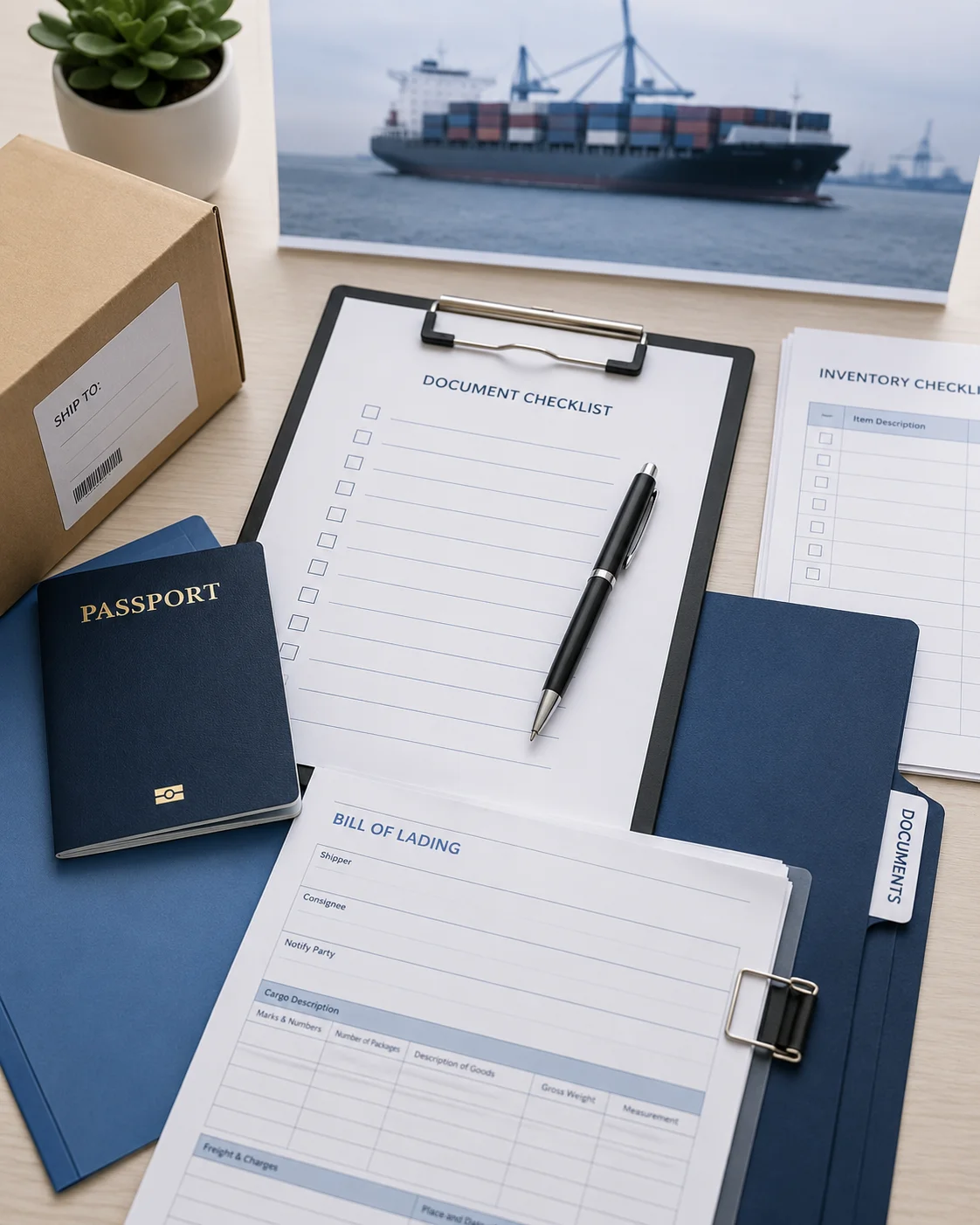
Documents required for importing used household goods, personal effects, and related shipments.
Returning Filipino Residents / Returning OFWs
Dual Citizens (Filipino and foreign passport holders)
Foreign Nationals holding 9(G), 9(D), 47(A)2, 13G, or 13A visas
Diplomats (9(E) visa holders)
Temporary Visitors and Tourists (9(A) visa)
- Original passport with the latest arrival stamp
- Affidavit of End-Use/Ownership
- Authorization letter
- Certificate of Employment (for OFWs)
- TIN ID or BIR Form showing importer's TIN
- Signed sea waybill (Express Release BL) or air waybill
- Copy of packing list
- Original and valid Philippine and foreign passports
- Original Oath of Allegiance
- Original Certificates of Retention and Identification
- Copy of birth certificate
- TIN ID or BIR Form with importer's TIN
- Signed authorization letter and affidavit of ownership
- Dated and signed bill of lading/AWB and packing list
- Original passport with the relevant visa stamped
- Dated and signed sea waybill (Express Release BL) or AWB
- Signed authorization letter on company letterhead
- Signed affidavit of ownership
- Copy of packing list
- Copy of Certificate of Employment (for 47(A)2 holders)
- Copy of Alien Certificate of Registration I-Card (for 13G/13A)
- Copy of marriage contract and spouse's birth certificate (for 13A visa; originals may be requested by the Department of Finance)
- Note verbal approval from the sponsoring agency
- Dated sea waybill (Express Release BL) or AWB
- Packing list
- Dated sea waybill (Express Release BL)
- Packing list and passport copy
- No duty/tax exemption; goods are dutiable
Specific Information
Duty-free conditions: Returning residents and returning OFWs qualify for tax exemption based on time spent abroad, applied for through the Department of Finance:
- Away less than 5 years: exemption up to PHP 150,000 per bill of lading
- Away 5 to 10 years: exemption up to PHP 250,000 per bill of lading
- Away 10 years or more: exemption up to PHP 350,000 per bill of lading
The shipment must arrive in the Philippines within 60 days of the returning resident's arrival to qualify. Returning OFWs may additionally bring in home appliances and other durables tax and duty free, limited to one of each kind; any excess is subject to duty and tax.
Holders of 9(G), 13G, 13A, 9(D), 47(A)2, SRRV, or EO 226 visas are entitled to full tax exemption on household goods, with the application submitted to the Department of Finance. The shipment must arrive within 90 days of the visa holder's latest arrival on the passport.
Diplomatic shipments (9(E) visa) are fully duty and tax exempt. The exemption request is routed through the Department of Foreign Affairs, which endorses it to the Department of Finance.
Temporary visitors and tourists (9(A) visa) have no exemption and pay a flat 15% duty and 12% VAT on their shipment, or may post a cash bond (approximately 150% of assessed duties and taxes, plus a posting/cancellation fee of about USD 450) while a change of visa status is pending. The bond is valid for 3 months and may be extended once for an additional 3 months.
Port storage is generally free for the first 5 days; demurrage on containerized shipments applies thereafter at the carrier's standard rate.
Clearance timelines: Air shipments with direct duty payment clear in 3 to 5 working days; LCL sea shipments in 7 to 10 working days; FCL sea shipments in 7 to 10 working days. Shipments filing for tax exemption take longer, typically 10 to 15 working days from receipt of the complete documentation package including the DOF-approved exemption.
ISPM 15: The Philippines has adopted ISPM 15 (International Standards for Phytosanitary Measures) requiring all wood packaging material to be treated and marked accordingly.
Duties & Taxes
Duty and tax treatment in the Philippines is determined by the consignee's visa or residency status rather than a flat allowance. All incoming shipments are subject to 100% customs examination and x-ray or physical scanning, except diplomatic shipments.
Prohibited & Restricted Items
Prohibited Items
- Obscene literature, photographs, and films
- Politically subversive literature
- Narcotics and drugs RESTRICTED
- Gambling equipment
- Firearms, guns, and ammunition PERMIT REQUIRED
- Sharp or bladed weapons
- Perishable items
- Endangered species and products thereof CITES
Restricted / Dutiable Items
- Alcohol: very limited duty-free allowance for non-diplomatic shipments, generally under 10 bottles; shipments without a tax exemption pay high duty and tax rates
- Tobacco and alcohol de minimis allowance (personal, non-shipment quantities): 400 cigarettes, 50 cigars, 250 g of tobacco, and up to 6 bottles of 1 liter each
- Ammunition, explosives, and firearms require licensing and Philippine National Police clearance
- Prescription and over-the-counter medicines should be hand-carried in minimal, personal-use amounts rather than shipped
- Wine, liquor, and food items should be loaded last in the container to facilitate customs inspection and should be listed on a separate detailed inventory (bottle count, volume, spirit type, value, and alcohol percentage)
- Computers may be imported as part of a household goods and personal effects shipment
Importing a Used Personal Vehicle
Required Documents
- Dated sea waybill (Express Release BL)
- Packing list
- Prior Authority to Import secured from the Bureau of Import Services (BIS) / DTI import permit
- Original car registration
- Proof of purchase (deed of sale)
Specific Information
Only diplomats (9(E) visa holders) are entitled to duty-free vehicle importation. All other importers, including returning residents, dual citizens, and holders of 13G or 13A visas, pay substantial duties and taxes, historically cited at up to approximately 90 to 200% of the vehicle's book value depending on classification.
Cars are subject to weight and engine displacement limits: vehicles must not exceed 1,500 kg unladen weight and 2,800 cc engine displacement to qualify for import. The vehicle must be registered in the consignee's name for at least 12 months prior to shipment, and returning residents must have stayed abroad continuously for at least one year.
Advance planning required: Non-diplomatic importers must obtain the BIS/DTI import permit prior to departure or risk delays and fines. Philippine vehicle import procedures change frequently; contact the nearest Philippine Embassy, Consulate, or a destination agent well in advance of loading to confirm current requirements.
Pets
- Sanitary and Phytosanitary Import Clearance (SPSIC) from the Bureau of Animal Industry (BAI), applied for online or in person, valid for up to 3 pets and 2 months
- International veterinary health certificate issued by a licensed veterinarian in the country of origin, dated within 30 days of arrival
- Proof of ISO 11784/11785 compliant microchip (15-digit), implanted before the rabies vaccination
- Vaccination and deworming records
- Notarized Affidavit of Undertaking (Filipino owners) or Undertaking for Foreign Importers form (foreign owners/agents)
- Photographs of the pet
- Pet passport, if applicable
- Airway bill
Only dogs and cats that are at least 120 days old at the time of SPSIC application may be imported. Rabies vaccination must be given at a minimum age of 12 weeks (84 days), administered at least 14 to 30 days before travel depending on the issuing authority's guidance; check current BAI circulars for the exact window at time of shipment. Dogs additionally require vaccination against distemper, infectious hepatitis, leptospirosis, parvovirus, and parainfluenza. Cats require vaccination against herpes, calicivirus, panleukopenia, and feline leukemia.
The BAI must be notified at least 24 hours prior to an animal's arrival. Pets may be quarantined at a government-approved facility if documentation is incomplete or the animal is not visibly healthy on arrival; a full quarantine period of up to 30 days can apply in these cases, though it may be reduced or waived when all paperwork is in order.
Dogs and cats imported without required microchip identification are declined entry and returned to origin. Pets classified as "exotic" may be restricted; confirm status with the Philippine Embassy or Consulate before shipping.
Pets are dutiable: a duty of approximately 5% of the animal's declared value plus 12% VAT typically applies. Pets may travel as accompanied baggage or as cargo; check with the airline for specific handling requirements.
Special Categories
IAM Disclaimer
Customs regulations can change at any time with or without notice. This document is provided as a guide and for information only. While this information is correct at posting, regulations, procedures, and charges are subject to change. IAM does not accept liability for errors, omissions, inaccuracies, or misinterpretation. It is recommended to verify this information with a destination agent prior to shipping.
Consignment Instructions
Recommended: Contact the destination agent to ensure all requirements have been met prior to import, particularly given the differences between air and sea shipment procedures and the visa-dependent exemption rules.
A complete, English-language inventory is required for customs review. Because 100% of incoming shipments are subject to examination and scanning, expect longer physical inspection timelines than in countries with spot-check regimes. Shipments filing for a tax exemption should have the DOF-approved exemption in hand before or immediately upon arrival to avoid extended storage charges; port storage is generally free for 5 days before demurrage accrues.
Cultural & Other Information
- OpenFactBook: Philippines
- Wikipedia: Philippines
- Bureau of Customs (Philippines)
- Department of Foreign Affairs (Philippines)
- Bureau of Animal Industry (Pet Import Requirements)
- PetTravel.com: Philippines Pet Import Requirements
*Note: dfa.gov.ph and embassypages.com are Cloudflare-protected and may return a bot-verification page to automated requests; both are fully accessible in a standard browser.*
Useful resources