

Country Guides
Romania

Start here
Overview
Explore sections
Guide Details
Household Goods
Documents
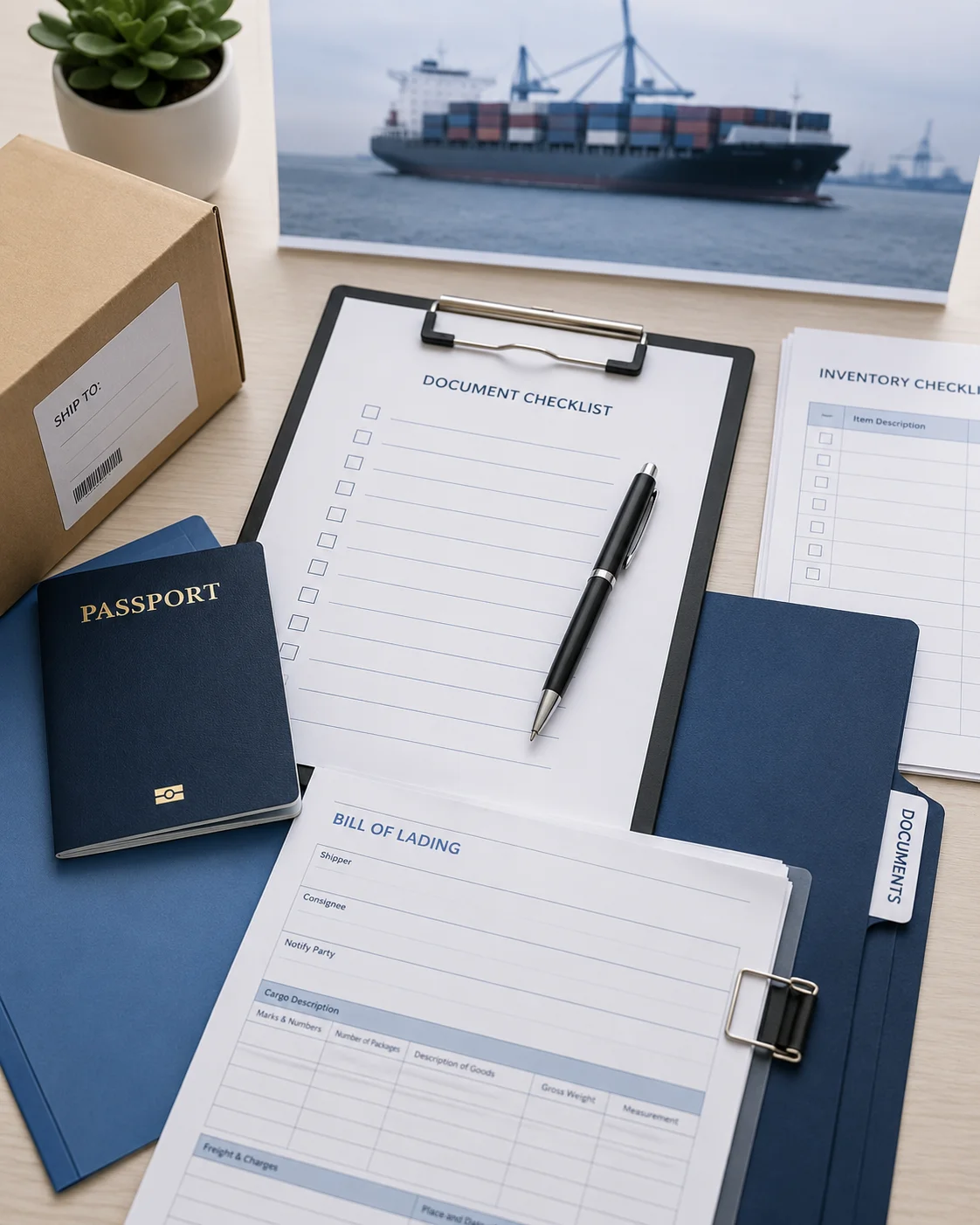
Documents required for importing used household goods, personal effects, and related shipments.
- Transport documents and waybill
- Invoice (if available)
- Copy of passport (simple scan acceptable)
- Copy of Romanian residence permit or registration certificate (CNP -- personal numeric code), simple scan acceptable
- Letter of employment in Romania
- Lease or rental contract for the residence in Romania
- Client statement (template provided by destination agent) confirming: goods have been owned for at least 6 months, are not intended for commercial purposes, and the client has lived outside Romania for at least 12 months prior to the import date
- Notarised Power of Attorney at the name of the destination agent in Romania, in original -- must be executed at a public notary in Romania and in Romanian language
- Notarised declaration, in original (same notary requirement)
- Photos in two copies of the following items where present in the shipment: paintings, carpets, trinkets or ornaments, jewellery, antiques, old pieces of furniture -- with corresponding packing list numbers (confirm with destination agent whether applicable)
- Packing list of personal effects
- Client's inventory in English, dated and signed
- Sea Waybill (SWB), AWB, or CMR indicating weight and standard transport information (provided by origin mover)
Romanian nationals returning from abroad who still hold a valid Romanian ID are entitled to duty-free import. The following additional documents are required instead of the notarised power of attorney set:
All documents must prove that the client lived outside the European Union for a minimum of 12 months prior to the import date. If this cannot be proven, import duties and taxes will apply.
- Copy of passport and Romanian ID card
- Copy of working permit or residence permit from the country of origin
- Original letter from the employer at origin confirming the working period
Alcohol is permitted in diplomatic shipments, but is limited to the annual quota agreed between the Romanian Ministry of Foreign Affairs and the respective embassies. General annual quotas are 300 litres of spirits (above 22%) and 2,000 packs of cigarettes (20 per pack) per mission, and 50 litres of spirits and 500 packs of cigarettes per family. Embassy-specific agreements may override these general quotas. The Embassy must submit a separate application to the Ministry of Foreign Affairs for alcohol and tobacco, which will not form part of the household goods shipment.
- Copy of passport (simple scan acceptable)
- Certificate for duty-free import of household goods ("Cerere de Import"), legalised by the Romanian Ministry of Foreign Affairs, stating the date of commencement of work, period of assignment in Romania, weight and value of goods, together with the inventory in Romanian
- Power of Attorney at the name of the destination agent
- Copy of diplomatic passport (if available)
- Copy of diplomatic identity card (if available)
- Packing list of personal effects
- Photos in two copies of paintings, carpets, ornaments, jewellery, antiques, and old furniture (confirm with destination agent)
Specific Information
Romania joined the Schengen Area in March 2024, eliminating border controls with other Schengen member states. Customs treatment for goods arriving from non-EU countries remains unchanged, but road shipments transiting through Schengen countries benefit from reduced border formalities.
RO e-Transport System: Since July 2024, Romania requires pre-declaration of road transport goods over 500 kg or valued over RON 10,000 (approximately EUR 2,000) via ANAF's online portal before movement begins. A Unique Transport Code (UIT) is generated and must accompany the driver. This applies to international road shipments (import, export, transit, intra-EU acquisitions). Non-compliance fines range from RON 10,000 to RON 100,000, plus potential confiscation of undeclared goods. Confirm with the destination agent whether this applies to specific household goods shipments.
The duty-free TNR exemption does not apply to: household goods belonging to persons transferring only a secondary residence to Romania without a grounded reason such as employment, marriage, inheritance, or studies; alcohol and tobacco exceeding the allowances in Section 4; and non-food goods exceeding duty-free thresholds.
Goods must not be sold within two years after customs clearance.
An EORI (Economic Operators Registration and Identification) number has been required for all imports and exports clearing Romanian customs since 19 August 2010. This applies to business operators and private individuals alike. The EORI number must be used in all electronic communications with customs authorities and is valid across all EU member states. Delegate this to the destination agent, who can assist with registration.
Food of any type increases the risk of customs inspection and is strongly recommended to be excluded from shipments.
Valued inventories showing serial numbers of electrical appliances and photographs of antiques, art, carpets, lamps, paintings, silver, and crystal items (two copies each) are required for shipments containing such items.
Duties & Taxes
Romania is an EU member state. Shipments originating within the EU require no customs clearance and move under EU free movement principles -- transport documents and a waybill (and invoice if available) are sufficient. Shipments from outside the EU are subject to Romanian customs clearance, import duties, and VAT at the standard rate of 19%.
The duty-free TNR (Transfer of Normal Residence) exemption is available to qualifying importers under EU Regulation 1186/2009. Whether customs duty or a customs guarantee applies depends on the shipper's status in Romania: diplomat, expatriate under a local working contract, returning Romanian national, tourist, or other. Confirm applicable treatment with the destination agent before shipping.
Prohibited & Restricted Items
Prohibited Items
The following items are prohibited or strictly controlled on import into Romania:
- Unlawful drugs and narcotics
- Pornographic material
- Alcohol and tobacco exceeding the personal allowances in Section 4 (excess treated as commercial cargo)
- Protected species and products thereof listed under CITES (Washington Convention), including ivory, tortoiseshell, coral, reptile skins, and wood from Amazonian forests
- Certain lethal firearms and ammunition without prior authorisation (see Section 4)
- Food (not formally prohibited, but strongly discouraged due to customs inspection risk)
Restricted / Dutiable Items
Intra-EU Imports
No customs duties apply to shipments from other EU member states.
Non-EU Imports
The following personal-use allowances apply duty-free. A mixed combination may be imported, provided the sum of percentages used from each category does not exceed 100%. Quantities exceeding these limits are treated as commercial cargo and cannot form part of a household goods shipment.
Alcohol: 1 litre of spirits above 22% ABV, or 2 litres of spirits at or below 22% ABV, plus 4 litres of wine and 16 litres of beer.
Tobacco: 40 cigarettes, or 100 cigarillos, or 50 cigars, or 250 g of tobacco.
Currency: no restriction for amounts arriving from EU countries. Amounts exceeding EUR 10,000 (or equivalent) must be declared when travelling from outside the EU.
Medicines: small personal-use quantities are generally permitted but some may need to be declared. Confirm with the destination agent before shipping.
Firearms (non-lethal, for personal or sporting use): foreigners wishing to bring non-lethal weapons and accompanying ammunition into Romania must apply in advance to the Romanian diplomatic representative or consular office in their country. This requirement applies to diplomats as well.
Lethal firearms and ammunition require authorisation from the Romanian Embassy in the country of departure, to be available at import customs clearance. Some lethal weapons are prohibited outright.
Importing a Used Personal Vehicle
Required Documents
- Copy of property title for the vehicle
- Registration certificate
- Invoice
- Proof of payment or proof of bank account
- Sale certificate or invoice in original (if available)
- RAR (Registrul Auto Roman) checking note
- All household goods documents listed in Section 1 applicable to the consignee's category
- EORI number for the owner of the goods
Specific Information
Romania has implemented specific rules for shipments containing motor vehicles, motorcycles, boats, and jet-skis. Whether customs duty or a customs guarantee applies depends on the shipper's status: diplomat, expatriate under a local working contract, returning Romanian national, or tourist.
For vehicles temporarily imported into Romania, a bank guarantee will be required by customs and released once the vehicle is exported from Romania.
The RAR (Romanian Auto Registry) technical audit must be paid separately, preferably by the client directly. It is recommended to delegate the RAR inspection process to the destination agent.
Vehicles can be registered after payment of a first registration charge, which varies based on the vehicle's emissions standard: from a few hundred euros for Euro 3-compliant vehicles to several thousand euros for non-Euro or Euro 1 vehicles.
Diplomats are exempt from first registration fees and duties on motor vehicles.
Pets
- EU Pet Passport, issued by an authorised veterinarian, containing valid microchip and rabies vaccination records From EU Member States
- Microchip documentation (ISO 11784/11785 standard) or tattoo applied before 3 July 2011 that is clearly visible From Non-EU Countries
- Veterinary health certificate issued by an official government veterinarian From Non-EU Countries
- Vaccination record including valid anti-rabies vaccination (administered at least 21 days before travel, after microchipping) From Non-EU Countries
Romania is an EU member state and follows EU pet travel regulations for cats, dogs, and ferrets.
Anti-rabies vaccination must be administered after microchipping and at least 21 days before travel, and must remain valid on arrival.
Birds are subject to separate EU import regulations. Confirm requirements with the destination agent well in advance of shipping.
CITES-listed species cannot be imported without valid CITES documentation. Some species are prohibited entirely.
Consignment Instructions
Contact the destination agent to ensure all requirements have been met prior to import, especially regarding differences between air, sea, and road shipments.
An EORI number is required for all customs clearances in Romania. Delegate EORI registration to the destination agent, who can assist with the application and registration process.
The notarised Power of Attorney and accompanying declaration must be executed at a public notary in Romania and in Romanian language. These are originals -- scans or copies are not accepted. Allow sufficient lead time before the shipment arrives.
Photos in two copies are required for all paintings, carpets, ornaments, jewellery, antiques, and old furniture in the shipment, cross-referenced to the packing list. Serial numbers of electrical appliances should be listed on the valued inventory.
For road shipments, the RO e-Transport pre-declaration system may apply (see Section 1). A UIT code must be generated through ANAF's SPV portal before transport begins. The declarant of the goods must provide the UIT code to the carrier before the vehicle's departure. Confirm applicability with the destination agent.
For temporarily imported vehicles, a bank guarantee is required at customs clearance and is released on re-export. The RAR technical audit is a separate client expense.
Exclude food items from all shipments to avoid triggering inspection of the entire consignment.
Goods imported duty-free may not be sold within two years of customs clearance.
Cultural & Other Information
Romania is a Central/Eastern European country with a population of approximately 18.15 million and a GDP of around $382.8 billion. The capital and largest city is Bucharest; other major cities include Cluj-Napoca, Timisoara, Iasi, and Constanta. Romanian is the official language. The currency is the Romanian Leu (RON). Romania has been an EU member since 2007 and joined the Schengen Area in March 2024. The country is a NATO member and has not adopted the euro, with no fixed timeline for doing so.
Customs administration is managed by the General Customs Directorate under ANAF (Agentia Nationala de Administrare Fiscala). Vehicle technical inspection and registration are administered by RAR (Registrul Auto Roman). Animal and veterinary import controls are administered by ANSVSA (Autoritatea Nationala Sanitara Veterinara si pentru Siguranta Alimentelor). The Ministry of Foreign Affairs (MAE) manages diplomatic matters and the Romanian consular network abroad.
Key Resources:
- OpenFactBook -- Romania
- Wikipedia -- Romania
- Romanian General Customs Directorate (ANAF)
- RAR -- Registrul Auto Roman (Vehicle Technical Authority)
- ANSVSA -- Veterinary and Food Safety Authority *(may require browser access)*
- MAE -- Ministry of Foreign Affairs / Embassies Abroad *(may require browser access)*
- EU Pet Travel -- Dogs, Cats and Ferrets (European Commission)
Useful resources