

Country Guides
Russia

Important operational note: Russia's Federal Customs Service (FTS) website and most Russian government web portals are inaccessible from outside Russia as of 2025. Members are strongly advised to verify current requirements with an in-country destination agent before shipping, as customs regulations have been subject to frequent change since 2022.
Explore sections
Guide Details
Household Goods
Documents
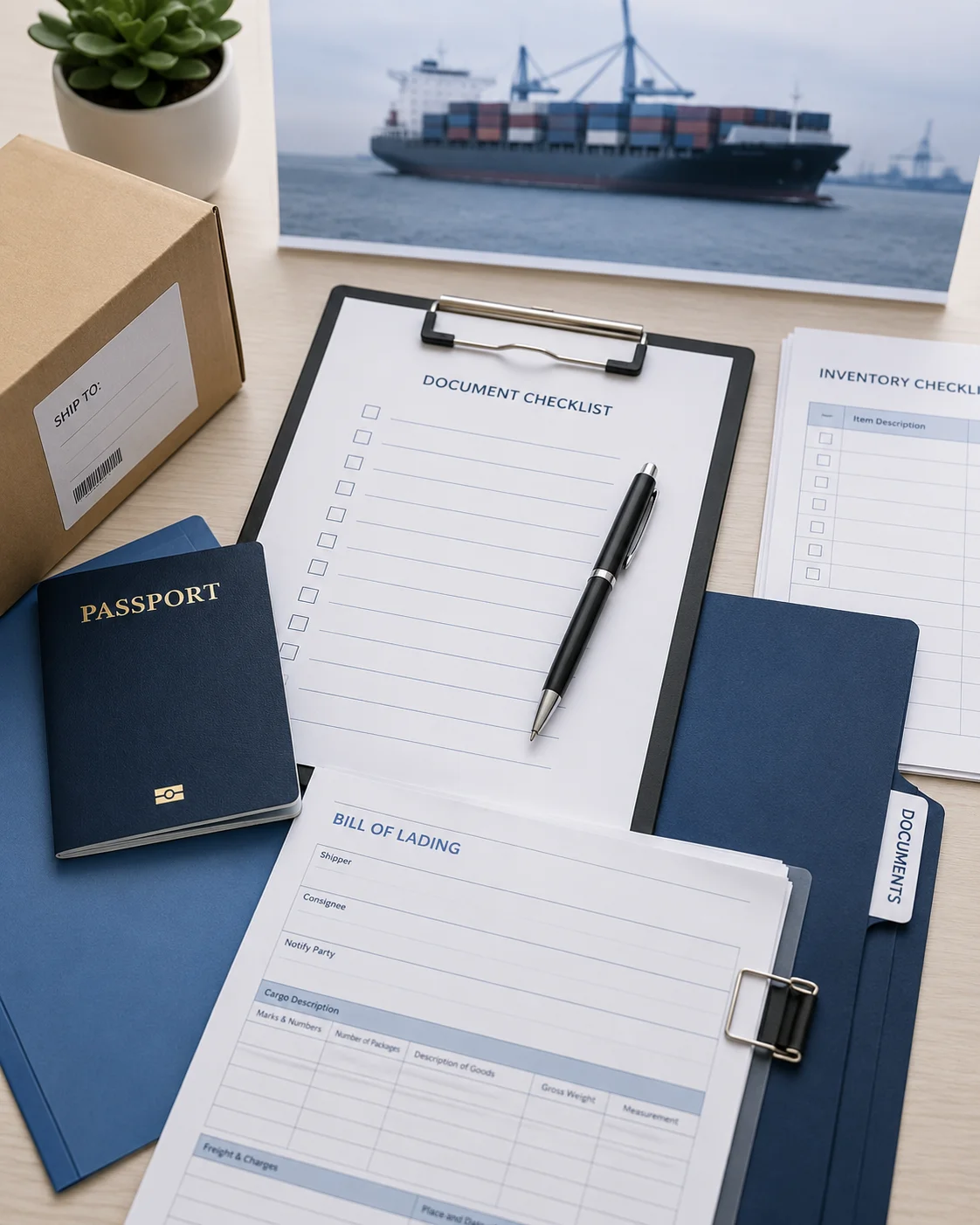
Documents required for importing used household goods, personal effects, and related shipments.
- Copy of passport
- Packing list / detailed inventory (with values and descriptions)
- Telex release bill of lading or copy of air waybill (AWB)
- Customs declaration form (stamped and signed by Russian Customs at the time of the owner's arrival -- required for returning citizens claiming duty-free import of unaccompanied baggage)
- Power of attorney (must be notarized by a Russian notary)
- Copy of passport
- Copy of valid visa
- Telex release bill of lading or copy of AWB
- Detailed inventory or pro-forma invoice
- Letter of employment on company letterhead, addressed to Russian authorities
- Customs declaration form
- Registration with the Federal Migration Service (FMS)
- Power of attorney (notarized by a Russian notary)
- Copy of diplomatic passport, diplomatic visa, and diplomatic card
- Copy of accreditation card
- Packing list / detailed inventory
- Telex release bill of lading or copy of AWB
- Power of attorney (on embassy letterhead)
- Letter on embassy letterhead addressed to Russian authorities
Specific Information
Russia applies customs duties to virtually all non-diplomatic household goods shipments. There is no general duty-free transfer-of-residence exemption for foreign nationals comparable to those found in EU countries. The standard rate for non-diplomatic personal effects is EUR 4 per kilogram or 30% of the CIF (cost, insurance, freight) value, whichever is higher.
All inbound non-diplomatic shipments are subject to customs declaration for each Harmonized System (HS) code. The cost of the customs declaration is determined during clearance. Payment is made in Russian rubles (RUB) directly to the Federal Customs Service; the exchange rate applied is the Russian Central Bank rate on the day of import clearance. Budget additional funds to account for exchange rate movement between booking and clearance -- payment processing through the FTS typically takes 3 to 4 working days.
The detailed inventory must include photographs and declared values for all works of art, antiques, or objects of cultural significance. For each artwork, the inventory must specify value, dimensions, author, year or period, and materials.
For returning Russian citizens who carried a Customs declaration form on departure, the form must be presented upon re-entry with Customs stamp and signature in order to qualify for duty-free treatment of unaccompanied baggage.
The power of attorney must be executed before a Russian notary. For diplomatic shipments, it may instead be issued on embassy letterhead.
Shipments arriving before the owner should be coordinated carefully. Pre-arrival importation is technically possible but involves additional guarantees and procedural complexity -- contact the destination agent for current requirements.
ISPM 15 compliance is required for all solid wood packing materials.
Prohibited & Restricted Items
Prohibited Items
The following items are prohibited from import into Russia:
- Weapons of all kinds (without proper permits and licenses) [PERMIT REQUIRED]
- Ammunition and explosives (without authorization) [PERMIT REQUIRED]
- Narcotics and psychotropic substances
- Pornographic materials
- Toxic, radioactive, and biologically dangerous materials
- Flora and fauna protected under CITES (Convention on International Trade in Endangered Species) [CITES]
- Technical receiving apparatus operating at frequencies above 9 kHz (without authorization) [PERMIT REQUIRED]
- Goods originating in countries subject to Russian counter-sanctions (product categories and country lists subject to change -- confirm with destination agent)
- Printed materials, audio-visual content, or other media deemed by Russian authorities to undermine state security or public order
Note: Since 2022, Russia has implemented extensive counter-sanctions affecting the import of a broad range of goods from Western countries. Shipments containing items of Western or sanctioned-country origin may be subject to seizure or return. This situation is fluid; always verify with the destination agent prior to booking.
Restricted / Dutiable Items
Personal allowances for travelers entering Russia (accompanied baggage):
Persons aged 21 and older may import up to 2 litres of alcoholic beverages duty-free. Tobacco products: up to 400 cigarettes, or 200 cigarillos, or 100 cigars, or 500 grams of tobacco. If more than one type of tobacco product is carried, only half of each category's allowance applies.
Unaccompanied baggage and household goods shipments:
There is a combined allowance threshold for unaccompanied baggage of 35 kg and/or a customs value of RUB 65,000. Goods exceeding this threshold are subject to customs duties at EUR 4 per kilogram over the limit or 30% of the excess value, whichever is higher.
Currency and valuables:
Currency (cash), precious jewelry, precious metals and stones, and pharmaceutical medicines may only be imported as accompanied baggage and must be declared to customs authorities at the time of the owner's arrival. Currency imports exceeding USD 10,000 (or equivalent) must be declared. Foreign currency may be imported freely but amounts above the declaration threshold require documentation. Export of currency is subject to separate restrictions.
Firearms and ammunition:
Subject to strict licensing and permit requirements. See Prohibited Items section for firearms imported without authorization.
Importing a Used Personal Vehicle
Required Documents
- Original technical passport (vehicle registration document)
- Telex release bill of lading or copy of AWB
- Original customs declaration
- Pro-forma invoice
- Purchase document (proof of ownership)
- Employment confirmation letter (for non-citizens)
Specific Information
A customs-cleared vehicle must have its customs declaration completed before it can be registered with the Russian Ministry of Internal Affairs (MVD). This declaration is a mandatory prerequisite for registration.
Temporary import of a personal vehicle is available only to foreign citizens and is limited to the duration of the owner's visa -- with a maximum of 12 months. Temporary import vehicles may not be transferred to Russian citizens or left in Russia beyond the visa period.
Permanent import of a vehicle is subject to significant customs duties and excise taxes, which vary depending on engine displacement, vehicle age, and customs value. The calculation is complex; members should confirm current duty rates with the destination agent at the time of booking, as these rates are periodically revised.
Foreign vehicles must meet Russian technical standards. Older vehicles from markets where emissions and safety standards differ from Russian norms may require technical inspection or modification before registration.
Pets
- Veterinary health certificate (issued no more than 10 days before the pet's arrival in Russia)
- Certificate of vaccination (including valid rabies vaccination)
- Pet passport (where applicable)
- Import permit from the Veterinary Department of the Russian Ministry of Agriculture (required for all animals other than domestic cats and dogs)
Dogs and cats do not require a separate import permit, but all other animals -- including birds, reptiles, and exotic pets -- require advance authorization from the Russian Veterinary Department of the Ministry of Agriculture (Rosselkhoznadzor). This permit must be arranged before shipment.
The veterinary health certificate must be issued by an accredited veterinarian within 10 days of the animal's arrival date. It must be endorsed by the official national veterinary authority of the originating country.
Rabies vaccination must be current. Russia requires at least a 30-day post-vaccination waiting period before entry -- pets vaccinated less than 30 days before travel may be refused entry or placed in quarantine. Owners should verify current waiting period requirements with the destination agent, as these are subject to change.
Microchipping is strongly recommended and may be required depending on the country of origin. The microchip should comply with ISO standard 11784/11785.
For imports from countries with active disease outbreaks, Rosselkhoznadzor may impose additional testing or quarantine requirements. Confirm current import conditions with the destination agent before travel.
Consignment Instructions
Recommended: Contact the destination agent to ensure all requirements have been met prior to import, especially for differences regarding air, sea, and road shipments. Given the significant changes to Russia's customs environment since 2022, advance coordination with a trusted in-country partner is essential.
All shipments require a detailed inventory, including values for each item. Inventories should be prepared carefully -- inaccurate or incomplete inventories can lead to delays, inspections, or penalties.
Currency exchange risk is a significant factor in duty calculations. The customs duty (where applicable at EUR 4/kg or 30% CIF) is assessed at the Russian Central Bank rate on the day of clearance. Because payment takes 3 to 4 working days to process, owners should deposit additional funds above the calculated amount to cover exchange rate movement.
Shipments containing artworks, antiques, or culturally significant objects are subject to heightened scrutiny and require detailed documentation in the inventory (see Household Goods section above). Items of cultural value may require export clearance from the originating country and import authorization from Russian customs.
There is no standard duty-free transfer-of-residence regime for non-diplomats. Members should advise clients to budget realistically for customs duties, which can be substantial.
International sanctions affect both the movement of goods into Russia and the ability of Western freight and banking networks to facilitate transactions. Some carriers, freight forwarders, and banks have suspended Russia operations. Confirm capacity and routing with the destination agent well in advance of shipment.
Cultural & Other Information
Russia is the world's largest country by land area, spanning eleven time zones across Eastern Europe and northern Asia. Moscow is the capital and largest city; St. Petersburg is the second-largest. The official language is Russian and the currency is the Russian ruble (RUB).
Since February 2022 and the invasion of Ukraine, Russia has been subject to extensive international sanctions from the United States, European Union, United Kingdom, and other countries. These sanctions affect banking, shipping, and the movement of goods and significantly complicate the logistics of international relocations. Many IAM and FIDI members have suspended or restricted service to and from Russia. Members should assess their capacity and compliance obligations carefully before accepting Russia-origin or Russia-destination shipments.
Reference links:
- OpenFactBook -- Russia
- Wikipedia -- Russia
- Federal Customs Service of Russia (FTS) -- Russian language only; inaccessible from most Western networks
- Rosselkhoznadzor (Federal Service for Veterinary and Phytosanitary Surveillance)
- MID.ru -- Russian Ministry of Foreign Affairs (Embassies Abroad)
- EmbassyPages -- Foreign Embassies in Russia
Useful resources