

Country Guides
Saint Lucia

Explore sections
Guide Details
Household Goods
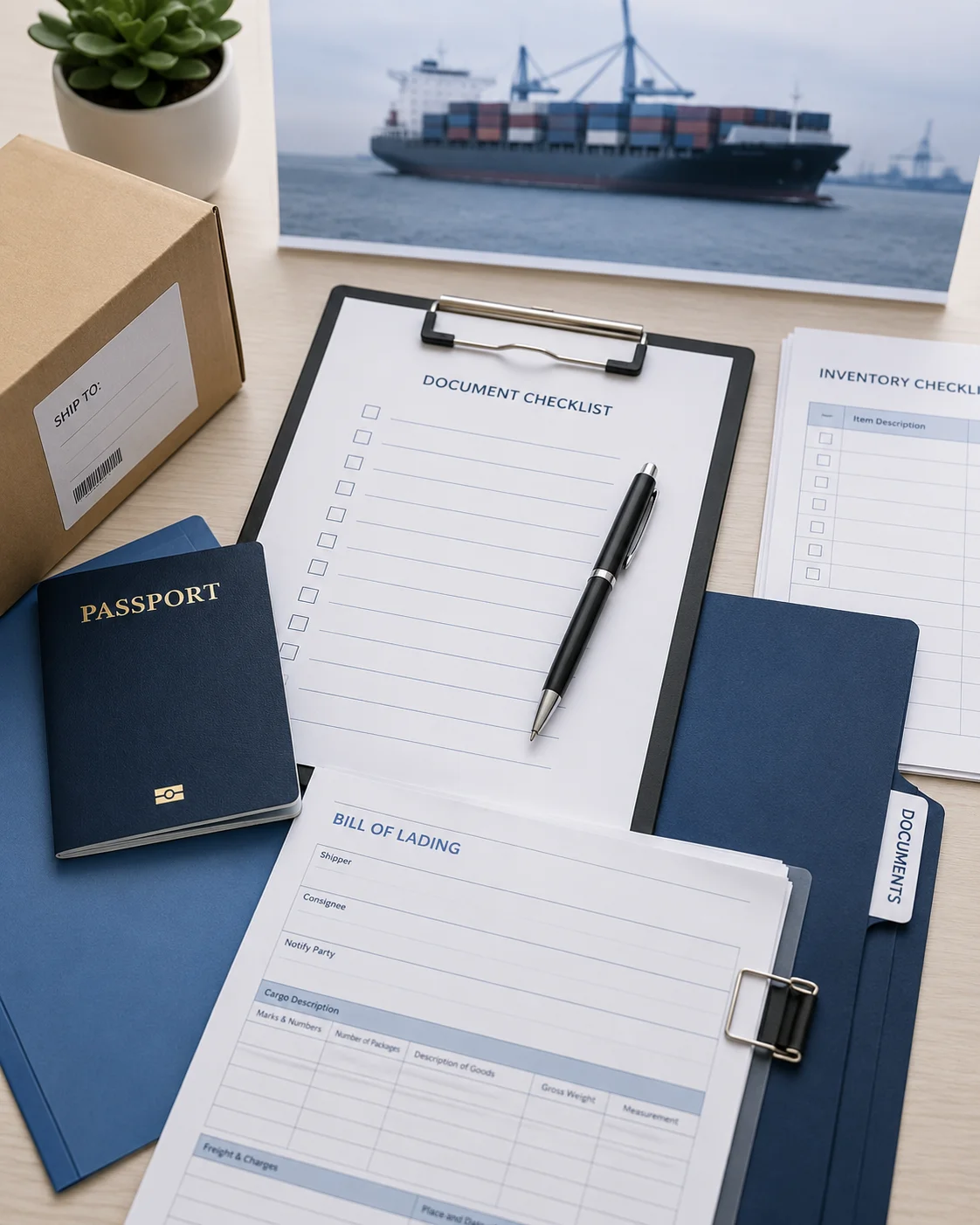
Documents
Documents required for importing used household goods, personal effects, and related shipments.
- Passport
- Original bill of lading (OBL) or air waybill (AWB)
- Detailed inventory in English, including serial numbers for all electrical devices and appliances
- Letter from the Ministry of Foreign Affairs (diplomats only)
Specific Information
Saint Lucia offers duty-free import of used household effects under two pathways: general used goods exemption and the returning nationals program.
General used goods exemption: Household effects that have been in the owner's use and possession for at least 12 months, are not intended for resale or exchange, and are imported within 3 months of the owner's arrival may be imported free of import duty and consumption tax. Note that a 5% customs service charge and a 1.5% environmental levy remain payable even on duty-exempt shipments. The owner must sign a declaration before a Customs officer at the time of clearance.
Returning nationals: A returning national is defined as a Saint Lucian citizen who has lived abroad continuously for a minimum of 10 years. Returning nationals may import personal effects (used or new) duty-free under the Customs returning nationals program. Tools of the trade, musical instruments, and professional equipment may also qualify for exemption for returning nationals. Contact the Saint Lucia Customs and Excise Department or the destination agent for the full list of applicable exemptions and documentation required for this category.
New goods, gifts, and souvenirs within a shipment are subject to applicable duties. Bicycles are dutiable regardless of age. Gifts and souvenirs of a value not exceeding EC$270 may be exempt from duty as a personal baggage allowance, claimable once per year and not applicable to alcohol, tobacco, or commercial goods.
A 6% customs service charge (updated: currently listed as 5% service charge plus 1.5% environmental levy by Saint Lucia Customs) is payable on all non-exempt imports. Confirm the current rate with the destination agent at time of booking.
All solid wood packing materials must comply with ISPM 15 phytosanitary standards.
Prohibited & Restricted Items
Prohibited Items
The following items are prohibited from import into Saint Lucia:
- Counterfeit currency and coins
- Food unfit for human consumption
- Pornographic materials (indecent or obscene prints, photographs, videos, or publications)
- Illegal drugs, narcotics, and drug paraphernalia (opium, morphine, cocaine, LSD, marijuana, etc.)
- Matches containing white or yellow phosphorus
- Items associated with the occult, black magic, or witchcraft
- Products made from endangered species protected under CITES [CITES]
- Counterfeit goods (intellectual property infringement)
- Air guns and similar firing devices [PERMIT REQUIRED if applicable]
- Condoms manufactured by Monkok Latix of South Korea
- Knives and other dangerous blades [PERMIT REQUIRED]
- Shaving brushes made in or exported from Japan
- Any pistol or apparatus in the form of a pen or pencil capable of firing a shot cartridge
Restricted / Dutiable Items
Accompanied baggage allowances (duty-free):
Travelers aged 18 and over may bring in duty-free: 40 fluid ounces (approximately 1.18 litres) of alcohol; 200 cigarettes or 50 cigars or 2 kg of smoking tobacco.
Gifts and souvenirs valued at EC$270 or less are exempt, claimable once per year and not applicable to alcohol or tobacco.
In household goods shipments:
New furniture and household goods are subject to import duties and require an original signed commercial invoice.
Precious metal objects (jewelry, coins, etc.) are dutiable unless they form part of a legitimate household goods shipment that qualifies for exemption.
Tins and food items are subject to duties.
Machines, appliances, and spare parts are dutiable.
Gifts, souvenirs, wedding trousseaux, and inheritances included in a shipment are subject to duties unless they qualify under the returning nationals exemption.
Firearms and ammunition:
Require a permit from the Commissioner of Police. The application requires a Criminal Record Form, two passport-sized photographs, and a medical certificate. Processing can take one to six weeks. Members should advise clients to begin the firearms permit process well in advance of shipment.
Plants:
A Phytosanitary Certificate is required for all plant material. Contact the destination agent to confirm current plant import restrictions, as Saint Lucia may restrict or prohibit specific species.
Importing a Used Personal Vehicle
Required Documents
- Title / registration document (from country of origin)
- Original purchase invoice
- Original bill of lading
Specific Information
Motor vehicles are generally subject to import duty and taxes. However, returning nationals may import one vehicle duty-free and tax-free, subject to all of the following conditions being met:
- The vehicle does not exceed a CIF (cost, insurance, and freight) value of USD 30,000 for a new vehicle.
- The returning national arrives accompanied by the vehicle, or the vehicle arrives within 3 months before or after the owner's return.
- Alternatively, the vehicle may be purchased in Saint Lucia within 3 months of the returning national's arrival.
- The vehicle may not be sold, exchanged, or otherwise disposed of within 3 years of importation.
Vehicles not qualifying under the returning nationals program are subject to the full schedule of import duties. Motor vehicles designed for use on both land and water are also subject to duties. Confirm current duty rates and eligibility criteria with the destination agent before committing to vehicle import.
Saint Lucia drives on the left. Right-hand drive vehicles are the norm.
Pets
- Import permit issued by the Veterinary Authority of Saint Lucia (Veterinary and Livestock Services Division, Ministry of Agriculture) -- must be obtained before travel **For all countries:**
- ISO-compliant microchip (ISO 11784/11785) -- must be implanted before vaccination **For all countries:**
- Rabies vaccination certificate (administered at least one month before export, at or over 12 weeks of age) **For all countries:**
- Veterinary health certificate issued by the government veterinary authority of the originating country, including records of all vaccinations and parasite treatments **For all countries:**
- Treatment records for internal parasites (including tapeworm) and external parasites (fleas and ticks), administered no less than 14 days before export **For all countries:**
- Rabies antibody titer test (FAVN) carried out by an approved laboratory, no less than 30 days after the date of rabies vaccination, showing a titer of at least 0.5 IU/ml **Additional requirements for Category 2 countries (all countries not on the rabies-free list):**
- The pet may not enter Saint Lucia until 3 months have passed from the date the blood sample was taken for the successful titer test **Additional requirements for Category 2 countries (all countries not on the rabies-free list):**
- Original laboratory results must accompany the health certificate **Additional requirements for Category 2 countries (all countries not on the rabies-free list):**
Saint Lucia classifies countries into two categories based on rabies status. Category 1 (rabies-free) includes: Antigua and Barbuda, Barbados, Bermuda, British Virgin Islands, Cayman Islands, Dominica, Jamaica, Montserrat, Saint Kitts and Nevis, Saint Vincent and the Grenadines, Turks and Caicos Islands, Australia, Fiji, French Polynesia, Hawaii, Hong Kong, Iceland, Japan, Malaysia, New Caledonia, New Zealand, Republic of Ireland, Singapore, Saint Helena, Sweden, Taiwan, United Kingdom, Uruguay, and Vatican City State. All other countries are Category 2.
Category 2 importers face a significantly longer timeline due to the 30-day post-vaccination waiting period before the titer test can be taken, plus the mandatory 3-month wait after a successful blood test result before the pet may enter Saint Lucia. Pet owners originating from Category 2 countries should begin the import process at least 5 to 6 months before the intended travel date.
Microchipping must precede vaccination. All documentation must include the microchip number. If the microchip is not ISO-compliant, the owner must provide a compatible scanner at the point of entry.
Dogs must be vaccinated against Canine Distemper, Leptospirosis, Hepatitis/Adenovirus, Parainfluenza, and Parvovirus, not less than 14 days before export. Testing for Heartworm, Lyme Disease, Leishmaniasis, and Nipah/Hendra virus is required where the originating country is endemic for these diseases; tests must be done within 14 days of export.
Cats must be vaccinated against Feline Leukaemia, Feline Rhinotracheitis, Feline Calicivirus, Feline Panleukopenia, and Feline Pneumonitis, not less than 14 days before export.
The Veterinary and Livestock Services Division must be notified of the port of entry, date, time, and flight number at least 3 days before arrival. Pets must not be in contact with other animals during transport unless those animals hold equivalent import permits.
Animals failing to meet import requirements or entering without a permit will be refused entry or euthanized. All costs are the owner's responsibility.
The import permit application must be submitted to the Veterinary and Livestock Services Division in advance and includes evidence of compliance with all the above requirements. Allow adequate lead time for permit processing.
Consignment Instructions
Recommended: Contact the destination agent to ensure all requirements have been met prior to import, especially for differences regarding air and sea shipments.
Original bills of lading are required for household goods clearance. Ensure the inventory is detailed, accurate, and in English, with serial numbers for all electrical and electronic items. Discrepancies between the inventory and actual shipment contents can result in delays and penalties.
The duty-free exemption for used household effects requires that goods have been in the owner's use and possession for at least 12 months and that they arrive within 3 months of the owner's arrival. The owner must be present at clearance to sign the declaration before a Customs officer. Members should plan shipping timelines accordingly to meet the 3-month window.
Note that even duty-exempt shipments attract a 5% customs service charge and a 1.5% environmental levy, payable at clearance. Clients should budget for these charges.
Returning nationals should confirm their eligibility and gather supporting documentation of continuous residence abroad (minimum 10 years) before shipment. The destination agent and the Saint Lucia Customs and Excise Department can advise on current requirements.
For diplomatic shipments, a letter from the Ministry of Foreign Affairs is required at time of clearance.
Cultural & Other Information
Saint Lucia is an island nation in the eastern Caribbean Sea, part of the Lesser Antilles. The capital and largest city is Castries. English is the official language; Saint Lucian Creole French (Kwéyòl) is also widely spoken. The currency is the Eastern Caribbean dollar (XCD), which is pegged to the US dollar at a fixed rate of EC$2.70 to USD$1.
Saint Lucia is a member of CARICOM and the Organisation of Eastern Caribbean States (OECS). The economy is heavily dependent on tourism and, to a lesser extent, banana cultivation. Saint Lucia is notable for two Nobel laureates: Sir Arthur Lewis (Economics, 1979) and Derek Walcott (Literature, 1992), an exceptional distinction for a nation of approximately 168,000 people.
Saint Lucia assumed the Chairmanship of CARICOM in July 2026.
Reference links:
Useful resources