

Country Guides
Serbia

Start here
Overview
Explore sections
Guide Details
Household Goods
Documents
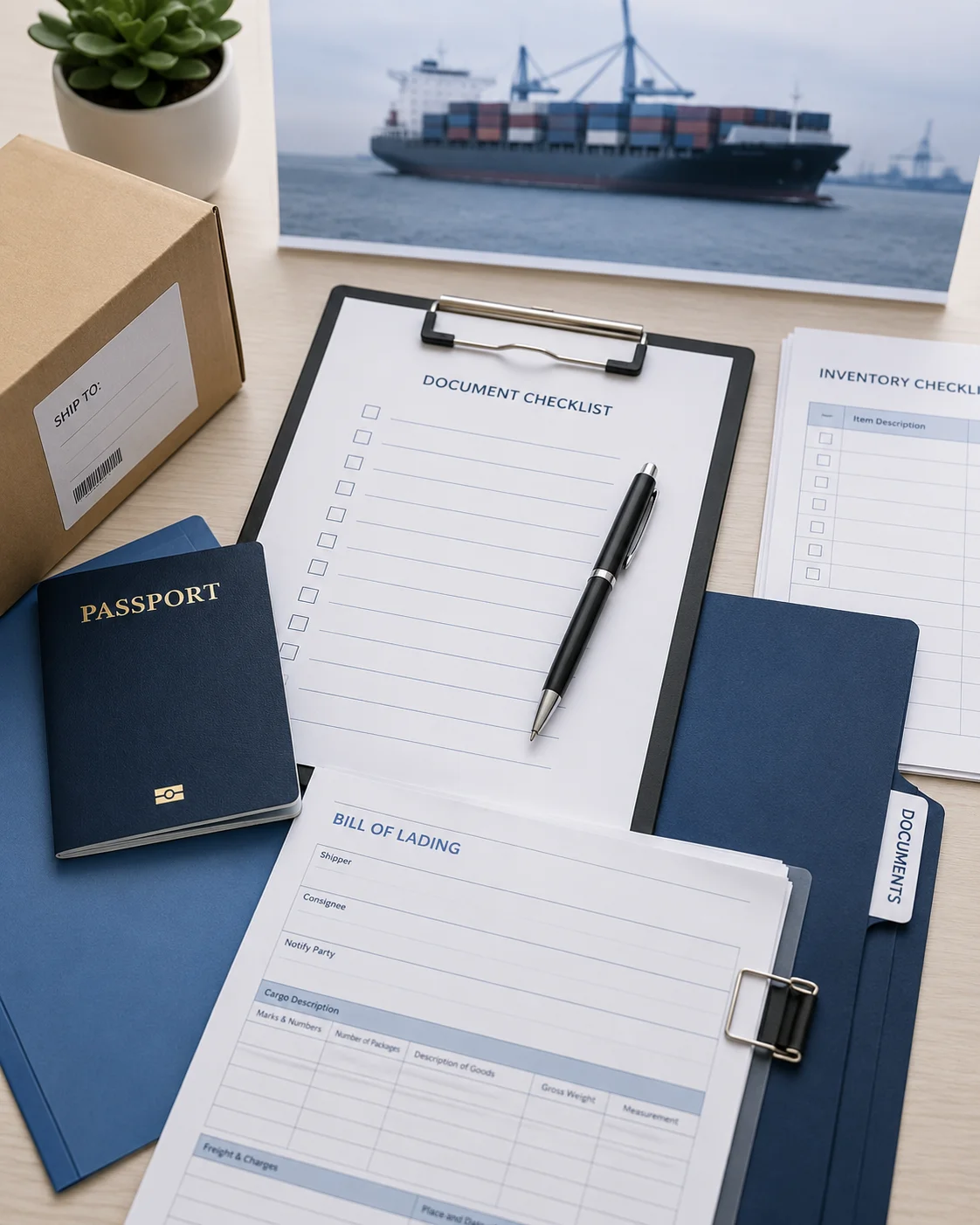
Documents required for importing used household goods, personal effects, and related shipments.
- Copy of passport
- Packing list in English or Serbian
- Detailed inventory with quantity of each item type
- List of books (title and author, in Word or Excel format)
- List of electrical items (brand, model, and serial number, in Word or Excel format)
- List of paintings (title, author, and technique used, in Word or Excel format) with photographs of each painting sent separately; appraisals required where applicable; same requirements apply to musical instruments, violins, pianos, and other cultural items
- Original bill of lading (OBL) or air waybill (AWB)
- Certificate from a local police station for foreigners (*uverenje*) confirming the client is authorized to import household goods -- can only be obtained if the temporary resident visa is valid for more than 3 months
- Power of attorney for customs clearance, on company letterhead, signed and stamped, in the name of the destination agent's customs representative
- Cost of transport to Serbia (from origin)
- Letter of employment / copy of work contract
- Copy of passport (original must be available on the day of import; most recent entry stamp into Serbia must not be older than 12 months)
- Copy of personal ID card with the address for delivery
- Packing list in English or Serbian
- Detailed inventory with quantities and values of each item type
- List of books (total number plus title/author for any books of value)
- List of electrical items (brand, model, serial number)
- List of paintings (title, author, technique) with photographs; appraisals where applicable
- Power of attorney for customs clearance, signed by the client
- Cost of transport to Serbia
- Certificate from the Serbian embassy in the country of origin confirming that the owner worked abroad for more than 2 years (required to claim duty-free threshold -- see Specific Information)
- Copy of passport (page with photo and personal data)
- Packing list in English or Serbian
- Diplomatic protocol from the embassy or organization (number of items and gross weight must match shipping documents)
- LNPDV certificate from the embassy or organization
- Power of attorney for customs clearance, on embassy/organization letterhead, stamped and signed
Specific Information
Foreign nationals (temporary import): Goods are imported on a temporary, tax-free basis tied to the owner's visa/temporary residence. When the visa is extended, the temporary import must be extended simultaneously by obtaining a new police certificate. If the client leaves Serbia permanently, the temporary import must be formally closed -- either by re-exporting the goods or by paying the applicable duties and taxes at that time. Food, alcohol, and all consumables cannot be imported on a temporary basis. The shipment is unloaded into a customs warehouse; the clearance process typically takes approximately 5 working days.
Returning Serbian citizens: If the owner worked abroad continuously for more than 2 years and provides the certificate from the Serbian embassy, the following duty-free thresholds apply: up to EUR 20,000 in total goods value for persons who worked abroad up to 10 years; unlimited duty-free value for persons who worked abroad for more than 10 years. These thresholds are confirmed by the Serbian Ministry of Foreign Affairs, though some sources cite a lower EUR 10,000 threshold. Members should verify the current applicable limit with the destination agent and the Serbian Customs Administration at the time of booking, as the threshold may depend on specific regulatory interpretation.
Foreign nationals with passenger vehicle transport: For household goods transported in a passenger vehicle with a total value not exceeding EUR 3,000, a simplified customs procedure applies at the border using a 10% flat rate plus VAT, without a full customs declaration.
The certificate from the police station (*uverenje*) requires that the temporary resident visa be valid for more than 3 months at the time of application. Members should advise clients to begin the certificate application process well before the shipment departs origin, as timing is critical.
If the owner cannot provide proof of working abroad for more than 2 years, the import is fully taxable. Duties and taxes are assessed on the CIF value (goods value plus transport cost).
The shipment is unloaded into a customs warehouse for clearance unless the client worked for the Serbian Ministry of Foreign Affairs abroad (in which case direct delivery applies). Clearance typically takes approximately 5 working days, but can range from 3 working days to several weeks.
All solid wood packing materials must comply with ISPM 15 phytosanitary standards.
Duties & Taxes
Serbia processes household goods shipments under three distinct categories -- temporary import (foreign nationals on work visa), permanent import by returning Serbian citizens, and diplomatic import. The applicable category determines the documents required and the duty/tax treatment.
Prohibited & Restricted Items
Prohibited Items
The following items are prohibited from import into Serbia:
- Illegal drugs and narcotics
- Weapons and ammunition (without authorization) [PERMIT REQUIRED for authorized imports]
- Pornographic materials
- Pesticides
- Toxic and harmful materials
- Counterfeit and pirated goods
- Products from endangered species protected under CITES [CITES]
- Consumable goods (food, alcohol, tobacco, etc.) in unaccompanied household goods shipments on temporary import basis
Restricted / Dutiable Items
Accompanied baggage allowances (duty-free):
Alcohol: 1 litre of spirits, or 1 litre of sparkling or liqueur wines, or a combination, plus 1 litre of other wines. Tobacco: 50 cigarettes, 25 cigarillos, 10 cigars, or 50 g of tobacco, or a proportional combination. Perfume: 50 ml; eau de toilette: 25 ml.
Currency: Any amount of foreign currency may be brought into Serbia. Amounts of EUR 10,000 or more (in any currency or combination of currencies) must be declared to Customs on arrival. This reporting requirement applies to both entry and exit from Serbia.
Cultural artifacts and artworks: Require a permit from the Serbian Ministry of Culture. Paintings must be accompanied by photographs and professional appraisals. Detailed lists are required for all cultural items, musical instruments, and similar goods.
Medications: A prescription or letter from a physician is required for personal-use medications. Customs may request the prescription at clearance.
Plants: Two phytosanitary inspections are required -- one at the Serbian border and one at the destination city. Not all customs offices have phytosanitary inspection equipment, which may cause transport delays. Always confirm plant import procedures with the destination agent in advance.
Radios and radio communication equipment: May require a license from the Republic Agency for Electronic Communications (RATEL). [PERMIT REQUIRED]
Firearms (hunting): May be imported with a permit from the Ministry of Interior, or when the owner is on an organized hunting trip through the Hunting Association of Serbia. [PERMIT REQUIRED]
Importing a Used Personal Vehicle
Required Documents
- Copy of passport **For Foreign Nationals (Temporary Import)**
- Certificate from the police station (*uverenje*) confirming the client is authorized to import -- requires temporary resident visa valid for more than 3 months **For Foreign Nationals (Temporary Import)**
- Power of attorney for customs clearance, on company letterhead **For Foreign Nationals (Temporary Import)**
- Original registration card **For Foreign Nationals (Temporary Import)**
- Copy of original purchase invoice **For Foreign Nationals (Temporary Import)**
- Cost of transport to Serbia **For Foreign Nationals (Temporary Import)**
- Certificate confirming the vehicle engine meets minimum EURO III emissions standard -- issued by the Serbian Standardization Institute or a COC (Certificate of Conformity) from the manufacturer or car dealer **For Foreign Nationals (Temporary Import)**
- Import Certificate from the Serbian Traffic Safety Agency (STSA) -- must be applied for and obtained by the consignee personally before the shipment is dispatched from origin, as STSA may decline the application **For Foreign Nationals (Temporary Import)**
- All export documentation from the origin country **For Foreign Nationals (Temporary Import)**
- Copy of passport and personal ID card **For Returning Serbian Citizens**
- Original registration card **For Returning Serbian Citizens**
- Purchase invoice **For Returning Serbian Citizens**
- Certificate confirming EURO III standard (from Serbian Standardization Institute) **For Returning Serbian Citizens**
- Cost of transport to Serbia **For Returning Serbian Citizens**
- Copy of all export documentation from origin **For Returning Serbian Citizens**
- Copy of passport **For Diplomats**
- Diplomatic protocol from the embassy/organization (all vehicle data must match transport documents) **For Diplomats**
- LNPDV certificate from the embassy/organization **For Diplomats**
- Power of attorney for customs clearance, on embassy letterhead **For Diplomats**
- Registration card **For Diplomats**
- Cost of transport to Serbia **For Diplomats**
Specific Information
The following vehicle data must be included in all documentation: type, model, chassis serial number, engine serial number, number of doors and seats, color, weight, engine displacement (ccm), engine power (kW), and maximum permitted gross weight.
Only diplomats may import vehicles that do not meet the EURO III emissions standard (whether for temporary or permanent import).
Temporary import of a vehicle is tax-free but tied to the owner's visa/temporary residence. When the client permanently leaves Serbia, the temporary import must be closed -- the vehicle must be re-exported, or the full duties and taxes paid in Serbia.
For returning Serbian nationals, vehicle import is taxable. Serbian Customs maintains its own internal price list for all vehicle models worldwide; if the declared purchase invoice shows a lower value than the customs price book, the customs authority's price will be used for duty assessment.
The Import Certificate from the Serbian Traffic Safety Agency (STSA) is a critical document -- it must be obtained before the vehicle is shipped. STSA may reject the application, resulting in the vehicle being unable to enter Serbia. Members must advise clients to obtain STSA approval before committing to shipment.
Vehicle customs clearance at the warehouse typically takes approximately 5 working days.
Pets
- ISO-compliant microchip (ISO 11784/11785, 15-digit non-encrypted) -- implanted before rabies vaccination; a tattoo is also accepted if clearly legible and vaccination was administered after the tattoo **For all origins:**
- Current rabies vaccination, administered at the same time as or after microchipping; for primary vaccination, the pet must wait at least 21 days before travel (from EU/Annex 1/Annex 2 countries); for Annex 3 (high-risk) countries, see below **For all origins:**
- Veterinary health certificate or EU pet passport (see below for format by origin) **For all origins:**
- The pet must travel with the owner or within 5 days of the owner; more than 5 pets per owner's passport constitutes a commercial transport with additional requirements **For all origins:**
- Rabies antibody titer test administered no sooner than 30 days after the rabies vaccination, at an EU-approved laboratory; results must show at least 0.5 IU/ml; the pet may not enter Serbia until 3 months after the blood draw date; original laboratory results must accompany the health certificate **Additional requirements for Annex 3 countries (all countries not on the EU rabies-controlled list):**
- The titer test is valid for the life of the pet if rabies vaccination boosters are kept current **Additional requirements for Annex 3 countries (all countries not on the EU rabies-controlled list):**
Serbia's pet import requirements align closely with EU standards, categorized by the origin country's rabies classification.
Serbia is classified as a high-rabies-risk country by the EU and WHO. Pets returning to an EU member state after a stay in Serbia will require a titer test for re-entry into the EU -- owners should plan for this before travel.
Quarantine may be required when a pet's stay exceeds 30 days. Contact the destination agent and the nearest Serbian embassy or consulate to confirm current quarantine requirements.
From EU member states and Annex 1/2 countries, a valid government-issued EU pet passport is accepted as the health certificate for up to 5 animals. From all other (Annex 3) countries, a non-commercial EU health certificate issued by a licensed veterinarian and endorsed by a government veterinarian within 10 days of entry is required.
As of January 2025, restrictions on imports and transits through Germany and Hungary of all live animals were implemented due to a foot-and-mouth disease (FMD) outbreak. Routing through these countries may be affected -- confirm current transit country conditions with the destination agent.
Serbia does not publish a banned breed list.
Consignment Instructions
Recommended: Contact the destination agent to ensure all requirements have been met prior to import, especially for differences regarding air and sea/road shipments.
Serbia's household goods customs procedures are document-intensive and vary significantly by importer category (foreign national, returning citizen, diplomat). Members must identify the correct category for each client before preparing documentation. All document preparation should be done in close coordination with the destination agent.
The police certificate (*uverenje*) for foreign nationals is time-sensitive and must be obtained after arrival in Serbia with a valid temporary resident visa of more than 3 months. This means the client must be in Serbia, with visa in hand, before the certificate can be obtained -- and the certificate must be obtained before the shipment can clear customs. Plan shipment timing around this constraint.
For returning Serbian citizens claiming the duty-free exemption, the embassy certificate must be issued by the Serbian diplomatic mission in the country where the client worked. This certificate confirms continuous employment abroad for 2+ years and must be presented to customs along with the original passport on the day of clearance.
Shipments are unloaded into a customs warehouse for clearance (except for returning Ministry of Foreign Affairs employees). Clearance typically takes 5 working days but can be significantly longer. Storage/demurrage charges accrue during this time; members should advise clients accordingly.
All lists (books, paintings, electrical items) must be prepared in advance as Word or Excel files and sent to the destination agent for formatting to Serbian customs requirements. These should not be prepared at the last minute.
Cultural & Other Information
Serbia is a landlocked country in the central Balkans. The capital and largest city is Belgrade, one of southeastern Europe's major urban centers. Serbian (written in both Cyrillic and Latin script) is the official language. The currency is the Serbian dinar (RSD). Serbia is a candidate country for EU membership and has progressively aligned much of its customs and trade legislation with EU standards, though it remains outside the EU and the EU customs union.
Serbia has strong cultural traditions in art, music, and literature, as well as a rapidly growing technology and startup sector. The country is a significant regional hub for the automotive industry (Stellantis has a major production facility in Kragujevac) and for IT services. Belgrade hosts one of Europe's most active nightlife and festival scenes.
Reference links:
Useful resources