

Country Guides
Seychelles

Explore sections
Guide Details
Household Goods
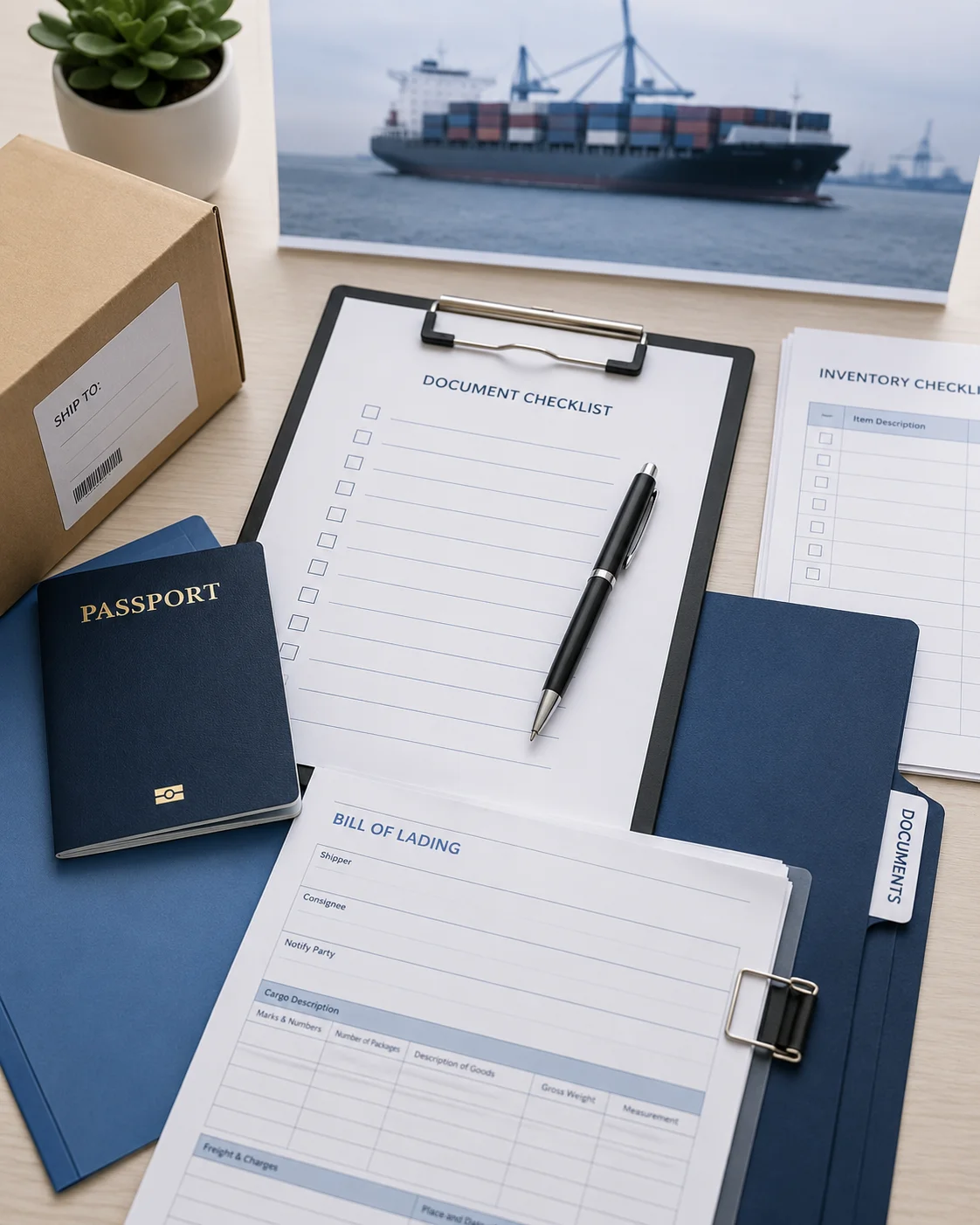
Documents
Documents required for importing used household goods, personal effects, and related shipments.
- Unaccompanied personal effects statement form (obtained from Seychelles Customs)
- Bill of Entry (2 copies)
- Invoice or receipts (proof of purchase/ownership and value)
- Bill of lading or airway bill
- Packing list / list of goods in cargo
- Copy of passport showing most recent entry into Seychelles
Specific Information
Used household effects that have been in the importer's possession and actual use for a minimum of 12 months prior to resuming residence in Seychelles are exempt from customs duties and taxes. The exemption requires that all three conditions are met: ownership, possession, and use. Goods that were owned and possessed but not actually used will not qualify and will be subject to regular duties.
The following categories of importer qualify for the duty-free used household effects exemption: returning Seychellois citizens, expatriates transferring residence, returning students/graduates (Seychellois citizens who have studied abroad continuously for at least 12 months), and other passengers changing residence.
New household items are dutiable at applicable rates. However, passengers accepted by the Commissioner of Customs as transferring their place of residence are entitled to a concession of SCR 1,000 per person on the customs value of new household effects.
Unaccompanied goods (parcels and cargo) for personal use, excluding alcohol and tobacco, are exempt from VAT up to a customs value of SCR 3,000.
VAT of 15% applies to all imported goods, calculated on the CIF value plus applicable customs duties and excise taxes. Importers should budget for VAT even on duty-exempt shipments, as VAT applies regardless of duty status.
Refrigerants and air-conditioning equipment: Seychelles has banned the import of CFC gases (R12/R22) and regulates other refrigerant gases. Importers of refrigerators, freezers, and air-conditioning units must consult the Ozone Unit of the Ministry of Agriculture, Climate Change and Environment before importing any such equipment.
All solid wood packing materials must comply with ISPM 15 phytosanitary treatment standards.
Prohibited & Restricted Items
Prohibited Items
The following items are prohibited from import into Seychelles:
- Illegal drugs, narcotics, and controlled substances
- Pornographic or indecent material
- Firearms and ammunition, including replica firearms (without authorization) [PERMIT REQUIRED]
- Offensive weapons (bombs, grenades, knuckle dusters, tear gas, daggers, whips, etc.)
- Radioactive substances
- Toxic chemicals, including asbestos and dieldrin
- Chlorofluorocarbon (CFC) gases, including R12 and R22
- Counterfeit currency and goods
- Textiles and garments in camouflage design
- Waste and waste products
- Palm plants
- Left-hand drive vehicles
- Endangered species and their derivative products protected under CITES [CITES]
- Plastic utensils and polystyrene boxes (subject to environmental import controls)
Restricted / Dutiable Items
Accompanied baggage allowances (duty-free, persons 18 and over):
Tobacco: 200 cigarettes or 250 g of tobacco. Alcohol: 2 litres of spirits and 2 litres of wine. Perfume/eau de toilette: 200 ml. Personal goods of non-commercial nature up to SCR 5,000 in value (for travelers aged 18 and over); up to SCR 3,000 for travelers under 15.
Currency: Up to SCR 2,000 in local currency may be imported. There is no limit on foreign currency imports, but amounts must be declared if significant.
Plants and plant products: Require an import permit and a phytosanitary certificate from the country of origin. All fruits, vegetables, plants, cuttings, bulbs, and seeds must be declared and presented for biosecurity inspection at the port of entry. A Biosecurity Import Permit (BIP) from the Department of Agriculture is required per consignment.
Meat and meat products, seafood: Require an import permit from the Department of Agriculture/Ministry of Environment, Natural Resources, and Transport.
Firearms, pyrotechnics, and explosives: Require a permit from the Commissioner of Police or the Ministry of Internal Affairs. [PERMIT REQUIRED]
Restricted goods (general): All items on the restricted list require an import permit from the Import and Export Permit Unit of the Ministry of Finance, National Planning and Trade. A valid permit must accompany the goods at import.
Importing a Used Personal Vehicle
Required Documents
- Bill of lading or airway bill
- Original purchase invoice
- Vehicle registration documents (from country of origin)
- Copy of passport
- Import permit (where required -- see Specific Information)
Specific Information
The Motor Vehicle Policy of the Department of Transport governs the import of new and used motor vehicles and vehicle spare parts. The household effects duty exemption explicitly excludes motor vehicles.
Left-hand drive vehicles are prohibited. Seychelles drives on the left, and only right-hand drive vehicles may be imported.
Import conditions, duties, and excise taxes on vehicles depend on vehicle type, age, engine size, and value. Excise tax applies to motor vehicles as an excisable good. Confirm current duty and excise rates with the destination agent before committing to vehicle import, as these rates are set by regulation and subject to revision.
Pets
- ISO-compliant microchip (ISO 11784/11785, 15-digit non-encrypted) -- must be implanted before vaccination; microchip number must appear on all documents
- Rabies vaccination certificate (administered between 30 days and 12 months before entry)
- Rabies antibody titer test result from an approved laboratory, administered more than 30 days after vaccination and within 6 months of travel -- **required for all countries**
- International veterinary health certificate in English or French, issued by a licensed veterinarian and endorsed by the government veterinary authority of the originating country; a second examination must be performed within 48 hours of departure confirming the pet is free of infectious, contagious, and parasitic disease
- Import permit issued by Veterinary Services of Seychelles (advance application required)
- Parasite treatment records (internal and external), administered within 48 hours of travel
Seychelles imposes quarantine on all imported pets. The duration depends on the origin country's rabies classification: 14 days for pets from rabies-free or rabies-controlled countries; 180 days for pets from high-rabies-risk countries. The pet must have continuously resided in the originating country for at least 6 months immediately before shipment (or since birth). The pet's intended stay in Seychelles must be at least 6 months -- pets imported for shorter stays will not be admitted.
Dogs should be vaccinated against distemper, hepatitis, leptospirosis, and parvovirus. Cats should be vaccinated against feline viral rhinotracheitis, panleukopenia, and feline leukemia. Vaccinations must be current at time of entry.
Flights should be direct or transit only through rabies-controlled countries.
Pets must enter through Seychelles International Airport as cargo in an IATA-compliant sealed crate. Prior notice to veterinary officials at the airport is required, particularly for arrivals outside normal business hours.
Breed restrictions: The following breeds are not banned but require proof of spaying or neutering before entry: Akita Inu, Alangu Mastiff, Alano Español, Alsatian (German Shepherd), American Pit Bull Terrier, American Staffordshire Terrier, Argentine Dogo, Bedlington Terrier, Boerboel, Boston Terrier, Bulldog, Bull Mastiff, Bully Kutta, Cane Corso, Canary Dog, Ca de Bou, Doberman, Dogue de Bordeaux, Dogo Sardesco, English Mastiff, Fila Brasileiro, French Bulldog, Great Dane, Gull Dong, Gull Terr, Ireland Staffordshire Bull Terrier, Korea Jindo Dog, Lottatore Brindisino, Neapolitan Mastiff, Rottweiler, Shar Pei, Staffordshire Bull Terrier, Tibetan Mastiff, and Tosa Inu.
Birds: With the exception of the African Grey Parrot (permitted only if it has been a family pet for at least one year), no birds are eligible for import into Seychelles.
Other animals (not dogs or cats) require an import permit and may be subject to CITES restrictions. The Seychelles classifies only cats and dogs as pets for import purposes.
Consignment Instructions
Recommended: Contact the destination agent to ensure all requirements have been met prior to import, especially for differences regarding air and sea shipments.
Seychelles is an archipelago nation in the Indian Ocean. Virtually all household goods shipments arrive by sea through the main port at Victoria, Mahé. Air freight is available at Seychelles International Airport but is used primarily for high-value or time-sensitive items. Shipping connections are less frequent than major continental ports; advance planning is essential.
The duty-free exemption for used household effects requires that goods have been in the owner's actual use for at least 12 months. Receipts and proof of purchase should be retained and produced when requested by customs. The Unaccompanied Personal Effects Statement Form must be submitted with the Bill of Entry.
VAT at 15% applies to all imports, including goods exempt from customs duty. Clients should budget for VAT on their shipment.
Refrigerators, air conditioners, and any equipment containing refrigerant gases require prior consultation with the Ozone Unit before import. This should be flagged early in the move planning process.
For restricted goods, import permits must be applied for in advance through the Ministry of Finance's Import and Export Permit Unit. This unit operates as a one-stop shop but decisions rest with the relevant ministries. Allow adequate lead time.
Cultural & Other Information
The Seychelles is an archipelago of 115 islands in the western Indian Ocean, northeast of Madagascar. The capital is Victoria on the island of Mahé, which is home to the majority of the population of approximately 98,000. Seychelles has three official languages: Seychellois Creole (Kreol), English, and French. The currency is the Seychellois rupee (SCR).
Seychelles is one of Africa's highest-income nations per capita, with an economy centered on tourism and fishing. It is renowned for its unique biodiversity, including the Vallée de Mai nature reserve on Praslin (home to the endemic coco-de-mer palm) and the giant Aldabra tortoise. The country is politically stable and a member of the African Union and the Commonwealth.
Reference links:
Useful resources