

Country Guides
Sierra Leone

Explore sections
Guide Details
Household Goods
Documents
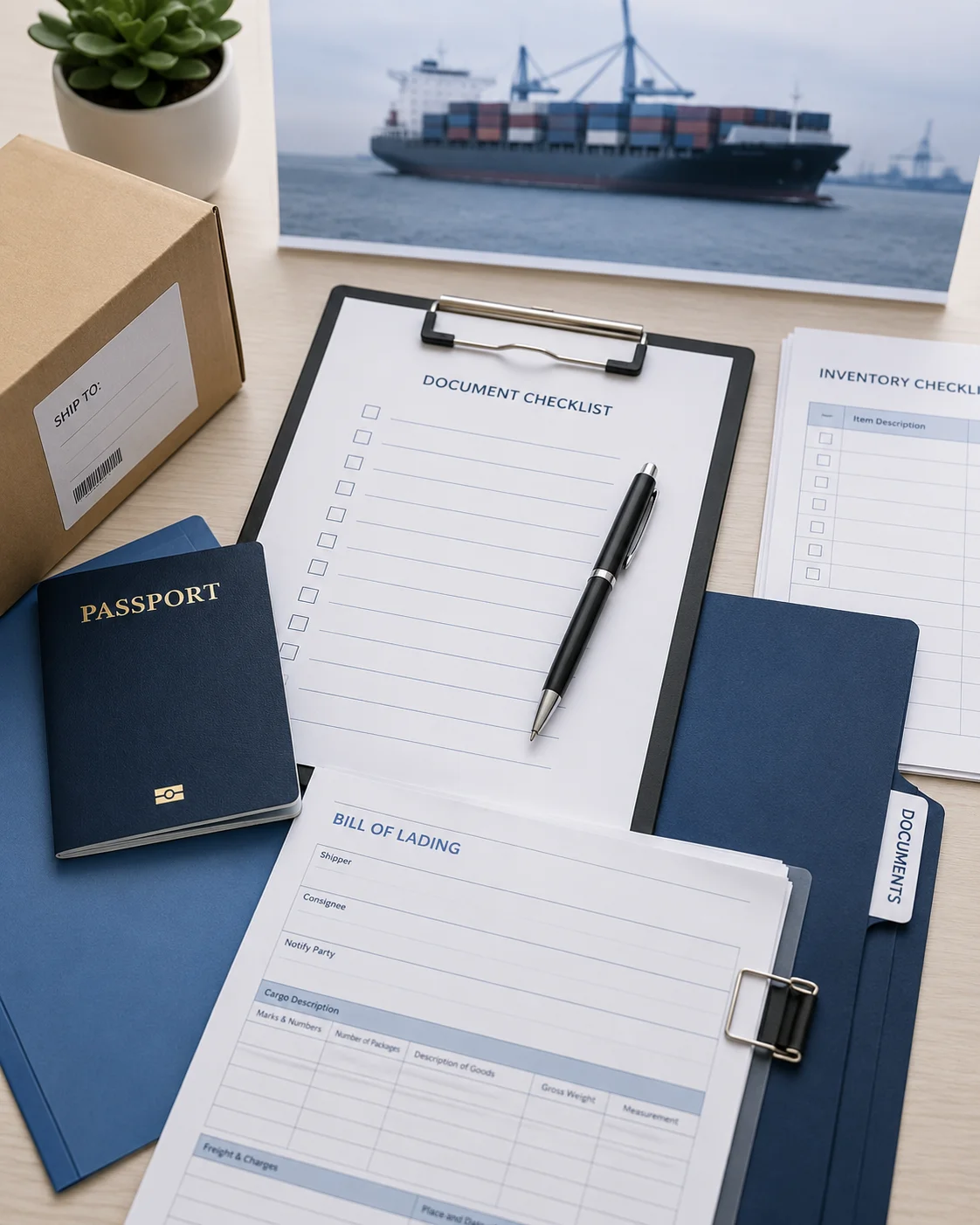
Documents required for importing used household goods, personal effects, and related shipments.
- Copy of passport
- Contact information for the owner of the goods
- Copy of Taxpayer Identification Number (TIN) -- if available; if not, the owner must apply at the National Revenue Authority (NRA) office
- Packing list in English (must include details of all electrical appliances)
- Commercial invoices for electrical appliances (if applicable)
- Detailed and valued inventory in English, dated and signed by the owner of the goods
- Original bill of lading (OBL), telex release, or air waybill (AWB) -- 3 copies required
- Exemption form obtained from the Ministry of Foreign Affairs (all importers)
- Diplomatic passport
- Diplomatic exemption form (obtained through the diplomatic organization in collaboration with the destination agent -- allow 35 to 45 days for processing)
Specific Information
All imports are administered by the National Revenue Authority (NRA) Customs and Excise Department. Customs duties are assessed on the CIF (cost, insurance, freight) value of goods.
A port and infrastructure levy of 1.25% of CIF value applies to all imports. This charge cannot be avoided and should be budgeted for in addition to any applicable duties.
Electrical appliances are subject to import taxes at 41% of their assessed value, regardless of whether they are used or new. This is a significant cost factor for household goods shipments containing televisions, computers, audio equipment, and other electronics. Purchase receipts for all electrical appliances should be included; if unavailable, customs will assess based on estimated current value.
The exemption form from the Ministry of Foreign Affairs is required for all importers -- not solely diplomats. This form must be obtained in advance and should be coordinated by the destination agent with the owner of the goods before shipment departs origin.
For telex release or express bills of lading, an additional USD 100 processing fee applies at customs clearance.
Diplomatic sea shipments carry an additional USD 250 processing fee for the preparation of duty-free diplomatic documentation. The diplomatic exemption form takes approximately 35 to 45 days to obtain; diplomatic moves must be planned accordingly.
The bill of lading and cargo manifest must clearly state the number of pieces in the shipment.
GST (Goods and Services Tax) at 15% applies to most imported goods in Sierra Leone. Personal household effects may benefit from exemptions under the GST Act, but the applicable treatment depends on the specific circumstances and the NRA assessment at the time of clearance. Confirm with the destination agent.
All solid wood packing materials must comply with ISPM 15 phytosanitary treatment standards.
Prohibited & Restricted Items
Prohibited Items
The following items are prohibited from import into Sierra Leone:
- Illegal drugs and narcotics
- Pornographic materials
- Counterfeit goods
- Products from endangered species protected under CITES [CITES]
Restricted / Dutiable Items
Accompanied baggage allowances (duty-free):
Cigarettes: 200; tobacco: 250 g (no age restriction stated in regulations). Alcohol: 1 litre of spirits.
Arms and ammunition: Require authorization from the Ministry of Interior, Intelligence Section, before import. [PERMIT REQUIRED]
Plants and plant materials: Require authorization from the Ministry of Agriculture and Forestry. [PERMIT REQUIRED]
Pharmaceuticals and medicines: Require authorization from the Ministry of Health before import. [PERMIT REQUIRED]
Importing a Used Personal Vehicle
Required Documents
- Copy of passport
- Original bill of lading or air waybill
- Original vehicle registration card (from country of origin)
- Original purchase invoice
- Residence permit
Specific Information
The vehicle registration number must appear on the original bill of lading or air waybill. This is a strict requirement and any discrepancy will cause significant delays at clearance.
Import duties and taxes on motor vehicles are calculated based on the vehicle's CIF value, age, engine size, and category. Confirm current duty rates with the destination agent before committing to vehicle import, as rates are set by the NRA and subject to periodic revision.
Pets
- Microchip (ISO 11784/11785 compliant, 15-digit non-encrypted) -- recommended; if not microchipped, a collar with the owner's name and contact information is required
- Rabies vaccination certificate (administered between 30 days and 6 months before entry)
- International veterinary health certificate issued by a licensed veterinarian and endorsed by the government veterinary authority of the originating country, within 48 hours of entry
- Import permit from the Ministry of Agriculture (must be obtained before travel)
- Records of parasite treatment (internal and external)
Dogs and cats must enter at Freetown International Airport (Lungi International Airport). Prior notice to veterinary officials at the airport is required, particularly for arrivals outside normal business hours.
Sierra Leone does not require a rabies titer test for entry. However, Sierra Leone is classified by the World Organization for Animal Health as a high-rabies-risk country. Pet owners planning to return their pet to its country of origin should check re-entry titer test requirements in advance.
Dogs should be vaccinated against distemper, hepatitis, leptospirosis, and parvovirus. Cats should be vaccinated against feline viral rhinotracheitis, panleukopenia, and feline leukemia. All vaccinations must be current at entry.
Puppies and kittens must be at least 3 months old and vaccinated, with a 30-day post-vaccination wait before travel.
Aggressive breeds must wear a muzzle. Sierra Leone does not publish a banned breed list.
Flights should be direct or transit only through rabies-controlled countries.
Birds, reptiles, amphibians, rodents, rabbits, and other non-dog/non-cat pets are not subject to the rabies vaccination requirement but may need a health certificate and may require additional import permits. Members should advise clients to contact the Ministry of Agriculture and the nearest Sierra Leone embassy for current requirements for non-standard pets.
Animals from endangered species or their derivative products are subject to CITES restrictions. [CITES]
Consignment Instructions
Recommended: Contact the destination agent to ensure all requirements have been met prior to import, especially for differences regarding air and sea shipments.
The Ministry of Foreign Affairs exemption form is a prerequisite for customs clearance and must be obtained before the shipment arrives. Coordinate this process through the destination agent well in advance of shipment departure.
The bill of lading must show the correct number of pieces and, for vehicles, the registration number. Any discrepancy between the bill of lading, cargo manifest, and actual shipment contents will cause delays and potentially trigger a full customs examination with additional charges.
Electrical appliances are taxed at 41% -- clients should be clearly advised of this before packing electronics into household goods shipments. For high-value electronics, it may be worth considering carrying them as accompanied baggage or shipping separately under different terms.
The 1.25% CIF port levy is unavoidable on all shipments. For diplomatic shipments by sea, budget the additional USD 250 diplomatic documentation processing fee.
Sierra Leone has limited port infrastructure at Freetown's Queen Elizabeth II Quay. Shipping options to Sierra Leone are less frequent than larger African ports; the destination agent should be consulted early about available shipping lines and schedules.
Cultural & Other Information
Sierra Leone is a coastal West African nation on the Atlantic Ocean, bordered by Guinea and Liberia. The capital and largest city is Freetown, one of the oldest cities in sub-Saharan Africa and the site of one of the continent's first universities (Fourah Bay College, 1827). English is the official language; Krio (an English-based creole) is the most widely spoken lingua franca. The currency is the Sierra Leonean leone (SLL/SLE).
Sierra Leone experienced devastating civil conflict from 1991 to 2002 and the Ebola epidemic from 2014 to 2016, but has been politically stable since and has made significant development progress. The country is rich in diamonds, gold, bauxite, and titanium ore. Sierra Leone is a member of ECOWAS.
Reference links:
Useful resources