

Country Guides
Somalia

Operational note: Somalia has no IAM Country Guide baseline. This guide is compiled from the U.S. Commercial Service Somalia Country Commercial Guide, the Federal Government of Somalia Ministry of Finance, the Somalia Revenue Directorate, and other available sources. Somalia presents significant operational challenges -- ongoing security concerns, limited port infrastructure, a developing customs administration, and regional administrative fragmentation (Puntland and Somaliland operate with varying degrees of autonomy and have their own customs structures). Members are strongly advised to engage a trusted in-country destination agent before accepting any Somalia-bound shipment and to verify current requirements with that agent, as conditions change frequently.
Explore sections
Guide Details
Household Goods
Documents
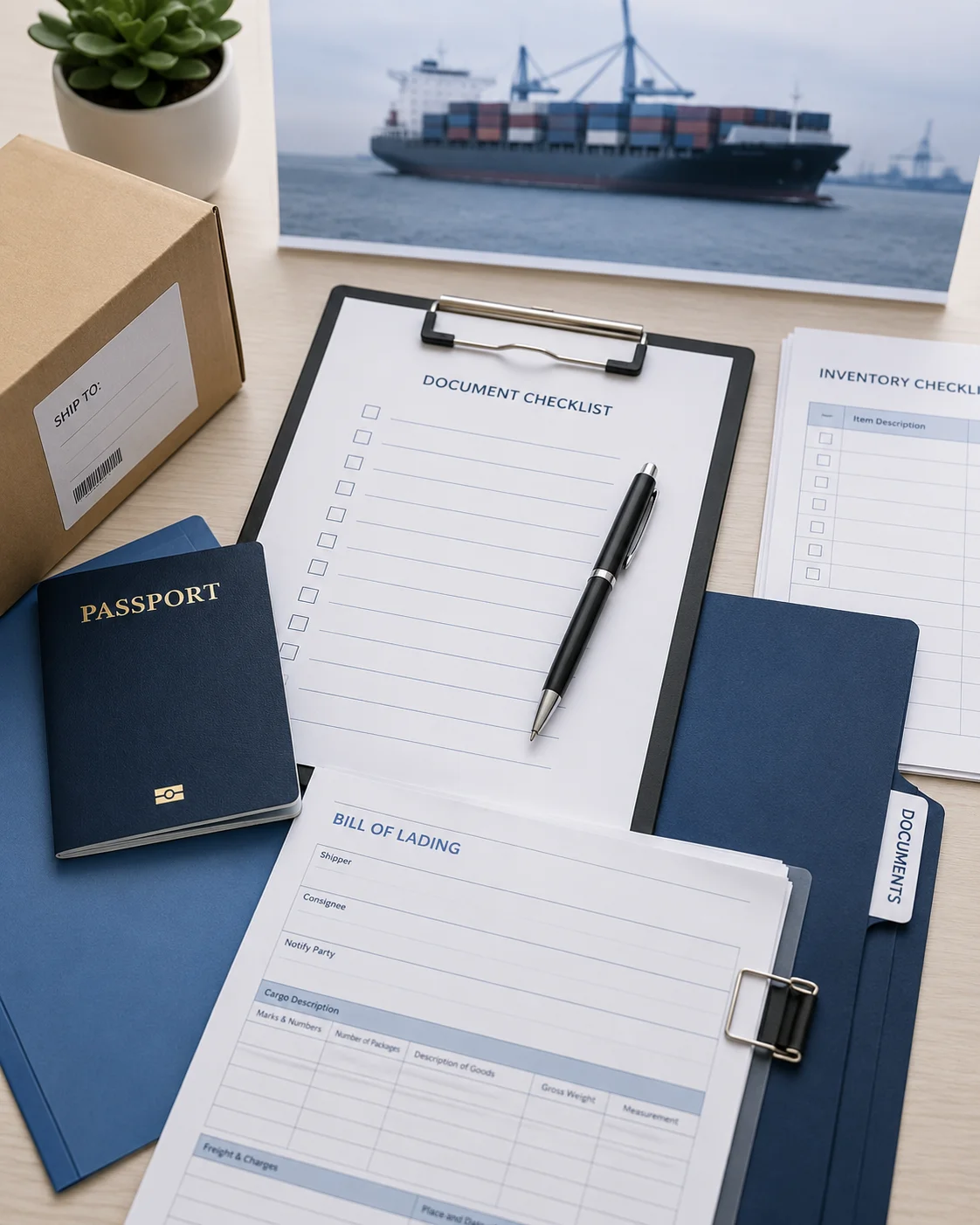
Documents required for importing used household goods, personal effects, and related shipments.
- Copy of passport
- SOMSAD customs declaration form (the standard Somali customs import declaration, filed through the SOMCAS electronic customs system)
- Original bill of lading (OBL) or air waybill (AWB)
- Detailed packing list
- Commercial invoice (for any new items or items with declared value)
- Tax Identification Number (TIN) -- required for customs clearance; must be obtained from the relevant Somali revenue authority
- Import license or permit from the relevant authority (where required for controlled goods)
Specific Information
Somalia uses the Harmonized System (HS) for tariff classification. Import duty is assessed on the CIF (cost, insurance, freight) value of goods. All imports must be declared to customs via the SOMCAS electronic system using the SOMSAD form. The Federal Government of Somalia has enacted updated Customs Regulations (2024) and a Customs Tariff Law based on the 2022 HS schedule.
Somalia currently has some of the lowest import tax rates in the region. The standard import duty structure is ad valorem (percentage of CIF value), with rates varying by HS classification. VAT and sales taxes may apply to specific categories on top of import duty, assessed on CIF plus duty.
No specific duty-free transfer-of-residence framework has been publicly documented for Somalia equivalent to EU or other regional regimes. Members should confirm with the destination agent whether any personal effects exemption applies for relocating staff.
For shipments to Somaliland or Puntland, separate customs administrations apply. Confirm with the destination agent which administrative region will handle clearance.
All solid wood packing materials must comply with ISPM 15 phytosanitary treatment standards.
Prohibited & Restricted Items
Prohibited Items
The following items are prohibited from import into Somalia. Given that Somalia is governed by Islamic law (*Sharia*), many prohibitions reflect Islamic principles. The following partial list is drawn from the U.S. Commercial Service Somalia guide and the Somalia Customs Tariff Law:
- Alcoholic beverages of all kinds (strictly prohibited; items will be confiscated and fines imposed)
- Pork, pork products, and all derivatives (fat, hair, blood, guts, any extracted products)
- Frog meat
- Narcotics, recreation drugs, and controlled substances of all types
- Plastic bags (prohibited under environmental regulations)
- Asbestos and any products containing asbestos
- Items containing radioactive elements (new or used)
- Industrial, pharmaceutical, and chemical waste products
- Foodstuffs made from animal blood
- Equipment, machinery, and devices for gambling
- Printed publications, photographs, books, and magazines that "contradict Islamic teachings, decency or morality" (broadly enforced)
- Advertising materials for cigarettes
- Radio or remote-controlled model aircraft
- Pornographic or indecent materials
- Counterfeit currency and goods
- Endangered species and their products protected under CITES [CITES]
Restricted / Dutiable Items
The following categories are subject to import licensing or special authorization:
- Firearms and ammunition: require prior permission from the appropriate Somali authority (confirm specific licensing authority with destination agent) [PERMIT REQUIRED]
- Pharmaceuticals and medicines: require authorization from the Ministry of Health [PERMIT REQUIRED]
- Currency: amounts of USD 10,000 or equivalent must be declared on arrival; a stamped customs form must be retained for departure inspection
- Food products: subject to inspection and may require permits depending on origin and type
- Telecommunications equipment: subject to licensing requirements [PERMIT REQUIRED]
- New electronics and high-value items: new electronics in original packaging may attract import duty; purchase receipts should be carried
Importing a Used Personal Vehicle
Required Documents
- Copy of passport
- Original bill of lading or AWB
- Original vehicle registration document (from country of origin)
- Original purchase invoice
- Vehicle details (make, model, year, chassis/VIN number, engine number, engine displacement, fuel type)
Specific Information
Somalia's vehicle import sector is primarily dominated by used right-hand drive vehicles from Japan, South Korea, and the UAE. Import duties on vehicles are assessed on CIF value at the applicable HS tariff rate.
Confirm current duty rates and any applicable excise or environmental levies with the destination agent at time of booking, as these are subject to revision.
Pets
- Veterinary health certificate issued by a licensed veterinarian in the originating country
- Rabies vaccination certificate
- Microchip documentation (ISO 11784/11785 compliant microchip strongly recommended)
- Import permit or authorization from the relevant Somali veterinary authority (confirm with destination agent)
Somalia does not have well-documented or consistently enforced pet import regulations at the national level. Given security conditions and limited veterinary infrastructure, bringing pets to Somalia is operationally complex. Members should advise clients to consult with the destination agent and the nearest Somali embassy or consulate well in advance. Requirements may vary significantly by port of entry and region.
Consignment Instructions
Recommended: Contact the destination agent to ensure all requirements have been met prior to import, especially for differences regarding air and sea shipments.
Somalia presents significant operational challenges for international movers. Members should be aware of the following:
Security: Somalia remains a high-security-risk environment. The U.S., UK, and other governments maintain active travel advisories against travel to most parts of Somalia. Operational risks must be assessed carefully before accepting shipments.
Port infrastructure: The main commercial port is the Port of Mogadishu. Port capacity and efficiency are improving under Federal Government reforms, but delays, demurrage, and logistical complications remain common. Other entry points include ports at Berbera (Somaliland), Bosaso (Puntland), and Kismayo.
Administrative fragmentation: Somaliland (in the northwest) and Puntland (in the northeast) operate with significant autonomy and have their own customs administrations. A shipment destined for Hargeisa (Somaliland) or Bosaso (Puntland) will go through a different customs authority than one destined for Mogadishu. Confirm the applicable customs regime with the destination agent.
Customs modernization: The Federal Government has been modernizing customs administration through the SOMCAS electronic system, the 2022 Customs Tariff, and the General Customs Regulations 2024. The system is functional in Mogadishu but implementation across all ports may be uneven.
Prohibited items: The prohibition on alcohol is strictly enforced. Members must advise clients clearly that no alcoholic beverages, pork products, or other prohibited items may be included in shipments under any circumstances.
NGO and diplomatic shipments: Most international household goods moves to Somalia involve NGO workers, UN staff, diplomatic personnel, or private security/development contractors. These categories may have specific customs exemptions -- confirm with the destination agent and the relevant organizational procurement or logistics function.
Cultural & Other Information
Somalia is located on the Horn of Africa, bordered by Ethiopia, Kenya, Djibouti, and the Indian Ocean and Gulf of Aden coastline. The capital is Mogadishu. Somali is the official language; Arabic has official status as well. The currency is the Somali shilling (SOS), though the US dollar is widely used in commercial transactions. Somalia is a predominantly Sunni Muslim country and Islamic law informs both personal conduct and commercial regulations.
Somalia experienced catastrophic civil conflict from 1991 following the collapse of the central government, and while the Federal Government of Somalia (FGS) has made significant progress in re-establishing state institutions, large areas of the country remain under the influence of non-state armed groups including Al-Shabaab. The country is classified as fragile and conflict-affected by international development institutions. AMISOM and successor peacekeeping forces have played a key role in supporting the FGS.
Despite these challenges, Mogadishu and parts of Puntland and Somaliland have seen genuine economic growth, driven by the Somali diaspora, telecommunications, and trade.
Reference links:
Useful resources