

Country Guides
South Sudan

Note: Regulatory information for South Sudan changes frequently. Confirm current requirements with the destination agent before shipping.
Operational Warning: South Sudan remains one of the most logistically challenging destinations in the world for international moving. The country gained independence in 2011, suffered devastating civil war from 2013 to 2018, and remains under a fragile peace agreement. Infrastructure outside Juba is extremely limited. Roads are frequently impassable in the rainy season (May–October). There is no functioning postal system. Most major international couriers provide only limited service to Juba. IAM strongly recommends coordinating all shipments with an experienced destination agent before any booking is made.
Start here
Overview
Explore sections
Guide Details
Household Goods
Documents
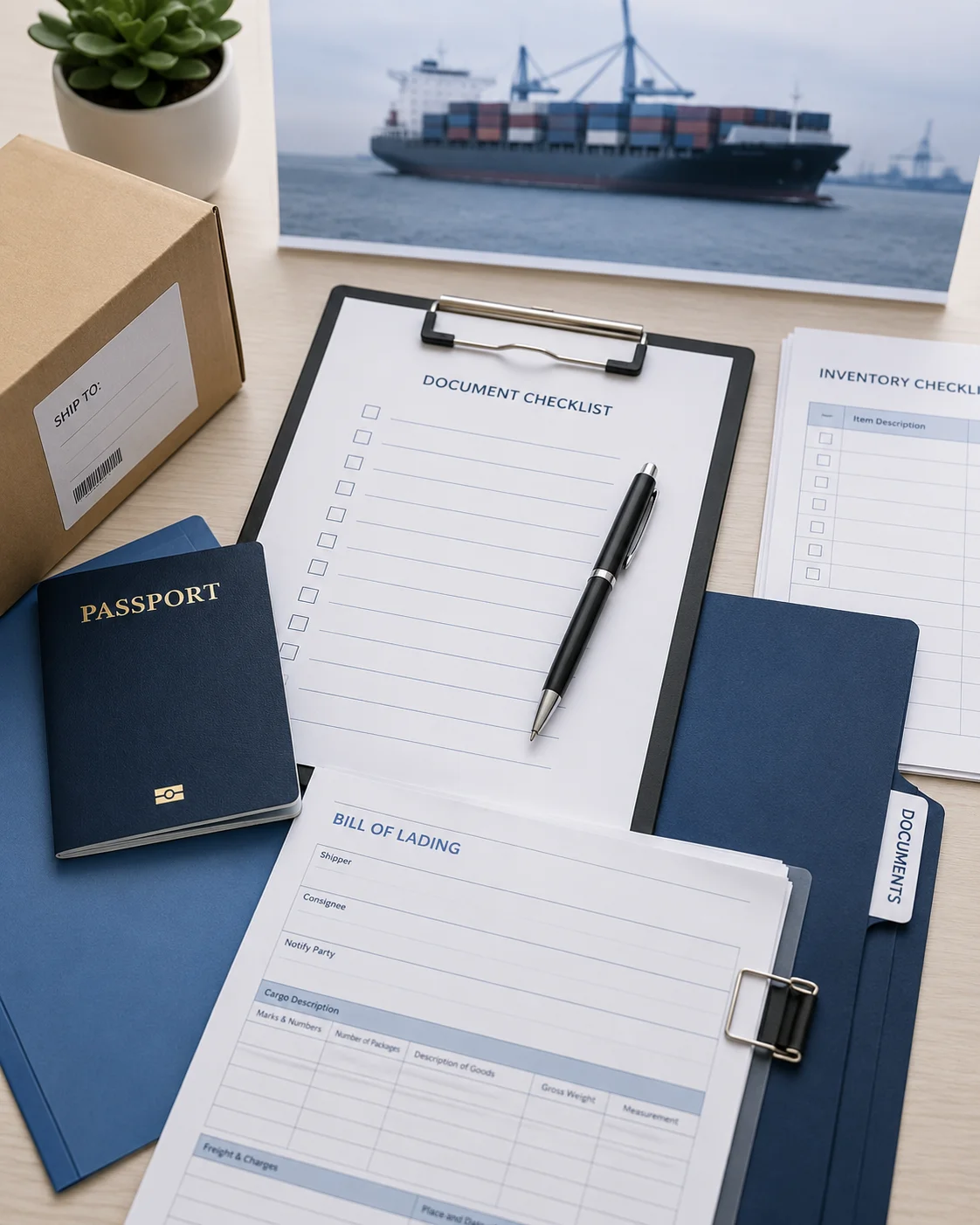
Documents required for importing used household goods, personal effects, and related shipments.
- Passport (copy)
- Original Bill of Lading or Airway Bill
- Detailed packing list/inventory, itemized and valued, signed by the owner
- Commercial invoice or declaration of value
- Import Declaration Form (IDF), issued through the South Sudan Revenue Authority (SSRA) / South Sudan Customs Service
- Certificate of Origin (where applicable)
- Letter of employment or posting letter (for diplomatic and expatriate relocations)
- Diplomatic identity documents
- Diplomatic exemption form (to be submitted by the diplomatic mission to the Ministry of Foreign Affairs and International Cooperation)
- MFA clearance letter forwarded to South Sudan Customs Service
Specific Information
Diplomatic shipments are generally exempt from duties and taxes, but exemption processing requires advance coordination with the Ministry of Foreign Affairs and can take several days to weeks. Clearance times for non-diplomatic sea and air shipments are highly variable.
Practical clearance notes: Juba is the only reliable entry point — via Juba International Airport for air shipments or the Juba river port on the White Nile for sea/river freight. Most overland trade enters via the Nimule border crossing from Uganda. UN and NGO logistics providers (UNMISS, WFP) handle a significant share of import volumes; movers operating in South Sudan typically coordinate closely with these networks. Wood packaging must comply with ISPM 15 requirements.
South Sudan Customs Service operates under the South Sudan Revenue Authority (SSRA). Customs clearance procedures are being progressively modernized through ASYCUDA implementation, though inconsistencies in application remain common.
Duties & Taxes
Duty-free conditions for personal effects: No formal duty-free transfer-of-residence exemption framework comparable to those found in more developed customs regimes has been confirmed. All non-diplomatic shipments are subject to inspection and may be assessed for duties and taxes based on the evaluator's determination of the goods' value. Import duties range from 0–25% depending on the category of goods. VAT is nominally 18% on CIF (cost, insurance, freight) value plus duty, though collection outside Juba remains inconsistent. Importers should budget for duty and VAT liability on any shipment and confirm current rates with the destination agent before shipping.
Prohibited & Restricted Items
Prohibited Items
- Narcotics and controlled substances
- Counterfeit currency or documents
- Pornographic material
- Goods of Israeli origin (regional restriction — confirm current status)
- Live animals and animal products without proper veterinary documentation `PERMIT REQUIRED`
- Plants and plant material without phytosanitary certificates `PERMIT REQUIRED`
- Firearms, ammunition, and explosives without prior government authorization `PERMIT REQUIRED`
- Wildlife and wildlife products covered by CITES (ivory, skins, live specimens of protected species) `CITES`
- Hazardous chemicals and materials without authorization
- Subversive or seditious material
- Items that conflict with public order or morality as defined by South Sudanese law
Restricted / Dutiable Items
South Sudan is a member of the East African Community (EAC), which provides a framework for regional trade integration, though intra-EAC preferential arrangements remain nascent and household goods/personal effects shipments are generally subject to standard customs treatment regardless of origin.
Alcohol: Subject to import duty and excise. Confirm current rates with the destination agent; rates and enforcement have been variable.
Tobacco: Subject to import duty and excise.
Electronics (computers, printers, scanners): May require additional scrutiny or permits. Customs inspection of these items can delay clearance.
Firearms and ammunition: Subject to strict permit requirements. See prohibited items below.
Medicines and pharmaceuticals: Controlled medicines require documentation and may require advance import authorization from the Ministry of Health.
Currency: Import and export of cash is subject to declaration requirements. Confirm current limits with the destination agent; the South Sudanese Pound (SSP) is subject to extreme inflation and the USD is the de facto currency for most transactions.
Importing a Used Personal Vehicle
Required Documents
- Original vehicle title/registration certificate
- Proof of ownership (minimum 6 months recommended; confirm with destination agent)
- Passport and visa documents
- Bill of Lading / Airway Bill
- Commercial invoice stating vehicle value
- Import Declaration Form (IDF)
- Certificate of roadworthiness or equivalent (from country of export)
Specific Information
Vehicle importation into South Sudan is subject to import duties, which can be substantial. There is no specific transfer-of-residence exemption for motor vehicles confirmed under current regulations. Duty rates are determined by Customs based on CIF value and vehicle category.
Right-hand-drive vehicles are common given South Sudan's road network heritage and regional context. Left-hand-drive vehicles are also in use, particularly among diplomatic missions and NGOs. There is no formal homologation requirement confirmed, but vehicles should meet basic roadworthiness standards.
South Sudan has limited fuel infrastructure outside Juba. Four-wheel-drive vehicles are strongly recommended given road conditions, especially during the rainy season. Contact the destination agent for the most current duty rate applicable to your vehicle category, as rates can change without notice.
Pets
- Official veterinary health certificate issued by a government-authorized veterinarian in the country of export, endorsed by the national veterinary authority
- Rabies vaccination certificate (vaccination must be current and administered at least 30 days before travel)
- Microchip documentation (ISO 11784/11785 compliant 15-digit microchip)
- Import permit from the South Sudan Ministry of Agriculture, Forestry, Cooperatives and Rural Development (if required — confirm in advance)
- Proof of treatment for internal and external parasites
South Sudan does not have a well-publicized or standardized pet import framework. The country is not a signatory to any regional pet travel protocol (such as the EU pet passport system). Quarantine requirements have not been formally published but may be imposed at the discretion of customs or veterinary officials at the point of entry.
Microchipping before vaccination is the recommended sequence to ensure the microchip reading links to the vaccination record. Rabies is endemic in South Sudan and neighboring countries; proof of current vaccination is essential.
Given the extremely limited veterinary infrastructure in South Sudan, pet owners should plan for medical self-sufficiency for their animals. The destination agent should be consulted about current inspection requirements at Juba Airport, as procedures are not consistently applied and can change. Bringing exotic animals or wildlife is strictly prohibited under CITES obligations.
Consignment Instructions
Contact the destination agent before booking any shipment. Given the extremely challenging logistics environment in South Sudan, advance coordination is essential. Requirements, access conditions, and clearance procedures can change without notice.
Inventory requirements: A detailed, itemized inventory signed by the owner is required. Items should be clearly described with estimated values. Customs inspects all non-diplomatic shipments.
Entry points: Juba International Airport (air) and Juba river port (sea/overland river freight) are the primary points of entry. The Nimule border crossing from Uganda handles the majority of overland cargo. Road access to other parts of the country can be severely limited or impassable during the rainy season (approximately May–October).
Clearance timing: Allow significant extra time for clearance. Delays of several days to several weeks are common, depending on cargo volume, staffing, and inspection queue at the point of entry.
Currency and payment: Import duties and associated fees are typically assessed in USD or the applicable equivalent. Budget for potential unexpected charges, as assessment practices are not always consistent or predictable.
UN/NGO coordination: Moves associated with UN agencies, diplomatic missions, or established NGOs typically follow specific logistics channels (UNHAS air cargo, WFP supply chains) that differ from commercial shipping. Confirm the applicable logistics framework with the receiving organization.
ISPM 15: All wood packaging material must comply with ISPM 15 (heat treatment or methyl bromide treatment with appropriate marking). Non-compliant wood packaging is subject to seizure and may result in shipment refusal.
Cultural & Other Information
South Sudan — officially the Republic of South Sudan — became the world's newest independent country on 9 July 2011, following a referendum in which 98% of voters chose independence from Sudan. The country has a population of approximately 12.7 million and encompasses a diverse array of mainly Nilotic ethnic groups. The capital is Juba, located in the south of the country near the Uganda border.
English is the official language. Arabic (including the Juba Arabic creole), Dinka, Nuer, and numerous other ethnic languages are widely spoken. The country is predominantly Christian (approximately 60%), with significant traditional religious practice and a Muslim minority.
South Sudan's economy remains heavily dependent on oil revenue, which accounts for approximately 97% of government income. The South Sudanese Pound (SSP) has suffered extreme hyperinflation; USD is commonly used for major transactions. Infrastructure is rudimentary, with limited paved roads, unreliable electricity, and minimal telecommunications outside Juba.
The security situation has improved significantly since the 2018 peace agreement but remains fragile. Travel outside Juba requires careful planning and coordination. Check current travel advisories before any relocation.
Reference links:
- South Sudan — OpenFactBook
- South Sudan — Wikipedia
- South Sudan Revenue Authority (SSRA) *(SPA — accessible in browser)*
- Ministry of Foreign Affairs and International Cooperation *(verify current status with destination agent)*
- EmbassyPages — South Sudan *(WAF-protected; accessible in browser)*
Useful resources