

Country Guides
Syria

Critical context — post-Assad transition: The Assad government fell in December 2024. Syria is now governed by a transitional authority led by Hayat Tahrir al-Sham (HTS) under Ahmed al-Sharaa (formerly Abu Mohammed al-Jolani). A new customs tariff was implemented by the General Directorate of Customs effective January 11, 2025, replacing Assad-era tariff structures. The United States lifted comprehensive Syria sanctions effective July 1, 2025 (Executive Order 14312, June 30, 2025), and the EU and UK undertook similar sanctions relief in mid-2025. Western governments' travel advisories for Syria remain elevated — verify current conditions before any engagement. Many pre-2025 customs regulations, prohibitions, and procedures reflect the prior regime and may have been substantially modified.
Explore sections
Guide Details
Household Goods
Documents
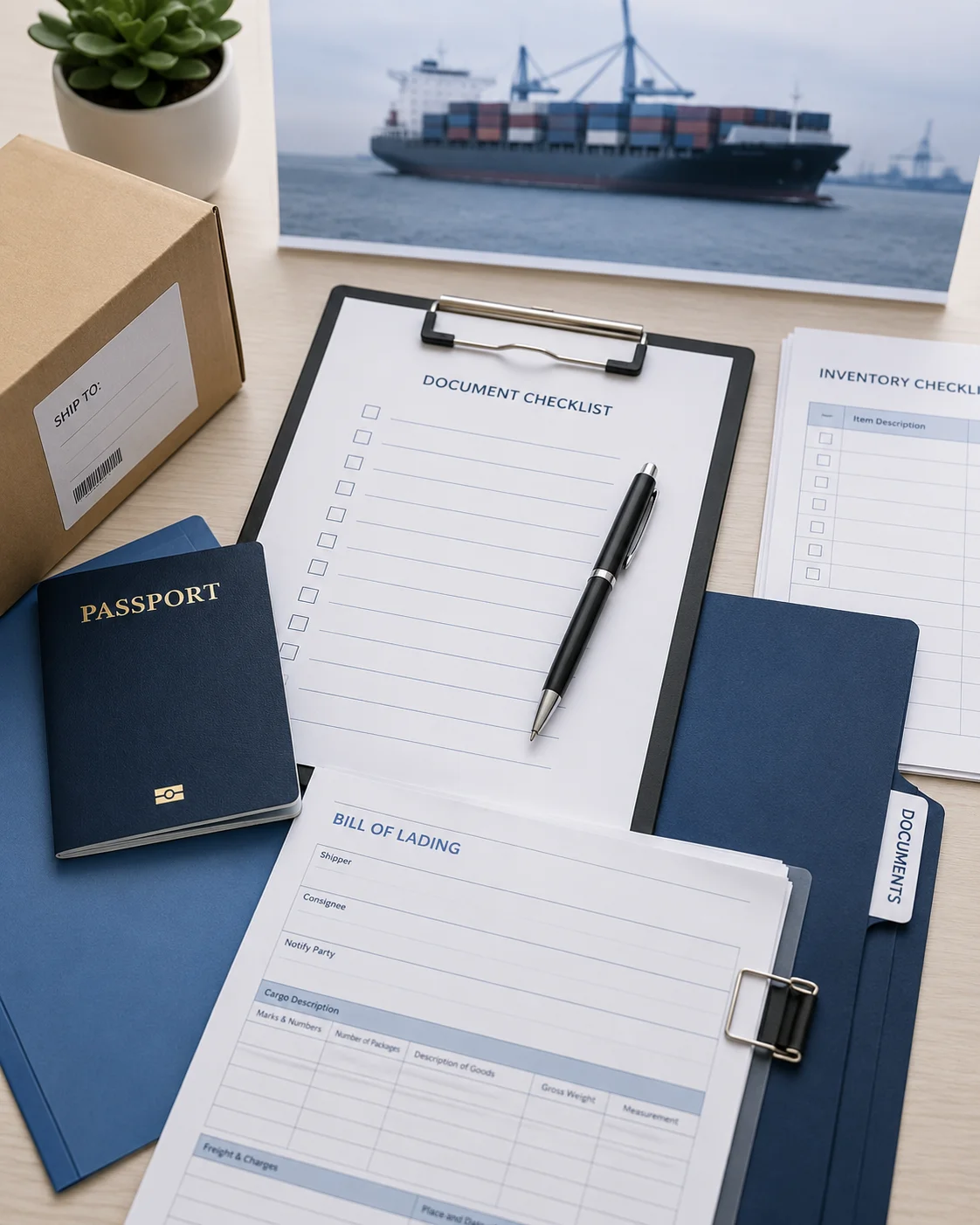
Documents required for importing used household goods, personal effects, and related shipments.
- Passport or Syrian identity card
- Original Bill of Lading (OBL) or Airway Bill (AWB)
- Detailed inventory, typewritten in English or French
- List of electrical appliances and electronics (make, year, serial number) and valuable articles (silver, carpets, furs, etc.)
- Letter of employment including start and end date
- Certificate of residence from Syrian embassy
- List of household goods in Arabic, certified by the Syrian Embassy
- Emigrant book from the Syrian embassy
- Lease agreement and proof thereof (utility bills, etc.)
- Passport
- Work permit
- Residence card
- Permit from the General Directorate of Customs for clearance under temporary admission regime
- Letter of guarantee from employer
- License of importation
- OBL or AWB
- Detailed inventory
- Manuals for computers, TVs, and radios
- Lease agreement
- Passport
- Diplomatic exemption from the Syrian Ministry of Foreign Affairs
- Inventory list
Specific Information
Post-transition note: Syria's new customs tariff (effective January 2025) introduced new duty rates across approximately 6,000 goods categories. The duty-free conditions described above may have been modified under the new tariff. Confirm current procedures with the destination agent before booking.
The owner of the goods must be present for Customs clearance. All shipments are subject to detailed inspection. Items cannot be moved to a bonded warehouse before Customs clearance is completed.
Items must arrive in Syria within 4 months of the owner's arrival (exception for diplomats). Only one shipment is allowed during the first 4 months for returning citizens.
For returning citizens: used household goods and personal effects are duty-free provided the owner is transferring primary residence to Syria permanently; the goods must have been used for at least 2 years and will be retained for personal use for at least 3 years in Syria.
For foreigners: used household goods are duty-free under temporary admission, provided they are for personal use, not sold in Syria, and re-exported before the work permit or active service expires.
ISPM 15 compliance is recommended for all wood packaging materials.
Prohibited & Restricted Items
Prohibited Items
The following items were prohibited under prior Syrian customs law. Some of these categories (particularly alcohol and sanctions-related items) may be under review following the post-Assad transition and international sanctions relief.
- Narcotic drugs
- Tobacco, wines, and spirits (prohibited for general import; confirm current status)
- Firearms, ammunition, and dangerous goods (without specific authorization)
- Pornographic materials
- Motorcycles
- Works of art and antiques
- Walkie-talkie radios and radio-controlled vehicles (cars, boats, planes)
- Counterfeit goods
- Items subject to current UN or international sanctions
Wildlife and wildlife products covered by CITES remain prohibited. `CITES`
Restricted / Dutiable Items
Under prior regulations, the following items were permitted only for diplomats: pets, plants, new furniture and household goods, and alcohol and tobacco products.
Printed matter, books, pictures, records, films, tapes, slides, videos, compact discs, and computer software were subject to censorship and possible confiscation. These items should be packed separately and placed near the container door for easy access by Customs.
Gifts and souvenirs, inheritances, and wedding trousseaux are dutiable.
Post-transition note: The January 2025 customs tariff restructuring may have modified which items are restricted or dutiable. Contact the destination agent for current rates and restricted categories.
Importing a Used Personal Vehicle
Required Documents
- Title/ownership card
- Green card (international insurance)
- Original Bill of Lading
- Work permit in Syria
- Permit from the Syrian General Directorate of Customs for clearance under temporary admission regime
- Letter of guarantee from Syrian employer
- Residence card in Syria
- License of importation
- Diplomatic exemption from the Syrian Ministry of Foreign Affairs (for diplomats)
Specific Information
Under the 2017 regulations, only foreigners and diplomats could import motor vehicles. Vehicles had to be less than 2 years old and diesel engine vehicles were prohibited. Automobiles were duty-free under a temporary admission regime for foreigners but had to be re-exported by the expiration of the work permit or active service. Road taxes were payable, and the vehicle had to be used for personal use only. Customs clearance was required within 4 months of the owner's arrival.
Post-transition note: Vehicle import regulations are among the most likely to have changed under the new customs tariff (January 2025). Contact the destination agent to confirm current rules, eligibility criteria, and duty rates before any vehicle shipment is arranged.
Pets
- Vaccination record including rabies vaccination (administered between 30 days and 12 months before entry)
- Government-issued veterinary health certificate from the country of origin
- ISO 11784/11785-compliant microchip is recommended, though not formally required
- Import permit (contact destination agent to confirm current requirement)
Dogs and cats must be accompanied by a government-issued veterinary health certificate from the country of origin. No quarantine is imposed if requirements are met; animals not meeting requirements may be quarantined, returned, or euthanized at the owner's cost.
Birds: Under prior regulations, only falcons were permitted for import, and advance permission from Syrian authorities was required. Confirm current status with the destination agent.
Note: Syria is classified as a high-rabies-risk country. All pets should have current rabies vaccination documented, and microchipping is strongly recommended.
Consignment Instructions
Contact the destination agent to ensure all requirements have been met prior to import, especially for differences between air and sea shipments.
The owner must be present for Customs clearance. Shipments cannot be moved to bonded storage before clearance is completed. Cargo must arrive within 4 months of the owner's arrival. Printed materials, electronics, and media items should be packed near the container door for Customs access.
Operational context: Syria's infrastructure — including ports, customs offices, and banking systems — is in a process of reconstruction following the December 2024 transition. The Port of Latakia resumed operations shortly after the fall of the Assad government. International banking and payment channels have been progressively reopened following US, EU, and UK sanctions relief in 2025, but conditions remain fluid. IAM members should confirm with the destination agent that the consignee's preferred port and inland routing are currently operational and that local banking and clearance services are available before booking any shipment.
Cultural & Other Information
Syria — officially the Syrian Arab Republic — is a country in the Middle East bordered by Turkey, Iraq, Jordan, Israel, Lebanon, and the Mediterranean Sea. The capital is Damascus. Syria has a population of approximately 22 million, though the country experienced massive internal displacement and refugee outflows during the 2011–2024 conflict period. Arabic is the official language. The currency is the Syrian Pound (SYP), though significant informal dollarization has occurred.
Syria's history of civilizations stretches back thousands of years, with major heritage sites including Palmyra, Aleppo's old city, and the Umayyad Mosque in Damascus. The country experienced devastating civil conflict from 2011 through 2024, followed by the fall of the Assad government in December 2024 and the beginning of a transitional period under new leadership. International sanctions have been substantially eased since mid-2025, and reconstruction and normalization are underway.
- Syria — OpenFactBook
- Syria — Wikipedia
- EmbassyPages — Syria *(WAF-protected; accessible in browser)*
- U.S. OFAC Syria Sanctions FAQ
- PetTravel.com — Syria Pet Import Requirements
Useful resources