

Country Guides
United States

Start here
Overview
Explore sections
Guide Details
Household Goods
Documents
Documents required for importing used household goods, personal effects, and related shipments.
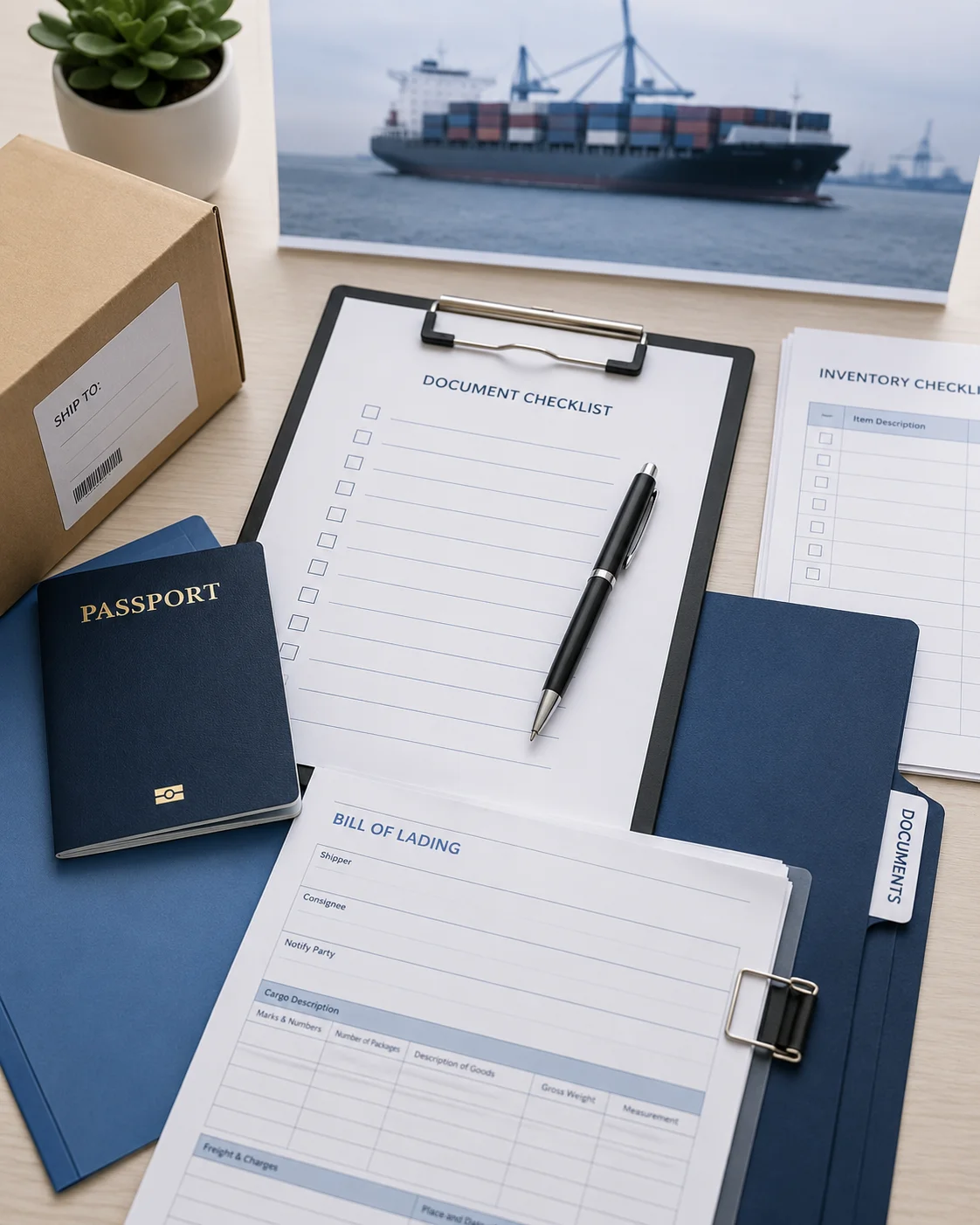
- Copy of passport (some ports require passports for all family members listed on the CF-3299; some ports require copies for accompanying family members)
- CBP Form CF-3299 — Declaration for Free Entry of Unaccompanied Articles (if claiming duty-free entry)
- CBP Form 6059B — Customs Declaration
- CBP Form 7501 — Customs Entry Summary
- Copy of bill of lading (OBL) / air waybill (AWB)
- Detailed inventory in English
- Importer Security Filing (ISF) — required for all ocean shipments (see below)
- Food questionnaire (if food items are included — required by most ports)
- Copy of visa, or copy of permanent resident card (green card)
- I-94 arrival/departure record (the entry card or digital record showing the length of stay authorized)
- A-1 visa
- Form DS-1504 (processed through the Department of State — see below)
- Supplemental declaration (required by most ports in Hawaii)
- Permit C — Household Goods Permit (required if importing alcohol)
- Food questionnaire form (required if importing food items)
- PPQ Form 505 — Plant and Plant Product Declaration (if importing plants or seeds)
- Standard documents above
- Documentation proving items are over 100 years old, or proof of use in a household where the owner resided for 12 months
Specific Information
Inspections and Examination Costs: All shipments are subject to examination at the discretion of CBP officers. Examinations ordered by CBP and other government agencies (FDA, USDA, Fish & Wildlife, etc.) are at the importer's expense, typically ranging from USD 200 to USD 1,700 or more for a full container load (FCL). The owner of the goods is responsible for all examination costs and any damage incurred during inspections.
Hawaii — Biosecurity Examinations: Hawaii's fragile and unique ecosystem results in significantly more frequent and intensive inspections. Shipments containing garden tools, outdoor furniture, playground equipment, motorcycles, scooters, or any items used outdoors are very likely to be physically examined. If CBP finds outdoor items to be dirty or to contain insects, snails, or other organisms, the State of Hawaii Department of Agriculture may require the entire shipment to be cleaned, fumigated, or frozen. This process can be very costly and may damage household goods. Clients should be strongly advised to clean all outdoor items thoroughly before packing.
ISF (Importer Security Filing): For all ocean shipments, the Importer Security Filing (ISF, also called "10+2") must be filed with CBP at least 24 hours before the vessel departs the last foreign port. Filing responsibility lies with the importer of record (typically the owner of the goods) or their customs broker. Late or inaccurate ISF filings carry penalties of up to USD 5,000 per violation. Origin agents must ensure the ISF is filed before the vessel sails.
PBO Prohibition on Inventory: Do not indicate "packed by owner" (PBO) or use miscellaneous descriptions on the detailed inventory. Every item should be described specifically.
Antiques: Items at least 100 years old are classified as antiques and are duty-free. A recently purchased antique should have its circa date indicated on the invoice.
ISPM 15: All wooden packing materials must comply with ISPM 15 phytosanitary treatment standards. This is especially critical for shipments from China, which has specific fumigation and documentation requirements.
Duties & Taxes
Duty-Free Eligibility (CF-3299)
Used household goods and personal effects may enter the United States duty-free under an informal entry using CBP Form CF-3299, provided:
- The goods have been owned and used in the owner's foreign household for at least 12 months prior to shipment from the origin country
- The importer holds a proper long-term visa (not a B1/B2 visitor's/tourist's visa); a B1/B2 visa permits import of personal effects only (clothing, toiletries, camping gear, etc.)
- The goods are for the importer's personal use and not for resale or for another person
Items used less than 12 months will generally require payment of customs duty. These items should be listed in detail on the reverse of Form CF-3299, including: item description, quantity, materials, value paid in USD, and country of origin.
Visa Requirement: The importer must hold the appropriate visa type. Only goods for personal use (not full household goods shipments) may be imported on a short-term B1/B2 visitor's visa.
Hawaii — 12-Month Use Rule: For Hawaii, the 12 months of prior use does not need to be continuous, nor does it need to be the 12 months immediately before importation.
Diplomatic Shipments (A-1 Visa): All foreign diplomats holding an A-1 visa must be processed through the U.S. Department of State using Form DS-1504, submitted by the diplomat's embassy or consulate at least 10 days before the shipment arrives. Customs brokers are not permitted to clear A-1 visa shipments through the CF-3299 process.
Informal vs. Formal Entry: Only shipments of used household goods and personal effects may enter under informal entry. New goods or commercial quantities require formal entry.
Prohibited & Restricted Items
Prohibited Items
- Illegal/controlled drugs and drug paraphernalia (Schedule I–V controlled substances without DEA authorization)
- Cuban-origin alcohol and tobacco products (including cigars) — prohibited under OFAC Cuban Assets Control Regulations since September 24, 2020
- Absinthe containing thujone
- Counterfeit goods, pirated goods, and goods using a federally registered trademark without authorization
- Products made from dog or cat fur
- Flavored cigarettes (including cloves) under the Family Smoking Prevention and Tobacco Control Act
- Haitian animal hide drums (due to anthrax risk)
- Blank tapes and CDs of Iranian origin (subject to OFAC Iran sanctions)
- Most ivory and products made from endangered species without valid CITES permits [CITES]
- Certain agricultural items posing phytosanitary risk (confirm with USDA/APHIS before shipment)
- Unsafe food products, products containing prohibited additives
Tuna note: Tuna has historically appeared on prohibited-items lists due to conflicts with the Marine Mammal Protection Act (dolphin-safe requirements). Commercial import restrictions apply; personal quantities of canned tuna in a household goods shipment are not affected.
Restricted / Dutiable Items
The following items are subject to import controls, duties, or restrictions when entering the USA:
Plants and seeds: An import permit and USDA/APHIS form PPQ 505 (Plant and Plant Product Declaration) are required. Plants and seeds from certain countries are prohibited.
Soil: An import permit is required. Soil may not generally be shipped with household goods.
Meats and meat byproducts: Import is generally prohibited or highly restricted, including bouillon soups and meat-based processed foods. Strong discourage against including any meat products in household goods shipments.
Food items generally: Importation of food items is strongly discouraged. Any food products require a detailed inventory for FDA food filings and duty payment.
Fruits and vegetables: Subject to USDA/APHIS phytosanitary controls; many fresh items are prohibited.
Medications / pharmaceuticals: Subject to FDA review and in some cases prohibition. Controlled substances require DEA authorization. Personal-use quantities of prescription medication are generally allowed if accompanied by a valid prescription, but quantities suggesting commercial import will be detained.
Game and hunting trophies: Subject to USFWS, CITES, and USDA controls depending on species and country of origin.
Gold: Subject to declaration requirements.
Textiles and clothing: May be subject to quota and tariff rules depending on country of origin.
Firearms / weapons: See Section 5 below.
Alcohol: Import is governed by both federal and individual state laws. Federally, a reasonable amount of alcohol in a household goods shipment is generally permitted. However, if CBP considers the quantity excessive, they may require the importer to engage a licensed alcohol importer for a commercial entry. States vary significantly — some allow no personal alcohol imports, some require permits and fees, and others allow a reasonable personal quantity. Each destination state's laws must be consulted before shipment. For Hawaii, the owner of the goods must personally apply for a liquor permit with the City and County of Honolulu Liquor Commission (Oahu) and present the permit at customs clearance.
Merchandise from sanctioned countries: Goods of Cuban origin: Cuban-origin alcohol and tobacco products (including cigars) may not be imported into the USA under any circumstances, including as accompanied baggage purchased in third countries (this prohibition was reinstated effective September 24, 2020, and remains in force as of June 2026). Other Cuban-origin merchandise may be imported as accompanied baggage for personal use by authorized travelers. See OFAC Cuban Assets Control Regulations (31 CFR Part 515) for current rules. For merchandise from Iran, North Korea, and other OFAC-sanctioned countries, a license from OFAC is required. Contact the destination agent before including any goods of potentially sanctioned origin.
Biological materials: Of public health or veterinary importance — import permit required (Hawaii especially).
Beekeeping equipment (used): Subject to USDA controls (Hawaii).
Importing a Used Personal Vehicle
Required Documents
- EPA Form EPA-3520-21 (if applicable — for foreign-purchased vehicles not previously titled in the USA)
- DOT Form HS-7 (Declaration of Conformity with Federal Motor Vehicle Safety Standards)
- OBL (for foreign-purchased vehicles)
- Bill of sale or pro-forma invoice with statement of value (must include vehicle description, VIN, model, year of manufacture)
- Title of ownership translated into English (for foreign-purchased vehicles)
- Proof of conformity (one of the following):
- US title or registration
- Letter of conformity from the manufacturer
- Foreign Military Sales contract confirming compliance with EPA/DOT regulations
- Documentation proving the vehicle is 25 years or older (exempt from EPA/DOT requirements)
- Copy of US title or registration (for vehicles previously owned and shipped from the USA by returning residents)
- Completed EPA-3520-1, DOT HS-7, and CBP Form 7501 (returning US-origin vehicles)
- Letter of permission from the EPA (non-residents importing a vehicle temporarily as a tourist)
Specific Information
Returning US-Owned Vehicles: Vehicles previously owned and shipped from the USA by returning residents can normally be re-imported using the US title or registration. The owner's name on the title/registration must match the name on the household goods shipment.
EPA/DOT Compliance: Vehicle models less than 25 years old that were not previously titled in the USA must comply with EPA (emissions) and DOT (safety) regulations. The cost and time to bring a non-compliant vehicle into compliance through a Registered Importer (RI) or Independent Commercial Importer (ICI) shop typically make the process economically unwise. It is strongly recommended not to import non-compliant vehicles.
25-Year Exemption: Vehicles 25 years or older with their original drivetrain are generally exempt from EPA and DOT regulations. Evidence of vehicle age (title, documentation) is required.
Non-Resident Temporary Import: A non-US resident may import a vehicle as a tourist for up to 12 months, with no extension. A prior permission letter from the EPA is required. The vehicle may not be sold during the period and must be exported before the 12-month period expires or it is subject to seizure and penalties. Some ports require a customs bond of up to three times the vehicle's value.
Marine Engines and Generators: Gas-powered marine engines and generators are also subject to EPA requirements. EPA Form EPA-3520-21 is normally required.
USDA Requirement: The undercarriage of all imported vehicles must be free of foreign soil before entry into the USA. Clean the undercarriage thoroughly before shipment (steam spray or similar method). Do not store personal items in any motor vehicle during shipment.
If the vehicle doesn't comply: A non-compliant imported vehicle must either be brought into compliance by an RI/ICI shop, exported, or destroyed. It cannot be registered or driven on US roads.
Pets
Important Update: Since August 1, 2024, the U.S. Centers for Disease Control and Prevention (CDC) is the primary authority for dog imports into the USA. APHIS (USDA) handles cats and other animals but is no longer the lead agency for dogs.
Special Categories
Dogs
Requirements depend on (a) whether the dog has been in a high-risk country for dog rabies in the 6 months before US entry, and (b) where the dog was vaccinated.
Key rule: Dogs that have been in a high-risk country for dog rabies within 6 months before entering the USA must meet specific CDC requirements. A dog that has NOT been vaccinated against rabies and has been in a high-risk country within 6 months will not be allowed to enter the USA.
For US-vaccinated dogs that have traveled to a high-risk country: a "Certification of U.S.-Issued Rabies Vaccination" form must be submitted by a USDA-accredited veterinarian before the dog leaves the United States.
Use the CDC Dog Importation Navigator at cdc.gov/importation/dogs to determine the specific requirements for your dog's situation. Requirements vary by vaccination status, country of vaccination, and countries visited.
Cats
Cats do not require a rabies vaccination certificate for entry into the USA. However:
- Cats must appear healthy at the port of entry
- Some US states have additional entry requirements for cats; check state-specific rules for the destination state
- A health certificate is recommended
Other Animals
Import of other animals (ferrets, rabbits, birds, reptiles, hedgehogs, rodents, amphibians) is governed by APHIS and in some cases the US Fish & Wildlife Service (USFWS) and CDC. Most turtles and monkeys have restricted or prohibited entry. Contact the destination agent and provide the common name, scientific name, and country of origin of any animal before shipment to allow appropriate government agencies to be consulted.
CITES: Many wildlife species and products (skins, feathers, shells, ivory, coral) require CITES permits. Permits must be obtained before the animal or product leaves the country of origin — they cannot be issued after departure. [CITES / PERMIT REQUIRED]
Section 4: Antiques, Artwork, Carpets, and Artifacts
Antiques: Items proven to be at least 100 years old are duty-free. Indicate the circa date on any invoice for recently purchased antiques.
Paintings: Paintings of nominal value may be shipped with household goods shipments without special documentation.
Carpets: Carpets of Iranian origin are subject to US sanctions on Iran administered by OFAC. Used carpets that have been in the foreign household for at least 12 months and are being imported as part of the owner's household goods and personal effects are generally approved for import under a long-standing OFAC general license. However, this authorization is subject to change. A large number of new carpets of Iranian origin should not be shipped, as these are unlikely to qualify. Confirm with the US destination agent before including Iranian-origin carpets in any shipment.
Artifacts: Artifacts of any kind should not be shipped without first consulting the US destination agent and the customs authority of the country of export. Different regulations apply depending on the country of origin, type of artifact, and age. Many countries are parties to CITES or have cultural property protection laws that prohibit or restrict export of certain artifacts.
Consignment Instructions
Contact the destination agent to ensure all requirements have been met prior to import, especially for differences between air and sea shipments, and for state-specific requirements at the destination.
ISF Filing — Mandatory for Ocean Shipments. The Importer Security Filing must be submitted to CBP at least 24 hours before the vessel departs the last foreign port. Origin agents are responsible for ensuring ISF is filed on time. Late or inaccurate filing carries penalties of up to USD 5,000 per violation. Provide all required ISF data to the US customs broker as early as possible — ideally at time of booking.
Detailed Inventory. Do not use PBO, miscellaneous, or vague descriptions. Each item must be specifically described. Items used less than 12 months must be listed separately on the reverse of Form CF-3299 with full details (description, quantity, materials, country of origin, and USD value).
Vehicle Separation. If shipping a non-US-compliant vehicle, ship it separately from household goods and personal effects to avoid delaying the household goods clearance while the vehicle compliance process is underway.
Hawaii Biosecurity. Thoroughly clean all outdoor items before packing. Advise clients in writing about the risk of fumigation and the associated costs. Consider whether outdoor items should be purchased in Hawaii rather than shipped.
Food and Alcohol. Strongly advise clients to minimize or eliminate food items in the shipment. For alcohol, obtain confirmation of state laws at the destination before packing. For Hawaii, the client must personally obtain the liquor permit before shipment.
USFWS Items. Any wildlife-related items (skins, feathers, shells, coral, ivory, mounted trophies, taxidermy) must be discussed with the US destination agent before shipment. CITES permits must be obtained before the goods leave the origin country — they cannot be obtained retroactively.
Examination Costs. Advise clients that CBP and other government agencies may order physical examinations at any time, and that examination costs (typically USD 200–1,700+ per FCL) are the importer's responsibility.
Cultural & Other Information
The United States of America is a federal republic of 50 states, a federal district (Washington, D.C.), and several territories, located primarily in North America. It is the world's third-largest country by land area and by population (approximately 335 million). The capital is Washington, D.C.; the largest city is New York City. The official language is English (de facto); Spanish is the second most widely spoken language. The currency is the US dollar (USD).
Time Zones: The contiguous 48 states span four time zones: Eastern (UTC-5/-4), Central (UTC-6/-5), Mountain (UTC-7/-6), and Pacific (UTC-8/-7). Alaska observes Alaska Standard Time (UTC-9/-8). Hawaii observes Hawaii-Aleutian Standard Time (UTC-10, no daylight saving time).
Useful Links:
- OpenFactBook — United States
- Wikipedia — United States
- US Customs and Border Protection (CBP)
- CBP — Prohibited and Restricted Items
- CBP Form CF-3299 — Declaration for Free Entry of Unaccompanied Articles
- USDA APHIS — Pet Travel (Import to USA)
- CDC — Bringing a Dog into the US
- EPA — Importing Vehicles and Engines
- US Fish and Wildlife Service — Permits
- OFAC — Cuba Sanctions
- OFAC — Sanctions Programs and Country Information
Useful resources