

Country Guides
Uruguay

Note: The pet section requires a mandatory microchip, specific vaccination protocols, and parasite treatment (see the Pets section below). Import categories vary by importer status, each with its own document requirements (see Documents Required below).
Explore sections
Guide Details
Household Goods
Documents
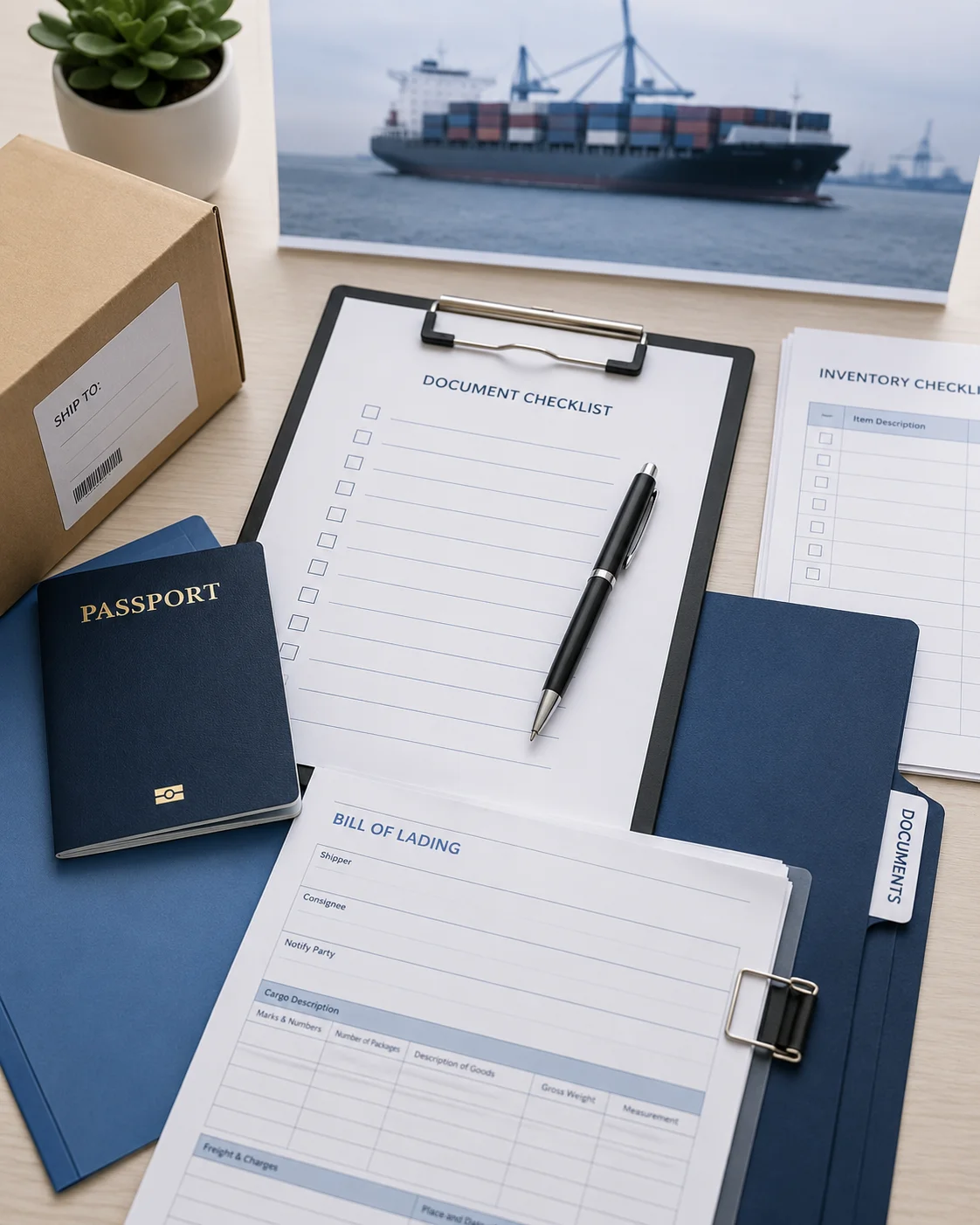
Documents required for importing used household goods, personal effects, and related shipments.
The required documents vary significantly by importer category.
- Copy of passport and national ID
- Express release bill of lading (OBL) or air waybill (AWB), endorsed by the owner of the goods using the same signature as on their entry documents when they physically entered Uruguay
- Certificate of entrance issued by the National Direction of Migration (Dirección Nacional de Migración)
- All documents above
- Packing list in Spanish, legalized by the Uruguayan Consulate at the origin country (typed on a computer or typewriter, printed on letterhead)
- Certificate of residence in Spanish stating a minimum of 2 years of residence abroad
- Signed letter of request to Customs requesting entry for household goods and personal effects
- All standard documents above
- Packing list in Spanish legalized by the Uruguayan Consulate at origin (mandatory once permanent residence is obtained)
- Documents proving that the legal residence procedure has been started (if residence not yet finalized)
- Signed letter of request to Customs requesting entry for household goods and personal effects
- Banking guarantee letter (bond) equal to the declared value of the shipment, issued by a local bank in Uruguay (required for non-citizens who do not yet have permanent legal residence)
- Diplomatic franchise authorization issued by the Ministry of Foreign Affairs of Uruguay, upon request of the embassy or international organization in Uruguay
- Customs release document or diplomatic franchise note for the incoming household goods
- Authorization resolution (contact the local agent as the process involves multiple governmental ministries)
- Authenticated packing list from the Uruguayan Consulate at origin
- Certificate issued by the Ministry of Foreign Affairs of Uruguay stating the period of employment abroad
Specific Information
Owner Arrival Before Shipment: The owner of the goods must arrive in Uruguay before the shipment arrives at the airport or port.
OBL/AWB Endorsement: The OBL or AWB must be endorsed by the owner of the goods using the same signature as the one used on entry documents when the owner physically entered Uruguay.
PBO Prohibition: Do not indicate "packed by owner" (PBO) on the packing list.
Packing List Legalization: The packing list in Spanish must be authenticated (legalized) by the Uruguayan Consulate at the origin country. It must be typed (not handwritten) and printed on letterhead. This requirement is mandatory for returning citizens and for foreigners who already hold permanent residence.
Returning Citizens — 2-Year Rule: A Uruguayan citizen who has been resident abroad for at least 2 years and is returning permanently may import household goods and personal effects duty-free. The certificate of residence must explicitly state a minimum of 2 years abroad.
Non-Citizens Starting Residence Procedure: Foreign nationals who have not yet obtained legal residence in Uruguay may import household goods and personal effects duty-free only if they have already initiated the legal residence application procedure. The importer's status must remain consistent throughout the entire process — it must not change between the start of the residence procedure and the completion of the household goods import.
Bank Guarantee: For foreign citizens who do not yet have legal residence, a bank guarantee (bond) equal to the declared value of the shipment must be provided through a local Uruguayan bank. The amount is determined by the declared shipment value. This guarantee remains in force until permanent residence is granted, at which point it is released.
Diplomatic Shipments: The diplomat's embassy, consulate, or diplomatic organization must manage the process of obtaining the diplomatic franchise authorization from the Ministry of Foreign Affairs. The owner of the goods must obtain a Customs release note or diplomatic franchise for the incoming goods.
CAROU / VUCE: Uruguay's current customs code (CAROU, Código Aduanero de la República Oriental del Uruguay) entered into force in March 2015, aligning with the Mercosur Customs Code. All import procedures are processed through the Ventanilla Única de Comercio Exterior (VUCE), Uruguay's single electronic window for international trade. The destination customs agent handles VUCE filings.
ISPM 15 / Fumigation: Uruguay requires fumigation of all household goods shipments. This is a mandatory step and must be accounted for in the clearance timeline and budget. All wooden packing materials must comply with ISPM 15 phytosanitary treatment standards.
Prohibited & Restricted Items
Prohibited Items
- Narcotics, illegal drugs, and drug precursors
- Pornographic or subversive materials
- Live plants (phytosanitary prohibition)
- New domestic appliances in quantities that are not reasonable relative to household size (contact the destination agent for guidance on what constitutes "reasonable")
- Medicines and narcotics without proper authorization
Restricted / Dutiable Items
The following items are subject to restrictions, duties, or special procedures when imported into Uruguay:
New household goods: New items are in principle subject to import duties and VAT. However, if new goods are included in a household goods shipment in a reasonable quantity and proportion, they may be imported duty-free along with the used goods. Contact the destination agent for specific guidance.
Domestic appliances: Televisions, refrigerators, washing machines, and similar appliances are restricted to quantities proportionate to the size of the shipment and the family. Items not classified as "household goods" by Uruguayan Customs (such as industrial tools, machinery, and new commercial-grade appliances) are subject to import duties regardless of their inclusion in a household goods shipment.
Alcohol and tobacco products: Subject to excise duties and import taxes. Include in the packing list with specific descriptions.
Food: Import of food items is generally discouraged. Food products are subject to MGAP phytosanitary controls and may be inspected or refused.
Works of art and antiques: Subject to declaration and may be subject to duties.
Jewelry and coins: Subject to declaration and duties.
Weapons and ammunition: Strictly controlled. See specific information below.
Firearms — Import Procedure:
- Only sport firearms may be imported; a permit from the Ministry of Defense is required before import. [PERMIT REQUIRED]
- All firearms must be declared on the packing list with full specifications and all property documents.
- When loading the container, weapons must be placed at the door of the container to enable easy Customs access.
- At the moment of shipment arrival, Customs will take possession of the weapons and transfer them to the Service of Material and Armament, where they are held until the owner obtains the import permit.
- Foreign citizens must obtain legal residence and a Uruguayan identity card before applying for permission to import a firearm.
Specialized tools and instruments: Duty-free only if accompanied by a professional degree legalized by a Uruguayan Consulate.
Bicycles: Permitted as part of a household goods shipment only.
Car accessories: Subject to declaration.
Medicines: Import of medications requires specific documentation. Controlled substances are prohibited without authorization. Contact the destination agent for pharmaceutical import requirements.
Live plants: Prohibited (see Section 6).
Importing a Used Personal Vehicle
Required Documents
- Copy of passport and identity card **For Returning Uruguayan Citizens**
- Original commercial invoice in the owner of the goods' name **For Returning Uruguayan Citizens**
- Driving document in the owner of the goods' name **For Returning Uruguayan Citizens**
- Express release bill of lading **For Returning Uruguayan Citizens**
- Certificate or written evidence of the vehicle's registration in the origin country, dated at least 6 months before the owner's arrival in Uruguay, authenticated by the Uruguayan Consulate at origin **For Returning Uruguayan Citizens**
- Employment confirmation from the country of origin **For Returning Uruguayan Citizens**
- Confirmation of ownership and usage for more than 12 months **For Returning Uruguayan Citizens**
- Personal sworn statement from the owner of the goods **For Returning Uruguayan Citizens**
- Confirmation of residency abroad for more than 2 years **For Returning Uruguayan Citizens**
- Declaration expressly invoking Law No. 18.250 and Decree No. 330/2008 **For Returning Uruguayan Citizens**
- Written evidence of freight and insurance issued by the moving company at origin (if the move is managed from Uruguay) **For Returning Uruguayan Citizens**
- Copy of passport or diplomatic identity card issued by the Ministry of Foreign Affairs of Uruguay **For Foreign Diplomats**
- Vehicle property document or circulation document issued in the owner's name **For Foreign Diplomats**
- Diplomatic franchise authorization issued by the Ministry of Foreign Affairs of Uruguay, upon request of the Embassy or International Organization **For Foreign Diplomats**
Specific Information
Who May Import Vehicles: Only returning Uruguayan citizens and foreign diplomats may import vehicles. Private non-citizens and Uruguayan diplomats returning from abroad are not permitted to import vehicles.
Returning Citizens — Conditions: The returning citizen must provide documentation of permanent and uninterrupted residence in the country of origin for at least 2 years. This documentation must be legalized by the Uruguayan Consulate at origin. Only one authorized automobile or motorbike may be imported per returning citizen. The vehicle must have been in the owner's name for a minimum of 12 months.
4-Year Restriction: The vehicle cannot be sold or transferred for a period of 4 years from the date of import. The owner must meet with Uruguayan Customs each year for the 4 years following import to confirm the vehicle remains in their possession.
Local Agent Essential: It is strongly recommended that returning citizens contact the local agent in Uruguay before initiating a vehicle import. The regulatory process is complex and involves multiple steps across different government agencies.
Pets
- Dogs: core vaccines per country-of-origin veterinary standards; leptospirosis exemptions may be granted with veterinary attestation that the disease is not prevalent in the country of origin 3. Additional vaccinations (must be current):
- Cats: core vaccines per country-of-origin veterinary standards 3. Additional vaccinations (must be current):
Current requirements have been substantially updated to include a mandatory ISO microchip, specific vaccination protocols, and mandatory parasite treatments. The term "anti-hydrofolic" is not used in current international practice; it refers to anti-rabies vaccination. The guide below reflects current MGAP and PetTravel.com requirements.
- ISO 11784/11785-compliant 15-digit microchip (mandatory; all documentation must reflect the microchip number)
- Rabies vaccination administered between 30 days and 12 months before entry into Uruguay; pet must be over 3 months of age at the time of vaccination
- Internal and external parasite treatment (required; including treatment for Echinococcus multilocularis); documented on the health certificate or in a separate treatment record
- International health certificate issued by a licensed veterinarian and endorsed by a government veterinarian in the country of origin, within 10 days of entry into Uruguay
- Vaccination record
No import permit is required for pets traveling with their owner. Advance notice to veterinary officials at Carrasco International Airport (Montevideo) is required to ensure inspectors are available, particularly for arrivals outside normal business hours.
No rabies titer test is required for entry into Uruguay. However, Uruguay is classified as a high-rabies risk country by the World Organisation for Animal Health; if the pet will return to its country of origin, a titer test may be required by that country. Plan accordingly.
No breeds are banned from import into Uruguay.
Puppies and kittens under 3 months of age may enter if the area of origin has been free of rabies or has had no rabies report in the 90 days before import, and proof of the mother's rabies vaccination is available.
Pets not meeting import requirements will be quarantined, returned to the country of origin, or euthanized. All costs are the importer's responsibility.
Pets must enter Uruguay by air via Carrasco International Airport in Montevideo.
Other Animals: Birds, reptiles, amphibians, rodents, rabbits, and tropical fish are not subject to the rabies vaccination requirement but may require a health certificate and must meet MGAP requirements for their species. Contact the Ministry of Livestock, Agriculture and Fisheries (MGAP) for current requirements.
CITES: Import of wildlife species and products requires CITES permits. [CITES]
Special Categories
Section 4: Wedding Trousseau and Inherited Goods
Wedding Trousseau / Gifts: Wedding gifts may be imported subject to Customs duties (which may apply depending on the value and category of goods). A separate packing list and a visa marriage certificate are required.
Inherited Goods: Inherited goods require a tax payment and a professional appraisal. The appraisal process takes approximately 30 days. Customs duties may apply depending on the nature of the goods.
Consignment Instructions
Contact the destination agent to ensure all requirements have been met prior to import, especially for differences between air and sea shipments.
Owner Must Arrive First: The owner of the goods must arrive in Uruguay before the shipment arrives at the airport or port. Coordinate travel and shipping dates carefully to ensure the owner arrives in advance.
OBL Endorsement Consistency: The signature used to endorse the OBL or AWB must match the signature on the owner's entry documents when they entered Uruguay. Signature discrepancies are a frequent cause of delays.
Packing List Legalization: The packing list in Spanish must be legalized by the Uruguayan Consulate at the origin country before the shipment departs. Allow sufficient lead time — Consulate processing can take several days or longer. The packing list must be typed and printed on letterhead.
No PBO: Packed-by-owner entries are not permitted on the packing list. All cartons must be professionally packed with itemized contents.
Fumigation: Uruguay mandates fumigation of all household goods shipments on arrival. This adds time and cost to clearance. All wooden packing materials must comply with ISPM 15. Budget for fumigation as part of standard clearance costs.
Bank Guarantee Lead Time: For non-residents starting the legal residence procedure, a bank guarantee letter must be arranged through a local Uruguayan bank before clearance begins. Coordinate this with the Montevideo agent well in advance of the shipment's arrival.
Non-Household Goods: Industrial tools, machinery, new commercial appliances, and similar items are not classified as household goods by Uruguayan Customs and will be assessed for full import duties. Advise clients to either leave these items or be prepared to pay duties on them.
VUCE: Uruguay processes all import declarations through its single electronic window, the Ventanilla Única de Comercio Exterior (VUCE). The destination customs broker handles VUCE submissions. Ensure all documents are provided to the broker promptly to avoid delays.
Cultural & Other Information
Uruguay (officially the Oriental Republic of Uruguay, República Oriental del Uruguay) is a country in southeastern South America, bordered by Brazil to the north and northeast, Argentina to the west, and the South Atlantic Ocean to the south and southeast. The capital and largest city is Montevideo, home to approximately half of the country's population of 3.5 million. The official language is Spanish. The currency is the Uruguayan peso (UYU).
Uruguay is a member of Mercosur and is known for its stable democratic governance, high quality of life by regional standards, and progressive social policies. The economy is based largely on agriculture (beef, soybeans, wool), services, and tourism. Montevideo serves as the major port of entry for household goods shipments.
Time Zone: Uruguay Standard Time (UYT), UTC-3. Uruguay does not observe daylight saving time.
Useful Links:
- OpenFactBook — Uruguay
- Wikipedia — Uruguay
- Dirección Nacional de Aduanas (DNA) — Uruguay Customs
- Ministry of Foreign Affairs of Uruguay (MRREE)
- Ministry of Livestock, Agriculture and Fisheries (MGAP)
- U.S. trade.gov — Uruguay Customs Regulations
- U.S. trade.gov — Uruguay Import Requirements and Documentation
- PetTravel.com — Uruguay Pet Import Requirements
Useful resources