

Country Guides
U.S. Virgin Islands

CRITICAL CUSTOMS NOTE — USVI IS OUTSIDE US CUSTOMS TERRITORY: Although the U.S. Virgin Islands (St. Thomas, St. Croix, St. John, and Water Island) is a U.S. territory and uses the US dollar, it is legally outside the customs territory of the United States (19 CFR § 7.2). This has major practical consequences for movers:
- Shipments from the US mainland to USVI require a customs declaration and are not treated as domestic movements
- Shipments from USVI to the US mainland are subject to US import duties under the Harmonized Tariff Schedule
- Tariff classification and duty rates applicable to goods imported into USVI are established by the Virgin Islands legislature, not federal law
- USVI imposes a 6% duty on most imported goods under its own customs regime
- CBP (US Customs and Border Protection) administers USVI customs law, but USVI law governs — where no USVI law applies, US law is used as a guide
This guide highlights the key distinctions.
Start here
Overview
Explore sections
Guide Details
Household Goods
Documents
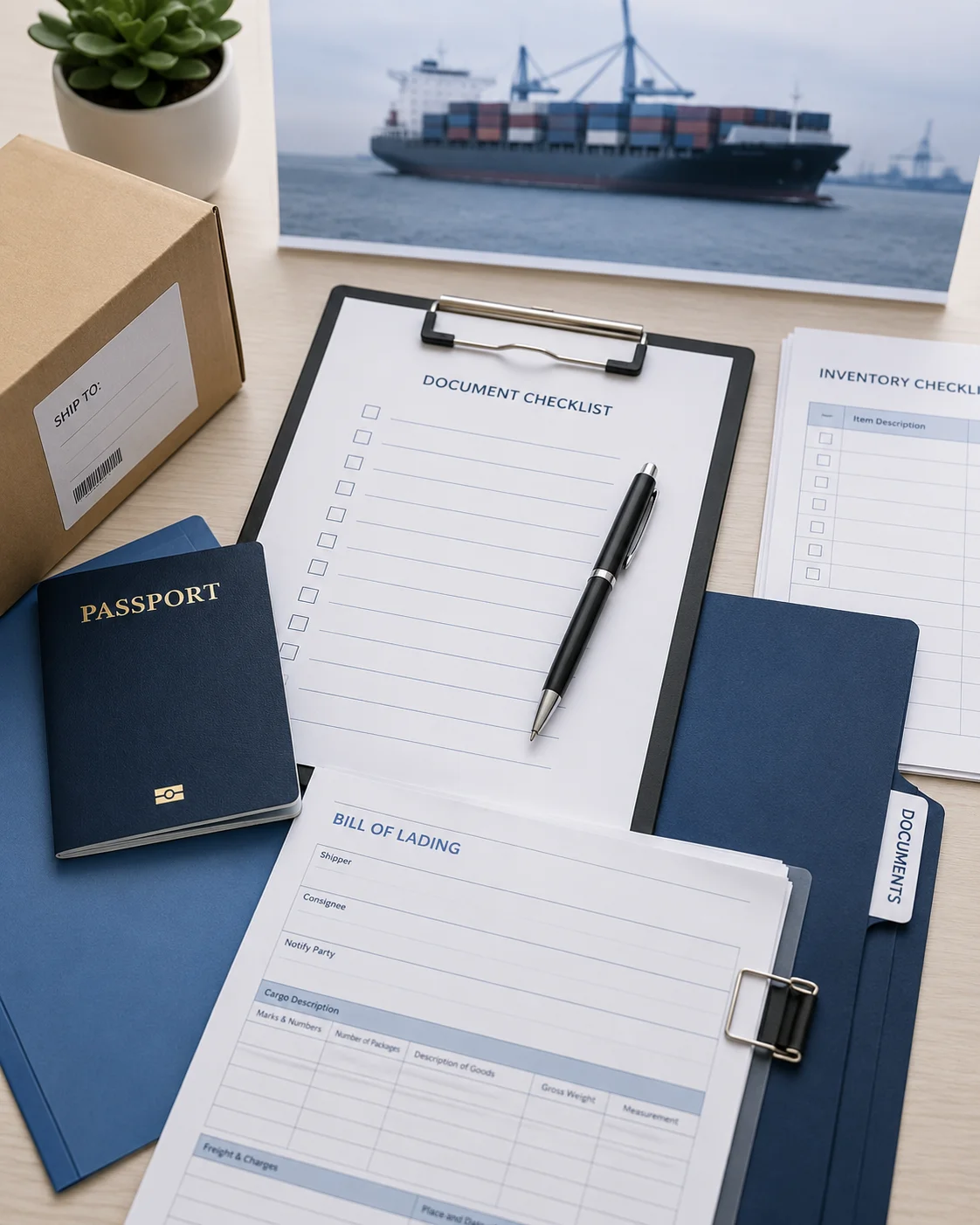
Documents required for importing used household goods, personal effects, and related shipments.
- Copy of passport (some ports require passports for all family members listed on Form CF-3299)
- CBP Form CF-3299 — Declaration for Free Entry of Unaccompanied Articles
- Supplemental declaration (required by most ports)
- Detailed inventory in English
- Copy of visa (if non-US citizen or permanent resident) / copy of permanent resident card
- I-94 arrival/departure record
- Copy of bill of lading (OBL) or air waybill (AWB)
- Importer Security Filing (ISF) — required for all ocean shipments (must be filed at least 24 hours before vessel departure from last foreign port)
- Form DS-1504 and A-1 visa (diplomats)
Specific Information
USVI's Own Customs Regime. The USVI levies a 6% duty on most imported goods. Unlike the US mainland, where used household goods qualifying under CF-3299 are generally duty-free, the USVI applies its own tariff schedule. In practice, used personal and household effects imported by a bona fide resident relocating to the USVI are typically eligible for duty-free treatment under CF-3299 — but this is governed by USVI law, not US federal law. Confirm current duty exemption eligibility with the destination agent before shipment.
Shipments from the US Mainland to USVI: These are not domestic shipments — they cross from the US customs territory into the USVI, which is outside that territory. Customs declarations and applicable USVI duties apply. ISF is not required for mainland-to-USVI ocean shipments (ISF applies to shipments moving from an insular possession to the US mainland, not the reverse), but confirm current requirements with the destination agent.
Shipments from USVI to the US Mainland: AMS/ISF filing is required for ocean shipments. Goods arriving at a US mainland port from USVI are treated as imports subject to HTSUS duties unless exceptions apply (e.g., goods wholly grown or produced in USVI).
No PBO on Inventory. Do not indicate "packed by owner" (PBO) or use miscellaneous descriptions on the detailed inventory. Every item must be specifically described.
Examination Costs. CBP and other government agencies may order physical examinations at any time. Costs range from USD 200 to USD 1,700 or more for FCL shipments. All examination costs are the importer's responsibility.
ISF Filing. For ocean shipments originating outside the US customs territory (i.e., from foreign countries to USVI), the ISF must be filed at least 24 hours before the vessel departs the last foreign port. Late or inaccurate ISF filings carry penalties up to USD 5,000 per violation. Origin agents are responsible for timely ISF filing.
ISPM 15. All wooden packing materials must comply with ISPM 15 phytosanitary treatment standards.
Duties & Taxes
Duty-Free Eligibility: For duty-free clearance under CF-3299, the household goods must have been owned and used for at least 12 months in a foreign household prior to shipment. The importer must hold a proper long-term visa (not a B1/B2 visitor's visa) to import household goods duty-free. Personal effects only (clothing, toiletries, camping gear) may be imported on a short-term visitor's visa.
Prohibited & Restricted Items
Prohibited Items
- Illegal drugs, narcotics, and absinthe (including any liquor containing artemisia absinthium)
- Cuban-origin alcohol and tobacco products (including cigars purchased in third countries)
- Blank tapes and CDs from Iran
- Counterfeit goods and goods using federally registered trademarks without authorization
- Products made from dog and cat fur
- Flavored cigarettes, including cloves
- Haitian animal hide drums
- Drug paraphernalia
- Fresh, dried, or canned meat or meat products; plants and seeds; vegetables; fruits; soil; live insects; snails; and other living plant or animal pests
- Goods from Iran (without OFAC license)
- Leather souvenirs from Haiti (e.g., drums)
Restricted / Dutiable Items
Alcohol: Import governed by both USVI and US federal law. Only persons aged 21 and over may import alcohol. A reasonable amount of alcohol in a household goods shipment is generally permitted, but excessive quantities may require a licensed importer.
Tobacco: Personal allowance for travelers arriving in USVI: 1,000 cigarettes (not more than 200 of which may have been acquired outside USVI, Guam, or American Samoa). For travelers arriving from elsewhere: 200 cigarettes.
Plants and seeds: Import permit required.
Soil: Import permit required.
Meat and meat byproducts, fruits and vegetables: Subject to USDA/APHIS phytosanitary controls; many items are prohibited or heavily restricted.
Unprocessed pork products from the Dominican Republic and Haiti: Prohibited.
Fish: Unless certified as disease-free, certain fish (including salmon and trout, or their eggs, if not canned, pickled, or smoked) may not be imported from outside North America.
Medications: Personal-use quantities with accompanying prescription are generally permitted.
Firearms: Require prior authorization from the ATF (if from overseas); registration and ATF permit process should begin at least 6 weeks before shipment arrives.
Merchandise from sanctioned countries (OFAC): A license is required for goods from Iran, Cuba, North Korea, and other sanctioned countries. Cuban cigars remain prohibited.
CITES / Wildlife items: Ivory, skins, feathers, shells, and items made from wildlife require CITES permits or may be prohibited. Permits must be obtained before departure from the origin country. [CITES]
Importing a Used Personal Vehicle
Required Documents
- EPA Form EPA-3520-21 (if applicable — for foreign-purchased vehicles not previously titled in the US)
- DOT Form HS-7
- OBL (for foreign-purchased vehicles)
- Bill of sale or pro-forma invoice with statement of value (description, VIN, model, year of manufacture)
- Title of ownership translated into English (foreign-purchased vehicles)
- Proof of conformity:
- US title or registration, or
- Letter of conformity from manufacturer, or
- Exemption documentation for vehicles 25 model years or older
- Copy of US title or registration (vehicles previously owned in the US by returning residents)
- Letter of permission from the EPA (non-residents importing a vehicle temporarily)
Specific Information
Vehicles less than 25 model years old that were not previously titled in the US must comply with EPA (emissions) and DOT (safety) regulations. The process of bringing a non-compliant vehicle into conformity through a Registered Importer (RI) is generally not economically feasible. Non-compliant vehicles should not be imported.
Non-US residents may import a vehicle temporarily for up to 12 months as a tourist. The vehicle may not be sold and must be exported before the 12-month period expires. Some ports require a bond of up to three times the vehicle's value.
Note: USVI drives on the left side of the road, but uses left-hand drive vehicles (American-made). This is unusual and worth flagging to clients arriving from countries with right-hand traffic where right-hand drive vehicles are standard.
Pets
- Rabies vaccination certificate (required for dogs from areas not classified as rabies-free)
- Veterinary health certificate issued by an accredited veterinarian within 14 days of arrival
The importation of pets is subject to health, quarantine, agriculture, and wildlife requirements. Dogs arriving from areas not free from rabies require a valid rabies vaccination certificate. There is no rabies certificate requirement for domestic cats.
CDC Dog Import Rules Apply. The CDC is the primary authority for dog imports into the US and its territories. Dogs that have been in a high-risk country for dog rabies within the 6 months before arrival must meet specific CDC requirements, including vaccination certification requirements. Use the CDC Dog Importation Navigator to determine applicable requirements.
Screwworm: Dogs arriving from screwworm-affected countries must have a certificate stating the pet was inspected for screwworm within 5 days before arrival and is either free from screwworm or was held in quarantine and treated until free.
Most turtles and monkeys are not allowed entry. Confirm any special import requirements with the destination agent, providing the animal's common and scientific name and country of origin, to allow appropriate government agencies to be consulted.
CITES. Import of wildlife species and products requires CITES permits. [CITES]
Special Categories
Section 4: Antiques, Artwork, Carpets, and Artifacts
Items at least 100 years old qualify as antiques and are duty-free. Indicate the circa date on invoices for recently purchased antiques.
Carpets of Iranian origin that have been in the foreign household for at least 12 months and are imported as part of a household goods shipment are generally approvable. New Iranian-origin carpets should not be shipped given ongoing OFAC Iran sanctions.
Artifacts of any kind should be discussed with the destination agent before shipment. Confirm whether CITES permits or country-of-origin export permits are required.
Consignment Instructions
Contact the destination agent to ensure all requirements have been met prior to import, especially for differences between air and sea shipments, and between shipments originating in the US mainland vs. from foreign countries.
Understand the Customs Status. USVI is outside the US customs territory. Every shipment entering USVI — whether from the US mainland or from a foreign country — requires a customs declaration and is subject to USVI duties (typically 6% on most goods). Coordinate with the destination agent on current duty rates and exemptions before quoting.
ISF for Foreign-Origin Ocean Shipments. The ISF must be filed at least 24 hours before departure from the last foreign port. Origin agents are responsible for timely filing; late ISF carries up to USD 5,000 in penalties per violation.
Left-Side Road / Left-Hand Drive. The USVI drives on the left but uses left-hand drive (American-spec) vehicles. Clients importing vehicles from right-hand traffic countries with right-hand drive vehicles should be aware their vehicle will not be eligible for import.
Detailed Inventory. No PBO or vague descriptions. Every item must be specifically listed.
Examination Costs. CBP can order examinations at any time at the importer's expense. Build examination cost contingency into client quotes.
Cultural & Other Information
The United States Virgin Islands (USVI) is an organized, unincorporated US territory in the Caribbean Sea, east of Puerto Rico. The main islands are St. Thomas, St. Croix, and St. John, along with the smaller Water Island. The capital is Charlotte Amalie on St. Thomas. The USVI has a population of approximately 100,000. English is the primary language. The currency is the US dollar (USD).
Although a US territory, USVI residents cannot vote in US presidential elections and have a non-voting delegate in the US House of Representatives. The territory has its own governor and legislature. The USVI is outside the US customs territory but within the US postal system and dollar zone.
Time Zone: Atlantic Standard Time (AST), UTC-4. The USVI does not observe daylight saving time (it stays on AST year-round, meaning it is the same as Eastern Daylight Time in summer).
Notable Distinction: Unlike Puerto Rico (which is within the US customs territory), all goods entering USVI — including from the US mainland — are subject to USVI customs procedures and duties.
Useful Links:
Useful resources